
649 words, 3 minutes read (double post)
What did you see on your journey from the airport to your accommodation? Keep your eyes open and reflect on ways modern and ancient intertwine. Did anything you learned in CultureSmart! come true for you in your logistical interactions along the way? What is your strongest taste or scent memory of today? Why? Did anything today remind you of life in NYC what was the most familiar part of the day?
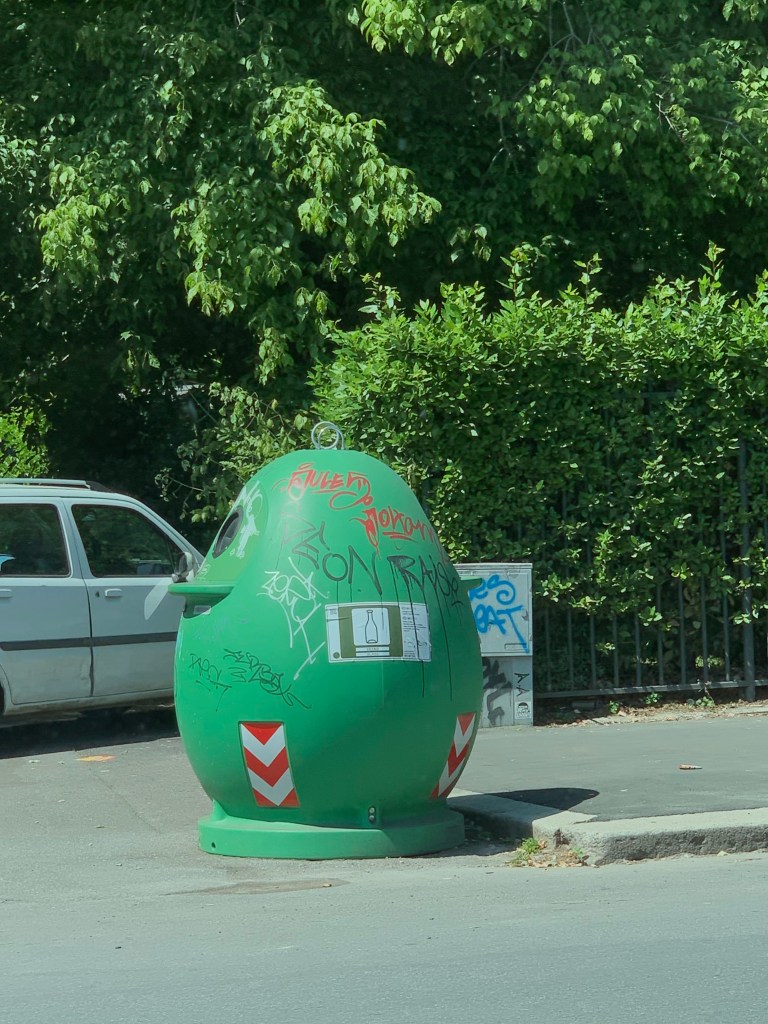
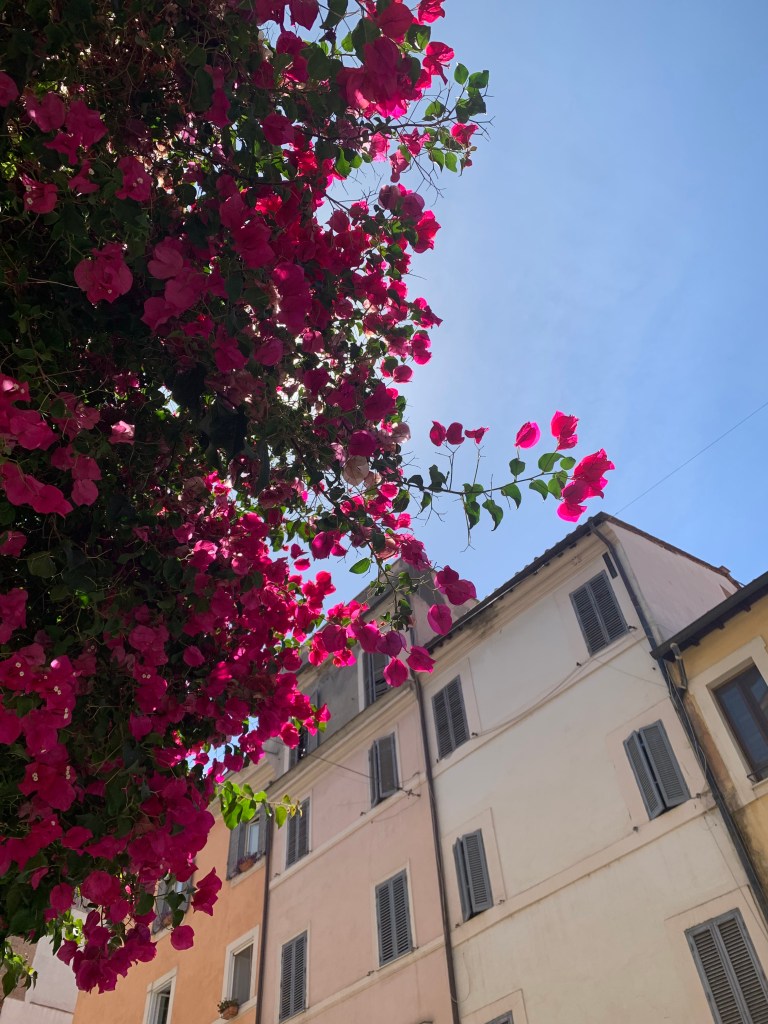
The taxi ride from Leonardo da Vinci International Airport was reminiscent of past drives I’ve taken in European cities- watching the environment change from the industrial infrastructure of the airport, to rural landscapes of fields and hay bales, to residential neighborhoods, and finally, the thoroughfares of the city. In Rome, this looked like apartment buildings and shops littered with graffiti, throngs of tourists, and ancient architecture juxtaposed against contemporary commercial establishments. I anxiously observed buses, motorcyclists, cars and cyclists all drive on the same road, somehow all making room for each other. The green glass recycling bins that resemble eggs (apparently rolled out last year) quite frankly stuck out like a sore thumb. Nevertheless, despite this- or perhaps because of it, they imbued the streets of Rome with a kookiness that I find quite endearing. The Stone Pine trees that litter the terrain very quickly became a distinct characteristic of the city, given their unique shape. Likewise, I came to recognize the beautiful vibrant Bougainvillea that adorn the walls of apartment buildings as palpably Roman. This is quite ironic however, given its reputation as Mediterranean flora, the vine is actually native to South America! The plant was ‘discovered’ in Rio de Janeiro, Brazil, by Dr. Philibert Commerson, who named the species after French admiral Louis Antoine de Bougainville, known for his voyage of circumnavigation of the globe. The plant was eventually introduced to Europe in the early 18th century, and is now inseparable from Italy’s landscape.
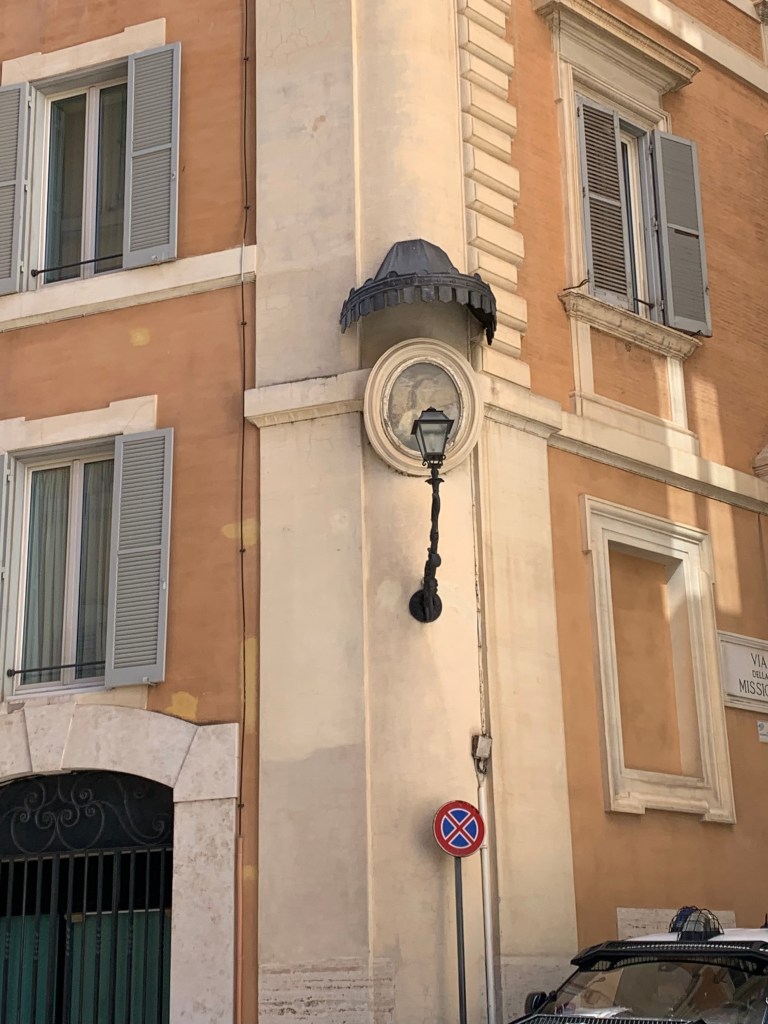
Chapter 2 of CultureSmart! discusses the importance of the Catholic Church in the structure of Italian life, and as I explore the city, this facet becomes more and more evident. Particularly Rome’s ‘Edicole Sacre’, or more affectionately, ‘Madonnelle.’ These Marian (term for relating to the Virgin Mary) shrines directly translate to ‘little Madonnas,’ and serve as protectors of the eternal city. Hundreds of these votive niches adorn the city’s quoins and alleyways, beginning in 1523 with one of the first shrines, Imago Pontis (named after its location), still surviving today in the Ponte neighborhood of Rome. The Madonnelle’s peak popularity occurred during the 15th and 17th centuries, coinciding with the Catholic Counter-Reformation, where the Church enacted its reform on the preceding war on images.
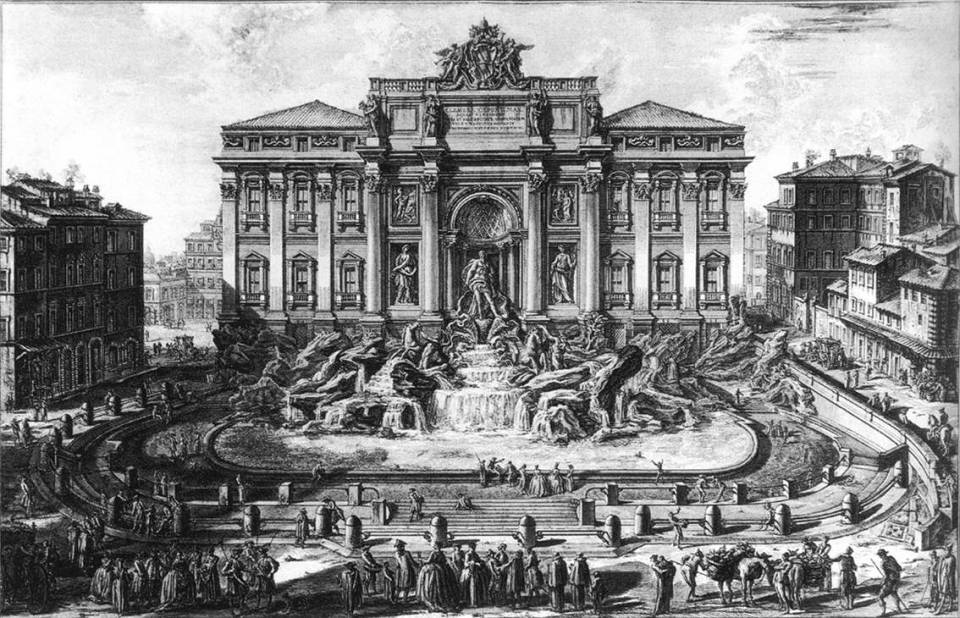
The strongest taste-memory of the day was definitely the Hugo Spritz that I and a few others enjoyed after our visit to the Trevi Fountain. The Aperol Spritz finds its origins in Italy, now as a well-known and popular cocktail available on almost every street with a restaurant or bar in Rome. The bitter apéritif is part of a tradition here, as both a post-work indulgence, as well as an instrument of togetherness. Playing a vital role in Italy’s social customs, people converge to drink and decompress from the day. The drink’s history is quite interesting, originating from the time of Austria’s domination of the Veneto region. The soldiers, merchants, and diplomats of the Habsburg Empire frequented the taverns of Veneto, however, as they seemingly had a low tolerance for alcohol, they requested that their wine be watered down, ‘sprinkling’ (spritzen, to splash, in German) a bit of water into the drink to lessen the alcohol content, thus creating what we know now as the Aperol Spritz!


 Rome via Brooklyn
Leave a comment