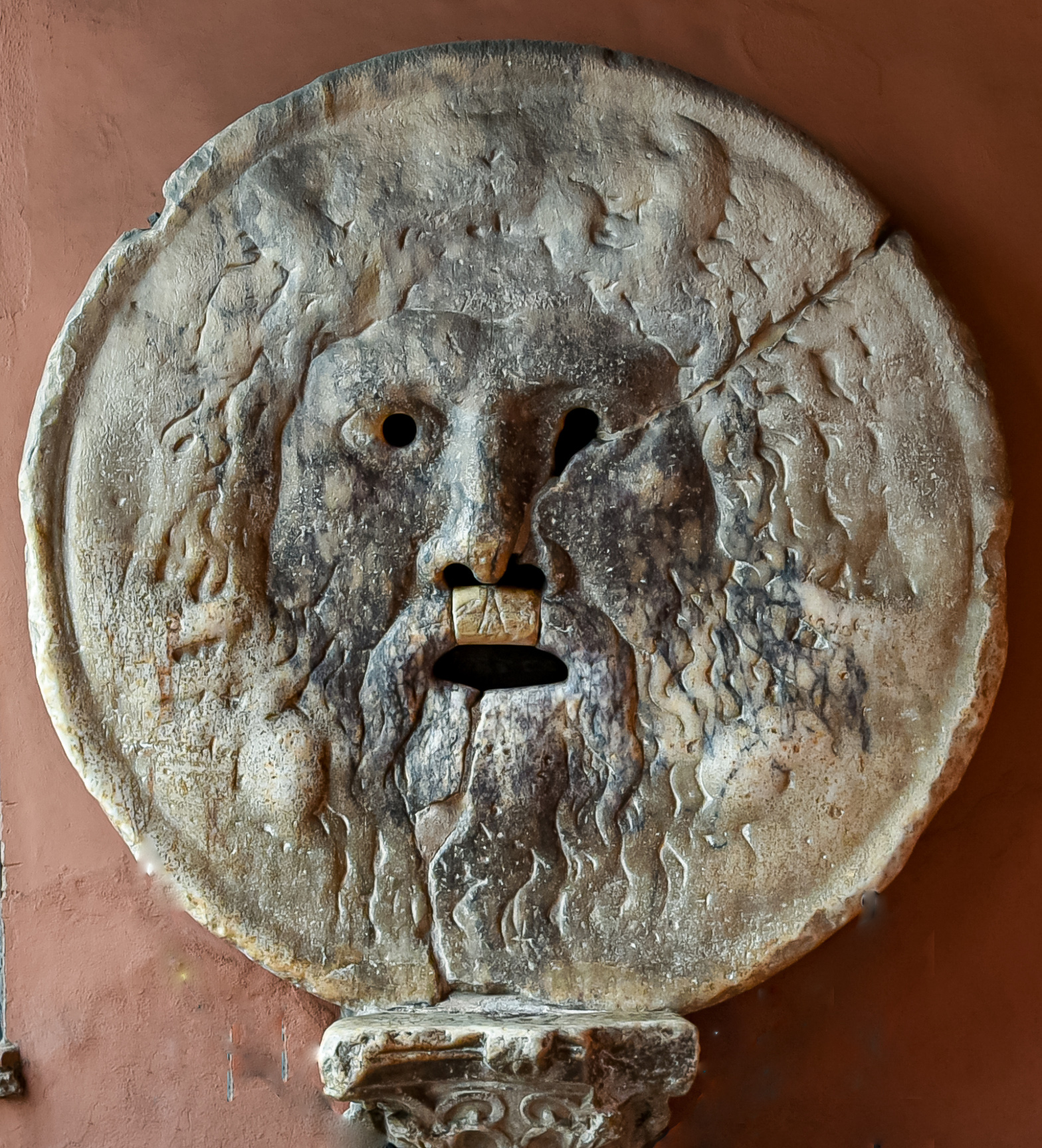

Question: What Board Games did the Romans Play?
The scholarship used was really cool! I personally recommend readers to read: Penn, Tim, and Summer Courts. “Lost and Found: The Object Biographies of Roman Gaming Sets from the Western Provinces.” Pallas (Toulouse, France) 119, no. 119 (2022): 241–62. https://doi.org/10.4000/pallas.24929!
Presentation (1/2): First part of this presentation are notes from Moussa! I focus on the theory of playing board games–meta-playing! I touch up on multiple key concepts regarding the meta-physics of playing, epistemology, asymmetry/symmetry, disposition, and the biographies of Objects.
Depiction of Board game and playing

Playing is a social activity!

Symmetrical Gaming sets (Rarity in Antiquity)

Dumping sets was a norm:

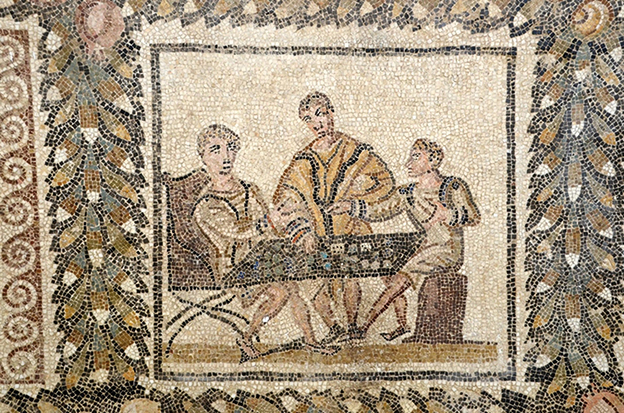
Mosaic!! Connections and Board Games!:

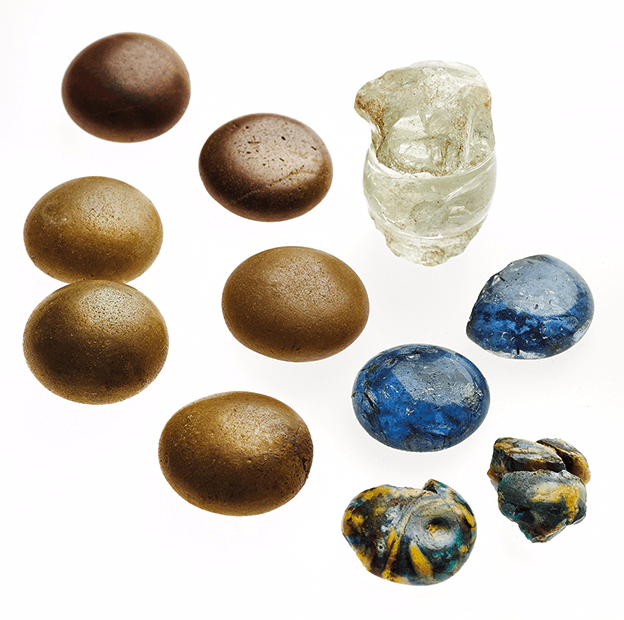
Counters found at burial (common voluntary deposition)
Under Abstract:
The main focus of this paper is to shine light on the needed research and relevance of biographies when discussing Board Games. In the abstract a foundation to understanding board games as more than objects is given. The number of counters usually indicates the type of games played or the number of players. Loss of counters and sets was a common phenomena. So was funnery evidence by intentional disposition. Replacement parts are usually distinct and different. These replacement parts were usually distinct by the materials used. As quoted: “…mixed sets was both a relatively common phenomenon and may have served as a mnemonic device to remember important moments of play.” The author points to the epistemic growth when one plays or engages in and with a board game (Penn, Tim, 2022, 1)
- The asymmetry of board games may elicit lost memories. (Penn, Tim, 2022, 2)
This is another extremely important note that must be mentioned. When introducing the concept of asymmetrical pieces and parts of a board came, the consequence may be remembering lost memories. Say for example I was a Council that played with high ranking members of parliament. We played an X game with pieces that were wooden. There was one piece that was glass, making the whole game asymmetrical. During that game I took away the opponents saying of “we are morally obligated to help the other,” which invokes a duty to be empathetic. Fast forward 5 years and now I am the emperor of Rome. I have only been focused on myself. I sat down and played an X game with a close friend. The pieces were all glass, except for one which was wooden. This asymmetry immediately reminded me of my opponent and the game, as well as the important lesson that was forgotten. This is what I mean by memorization and epistemic evolution.
- Objects Birthed, Born, Love, and Die. Further, fragments are also important and key to understanding and reconstructing antiquity. (Penn, Tim, 2022, 2)
Objects may actually be treated as humans. What does one mean by this? Well, to give a biography of something, that thing is usually limited by the natural cyclical phenomena that is life; birth and death. Therefore, it seems to the author and myself that objects are born (when they are created), live a life where they get worn and torn as well as subject to emotions, and finally they die. The death of an object is somewhat an interesting inquiry. For the most part the object itself is a transcendental sort of thing. It transcends time. By this I mean it is not contingent on an owner, yet it is. Does the destruction and ultimate death of an object equate to the same thing? I argue no. It seems that the memories, histories, epistemic growth, and biographies of objects–in the context of board games–supersede a limit. They are remembered and they contribute a lot.
- Gaming sets can be artifactually complete or fragmented. Through time, pieces are both lost and introduced. This directly affects the physical composition of a set and it may change. Gaming is a social activity. (Penn, Tim, 2022, 3)
Gaming sets may be complete or fragmentary. Usually games and objects are in fragments, displaced of any notion or concept of organization or completeness. Because of the inevitable loss and introduction of pieces, a board game–as a physical composition–and its rules are subject to change. The players and their needs may also put forth their own will subjecting the game to change. Remember that a board game is a social activity, one that could be a means to get away from reality and experience some sort of hedonistic lifestyle.
- Roman Board games accumulate memories and introduce cultural connotations. Wear and Tear of an object as well as emotional presence are also key. (Penn, Tim, 2022, 4)
Games accumulate memories. The players and their histories change, but the board game as a function does not. By “function” it is meant as the property of a board game that all else is constructed around. For me, the function of a board game is to elicit social behavior, accumulate memories and introduce cultural connotations. The function of a board is not contingent on the physical board game itself. The property exists as an understanding, a concept, something that is ultimately intangible. It is therefore that any wear and tear of an object–whether through natural occurrences/decomposition, or emotions willed upon it–cannot supersede the function of a board game. We can further conclude that: the tangible and its converse each serve a distinct role in the understanding of board games.
Further notes/interesting findings/questions one should read up on and ask themselves!
Roman board games: duodecim scripta, ludus latrunculorum. People present: Players, spectators, advisors, commentators, and gamblers. (Penn, Tim, 2022, 3)
Deconstruction of Board Games: (Penn, Tim, 2022, 4-6)
Funnery object dumps may be deemed full sets rather than a piece because you deposit it. (Penn, Tim, 2022, 8)
A current norm should not be the assumption that leads to any extraction of premises that when deduced breed a conclusion. Also “Special Pieces” may be present. (Penn, Tim, 2022, 8)
Deposition of pieces is actually ritualistic: 1. Temple 2. Burials 3. Hoards (Penn, Tim, 2022, 10)
Further notes/interesting findings/questions one should read up on and ask themselves!
What makes up board games?–Dice, Counters, Sets?
What is the definition of a “game”?
Symmetrical vs Asymmetrical games? (This is SO interesting and could be applied to everything)!!
Epistemic growth when playing board games?
Presentation (2/2): Second part of this presentation are notes from Jibriel! He focued on the board games that were played and their accompanying rules.
- Played on an 8×8 or 12×8 grid, similar to chess.
- Mentioned by Varro and Martial.
- Counters captured by custodian capture.
- Misinterpretation: the piece “dux” likely did not exist; it was an invention based on misread artifacts from Camulodunum.

Modern interpretation of the board game: Ludus Latrunculorum
This was a military strategy game played on an 8×8 or 12×8 board.
It’s similar to chess but we don’t fully know how it was played.
The Roman authors Varro and Martial mention it.
One common move was “custodian capture,” where you trap a piece between two of your own.
There was also a piece called the “dux,” which we now know probably did not exist. It was invented by misreading finds from Camulodunum.
Duodecim Scripta
- Played with dice and three rows of 12 spaces.
- Similar to modern backgammon.
- Often inscribed with Latin phrases or sayings.

Modern interpretation of the board game: Duodecium Scriptica
This was a dice game played on three rows of twelve spaces. It’s kind of like modern backgammon. Some boards were carved with Latin sayings, making them fun to look at as well as play.

This is an ancient Roman die made from bone or ivory, featuring circular dot patterns carved into each face. The craftsmanship and wear suggest it was used in board games and reflects the Roman emphasis on both function and aesthetics in everyday objects.
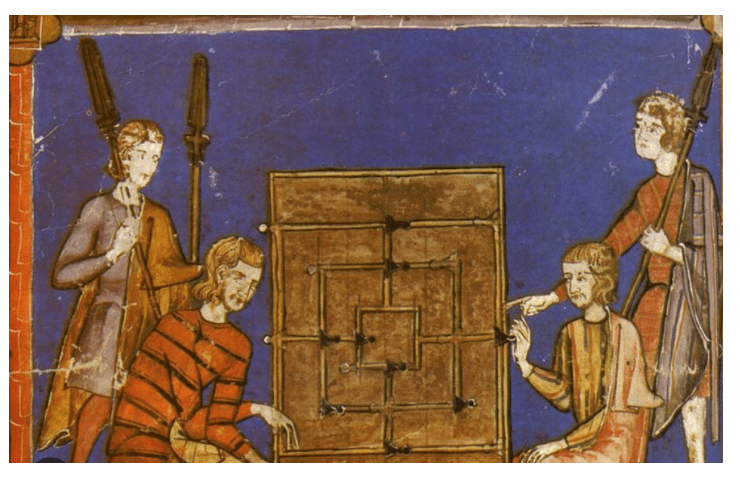
This medieval illustration depicts four individuals engaged in a game of Nine Men’s Morris, a strategic board game with a grid of interlocking squares. The players are focused on the board, with two standing guards suggesting the game’s significance or formality in the social setting.
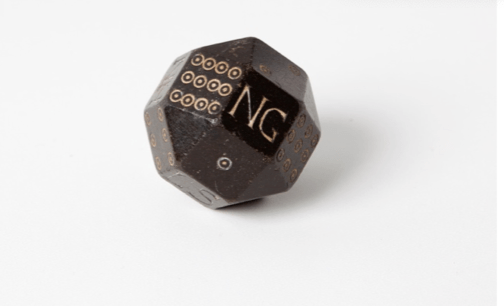
This is a Polyhedral die in the Swiss Museum of Games!
Bibliography
Penn, Tim, and Summer Courts. “Lost and Found: The Object Biographies of Roman Gaming Sets from the Western Provinces.” Pallas (Toulouse, France) 119, no. 119 (2022): 241–62 https://doi.org/10.4000/pallas.24929.
Schädler, Ulrich. “Some Misconceptions About Ancient Roman Games.” Board Game Studies Journal 15, no. 1 (2021): 79–97. https://doi.org/10.2478/bgs-2021-0004
Cooper, Megan. “5 Ancient Roman Board Games That’ll Challenge Your Modern Mind.” LoveToKnow. 2021.https://www.lovetoknow.com/home/antiques-collectibles/ancient-roman-board-games.
–Jibriel Ahmad & Moussa Toni Cisse
 Rome via Brooklyn
Leave a comment