

A curse tablet (in Latin: defixio, plur: defixiones) is a small sheet of lead (or sometimes other metal), inscribed with a written curse intended to bring harm, control, or misfortune to another person. These were commonly used in the Greco-Roman world from the 5th century BCE through late antiquity.
The content of curse tablets varied hugely, but have been traditionally classified into six categories. These categories are traditional, but can be misleading since many tablets do not fit into just one of these groups. This can be problematic because it can cause us to focus more on our interpretations of the text rather than the intention driving the individual to create the tablet in the first place.
- Erotic/love magic
- Legal curses
- Competition curses
- Prayers for justice
- Business curses
- Miscellaneous tablets
Some key features of curse tablets are:
- Material: Typically made of lead because it was cheap, easy to inscribe, and symbolically connected to the underworld
- Format: Thin sheets often folded or rolled, sometimes pierced with nails or placed in containers with ritual items (e.g., hair, wax figurines)
- Language: Written in Greek, Latin, or a magical “nonsense” script to heighten mystical power
- Placement: Deposited in graves, wells, sanctuaries, or near the target’s location—places believed to connect to chthonic deities or spirits—in this case, this particular curse tablet was folded and rolled up before being inserted into an oil lamp and left at the fountain
Curse tablets were typically deposited at specific locations, often associated with water or sacred springs. And while the Baths of Diocletian (very obviously) are a site of water, it only served as a public bath complex and was not known to have any other significance. In fact, the Baths were primarily known for their overwhelming size and role as a social and recreational center; they were a place for bathing, socializing, and exercise. Many of the curse tablets on display were actually found at other sacred sites in Rome, such as the Sanctuary of Anna Perenna, or the Roman Baths in Bath, England.
- Source: Curse Tablets and Our Understanding of the Ancient World by Charlotte Spence
- Source: Curse Tablets: The History of a Technology by Greg Woolf

Water is a really significant element of cursing in the ancient world. Primarily, it was believed to serve as a conduit to the underworld and chthonic (relating to or inhabiting the underworld) deities. It was believed that depositing the curse tablet in a body of water, such as wells or springs, the curse was activated by the water physically carrying it to the realm of the gods.
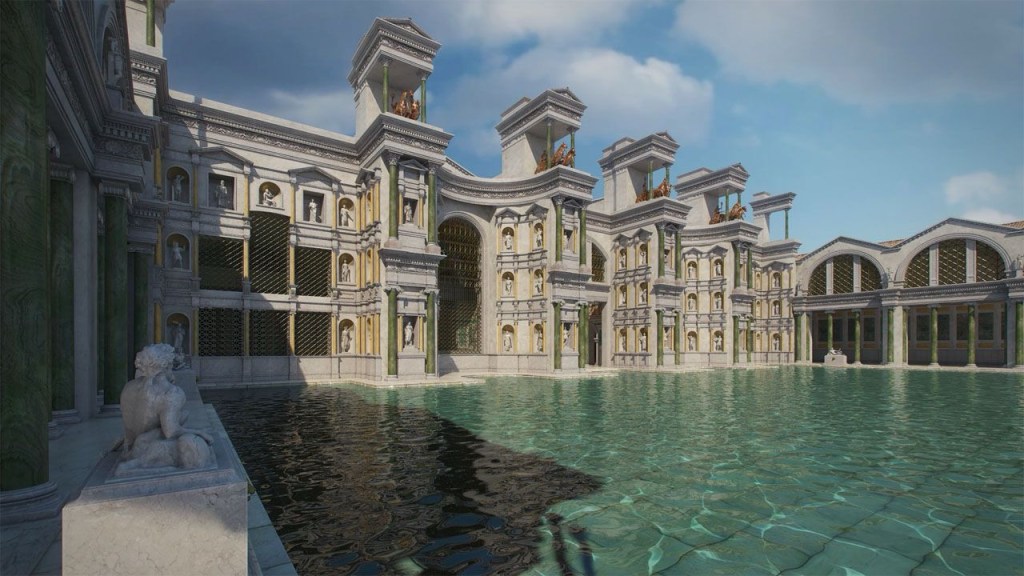
Pictured above are the Roman Baths in what was then known as Aquae Sulis (today known as Bath, England named as such because of the Roman Baths), which were constructed around 60-70 CE and were used until the end of Roman in Britain in the 5th century CE. The Roman Baths was a public bath site built around a hot spring, containing various rooms with different temperatures, swimming pools, and spaces for socializing. However, the site was primarily considered a sacred site at the time and was devoted to Sulis, a Celtic goddess, whom the Romans identified with their own goddess of wisdom and strategic warfare, Minerva.

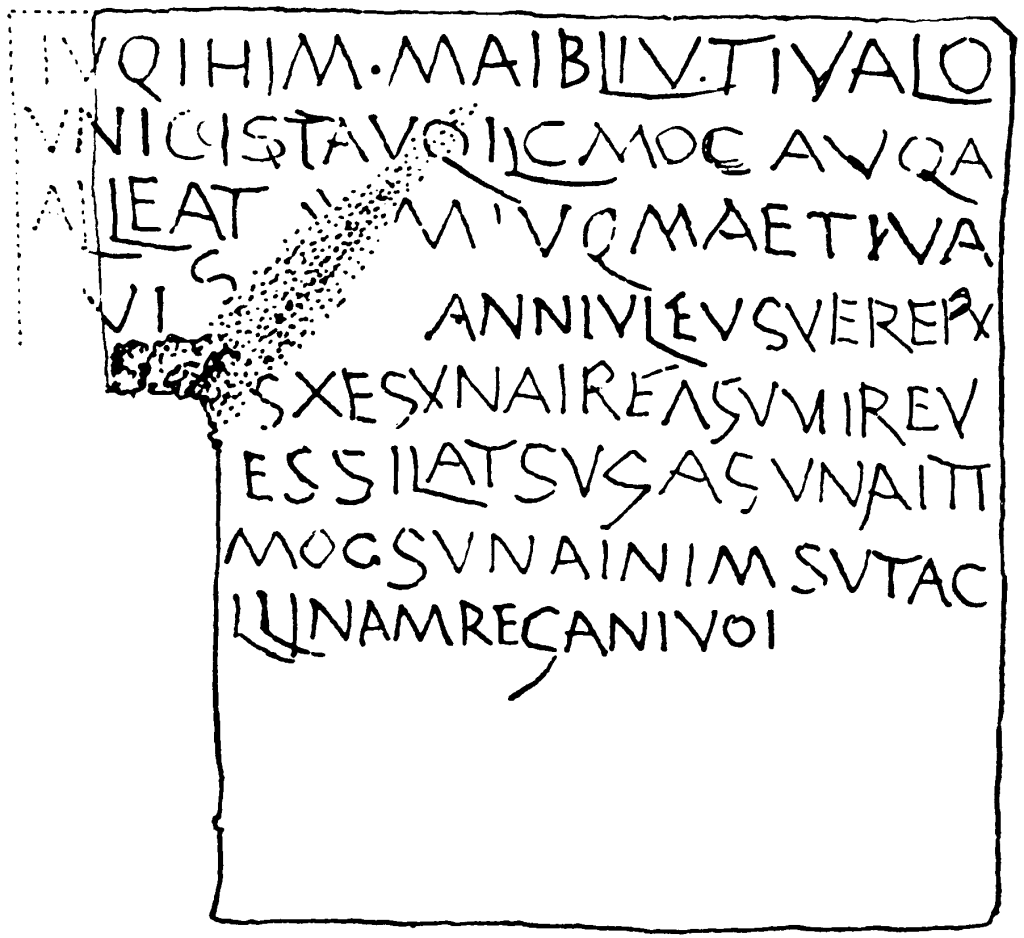
Over a hundred curse tablets have been excavated from the Roman Baths and are currently on display in their museums. Pictured about is a curse tablet that has been titled “Curse upon thief of ‘Vilbia’”. Below is the full inscription:
Original: “Qu[i] mihi Vilbiam in[v]|olavit sic liquat com[o](do) aqua |ell[…]- m[2-3]ta qui eam [invol]|avit si Velvinna Exs|5 upereus Verianus Se|verinus A(u)gustalis Com|itianus Catus Minianus |Germanill[a] Iovina”
Translation: “May he who carried off Vilbia from me become as liquid as water. (May) she who obscenely devoured her (become) dumb, whether Velvinna, Exsupereus, Verianus, Severinus, A(u)gustalis, Comitianus, Catus, Minianus, Germanilla (or) Jovina.”
Based on the phrase “may he . . . become as liquid as water”, we can infer that the Romans used water as a metaphor in the curse itself, symbolizing the binding, weakening, or dissolution of the target of the curse. And because the Roman Baths were considered a sacred site, depositing the curse tablets there further emphasized this symbolism.
- Source: May the Thief Become as Liquid as Water: Persuasion and Power in a Curse Tablet from Roman Bath

Pictured at the top of this post is an example of a lead curse tablet from a burial area along Via Ostiense in Rome. While we don’t know exactly who wrote the post or what event caused them to write the post, we can infer that at the very least, the writer (likely a man, based on details in the inscription) felt slighted by Caecilia Prima in some way and cursed her for that reason. The inscription is quite long, but it basically boils down to the practitioner wishing all kinds of pain and suffering on Caecilia – including intense bodily harm, madness, and to be tortured in the Underworld. Below is a translation of the full inscription:
Side A: “…steal from that Caecilia Prima her flesh, the heat of her mind from that Caecilia Prima. Hounds of Orcus, Three-headed Creatures of Orcus, may you consume that Caecilia Prima’s liver and lungs, may you tear and rend her heart and veins, entrails, limbs, marrow, may you snatch away the eyes of that Caecilia Prima and you, infernal Burners, may you burn the eyes of that Caecilia Prima, her stomach, heart, lungs, fat, may you burn and scorch all the other limbs of that Caecilia Prima, you, and let her not be able to live or enjoy good health, and may you carry off that Caecilia Prima to yourselves, hand over those parts of her to the infernal bone-breakers, you, let them break the bones of that Caecilia Prima, let them consume her marrow, let them tear apart her liver and lungs, and may you, infernal Bone-Breakers, deliver that Caecilia Prima to Aurora, sister of Orcus. Aurora, sister of Orcus, may you take away sleep and slumber from that Caecilia Prima, may you inflict on her madness, pangs, stupefaction, a distressed brow… up to the time when Caecilia Prima dies, perishes, wastes away; then may you, Aurora, sister of Orcinus, deliver over that Caecilia Prima to the infernal Ghosts and Furies… may you inflict upon that Caecilia Prima fear, frights, pangs.”
Side B: “Stupefaction and madness and all… let them bring about, the same… who for herself… let her get, immoral behavior… that Caecilia Prima… let her always have. Immoral behavior, that that Caecilia Prima may be oppressed, crushed by her enemies, consumed [by illness] and not… Birds of the night, Harpy birds, you, may you consume the heart of that Caecilia Prima, her hands, all her intestines, may you inflict upon all… of that Caecilia Prima anguished thoughts, daily, tertian and quartan fevers, until the time when you wrest away the life of that…. Virga, of the infernal detiies, you, may you bring it about that of that Caecilia Prima, whom you are quite subduing, lashing, burning, scorching among those persons in the Underworld who have done all kinds of wickedness and crimes in the world above, that even so you, Virga, burn, scorch, lash, subdue that Caecilia Prima until you carry her off dead to you, just like persons upon a shore who have lost all their possessions. Himaera… may you sink your teeth into Caecilia Prima… so that she never becomes healthy… her… may you [Caecilia Prima] swell up just like a drum, and may she die from terrible pangs until she perishes that you carry off… never.. that Caecilia Prima you should scorch.. let her be dead… Geryones, Sirens, Circe the daughter of the Sun, just as Minerva with her tunic alone… them, the Sirens, female monsters, detained men with their songs and Circe with her deadly drugs the companions of Ulysses… may you.. that Caecilia Prima with the same evils, the same pangs you help Caecilia, and may you her life and spirit… take away, may you deliver to the infernal… father Dis, divine Proserpine and Virga, he beseeches you who charges you in this matter….”
- Source: Magic in Ancient Greece and Rome by Lindsay C. Watson
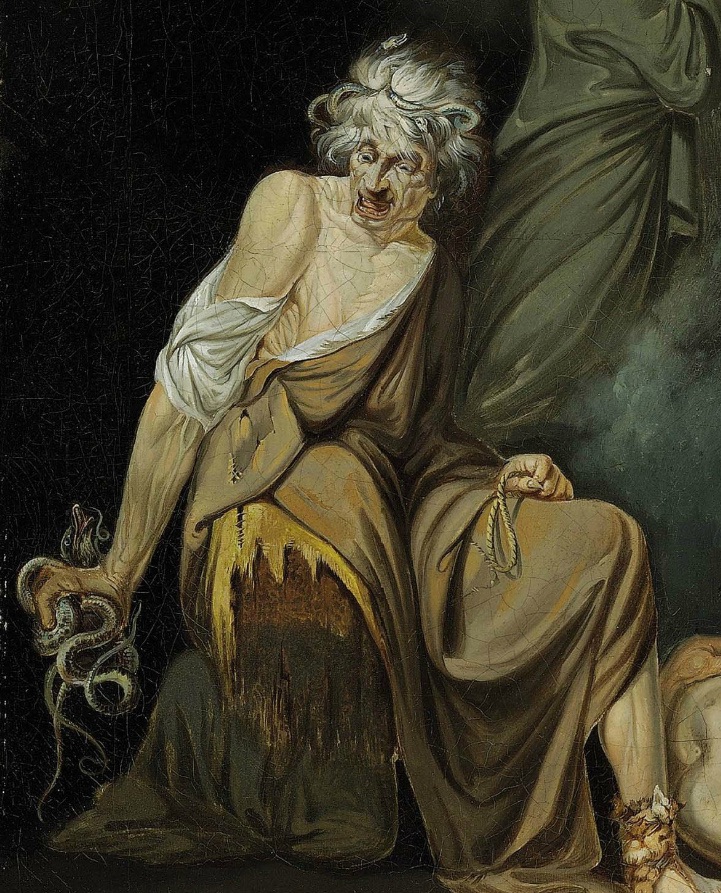
The gender dynamics of ancient magical practices is quite interesting. While male practitioners were seen as intellectuals or seekers of knowledge, women’s magic was depicted as visceral, emotional, or irrational. The image above is of Erichtho, a famous Thessalian witch that appears in many Roman literary works, the artwork is an interpretation of the stereotype of the ugly witch by John Hamilton Mortimer. In ancient literature, the “old, ugly Thessalian woman” was a common stereotype, combining gender, age, and regional “otherness” to emphasize alterity and suspicion. This stereotype depicted them as dangerous and manipulative, often operating outside societal norms. Women’s magical practices were perceived as threatening because they allowed women to exert power in ways that challenged male-dominated societal norms. For example, love spells could invert typical gender power dynamics by making a man fall uncontrollably in love with a woman. In reality, women were more often than not the target of certain magic – particularly love spells and other erotic magic. The overwhelmingly male-driven use of erotic spells suggests that magic was a way for men to assert control over women, especially in contexts where traditional means of persuasion failed.
- Source: magic, Greek by Radcliffe G. Edmonds
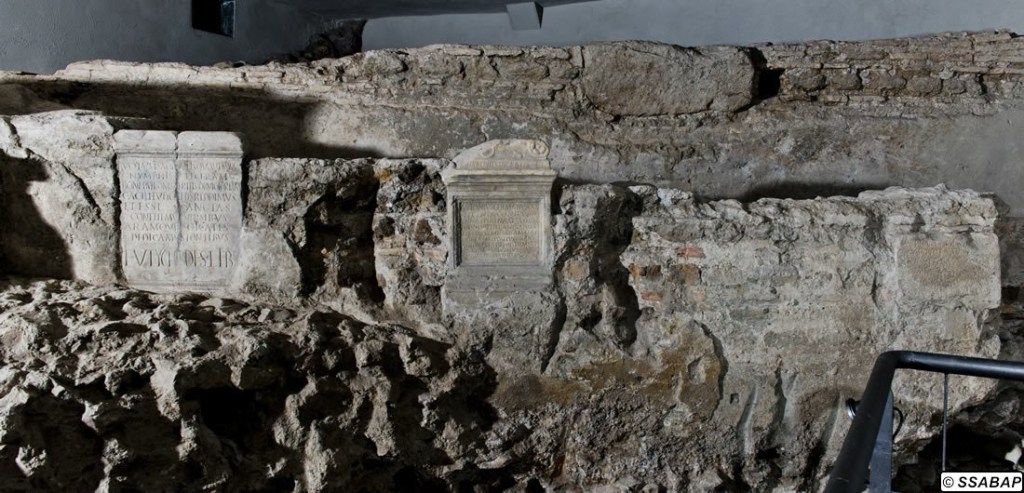
Pictured above is the excavation of the Fountain of Anna Perenna in Rome. The fountain was said to have been constructed around the 4th century BCE and was reported to have been used all the way up until the 6th century CE. Many, many years later in 1999 CE, the fountain was discovered and excavated near Piazza Euclide in Rome.
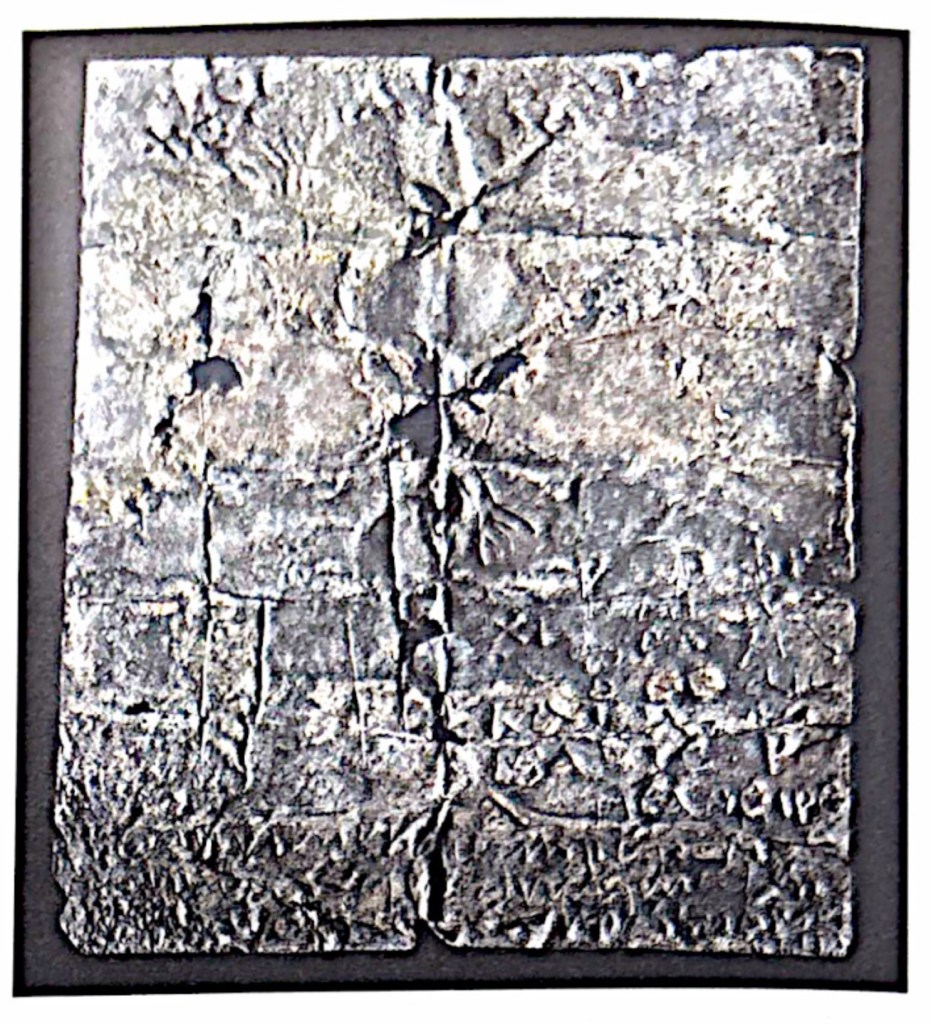
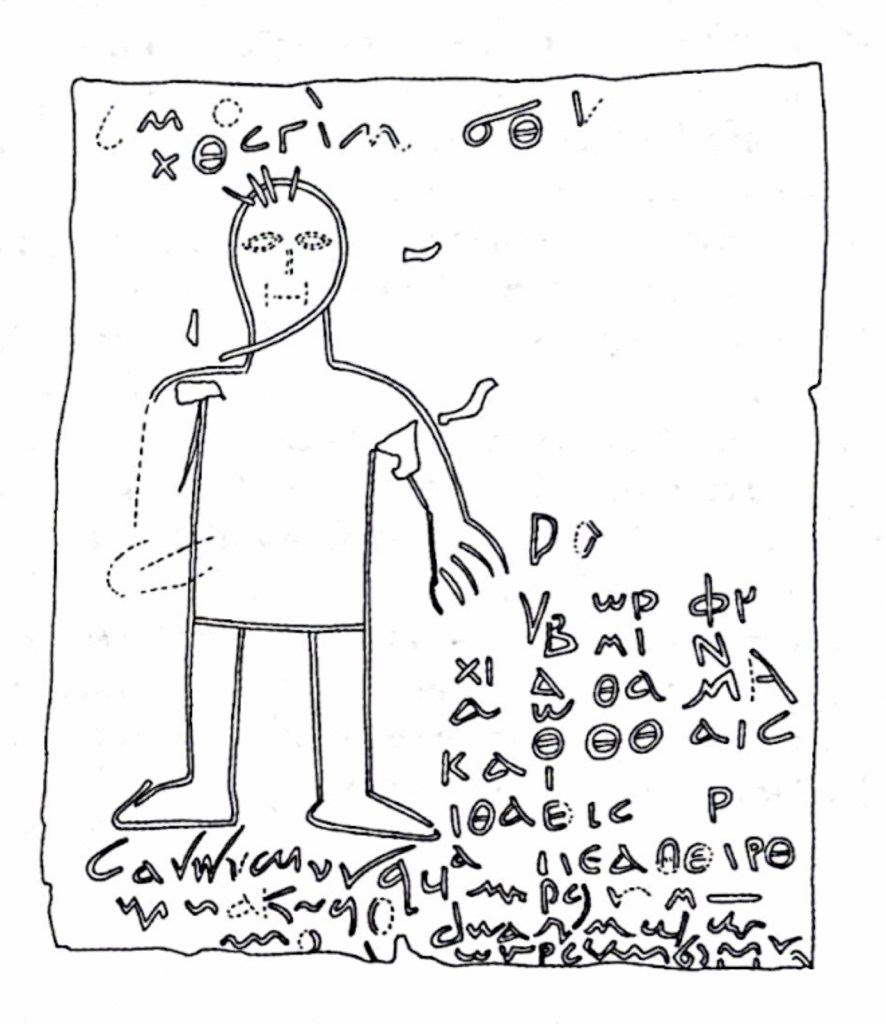
This tablet is “The Curse of Cassianus” – it features a depiction of a demon with straight hair, bird-like claws on its left arm (with faint traces of a hand), and feet pointing outward. The demon’s drawing is crude but the figure can potentially be identified as Abraxas, who, in Gnostic traditions, is a powerful supreme being and the embodiment of destruction.
- Inscription A (above the head) is unreadable, possibly Greek and Latin letters
- Inscription B (to the right of the body) are Greek letters arranged in a quadrangle, but without any apparent magical system
- Inscription C (below the feet) reads, in Latin, Cassianusquem ponere [- -] / [po]terat [J qui illas malam mulieres / [- s]urupserunt paup[erem]
- This can be interpreted as a curse against a man named Cassianus, who had hired some witches (“evil women”) to rob his victim, who ultimately identifies himself as a “poor man”
Though there is no way to guarantee who made this tablet, one possible interpretation is that the witches he hired could have been snubbed by him in some way, possibly withholding payment since he self-identified as poor.
In conclusion, curse tablets were a physical means for ancient Romans to reach out and appeal to the divine to seek some sort of reward for themselves, or punishment for those who may have wronged them. There is so much more to be said about this topic that I can’t possible cover in one blog post, but we are lucky to have so many surviving artifacts that offer us a brief glimpse into the life of everyday ancient citizens.
 Rome via Brooklyn
Leave a comment