
1,454 words, 8 minute read
Why does this museum have a Secret Cabinet? Explain why it was created and argue whether you think it is still a useful way of organizing the collection?
Pornography. The word itself already carries a negative connotation: explicit, private, forbidden— even uttering the word itself is taboo. But how did we get here? Has it always been like this? In my opinion, and as these ancient objects will show us, the answer is no! The word ‘pornography’ did not even enter modern European languages into the 19th century… so, as you can imagine, this is a relatively new term, especially compared to the ancient world. This leads us to the curiosities that sit behind that iron gate at the Museo Archeologico Nazionale di Napoli. Tucked away in that space is the Gabinetto Segreto. Here, an ancient world of culture and values manifests through erotica– and it has much to teach us about our modern preconceived notions of pornography and the ways in which it has been historically censored.
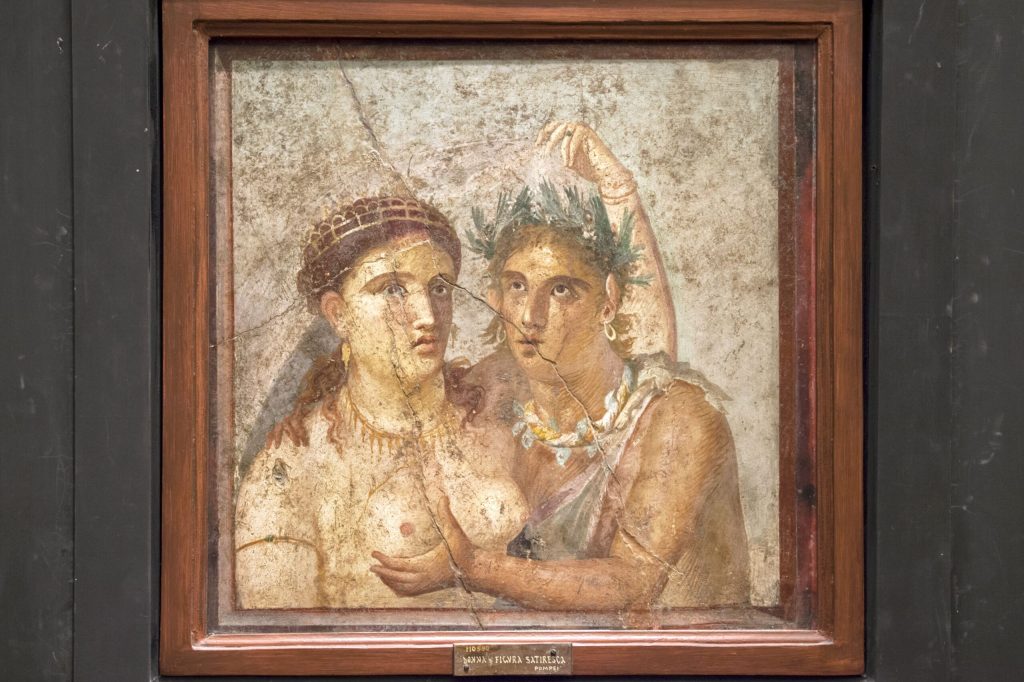
The Secret Cabinet, or in Italian, ‘Gabinetto Segreto’, is a collection of 1st-century Roman erotic art found in Pompeii and Herculaneum. Now, plainly and candidly, the objects from the cabinet were meant for public space. These images found themselves in wall paintings adorning dining rooms and hall walls, public pathways, and pavements, where everyone from slaves to children to guests would pass through. Erotic art was simply a part of daily life for all types of ancient Roman people. Given this fact, the term pornography and all of its modern associations simply do not apply here– it would be pointless and incorrect to apply our understandings of porn and pornography to these images and objects. For ancient Romans, visual representations of sexual activity functioned more like our current day wall art: the images expressed certain notions about the status or aesthetic tastes of the families that had these erotic paintings in their homes.
The collection holds roughly about 250 erotic-themed artifacts, arranged in chronological and cultural order. They are organized by function and material type: frescoes with mythological subjects, garden decorations, brothel paintings, banquet room furnishings, amulets, and phallic-themed objects from Pompeii. As stated, sex was a vital part of the culture, with objects that all concern the erotic corporeal: all of these figures focus on the body in one way or another, featuring the male and the female genitalia, sex, and various methods and ways of having sex.
Though the excavation of Pompeii was initially a project of the Enlightenment, the objects were later categorized ‘obscene’ in 1819, upon suggestion of Francis I, to be placed in a room accessible only to ‘persons of mature age and known morals.’ As a result, in 1821, the Cabinet of Obscene Objects was established. Then, with the arrival of Garibaldi in Naples and the end of the Bourbon reign in 1860, the collection was opened to all. This changed in the 20th century with the twenty years of fascism, the collection was completely closed to the public, not reopening until 1967. The collection was finally permanently opened to the public in 2000 where it remains open to this day.
So, as we can see, the Gabinetto Segreto has seen much back and forth, with access to its objects vacillating between authorities, reflecting the shifting political attitudes and the varying approaches of the museum’s directors. Given that these objects and their further meanings were a part of history that was restricted and suppressed for a long time, the discovery of objects proved difficult to make amends with, as before this time, the Roman republic was understood historically as a paradigm of moral virtue. The idealized notion of Greco-Roman antiquity was completely shattered and proven wrong by the discovery of these extremely erotic images. The collection has been repeatedly censorsed and, as we can clearly see, been separated from the rest of the museum, guarded by a gate that physically demarcates its otherness. Now that these objects are finally on public display, people can see this important aspect of Roman culture and from it, they can gather a better understanding about both the past itself and the ways in which it has been classified, protected, and controlled for over 200 years.
David Edward Rose discusses this further in his article, The Ethics and Politics of Pornography:
“As the secret museum created a physical space for the ‘obscene’ objects (that is, what is ‘off the stage’ and hence designating what should be out of view), so modern life creates the space of transgression, the desire for what should not be desired. In the pre-modern period, one’s life was divided between the public world of the home and the public world of work (or the state) and there was no space for the private.”
Many of us have intense reactions when these objects are presented in front of us in a public space, because typically, as Rose observes, the only time we access and consume material of this kind when we are isolated- for example: when a couple have sex in the privacy of their own homes, it is not pornography- however, if the same couple were to record it and upload it to the internet, (hence, entering it into the public space) it very definitively becomes pornography. Why is this so? Is sex only meant for the private, the domestic? It is precisely because our modern day understandings of pornography that operate in the private space and the individual’s own discrete desires, that this reaction is elicited.
The Gabinetto Segreto gives us a chance to reevaluate our preconceived notions of what ‘pornography’ is, and perhaps provide some kind of normalization or destigmatization of these kinds of objects, and, at the very least, it give us empathy and space to understand that cultures operate on different understandings and acceptances of what is deemed ‘common’ and ‘normal’ in the public space. Though I do believe that keeping it hidden in a separate room still reinforces these notions of the taboo and inappropriate, displaying these objects in a way that appeases our social opinions regarding the erotic is a difficult task, and one that may not have one clear right method of exhibition. However, one thing is for certain: keeping these objects isolated from the rest of the visual imagery of Pompeii and Herculaenum will not help challenge these ideas, and it creates for a historically inaccurate viewing experience of the lives of ancient Romans. They lived among all these objects in tandem- one was not more morally permissible than the other, and acknowledging that truth is important.
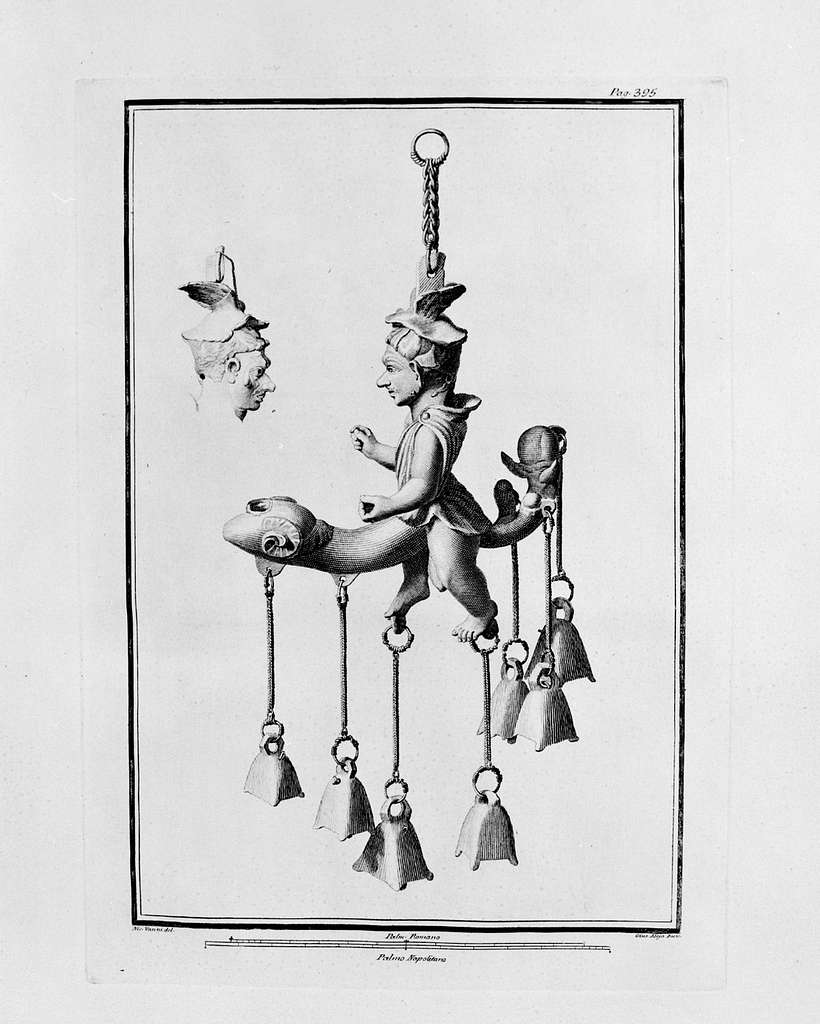
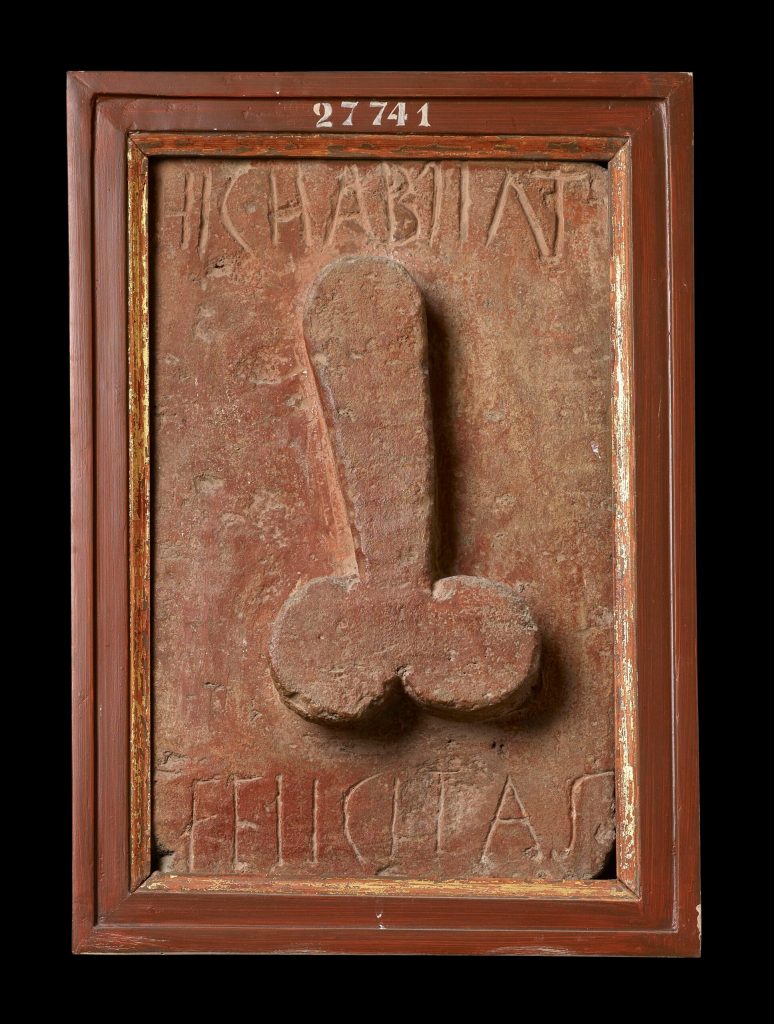
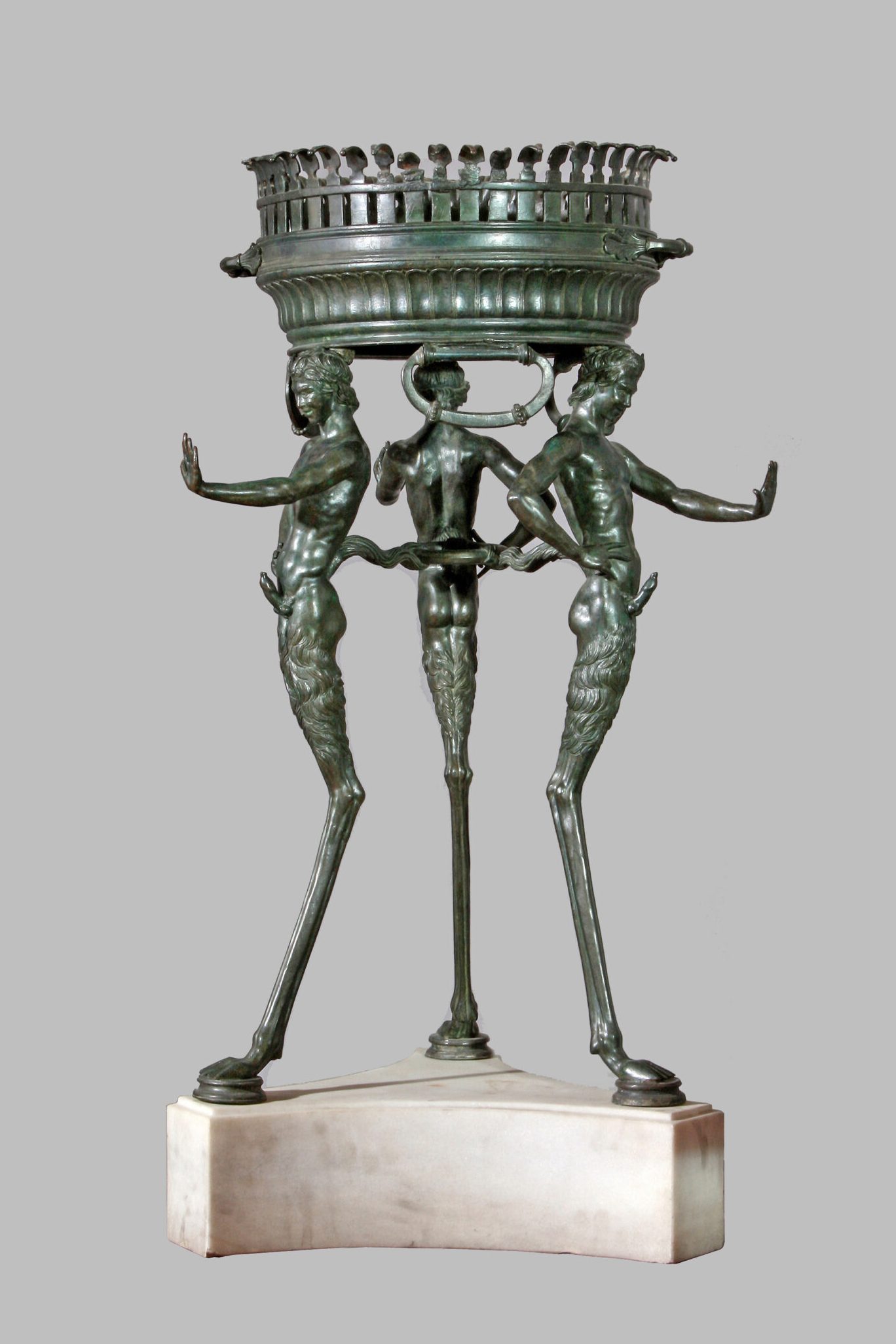
One of the objects featured in varying iterations in the Gabinetto Segreto is the Tintinnabula. Tintinnabula were ancient Roman bronze wind chimes that either took on the form of ithyphallic deities or fascinum. Now, fascinum is an interesting word– this is where we get our modern word fascination, but, in the ancient Roman world, it operated a bit differently. It was understood as ‘fascination’ in a negative context, tied with notions of enchantment and the ability to harm people with their gaze. It was a belief that was deeply ingrained in the ancient Romans, as a common source of superstition and fear.
This superstition manifested into objects such as the tintinnabula- the wind chimes were utilized to ward off evil, much like how many today wear the evil eye or hamsa- it’s just that in ancient times, this was an erect penis that people wore around their necks instead of an eye or hand. Ancient Roman author, Pliny, speaks on the use of fascinum in gardens and hearths as protection against the ‘fascinations’ of the envious- we also learn from Pliny about the worship of the god Fascinus, worshipped by the Vestal Virgins, where he writes that Fascinus was placed under the chariot of those who triumphed as a means of protector against fascination, which is assumed to mean that there would be a literal phallus sculpture under the chariot. Pliny even referred to the fascinum as a ‘medicus invidiae’, a remedy for envy.





Bibliography
“Fascinus.” Wikipedia, Wikimedia Foundation, en.wikipedia.org/wiki/Fascinus.
Rose, D.E. (2013). The Mull of Kintyre Is Not in Naples: The Definition of Pornography. In: The Ethics and Politics of Pornography. Palgrave Macmillan, London. https://doi.org/10.1057/9780230371125_2
Woditsch, P., Leysen, J., Schoukens, S., & Roekens, J. (2008). Secret museums [Video recording]. Distributed by Icarus Films.
 Rome via Brooklyn
Leave a comment