
Word Count: 516
Read Time: 3 minutes
Blog Prompt: Step back in this post. Don’t worry about writing about just what you saw today. Flip through your photos and choose two that you’ve not yet written about, ideally something you might now understand better and can better contextualize. You’re learning and seeing so much it can be hard to remember it all. Free write on your experience on this trip so far. What haven’t you done yet that you want to be sure to do in the few days ahead?
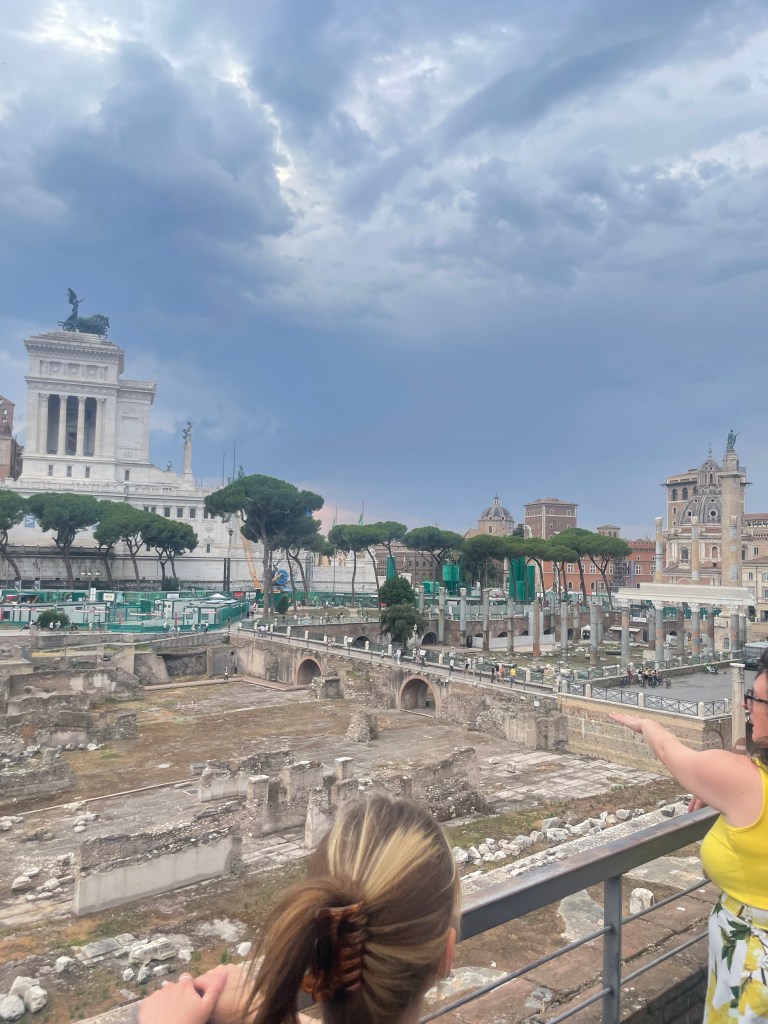
I really liked the talk about the urban layout of the whole plaza. I specifically enjoyed 4 things: shopping center, destruction of medieval architecture, riot police, urban functions.
- Shopping Center: The rationalization and organization of a shopping center is huge for a number of reasons. For one, the shopping center gives a space where people can go and obviously shop, but also meet and socialize. The shopping center also conveys the emperor’s interest. If a mayor were to do this in NYC, the civilians may say something like, “He is focused on the betterment of the community.” Could this shopping center be a stunt to better the image of an emperor? Most likely, but it still brings positive consequences.
- Destruction: Mussolini is a questionable character to say the least. If I remember correctly, he destroyed medieval history and structures to make room for the Roman ones. I am sure much was lost, but lots was rediscovered as well. Destruction is a very interesting concept as it yields varying consequences and has multiple functions.
- Riot Police: The connection between the way armies fought and marched in antiquity and the way the riot police march and attack innocent civilians is uncanny. The literal organization of the march with the way the shields are positioned is the same between the era’s. This continues to show us how some things transcend time and the old and present are always connected.
Urban Functions: I like the way Augustus portrayed himself. In Rome Alive! Aicher references Augustus as he says: “I completed the Forum of Caesar” (Augustus, Achievements 20, referenced in Aicher 2004, 193). He made sure that he was not seen as a tyrannical leader. In fact, it seems he did everything to look like he was not in power. I like the way Prof. Yarrow pointed out the wall and the bend in it. It signifies purchase over conquering. Augustus was a genius from the way he made people turn towards Julius Caesar’s altar (I believe)–signifying a change in time–to the way he conveyed purchasing the land over conquering it. The dude was a master at propaganda and subtle control.

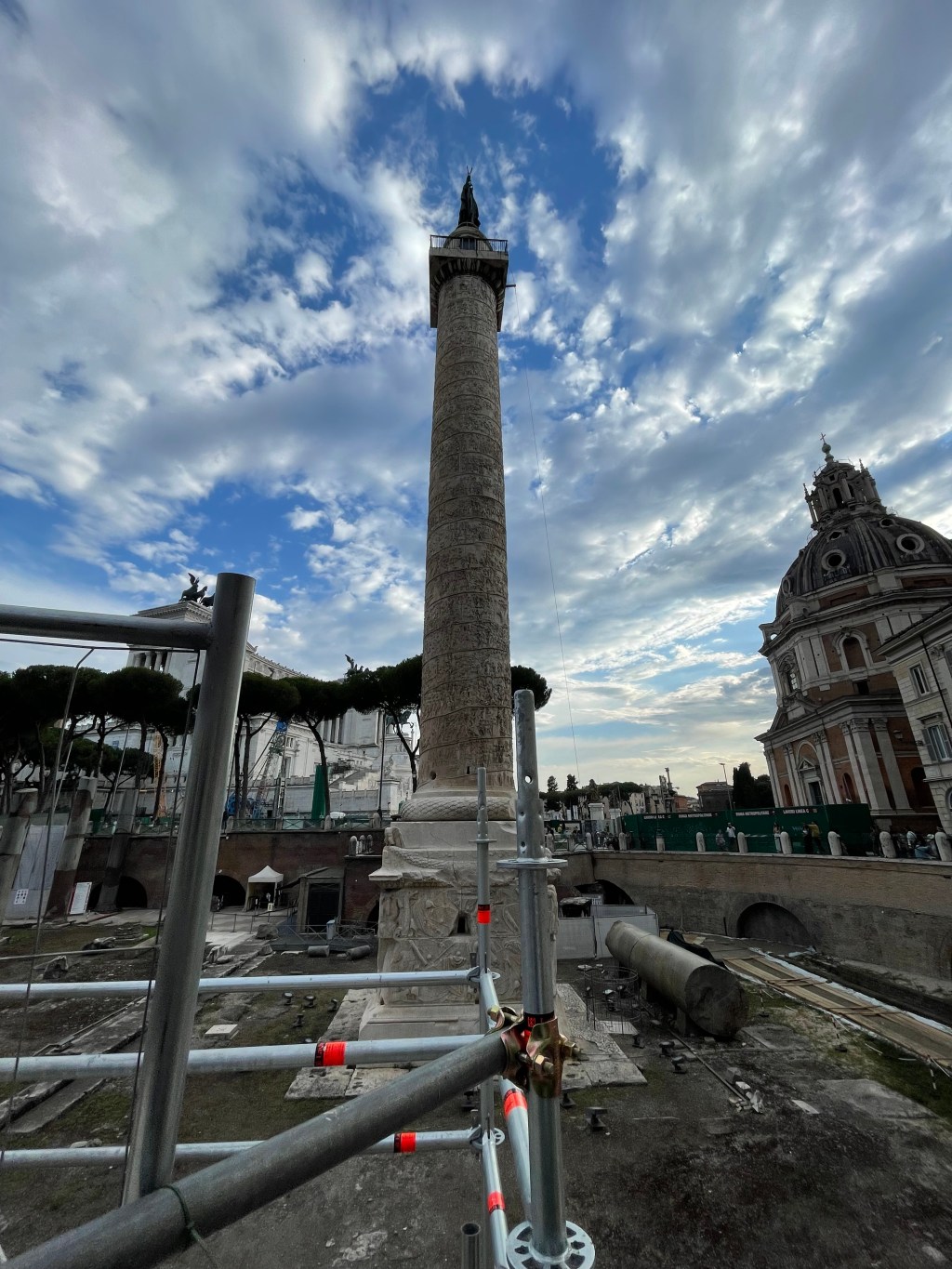
I really liked seeing Trajan’s Column and imagining what the Column of Marcus Aurelius truly looks like. This is nothing but an architectural innovation and I loved just being in its presence. I really enjoyed the talk on the will that this Column places on the viewer. From the sheer size of the Column to its helical frieze, it conveys something that is beyond comprehension.
–Moussa Toni Cisse
 Rome via Brooklyn
Leave a comment