Extracts from the E. Shuckburgh translation (Public Domain)
I will now endeavour to describe that of Rome at the period of their disastrous defeat at Cannae [216 BCE].
…
As for the Roman constitution, it had three elements each of them possessing sovereign powers: and their respective share of power in the whole state had been regulated with such a scrupulous regard to equality and equilibrium, that no one could say for certain, not even a native, whether the constitution as a whole were an aristocracy or democracy or despotism. And no wonder: for if we confine our observation to the power of the Consuls we should be inclined to regard it as despotic; if on that of the Senate, as aristocratic; and if finally one looks at the power possessed by the people it would seem a clear case of a democracy. What the exact powers of these several parts were, and still, with slight modifications, are, I will now state.
The Consuls, before leading out the legions, remain in Rome and are supreme masters of the administration. All other magistrates, except the Tribunes, are under them and take their orders. They introduce foreign ambassadors to the Senate; bring matters requiring deliberation before it; and see to the execution of its decrees. If, again, there are any matters of state which require the authorisation of the people, it is their business to see to them, to summon the popular meetings, to bring the proposals before them, and to carry out the decrees of the majority. In the preparations for war also, and in a word in the entire administration of a campaign, they have all but absolute power. It is competent to them to impose on the allies such levies as they think good, to appoint the Military Tribunes, to make up the roll for soldiers and select those that are suitable. Besides they have absolute power of inflicting punishment on all who are under their command while on active service: and they have authority to expend as much of the public money as they choose, being accompanied by a quaestor who is entirely at their orders. A survey of these powers would in fact justify our describing the constitution as despotic,—a clear case of royal government. Nor will it affect the truth of my description, if any of the institutions I have described are changed in our time, or in that of our posterity: and the same remarks apply to what follows.
The Senate has first of all the control of the treasury, and regulates the receipts and disbursements alike. For the Quaestors cannot issue any public money for the various departments of the state without a decree of the Senate, except for the service of the Consuls. The Senate controls also what is by far the largest and most important expenditure, that, namely, which is made by the censors every lustrum for the repair or construction of public buildings; this money cannot be obtained by the censors except by the grant of the Senate. Similarly all crimes committed in Italy requiring a public investigation, such as treason, conspiracy, poisoning, or wilful murder, are in the hands of the Senate. Besides, if any individual or state
among the Italian allies requires a controversy to be settled, a penalty to be assessed, help or protection to be afforded, —all this is the province of the Senate. Or again, outside Italy, if it is necessary to send an embassy to reconcile warring communities, or to remind them of their duty, or sometimes to impose requisitions upon them, or to receive their submission, or finally to proclaim war against them,—this too is the business of the Senate. In like manner the reception to be given to foreign ambassadors in Rome, and the answers to be re turned to them, are decided by the Senate. With such business the people have nothing to do. Consequently, if one were staying at Rome when the Consuls were not in town, one would imagine the constitution to be a complete aristocracy: and this has been the idea entertained by many Greeks, and by many kings as well, from the fact that nearly all the business they had with Rome was settled by the Senate.
After this one would naturally be inclined to ask what part is left for the people in the constitution, when the Senate has these various functions, especially the control of the receipts and expenditure of the exchequer; and when the Consuls, again, have absolute power over the details of military preparation, and an absolute authority in the field? There is, however, a part left the people, and it is a most important one. For the people is the sole fountain of honour and of punishment; and it is by these two things and these alone that dynasties and constitutions and, in a word, human society are held together: for where the distinction between them is not sharply drawn both in theory and practice, there no undertaking can be properly administered,—as indeed we might expect when good and bad are held in exactly the same honour. The people then are the only court to decide matters of life and death ; and even in cases where the penalty is money, if the sum to be assessed is sufficiently serious, and especially when the accused have held the higher magistracies. And in regard to this arrangement there is one point deserving especial commendation and record. Men who are on trial for their lives at Rome, while sentence is in process of being voted,—if even only one of the tribes whose votes are needed to ratify the sentence has not voted,—have the privilege at Rome of openly departing and condemning themselves to a voluntary exile. Such men are safe at Naples or Praeneste or at Tibur, and at other towns with which this arrangement has been duly ratified on oath.
Again, it is the people who bestow offices on the deserving, which are the most honourable rewards of virtue. It has also the absolute power of passing or repealing laws; and, most important of all, it is the people who deliberate on the question of peace or war. And when provisional terms are made for alliance, suspension of hostilities, or treaties, it is the people who ratify them or the reverse.
These considerations again would lead one to say that the chief power in the state was the people’s, and that the constitution was a democracy.
Such, then, is the distribution of power between the several parts of the state. I must now show how each of these several parts can, when they relation of the choose, oppose or support each other. three.
The Consul, then, when he has started on an expedition with the powers I have described, is to all he Consul appearance absolute in the administration of dependent on the business in hand; still he has need of te Senate, the support both of people and Senate, and, without them, is quite unable to bring the matter to a successful conclusion. For it is plain that he must have supplies sent to’ his legions from time to time ; but without a decree of the Senate they can be supplied neither with corn, nor clothes, nor pay, so that all the plans of a commander must be futile, if the Senate is resolved either to shrink from danger or hamper his plans. And again, whether a Consul shall bring any undertaking to a conclusion or no depends entirely upon the Senate : for it has absolute authority at the end of a year to send another Consul to supersede him, or to continue the existing one in his command. Again, even to the successes of the generals the Senate has the power to add distinction and glory, and on the other hand to obscure their merits and lower their credit. For these high achievements are brought in tangible form before the eyes of the citizens by what are called “ triumphs.”
But these triumphs the commanders cannot celebrate with proper pomp, or in some cases celebrate at all, unless the Senate concurs and grants the necessary money. As for the people, the Consuls are pre-eminently obliged to court their favour, however distant from home may be the field of their operations ; for it is the people, as I have said before, that ratifies, or refuses to ratify, terms of peace and treaties ; but most of all because when laying down their office they have to give an account? of their administration before it. Therefore in no case is it safe for the Consuls to neglect either the Senate or the goodwill of the people.
As for the Senate, which possesses the immense Power I have described, in the first place it is obliged in public affairs to take the people. multitude into account, and respect the wishes of the people; and it cannot put into execution the penalty for offences against the republic, which are punishable with death, unless the people first ratify its decrees. Similarly even in matters which directly affect the senators,— for instance, in the case of a law diminishing the Senate’s traditional authority, or depriving senators of certain dignities and offices, or even actually cutting down their property,— even in such cases the people have the sole power of passing or rejecting the law. But most important of all is the fact that, if the Tribunes interpose their veto, the Senate not only are unable to pass a decree, but cannot even hold a meeting at all, whether formal or informal. Now, the Tribunes are always bound to carry out the decree of the people, and above all things to have regard to their wishes: therefore, for all these reasons the Senate stands in awe of the multitude, and cannot neglect the feelings of the people.
In like manner the people on its part is far from being independent of the Senate, and is bound to take its wishes into account both collectively and individually. For contracts, too numerous to count, are given out by the censors in all parts of Italy for the repairs or construction of public buildings; there dependent on is also the collection of revenue from many rivers, harbours, gardens, mines, and land—everything, in a word, that comes under the control of the Roman government : and in all these the people at large are engaged ; so that there is scarcely a man, so to speak, who is not interested either as a contractor or as being employed in the works. For some purchase the contracts from the censors for themselves; and others go partners with them; while others again go security for these contractors, or actually pledge their property to the treasury for them. Now over all these transactions the Senate has absolute control. It can grant an extension of time; and in case of unforeseen accident can relieve the contractors from a portion of their obligation, or release them from it altogether, if they are absolutely unable to fulfil it And there are many details in which the Senate can inflict great hardships, or, on the other hand, grant great indulgences to the contractors: for in every case the appeal is to it. But the most important point of all is that the judges are taken from its members in the majority of trials, whether public or private, in which the charges are heavy. Consequently, all citizens are much at its mercy; and being alarmed at the uncertainty as to when they may need its aid, are cautious about resisting or actively opposing its will, And for a similar reason men do not rashly resist the wishes of the Consuls, because one and all may become subject to their absolute authority on a campaign.
The result of this power of the several estates for mutual help or harm is a union sufficiently firm for all emergencies, and a constitution than which it is impossible to find a better. For whenever any danger from without compels them to unite and work together, the strength which is developed by the State is so extraordinary, that everything required is unfailingly carried out by the eager rivalry shown by all classes to devote their whole minds to the need of the hour, and to secure that any determination come to should not fail for want of promptitude; while each individual works, privately and publicly alike, for the accomplishment of the business in hand. Accordingly, the peculiar constitution of the State makes it irresistible, and certain of obtaining whatever it determines to attempt. Nay, even when these external alarms are past, and the people are enjoying their good fortune and the fruits of their victories, and, as usually happens, growing corrupted by flattery and idleness, show a tendency to violence and arrogance,—it is in these circumstances, more than ever, that the constitution is seen to possess within itself the power of correcting abuses, For when any one of the three classes becomes puffed up, and manifests an inclination to be contentious and unduly encroaching, the mutual interdependency of all the three, and the possibility of the pretensions of any one being checked and thwarted by the others, must plainly check this tendency: and so the proper equilibrium is maintained by the impulsiveness of the one part being checked by its fear of the other. . .
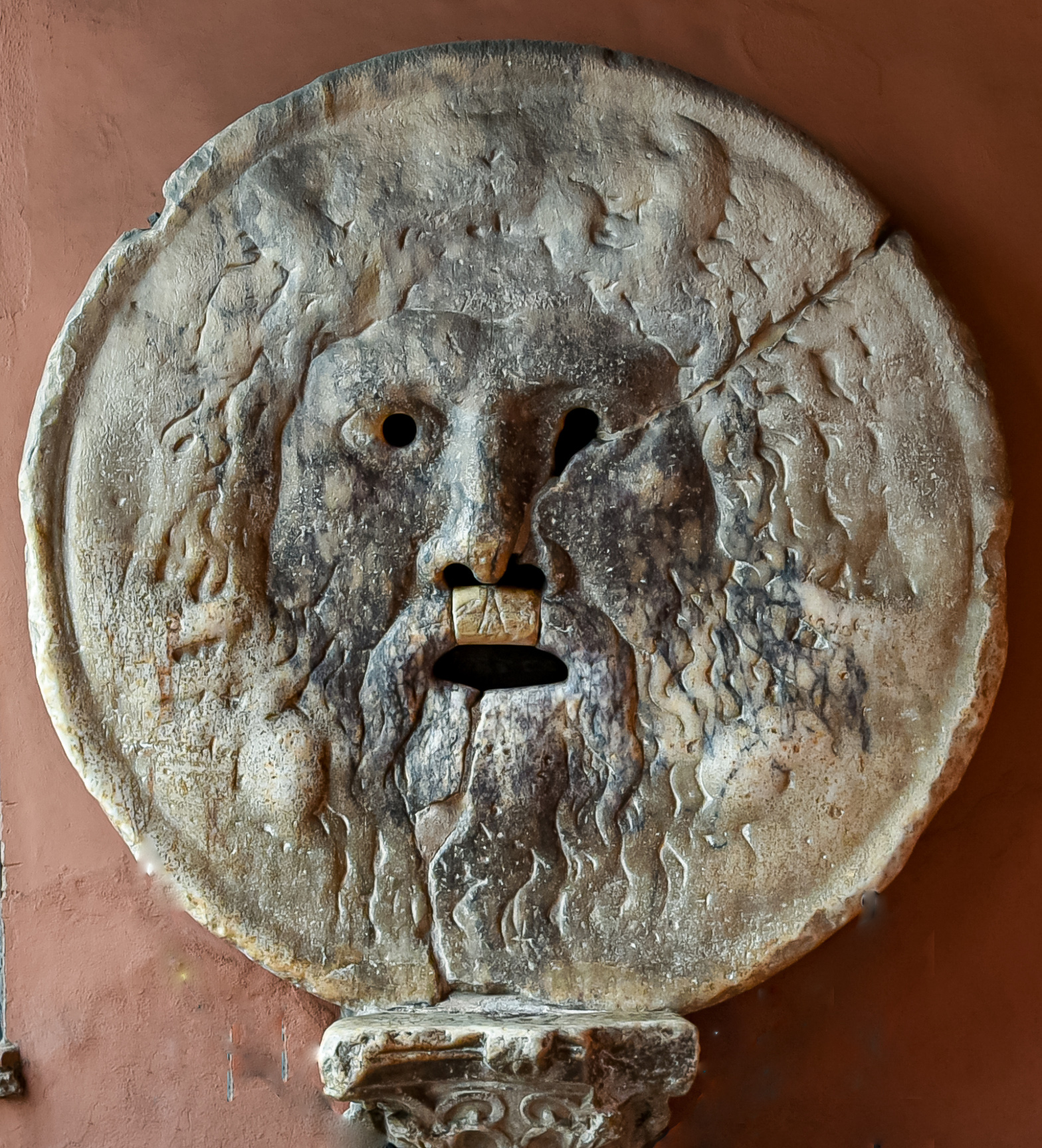
… Whenever one of their illustrious men dies, in the course of his funeral, the body with all its paraphernalia is carried into the forum to the Rostra, as a raised platform there is called, and sometimes is propped upright upon it so as to be conspicuous, or, more rarely, is laid upon it. Then with all the people standing round, his son, if he has left one of full age and he is there, or, failing him, one of his relations, mounts the Rostra and delivers a speech concerning the virtues of the deceased, and the successful exploits performed by him in his lifetime. By these means the people are reminded of what has been done, and made to see it with their own eyes,—not only such as were engaged in the actual transactions but those also who were not ;— and their sympathies are so deeply moved, that the loss appears not to be confined to the actual mourners, but to be a public one affecting the whole people. After the burial and all the usual ceremonies have been performed, they place the likeness of the deceased in the most conspicuous spot in his house, surmounted by a wooden canopy or shrine. This likeness consists of a mask made to represent the deceased with extraordinary fidelity both in shape and colour. These likenesses they display at public sacrifices adorned with much care. And when any illustrious member of the family dies, they carry these masks to the funeral, putting them on men whom they thought as like the originals as possible in height and other personal peculiarities. And these substitutes assume clothes according to the rank of the person represented : if he was a consul or praetor, a toga with purple stripes; if a censor, whole purple; if he had also celebrated a triumph or performed any exploit of that kind, a toga embroidered with gold. These representatives also ride themselves in chariots, while the fasces and axes, and all the other customary insignia of the particular offices, lead the way, according to the dignity of the rank in the state enjoyed by the deceased in his life time ; and on arriving at the Rostra they all take their seats on ivory chairs in their order.
There could not easily-be a more inspiring spectacle than this for a young man of noble ambitions and virtuous aspirations. For can we conceive any one to be unmoved at the sight of all the likenesses collected together of the men who have earned glory, all as it were living and breathing? Or what could be a more glorious spectacle ?
54, Besides the speaker over the body about to be buried, after having finished the panegyric of this particular person, starts upon the others whose representatives are present, beginning with the most ancient, and recounts the successes and achievements of each. By this means the glorious memory of brave men is continually renewed; the fame of those who have performed any noble deed is never allowed to die; and the renown of those who have done good service to their country becomes a matter of common knowledge to the multitude, and part of the heritage of posterity. But the chief benefit of the ceremony is that it inspires young men to shrink from no exertion for the general welfare, in the hope of obtaining the glory which awaits the brave. And what I say is confirmed by this fact. Many Romans have volunteered to decide a whole battle by single combat; not a few have deliberately accepted certain death, some in time of war to secure the safety of the rest, some in time of peace to preserve the safety of the commonwealth. There have also been instances of men in office putting their own sons to death, in defiance of every custom and law, because they rated the interests of their country higher than those of natural ties even with their nearest and dearest. There are many stories of this kind, related of many men in Roman history; but one will be enough for our present purpose ; and I will give the name as an instance to prove the truth of my words.
The story goes that Horatius Cocles, while fighting with two enemies at the head of the bridge over the Tiber, which is the entrance to the city on the north, seeing a large body of men advancing to support his enemies, and fearing that they would force their way into the city, turned round, and shouted to those behind him to hasten back to the other side and break down the bridge. They obeyed him: and whilst they were breaking the bridge, he remained at his post receiving numerous wounds, and checked the progress of the enemy: his opponents being panic stricken, not so much by his strength as by the audacity with which he held his ground. When the bridge had been broken down, the attack of the enemy was stopped ; and Cocles then threw himself into the river with his armour on and deliberately sacrificed his life, because he valued the safety of his country and his own future reputation more highly than his present life, and the years of existence that remained to him. Such is the enthusiasm and emulation for noble deeds that are engendered among the Romans by their customs.
But the most important difference for the better which the Roman commonwealth appears to me to display is in their religious beliefs. For I conceive that what in other nations is looked upon as a reproach, I mean a scrupulous fear of the gods, is the very thing which keeps the Roman commonwealth together. To such an extraordinary height is this carried among them, both in private and public business, that nothing could exceed it. Many people might think this unaccountable ; but in my opinion their object is to use it as a check upon the common people. If it were possible to form a state wholly of philosophers, such a custom would perhaps be unnecessary. But seeing that every multitude is fickle, and full of lawless desires, unreasoning anger, and violent passion, the only resource is to keep them in check by mysterious terrors and scenic effects of this sort. Wherefore, to my mind, the ancients were not acting without purpose or at random, when they brought in among the vulgar those opinions about the gods, and the belief in the punishments in Hades: much rather do I think that men nowadays are acting rashly and foolishly in rejecting them, This is the reason why, apart from anything else, Greek statesmen, if entrusted with a single talent, though protected by ten checking-clerks, as many seals, and twice as many witnesses, yet cannot be induced to keep faith. whereas among the Romans, in their magistracies and embassies, men have the handling of a great amount of money, and yet from pure respect to their oath keep their faith intact. And, again, in other nations it is a rare thing to find a man who keeps his hands out of the public purse, and is entirely pure in such matters: but among the Romans it is a rare thing to detect a man in the act of committing such a crime …
… those who are capable of taking in the whole drift of my argument can henceforth draw their own conclusions as to the future of the Roman polity. For it is quite clear, in my opinion. When a commonwealth, after warding off many great dangers, has arrived at a high pitch of prosperity and undisputed power, it is evident that, by the lengthened continuance of great wealth within it, the manner of life of its citizens will become more extravagant ; and that the rivalry for office, and in other spheres of activity, will become fiercer than it ought to be. And as this state of things goes on more and more, the desire of office and the shame of losing reputation, as well as the ostentation and extravagance of living, will prove the beginning of a deterioration. And of this change the people will be credited with being the authors, when they become convinced that they are being cheated by some from avarice, and are puffed up with flattery by others from love of office. For when that comes about, in their passionate resentment and acting under the dictates of anger, they will refuse to obey any longer, or to be content with having equal powers with their leaders, but will demand to have all or far the greatest themselves. And when that comes to pass the constitution will receive a new name, which sounds better than any other in the world, liberty or democracy ; but, in fact, it will become that worst of all governments, mob-rule.

