2–3 minutes

1: NYC, Rome, and Their Annoying Birds

420 words, 2 minutes read time

“. . .the primary goal of presenting Rome in this book is not to determine the historical veracity of each ancient source. . .but rather to bring to the fore what the natural and architectural monuments meant to those who lived in the city or who read about it and felt its influence in distant regions of the empire.” -Peter J. Aicher, Rome Alive, xvi

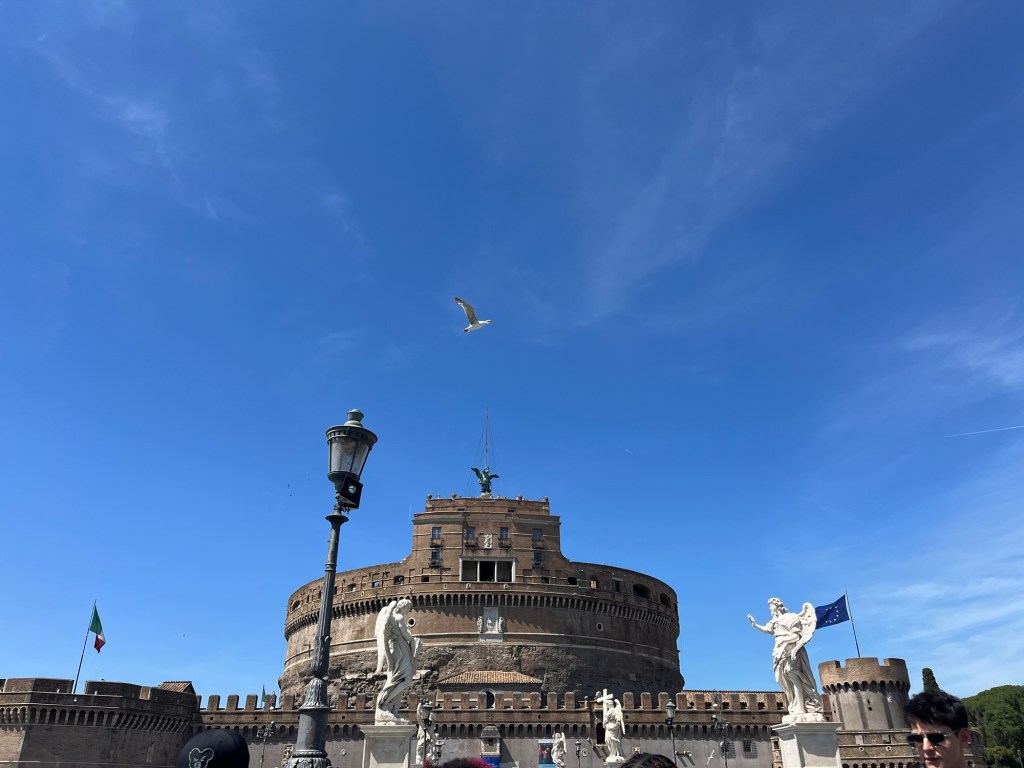
Similarities between Rome and New York City first began hitting me when we started walking during our first class. The ginormous seagulls flocking around the bridge by Castel S’Angelo made me think that they might be the Italian equivalent of our pigeons, but I’ll need to see how true this hypothesis is throughout our course. The amount of walking you need to do around Rome is similar to NYC, but additions like cobblestone roads and uphill treks make walking around central Rome difficult after a while. However, everything you can see and experience on these walks more than makes up for it.

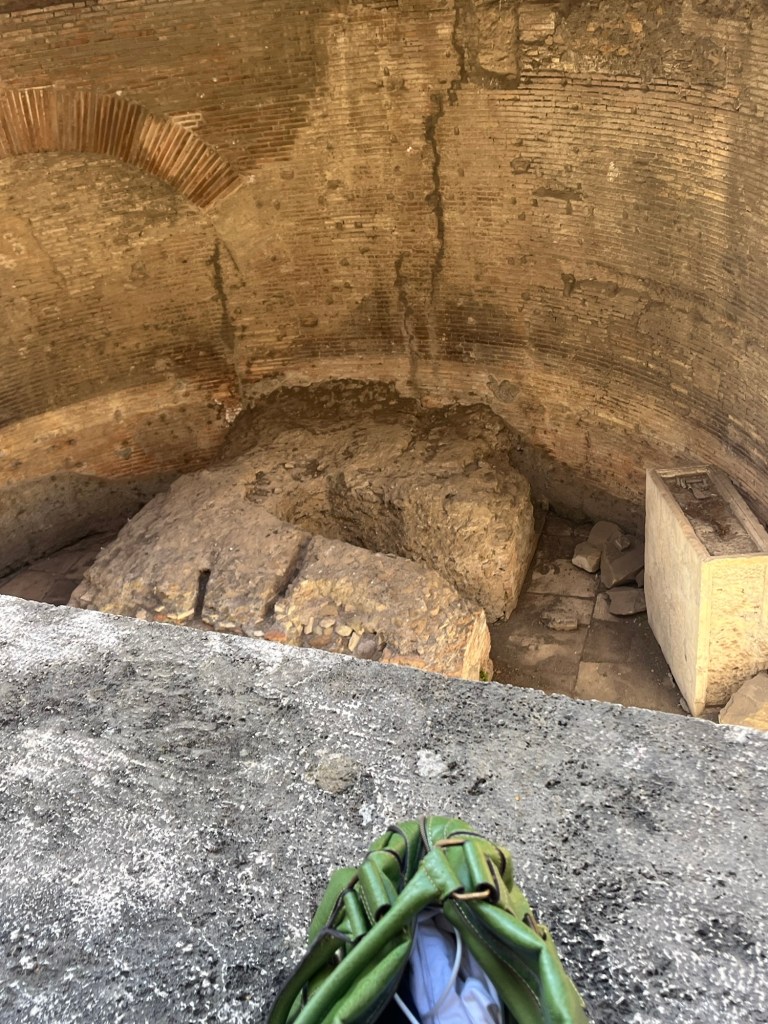
The highlight for me during Day 1 was seeing the layers and layers Rome built itself off of over millennia by observing the Pantheon’s alcove for its statue of Neptune. Seeing how much lower the ground was during the height of the Roman Empire was a shock, but I soon remembered how my home city constantly builds on itself for the sake of culture. Popular New York City locations like Ellis Island, the World Financial Center, and the newer Little Island being built on landfill and artificial ground reminds me of the vast architectural history Rome holds from manmade creations. I hope that once NYC reaches the lifespan of Rome, humankind can look back on how people across the world have both preserved and expanded upon the places they love over time.

The most familiar part of the day for me was the Rome metro system. Though its subway cars are quite different from those in NYC, the process of getting through a train station has become habitual. I may or may not have forgotten to take my metro card out of its holder when tapping it at the gate, but a physical card reminded me of how I used to fumble with my student metro card on the bus home in 9th grade.

Though I’ve never been to Italy before, I’m surprised at how familiar everything feels to me. Of course, I’m sure I’ll run into culture shock during my time here, but a very distant part of me feels like they’re at home here.

4 responses to “1: NYC, Rome, and Their Annoying Birds”

  1. mazlinwhite43 Avatar
    mazlinwhite43

    I too noticed the birds!! Elena pointed out that the pigeons here in Italy are thinner than their American cousins, something that tickled me enviously. God how I’d like to be a pigeon perched on the bricks of the Pantheon, or a Bernini statue. That’s the life – to see and not much else. Charmed to read about the connection to the student metro card.

    Liked by 1 person

  2. moussatonicisse Avatar
    moussatonicisse

    Great Post! I too hope that NYC survives the test of time and is able to explain its relevance to future generations just like Rome! I do however think that we are seeing great exploitation and gentrification in NYC, which may wipe out its history. Just look at St. Marks street!!! Now I have an interesting question. Do we need a Mussolini (without the facism) for NYC? The dude was controversial, but has been praised for preserving Rome and its history. We can see the converse in someone like Robert Moses. He both destroyed and alienated communities, yet connected the 5 boroughs like never before. 

    I also noticed the pigeons! Jibriel pointed them out and ever since that, I have been noticing that they are everywhere! This is the one thing that somewhat reminded me of NYC. Although, NYC pigeons are different. 

    Great read, keep it up!

    –Moussa Toni Cisse

    Liked by 1 person

  3. moussatonicisse Avatar
    moussatonicisse

    Great Post! I too hope that NYC survives the test of time and is able to explain its relevance to future generations just like Rome! I do however think that we are seeing great exploitation and gentrification in NYC, which may wipe out its history. Just look at St. Marks street!!! Now I have an interesting question. Do we need a Mussolini (without the facism) for NYC? The dude was controversial, but has been praised for preserving Rome and its history. We can see the converse in someone like Robert Moses. He both destroyed and alienated communities, yet connected the 5 boroughs like never before. 

    I also noticed the pigeons! Jibriel pointed them out and ever since that, I have been noticing that they are everywhere! This is the one thing that somewhat reminded me of NYC. Although, NYC pigeons are different. 

    Great read, keep it up!

    –Moussa Toni Cisse

    Like

  4. moussatonicisse Avatar
    moussatonicisse

    Great Post! I too hope that NYC survives the test of time and is able to explain its relevance to future generations just like Rome! I do however think that we are seeing great exploitation and gentrification in NYC, which may wipe out its history. Just look at St. Marks street!!! Now I have an interesting question. Do we need a Mussolini (without the facism) for NYC? The dude was controversial, but has been praised for preserving Rome and its history. We can see the converse in someone like Robert Moses. He both destroyed and alienated communities, yet connected the 5 boroughs like never before. 

    I also noticed the pigeons! Jibriel pointed them out and ever since that, I have been noticing that they are everywhere! This is the one thing that somewhat reminded me of NYC. Although, NYC pigeons are different. 

    Great read, keep it up!

    –Moussa Toni Cisse

    Like

Leave a reply to mazlinwhite43 Cancel reply