

501 words, 3 minutes read time
Day 2 (technically 3 due to our day swap) of life in Rome has been a more present experience for me compared to Day 1 now that I’ve gotten more than an hour or two of sleep in my system. Riding public transportation has generally gone well besides me getting on the wrong bus this morning and me taking the wrong direction of the bus going home afterwards, but trial and error is an inescapable part of life.
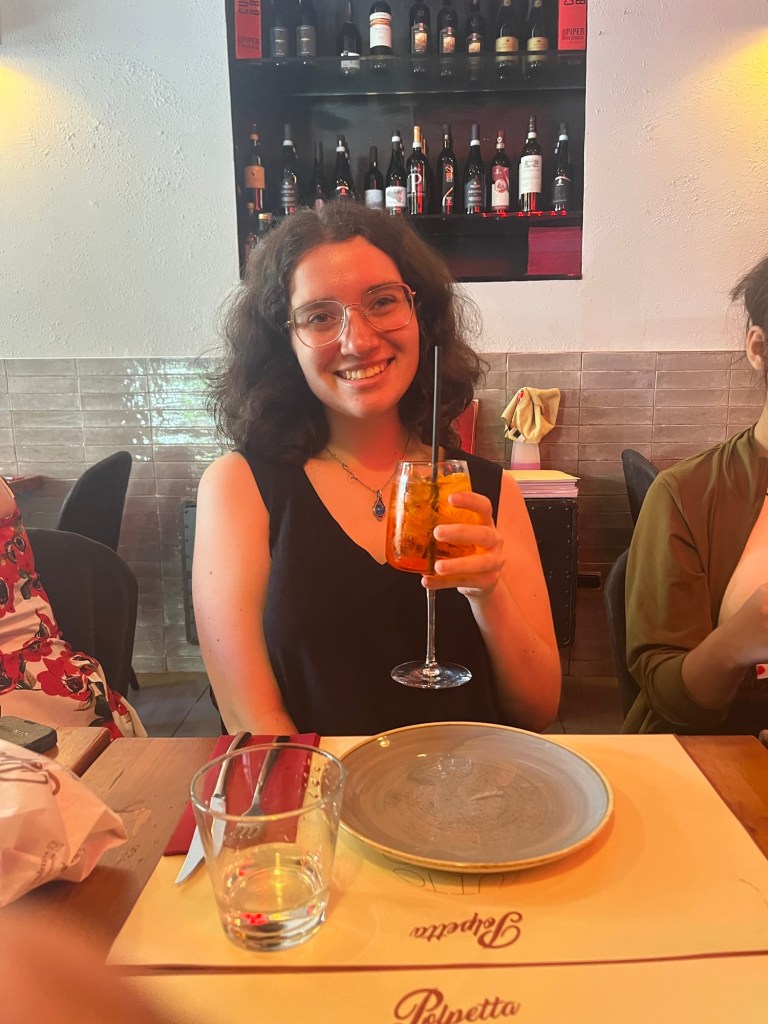
Lunch was great! Professor Yarrow’s discussion about wine and asking for the vino della casa reminded me of what Culture Smart! stated about Italy’s drinking culture (Tomalin 120), so I’m glad to see what I’ve read in this book put into action little by little. I attempted to talk to the server and other service workers I’ve met around the area in Italian but they sometimes talk to me back in English. For instance, I stopped at a Tigotá across the street from the food market per my Italian friend’s recommendation to pick up a shower cap (I left with practically everything on my shopping list). When at checkout, I asked the cashier to repeat the amount I owe her (“Quanto ti devo?”), but I had to unintentionally put a “Sorry” in front of it and she replied with “Twenty-seven Euros.” Unfortunately, mi dispiace is three more syllables than sorry, so I don’t know how quickly I’ll get used to the change.
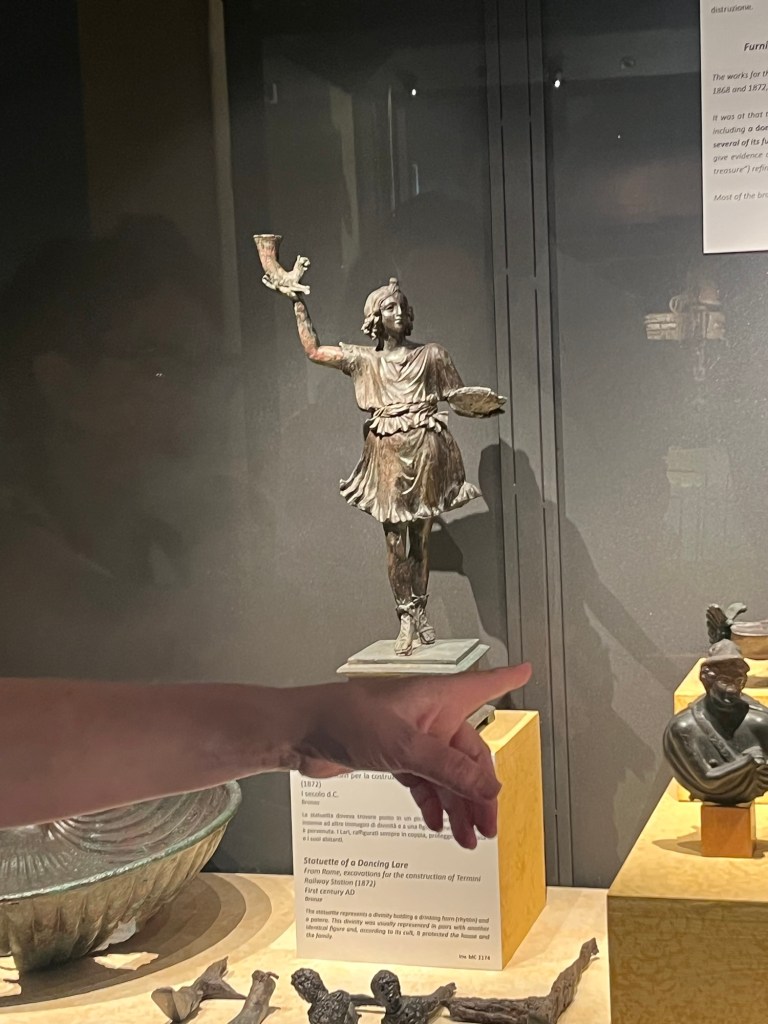
When visiting Centrale Monetemartini for our class today, I immediately loved the unique setting and curation of the museum. Unique techniques the curators used, such as placing a mirror behind a statue’s head so the viewer can notice the details on the statue’s hair, made visitors pay attention to the care that Ancient Roman artists put into their work. I also loved seeing what Professor Yarrow called “the first Popemobile,” which was something I was not expecting to see at this museum at all.
I didn’t find Centrale Monetemartini jarring at all, but to be a great commentary on fascism and its connection to Ancient Roman culture. I remember reading an article for a previous art history course about how Ancient Greco-Roman art’s white exterior and marble material was (and still is) co-opted by fascist groups, completely ignoring the fact that these sculptures were painted with colorful pigments before its deterioration. With Mussolini’s love for a romanticized Roman Empire that was soon credited for the inspiration behind his fascist power structures, I interpreted this curation and decision to place these pieces in a fascist Italian-era boiler warehouse as commentary on how Western conservative groups push ancient Greco-Roman culture as the peak of Western (read: white) culture compared to the 20th/21st century.
P.S.: Happy Birthday Mazzy! Tanti auguri!


 Rome via Brooklyn
Leave a comment