

All Sculptures SAY: YOU ARE LESS I AM THE BEST! (Nice rhyme)
DOUBLE POST
Words: 618
Read Time: 3 minutes
What seemed especially old and what seemed surprisingly modern? Was there one myth or god or symbol you kept seeing? Why do you think it was so ‘popular’? As you moved through the city on your own did any of the same style of architecture or images reoccur? Where and when?
What seemed especially old and what seemed surprisingly modern?
On day two we visited the converted Museum. I really liked the way the left some of the parts of the once factory in. This showed that they were not willing to erase the history just for people to feel more comfortable. Comfortable as a word and definition probably rubs off against—in a bad way—the Greeks, the Trojans (especially), and the Romans. So I would argue they–as a group–would approve of combining periods through time.
I actually reject this. The brutalist aesthetic, for me at least, deserves its own exhibition. The city is already overstimulating between the modern and past. And now adding a commingled presentation does not make it any better…but I digress. The museum was amazing and I was able to see so many cool objects that have survived the test of time. Isn’t that wonderful?!
Was there one myth or god or symbol you kept seeing?
I kept seeing the dolphins as a recurring theme across multiple objects. They are quite scary, so they have been permanently embedded in my mind. The dolphins act as protectors and guardians for sailors and voyagers. They have been linked to the God Neptune!
I also kept seeing the robe and the way men and women held them differently. Women would hold them higher, around their necks and men would usually be in positions that show off their masculinity. Men would be positioned in ways that show their ability to control themselves, dominate others, and show off their strength. Women would usually be positioned in a way that shows innocence and elegance.
Another “symbol” that I saw was the Etrucian fasces which were passed on to ancient Rome. The bundle of sticks with a protruding axe signified power, control, and authority of the Roman civilians. The symbol could be seen throughout different artworks. They were both depicted in a conflict setting and a “normal”, tranquil, setting.
As you moved through the city on your own did any of the same style of architecture or images reoccur?
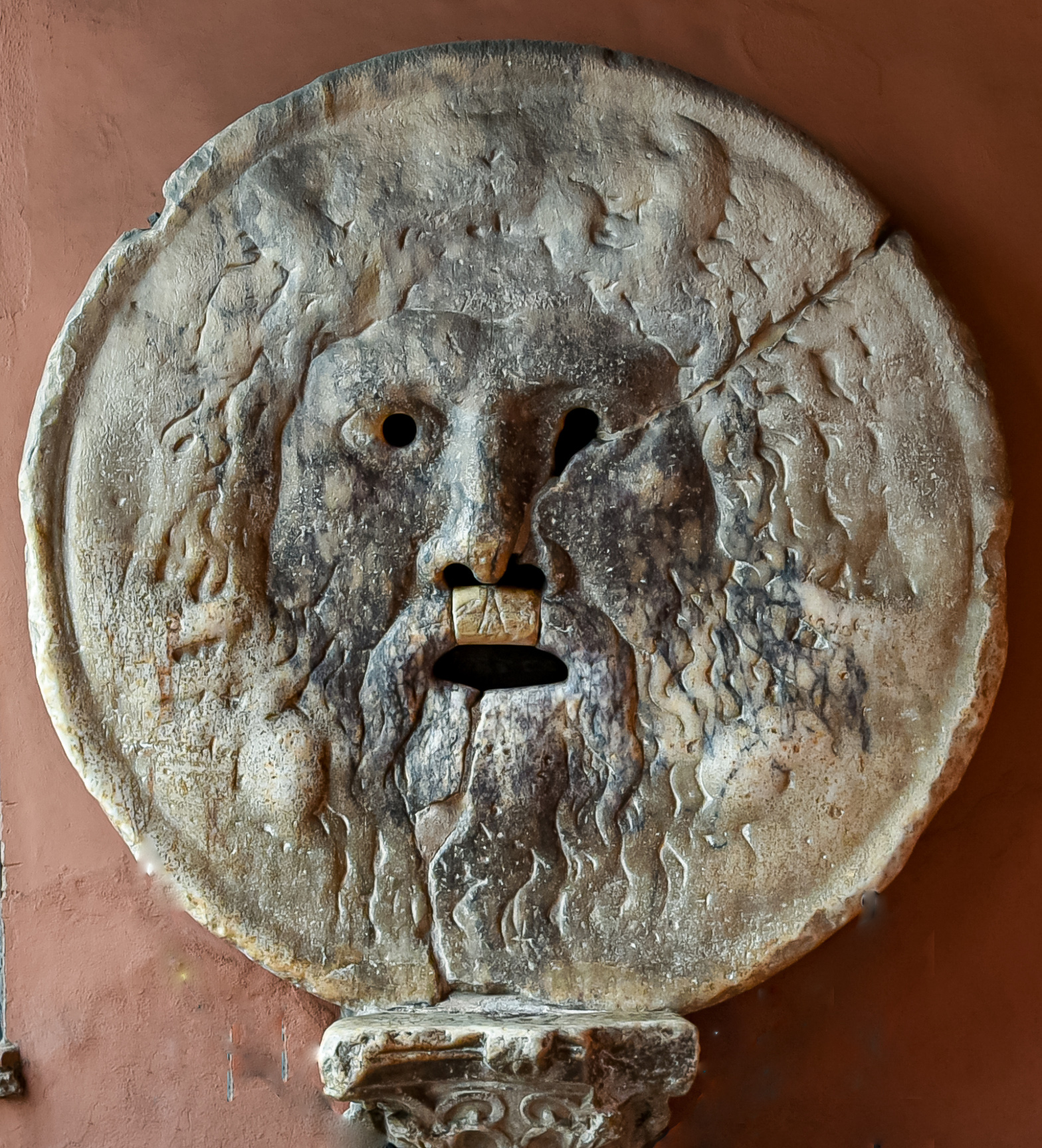
During our tour of the museum, Prof. Yarrow drew our attention to a gigantic head that was up to most of our waistline. We collectively looked down on it, yet the full version of this statue is huge and looks down on everyone and everything. I think that this is a very interesting thing and we could connect it to brutalist architecture. Even though the architecture was much more elegant, genius, and beautiful, its functions are very similar to the brutalist aesthetic. Both seem to put forth dominance, power, and authority. This does the complete opposite for the onlooker. It instills fear, conformity, and submissiveness. This is why I am both stupefied–in a good way–when looking at the sculptures and architecture in antiquity, yet also repulsed in a way that makes someone feel rejected. Very interesting!!! I do have to say though that the architecture in antiquity was amazing! And far supersedes anything that I have seen. The Romans were something else!
I wonder how alienated the people of Rome felt when walking around and being subjected to the grandiosity of these artworks. More abstractly, the statues impose their “will” on us, making us subservient.
–Moussa Toni Cissé

 Rome via Brooklyn
Leave a reply to rachel19281 Cancel reply