
DOUBLE POST 628 words, 3 minutes
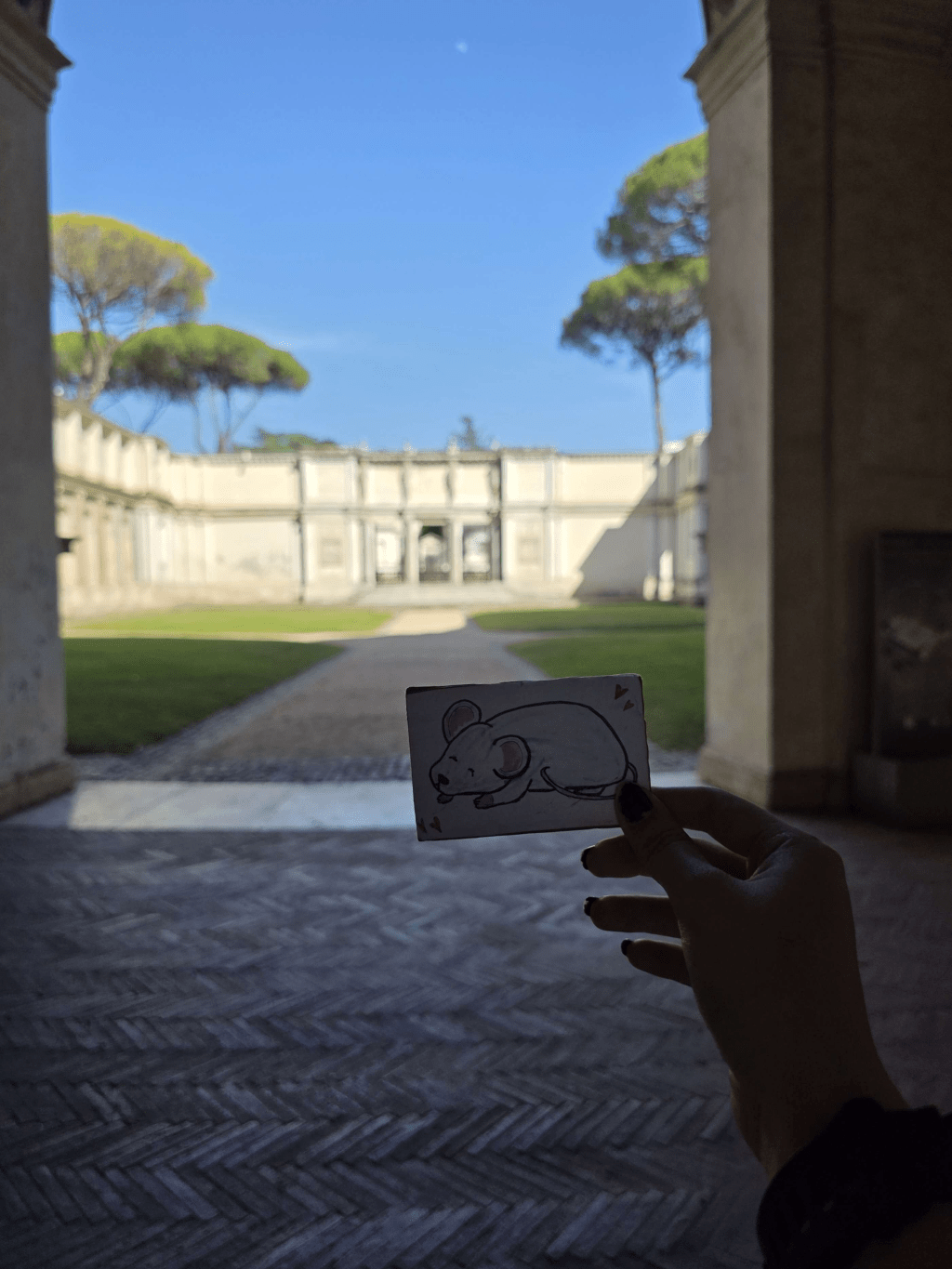
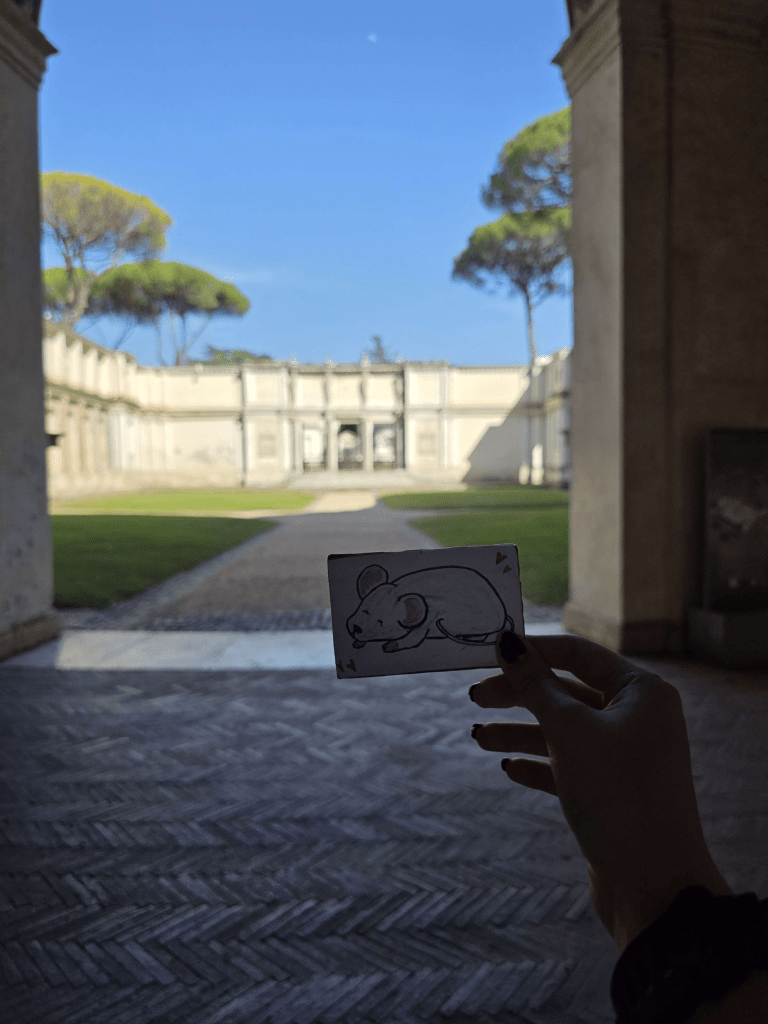
Today, we visited two different sites- the Forum Boarium and later in the day, the Villa Giulia. Although it’s hard to quantify how much walking was done today compared to our previous days, today was definitely strenuous in the length of our activities- and I think it was a little evident, although I don’t think it’s necessarily a bad thing. My fatigue, and the fatigue of others judging off by blog posts, stemmed from my decision to head out during our extended break. I tagged along with Isabel to go to an art store not too far from our hostels, and it was a nice opportunity to hang out with someone who wasn’t my housemate and to explore the city more. I wanted to check out Museo delle Anime del Purgatorio, a hybrid museum and church that focused on artifacts of purgatory. However, I failed to check the visiting hours of the establishment and arrived at it closed. I had to make the walk of shame back to my hostel, which was a little tough after our first excursion today. I also made the mistake of not eating lunch (beyond a limone gelato) and only ate once I was at the museum. The journey to the museum in of itself was a whole other ordeal as the bus I needed failed to arrive for 20+ minutes, resulting in me being hot, hungry, and late. But despite all those obstacles, it was a genuine treat to be able to explore the museum!
I have always associated the Archaic art style with the Etruscans, likely due to the iconic couple sarcophagus and their twin archaic smiles. Because of that, Etruscan art was always something that appeared ‘old’ to me. When we explored the museum, I was pleasantly surprised by just how diverse their range in style was. Of course, there were archaic pieces present, but what stood out to me the most was how much Greek art influenced the Etruscans, from their terracotta vases to their hellenistic sculptures. Seeing these hellenistic figures struck me as ‘modern’ for the archaic-associated culture of the Etruscans.
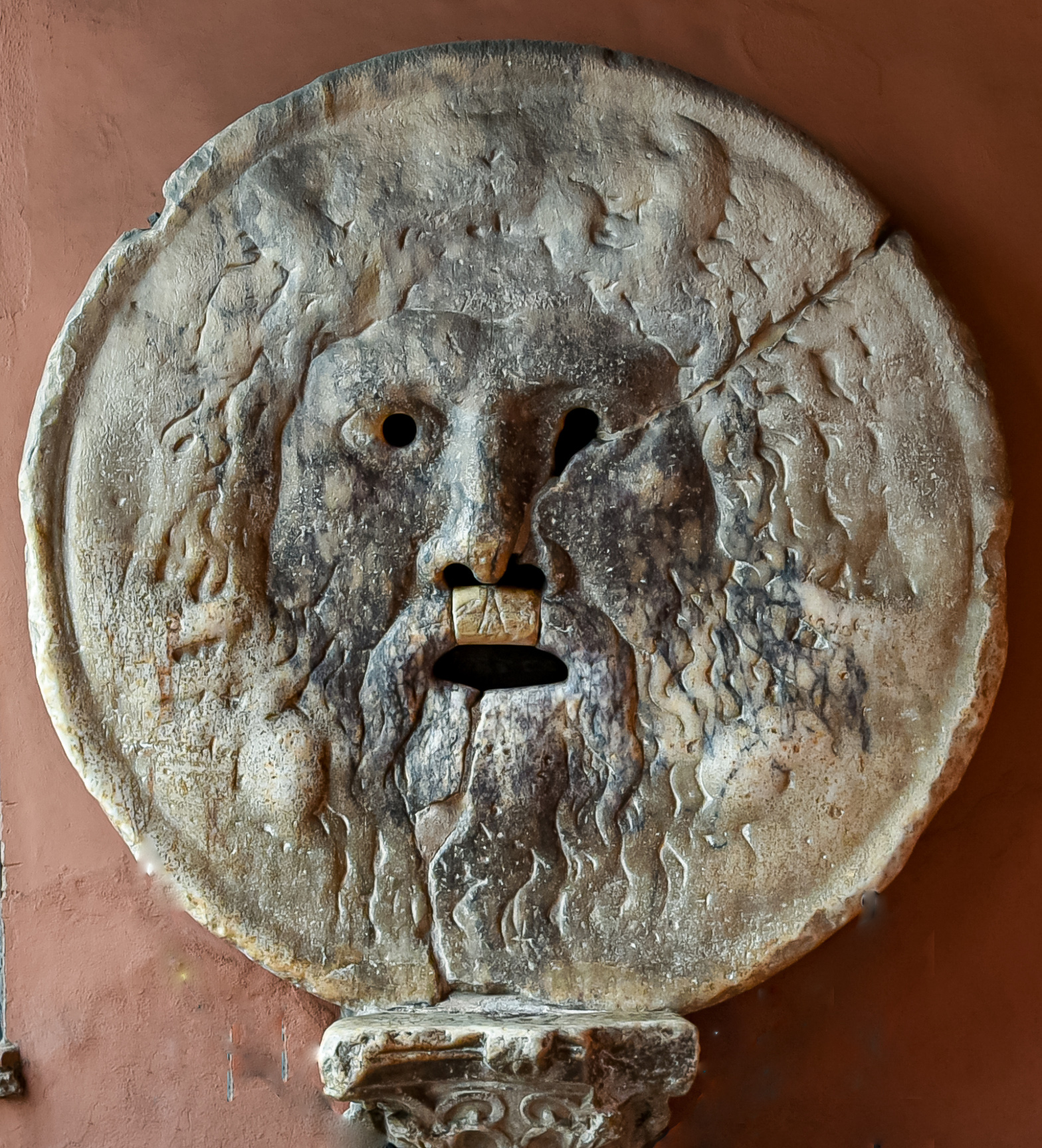
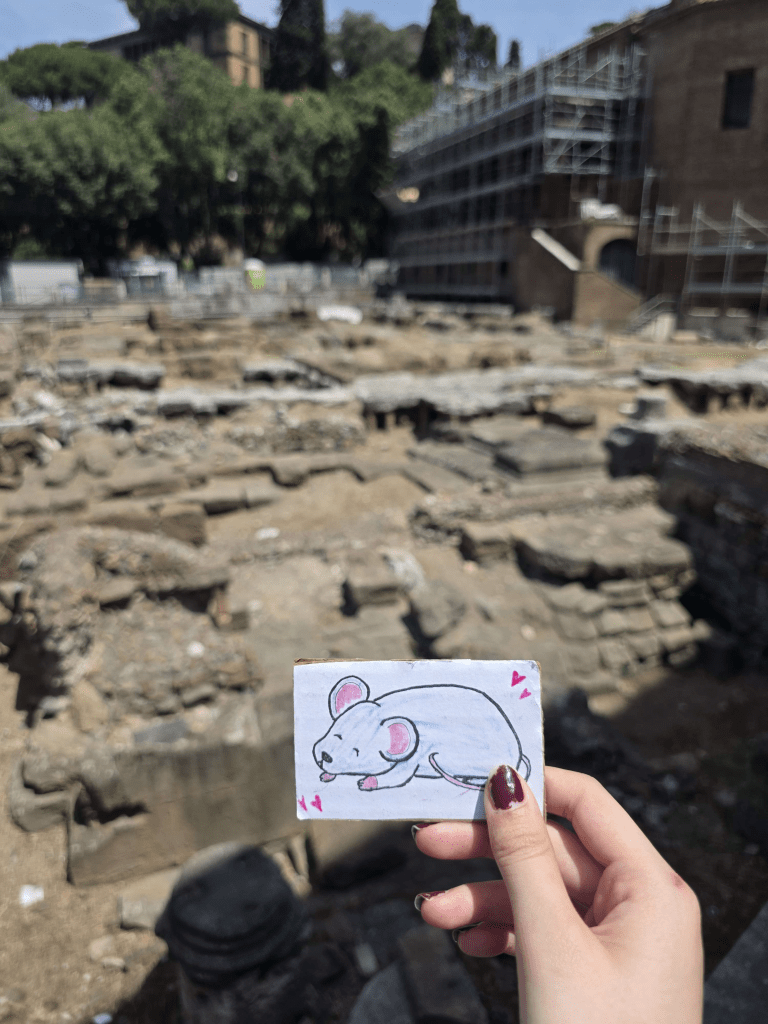
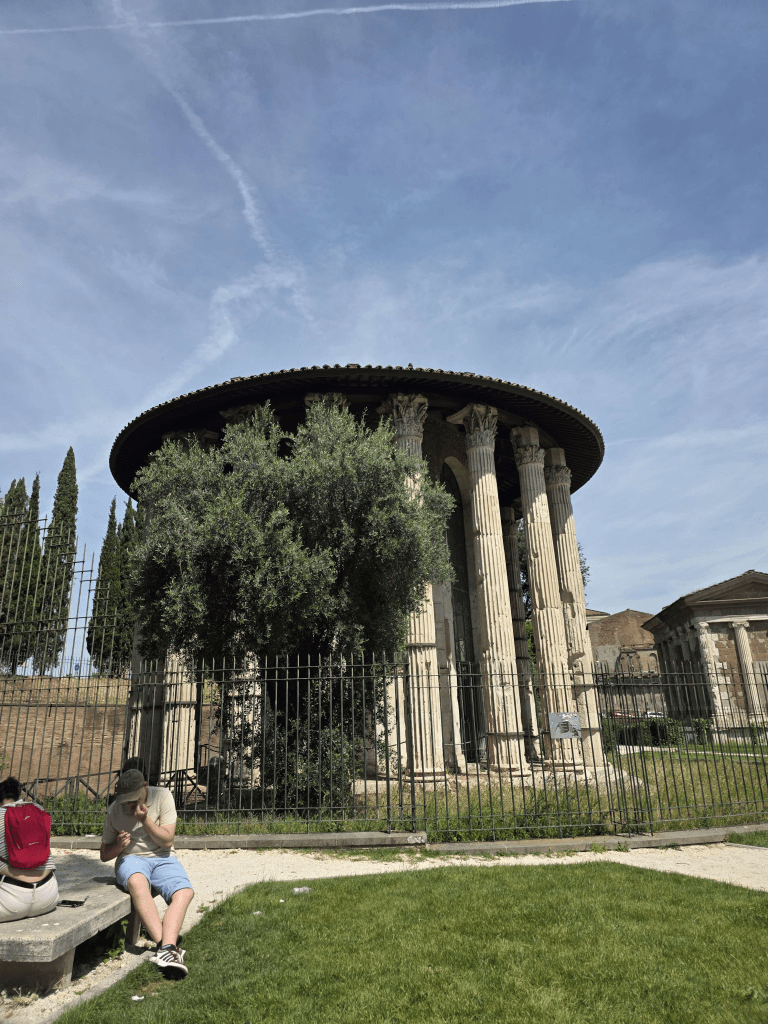
Before we visited the museum, we explored the area of Forum Boarium with Professor’s Yarrow associate, Dan Diffendale, who was incredibly insightful and I thoroughly enjoyed what he had to say about the various sites. One thing in particular that is especially relevant was the recurring theme of layers- the emphasis in archaeology to keep an eye out for the difference in elevation between different building structures and foundations. Like sedimentary rocks, the oldest layer resides on the bottom and the youngest on the top (and frequently most visible). The portunus struck me as one of the oldest things I’ve seen. Compared to the ‘street-level’ beside the river Tiber, the temple sat on a much lower level. The raised nature of its podium made it feel even deeper than it was. What makes this portunus feel so old was the fact that there were still parts of it buried underground, even older than what we see on the surface. Time becomes something tangible, obscuring a relic of the past so old that it is rendered unseen and untouched by the modern world. According to literary records of the area, Hercules was the most popular figure in the area- leading the round temple to be attributed to him. Hercules in general is a very popular figure in mythology (and he is also my favorite mythological hero). He is a fascinating character- part man, part god, with a trail of impossible feats that emphasize many facets of his character. It is no wonder that authors entangle him within his tales (either for tragedies or comedies) and that he is worshiped for his strength, wit, and power by common people.


 Rome via Brooklyn
Leave a reply to jeyanov02 Cancel reply