
622 words, 3 minutes read time. (double post)
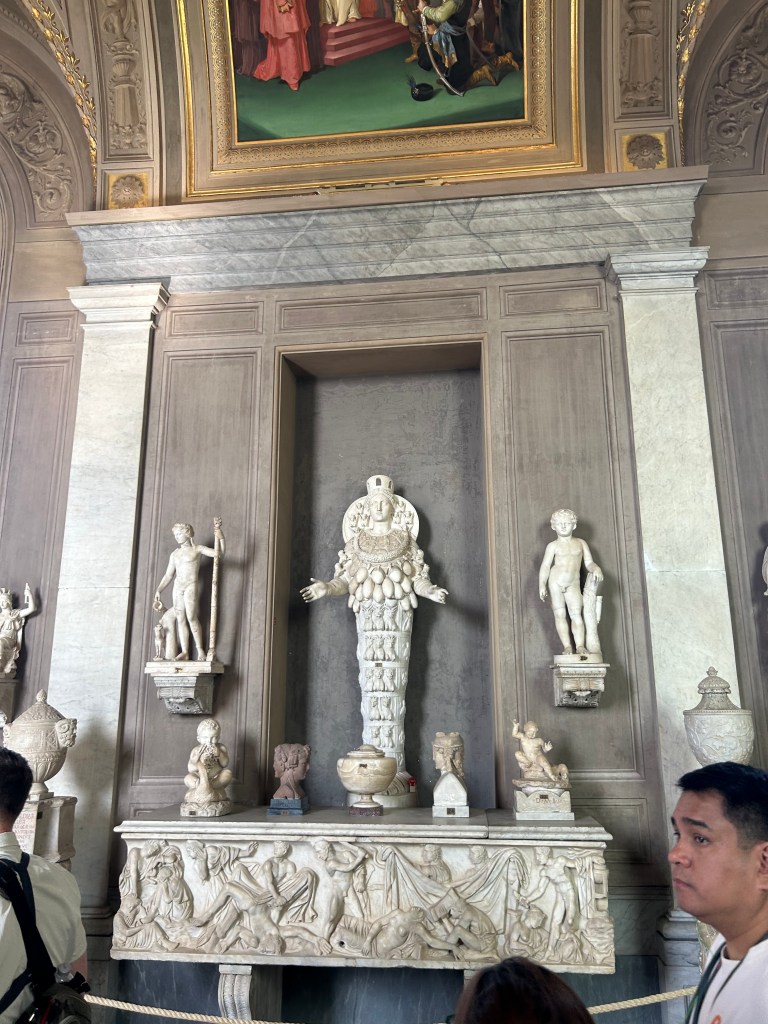
Today I did a Vatican museum tour and my tour guide was pretty knowledgable. This class and its material helped me recognize and connect a lot of what I learned to what was inside the museum. For example, I recognized a bronze statue of Hercules with his lion drape and his club. Also, I saw more Roman fetishization of Egyptian monuments like the sphinx throughout the chapels and rooms. I also recognized the goddess Artemis from the time we went to the Capitoline museum with her uncanny look of multiple breasts draped on her body. Also, the guide told us about how a common theme in Roman art is of children strangling animals. I attached a photo with a boy in the middle strangling a duck, but there were also other statues of children fighting with snakes and other small animals. The reason for this common theme could be because of two reasons. One is that this popular theme explored man’s position in nature and how a child is still supreme in the animal kingdom. Another reason could be because of an exploration of how innocence triumphs over evil.


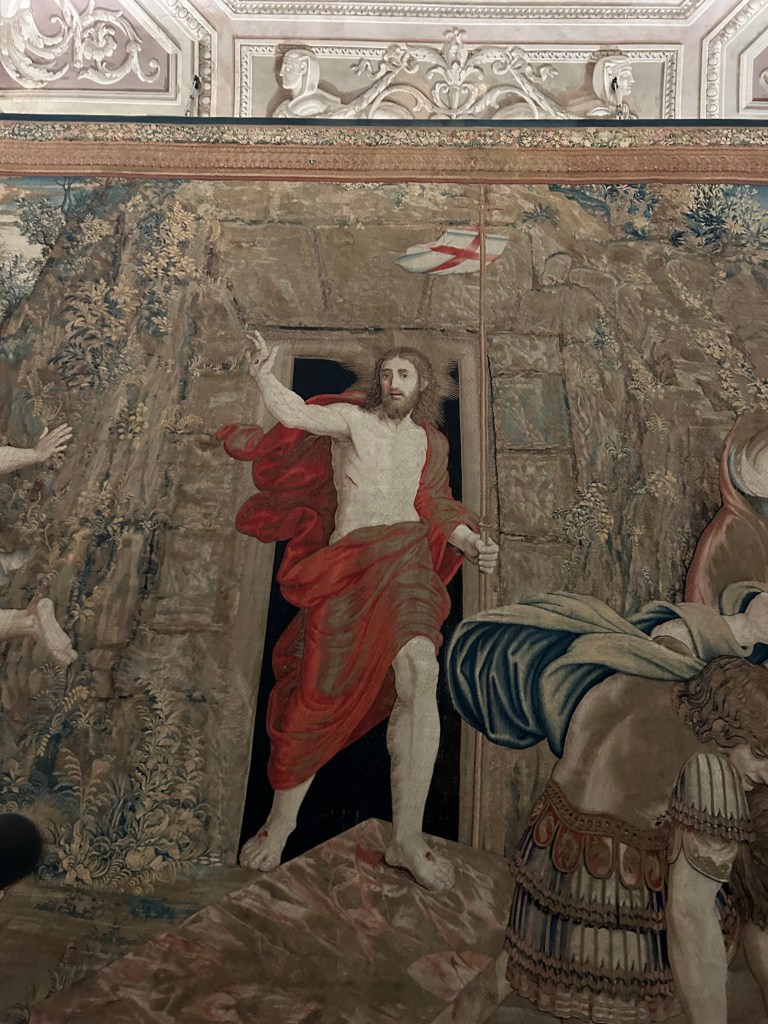
I also liked the many “optical illusions” that occurred as I walked through the halls. For example, there were artworks with Jesus where his eyes would follow you as you walked across the hall. It was cool, but also unsettling. There were also other faces of Jesus. For example, in an artwork one side of Jesus (his right side) is supposed to represent the qualities of his human nature, while his left side represent his divinity.
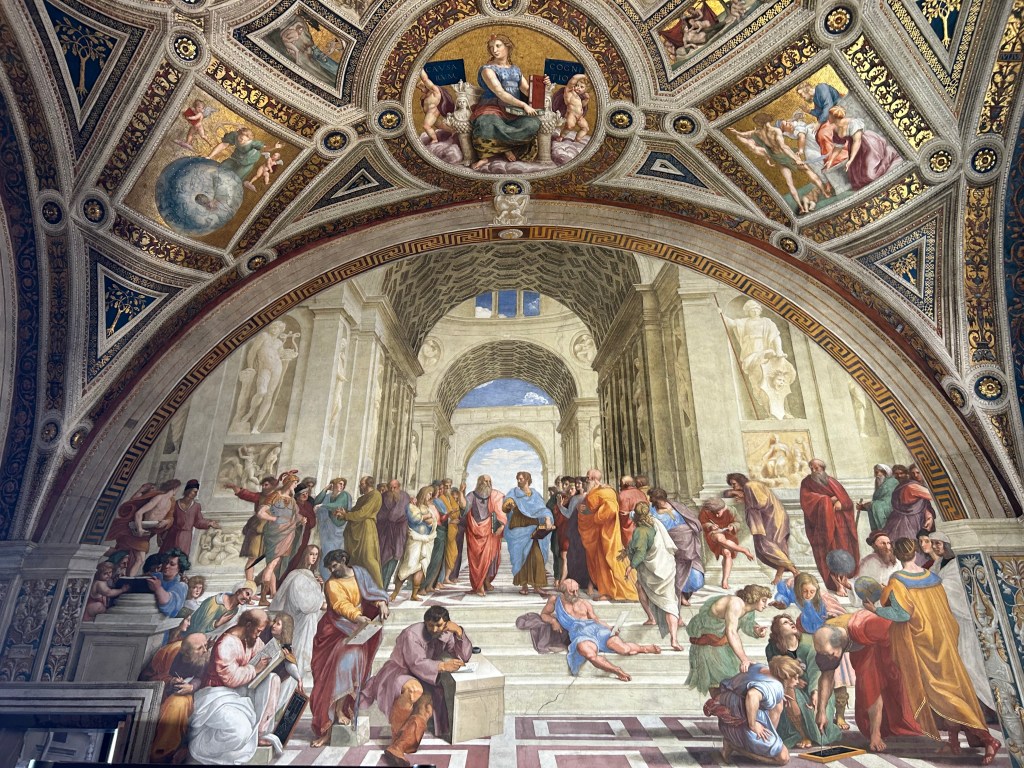
In addition, I also went into the state room where people waited to meet with pope Julius the second. Those rooms had many paintings done by Raphael. The first room had many paintings of Constantine, for example the baptism of Constantine, as to make sure the pope’s guests knew what kind of powerful person they were about to meet. The next room had the School of Athens and across from it was The Disputation of the Holy Sacrament. These paintings were across from each other because the School of Athens was supposed to represent philosophy and knowledge, and as Aristotle (who is the one walking towards us and represents empirical observations and knowledge) walks forward he would walk to the The Disputation of the Holy Sacrament which represents theology. Thus, showing how philosophy and theology is needed to understand and obtain the Truth.

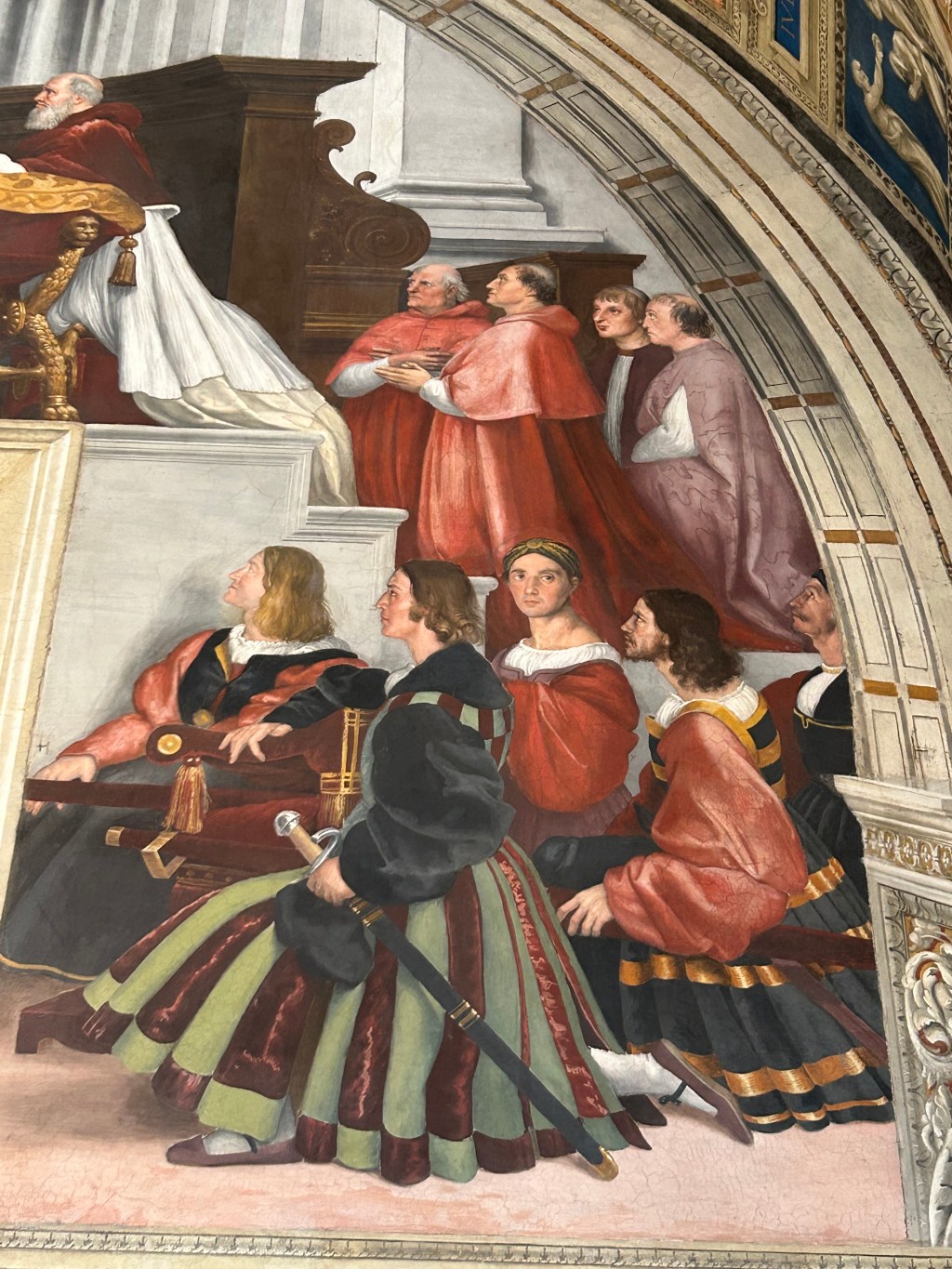
And a side note, the guide also let us know about her love for Raphael and how many people were infatuated with Raphael back in the day as well. She also informed us how she noticed that Raphael and Benson Boone had uncanny similarities, and I kind of see that as well. So, every time I’ll listen to Benson Boone I’ll unconsciously start thinking about my experience at the Vatican. *The portrait of Raphael comes from the painting “The Mass at Bolsena,” which was also shown in the Raphael rooms.

Also, a fun fact is that the color purple is almost never used in paintings or tapestries. This is because purple dye was only found in Lebanon (Phonecia) and it was found from a specific gland of a snail. So, it would be very rare and highly expensive to actually use the color purple.
In addition, if other people are going to the Vatican museum, I think it’s a great idea to send postcards in the mail from the Vatican City! Since, the Vatican city is its own country, they have their own stamps and post cards.


 Rome via Brooklyn
Leave a comment