

Triple Post 1,164 words, 6 minutes read time.
The past few days, I went out to a few churches within the vicinity of my hostel. As of writing, I’ve gone to only three (a fitting number considering the subject) and I’ve been awed by their beauty and the vast differences between each establishment. I wasn’t sure if I wanted to make anything dedicated to the churches beyond mentioning them in a post, but after Joseph’s suggestion to look into the history of them, I decided to do so.
Parrocchia Santuario di Santa Maria in Traspontina
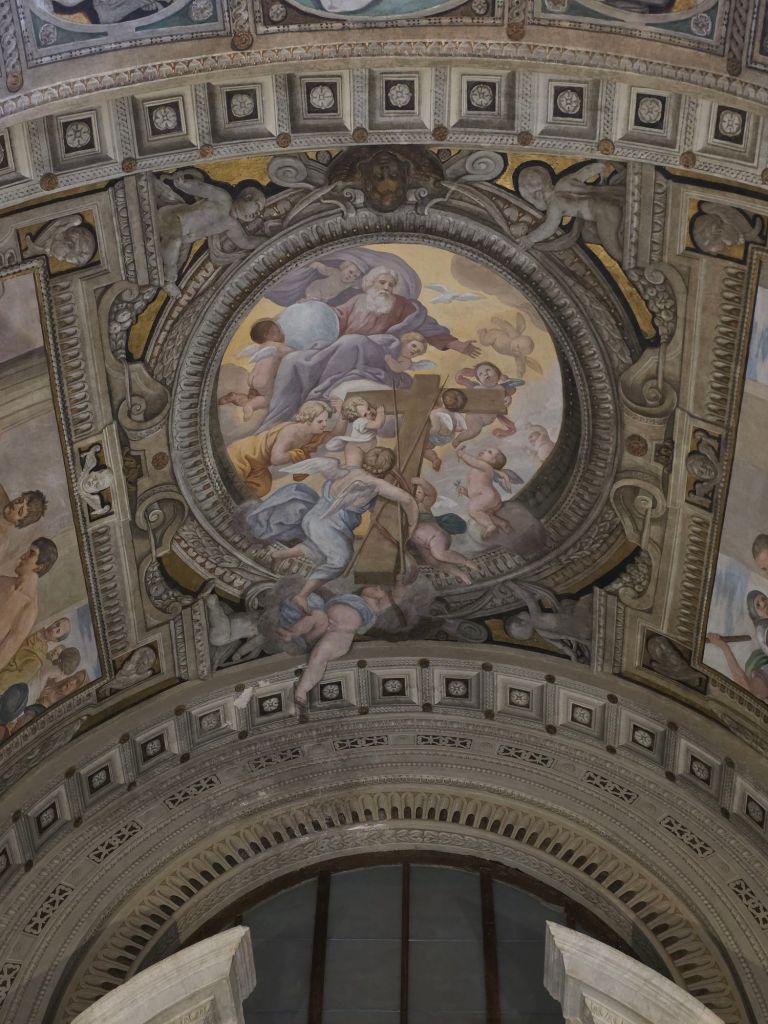
This church was one of the closest ones to us, a quick four minute walk. It lies on Via della Concilizione and was somewhat busy for the time (at least compared to the other places I’ve been to), which is no wonder due to the steady traffic of the road. The history of Santa Maria in Traspontina, like the others, is interesting. Its first iteration was demolished under Pope Pius IV’s papacy so that the canons of Castel Sant’Angelo could be fired without the church blocking the line of fire. It is for this reason that the Santa Maria in Traspontina is the only church in Rome without that iconic tholobate. Another interesting event in its history is the theft of five statue that were subsequently thrown into the River Tiber by the conservative and traditionalist Catholic activist Alexander Tschugguel and an accomplice in 2019 under the belief that idolatry was committed through the statues.
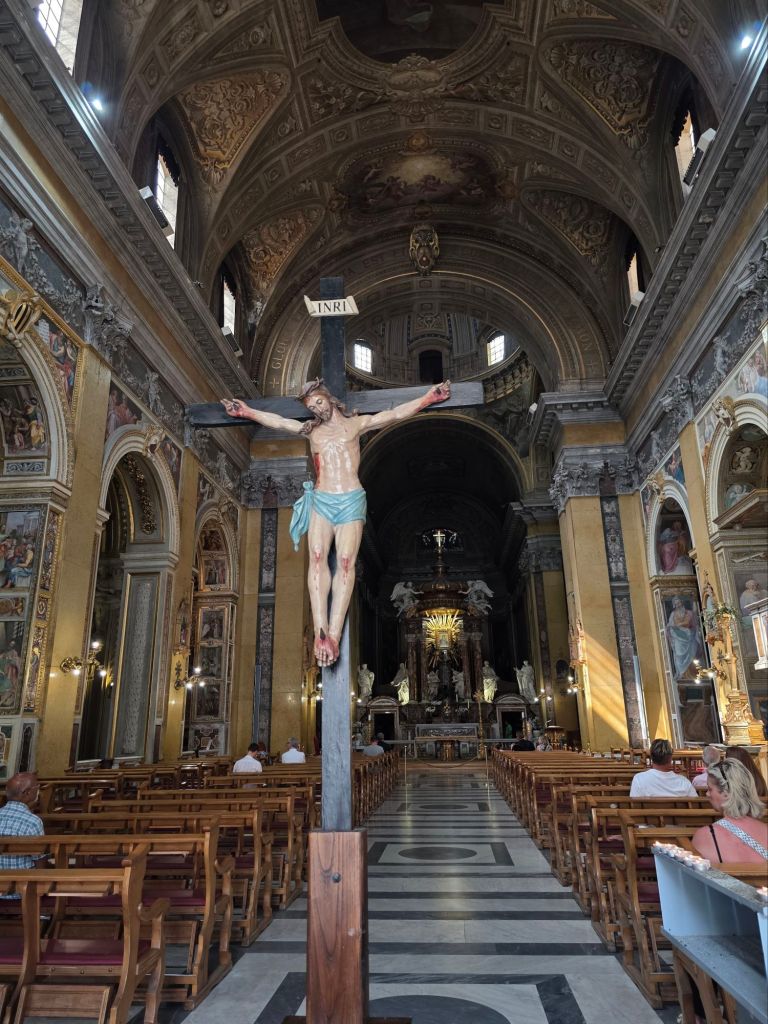
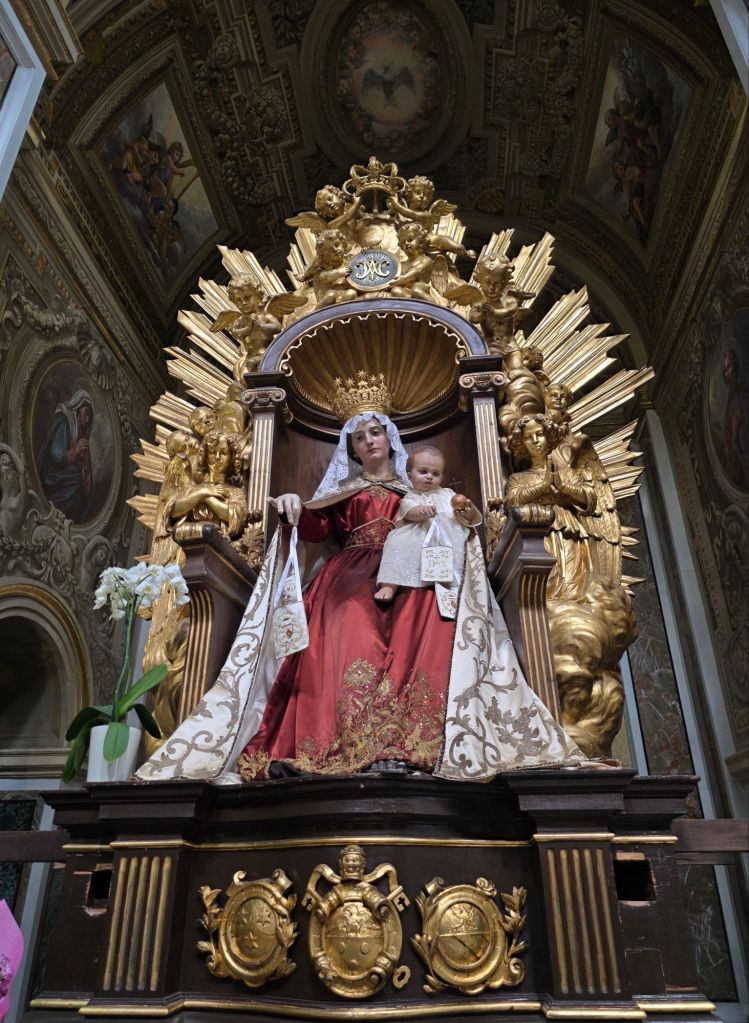
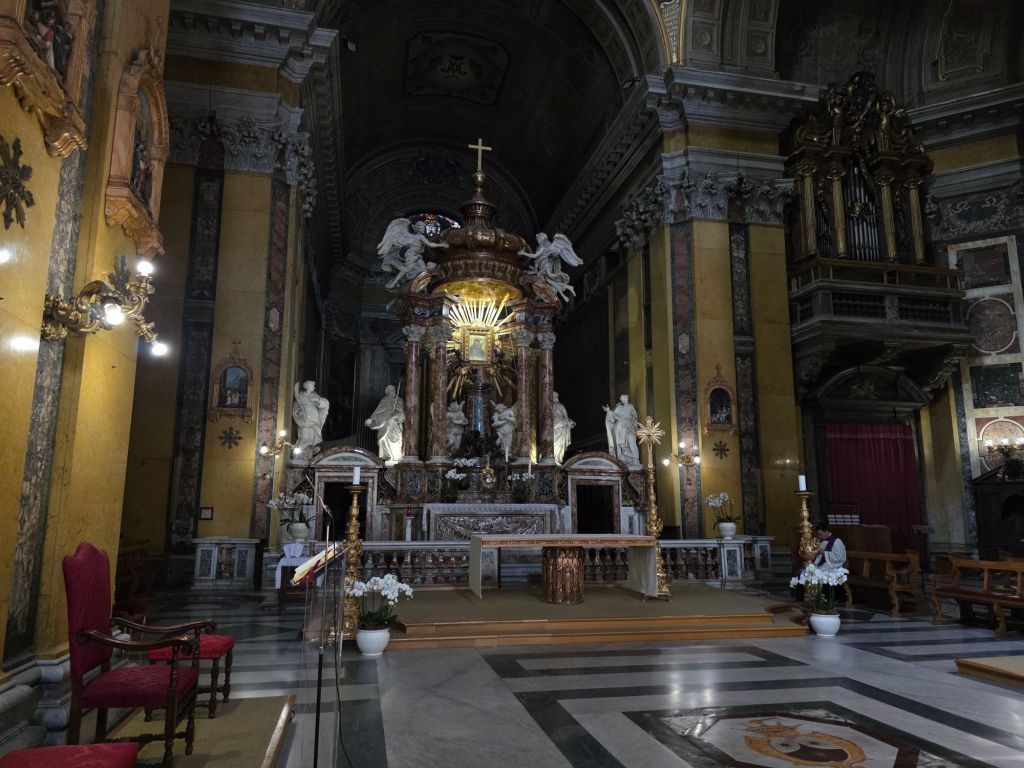
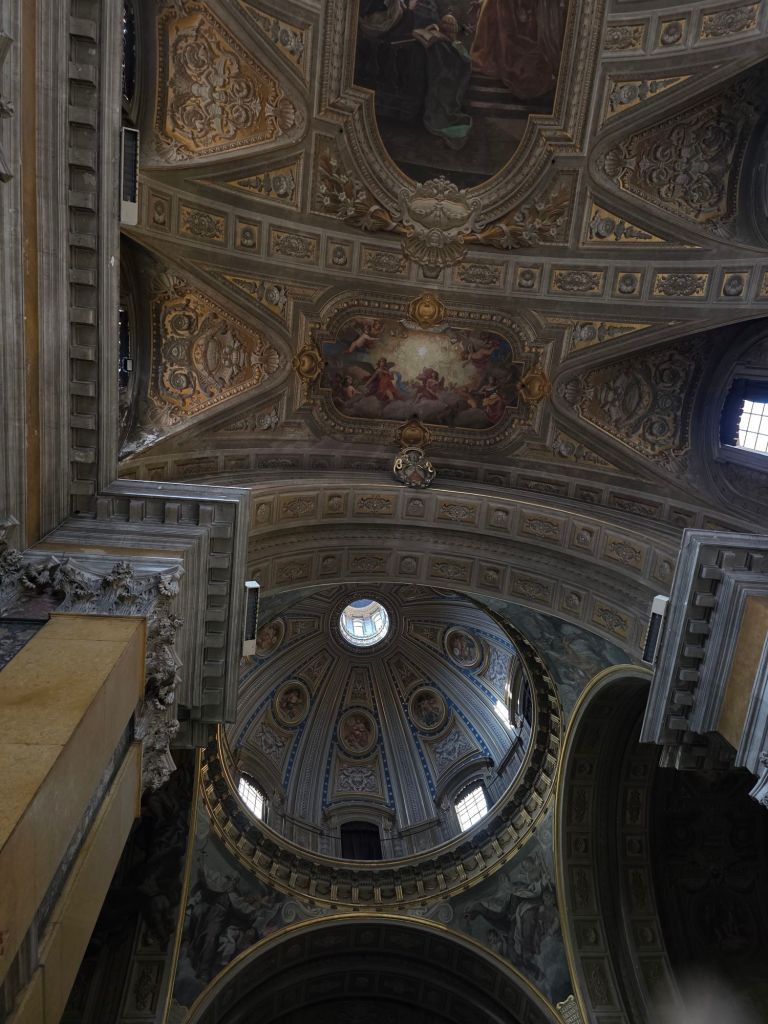
The interior was massive- upon being greeted by a figure of Christ’s crucifixion, you were met with towering walls with every inch covered in densely decorated stone and paintings.One of the things I noticed was the variety of colored marble used to construct walls, pillars, and pedestals for both the interior as a whole but also for individual pieces within each chapel almost like a sort of frame. This material, with the usage of etched travertine, produced a light and airy feeling within the church. Although there were a limited number of windows (with the few being small in sized and high above in the clerestory), the church was brightened by light pouring through the opened doors and with the help of artificial light, illuminating every detail. My favorite parts were the devotional statue of the Throne of Wisdom, and the altar in the chancle. The statue was massive in size and incredibly lifelike- an attribute made possible by its clothes and naturalistic paint. Saint Mary’s throne is radiating light while flanked by angels- a motif echoed in the ciborium of the altar- marbled and accompanied by pure white angels. Inside, an icon of Madonna and Child can be seen, once again, emanating rays of golden light.
Chiesa del Sacro Cuore di Gesù in Prati/Museo delle Anime del Purgatorio
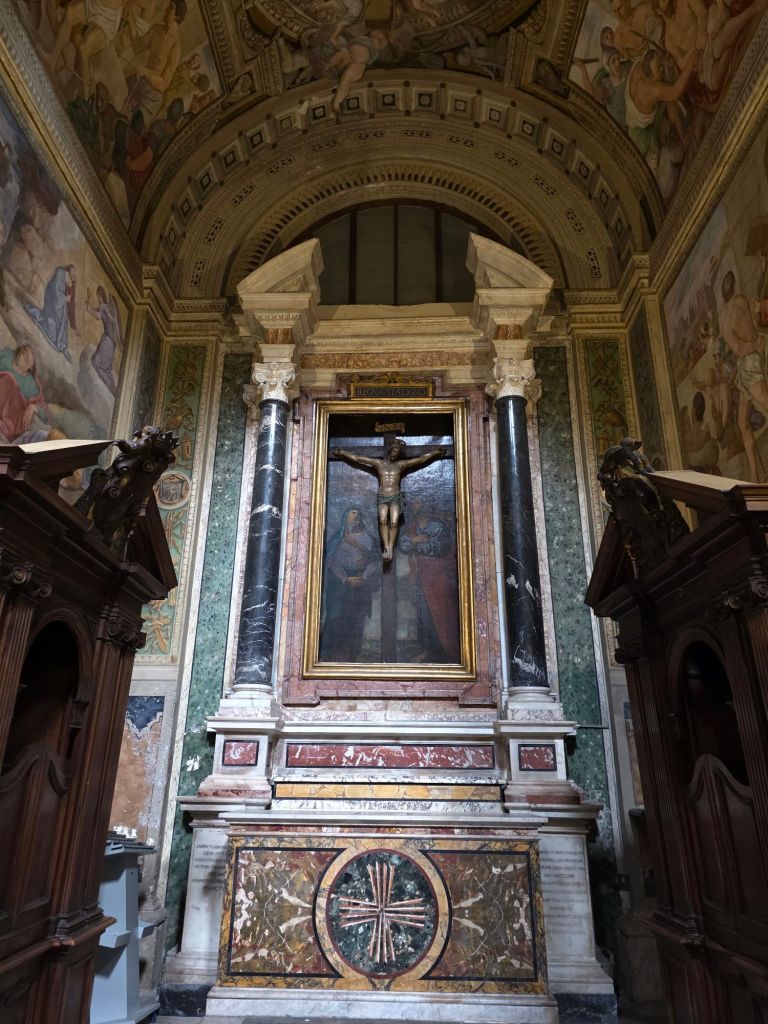
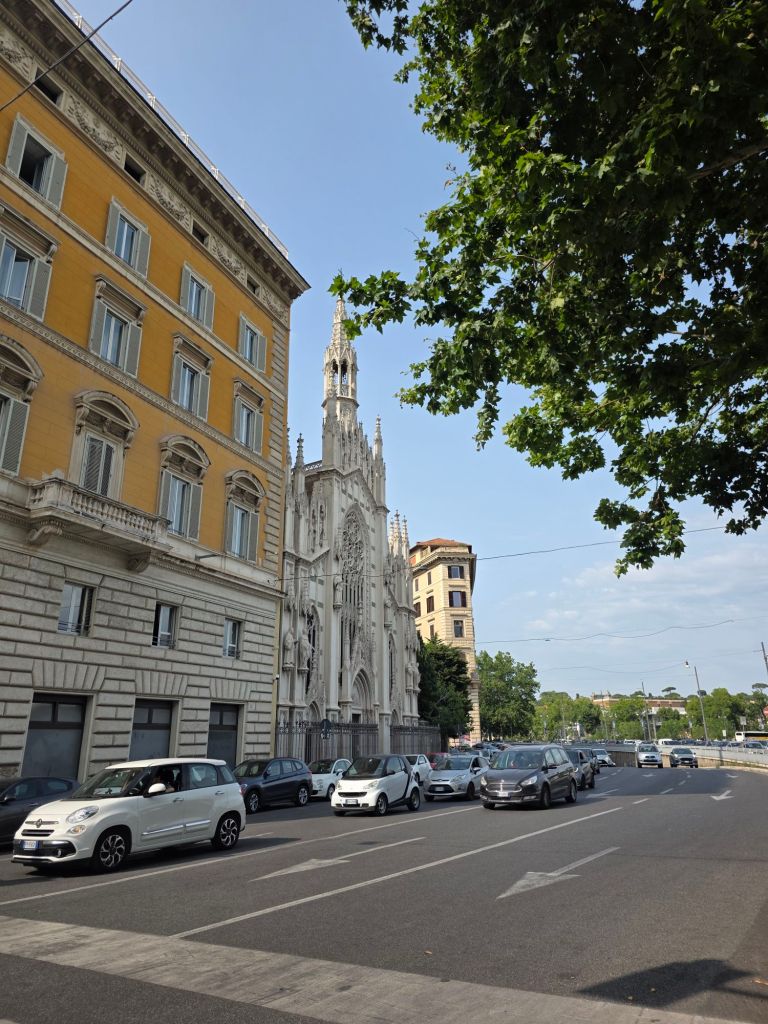
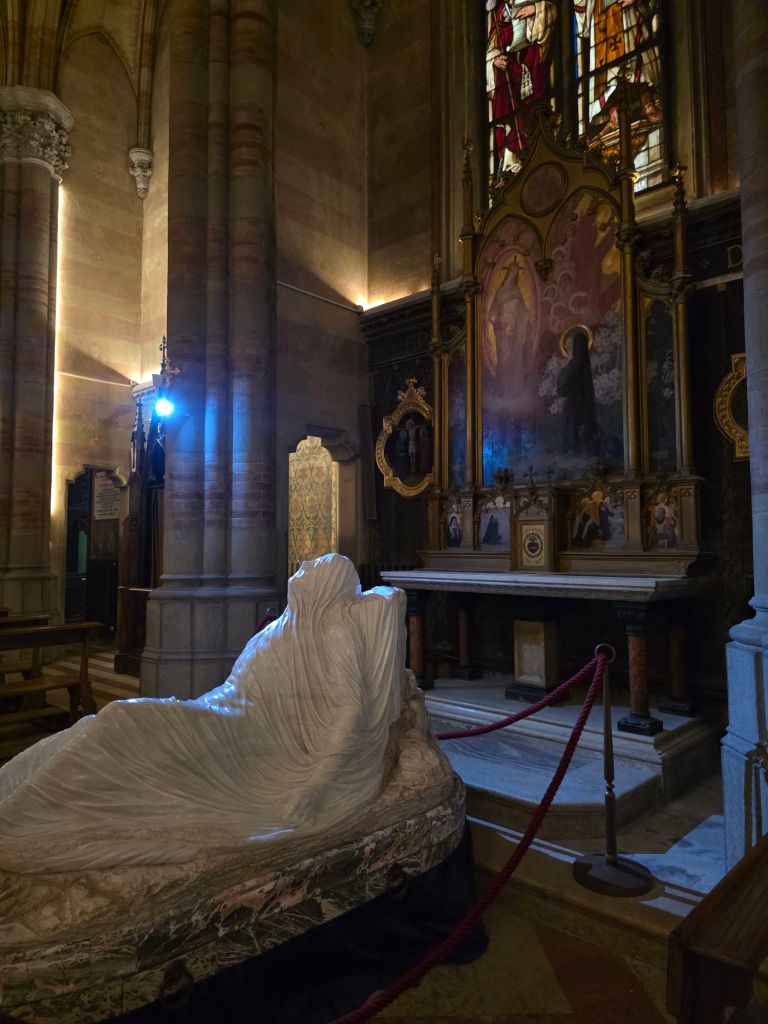
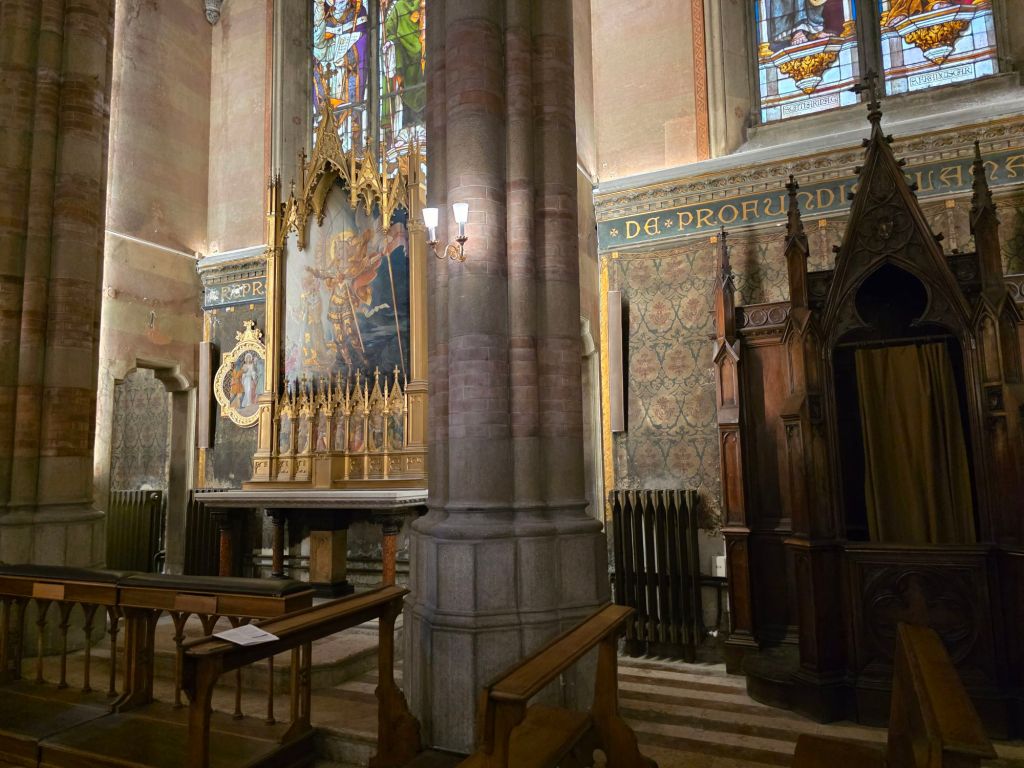
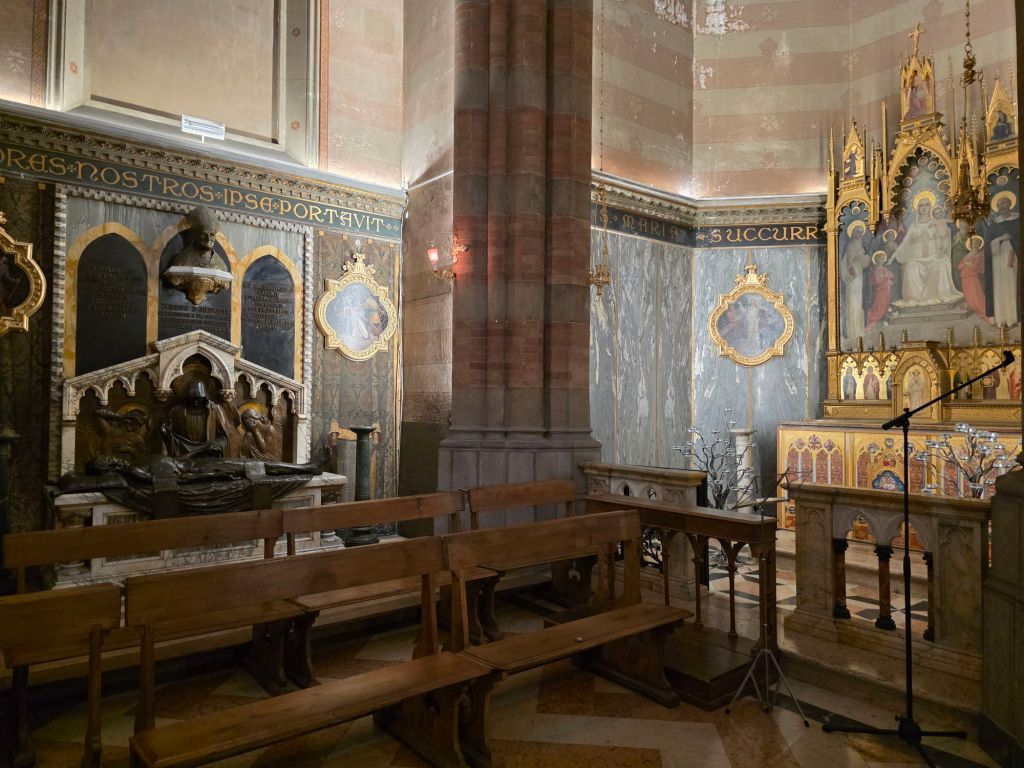
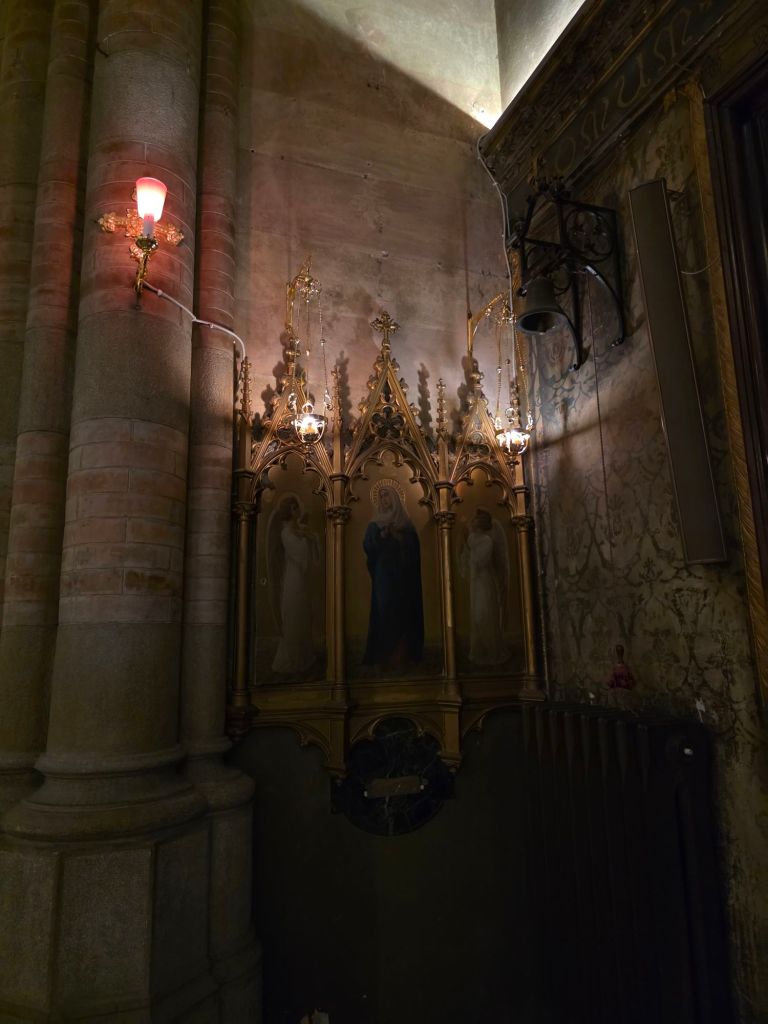
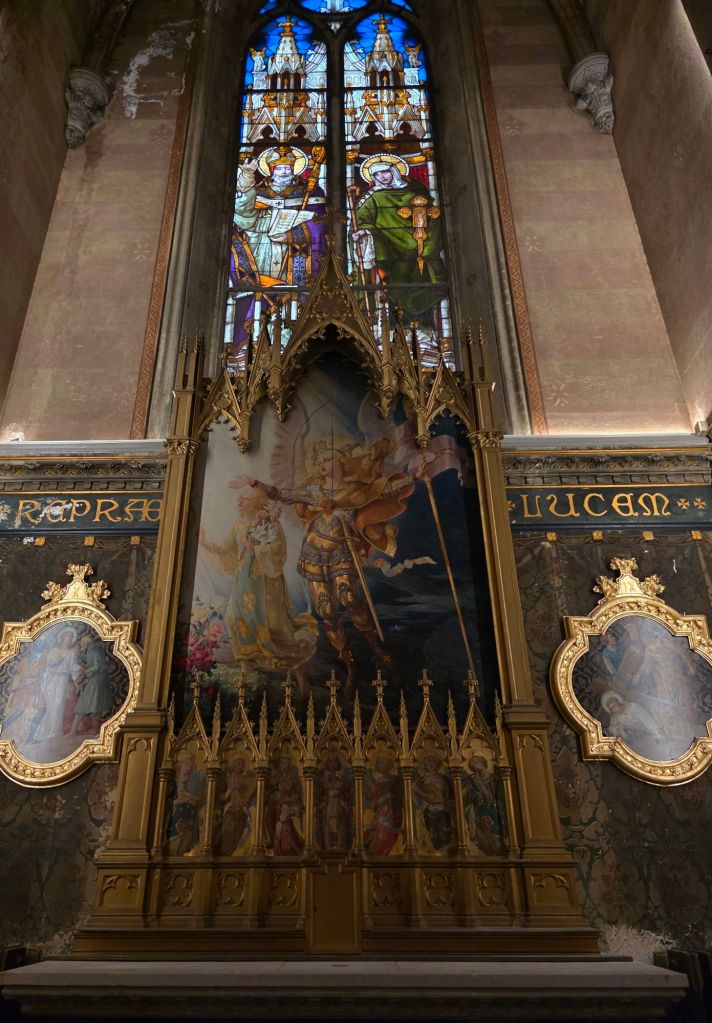
This church is the most modern of the three, having been completed in 1917. There are two things that make this church unique. One is that it doubles as a museum for artifacts of Purgatory- the intermission in which a soul is cleansed before going to heaven- and the other is that amidst the dominating Baroque style, the church of the Sacred Heart of Suffrage is Neo-Gothic. The man who constructed the church, Missionary of the Sacred Heart Victor Jouët, was the same person who established the museum. The chapel was burnt down in 1897 and in the wake of the flames on the wall behind the altar was the impression of a man’s face, contorted in sorrow. Jouët believed this to be a soul trapped in Purgatory, compelling him to gather artififacts relating to this limbo.
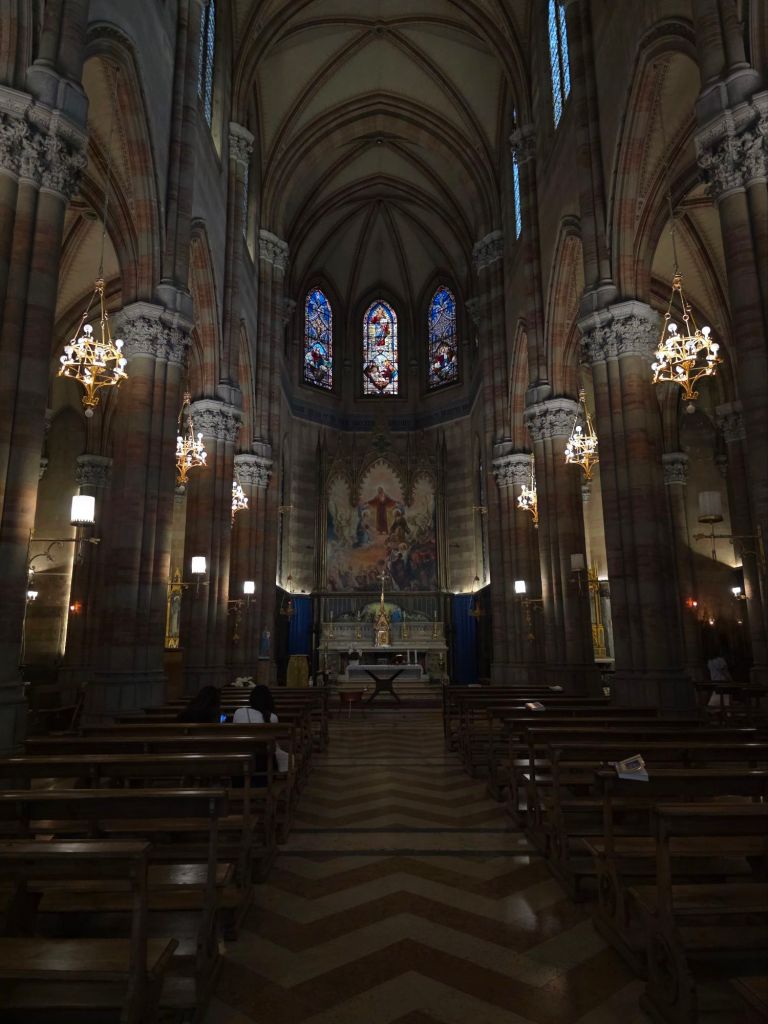
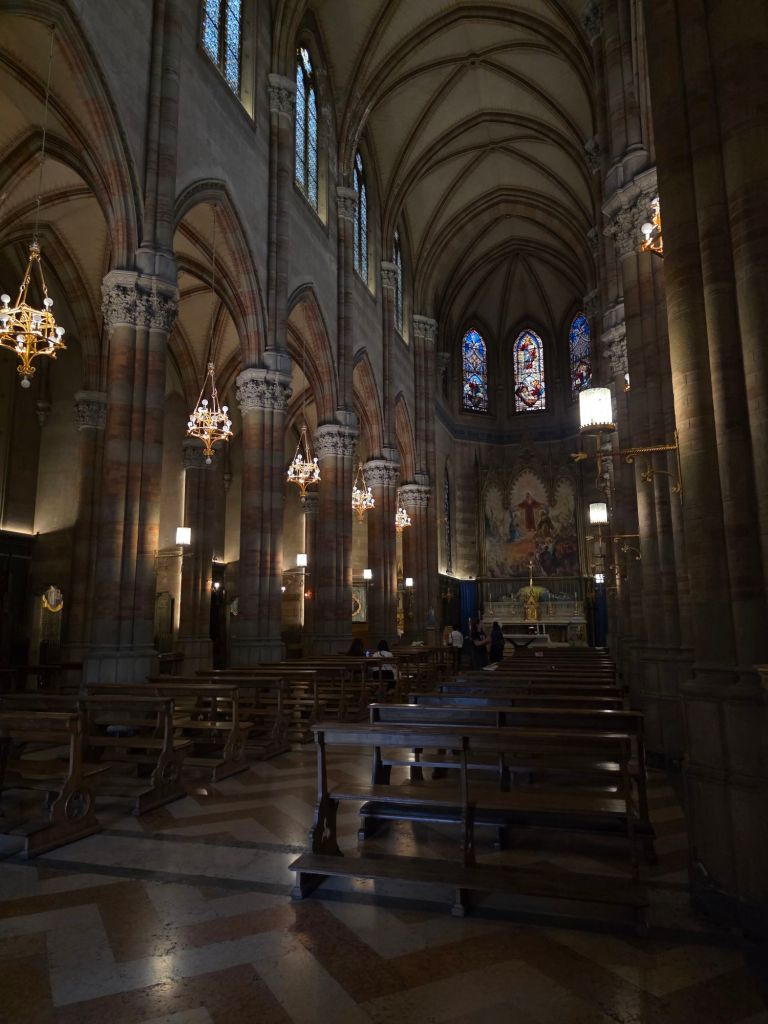
The facade is blindingly white, made of reinforced concrete instead of a more common travertine. However, once you entered the nearly unreal portal, you’re immediately transported to a dimly lit and moody space. This struck me as incredibly fascinating as traditionally, Gothic architecture (predominately French Gothic) strived to illuminate the interiors with as much natural light as possible through stained glass windows. Numerous lancet windows lined the clerestory and galleries of the nave, aisles, and apse- but hardly any light seemed to enter the church at all. Even the artificial light present in the hall were faint compared to the exceedingly bright Santa Maria in Traspontina and Santi Michele e Magno. This aspect, in addition to the church’s smaller scale, provides a deeply intimate atmosphere and one that matches the tone of Purgatory. I was drawn to the iconic Gothic frames of each piece displayed in the chapels. I find that the intricate ornaments of the frame (and the Gothic style as a whole) offer more depth than the Baroque style I saw in the church prior. Interestingly, there seemed to be a confessor in every other chapel, alternating with every other altars piece. I have always been partial to Gothic art, and seeing a deeply Gothic church in Rome was a pleasant surprise.
Santi Michele e Magno
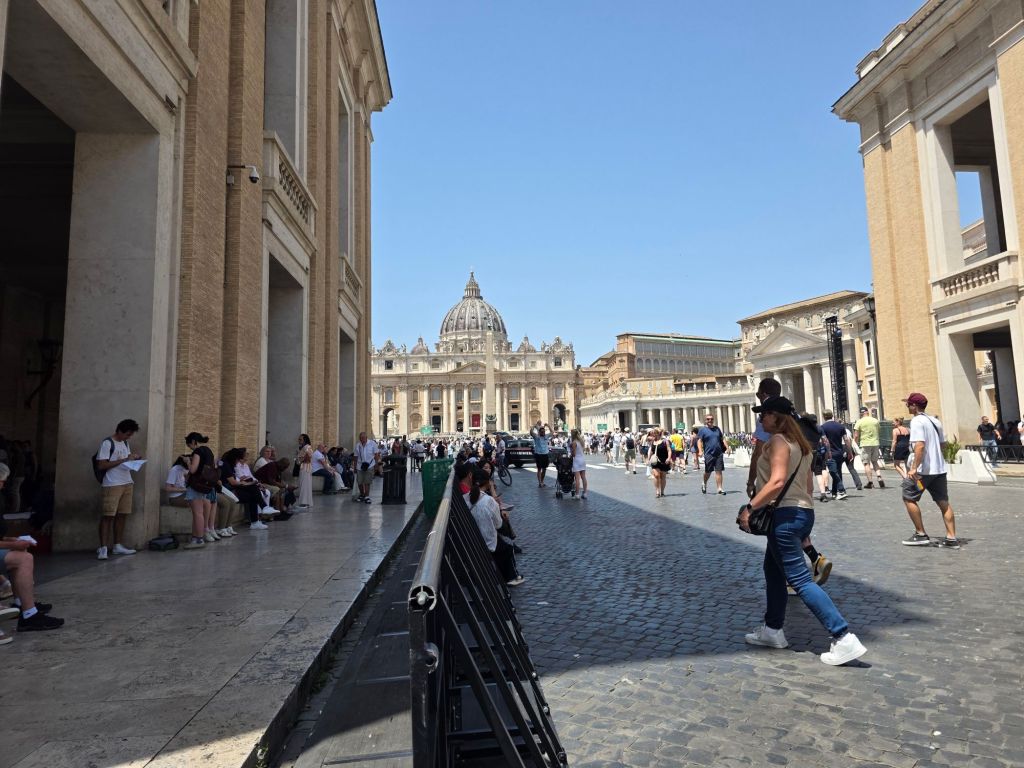
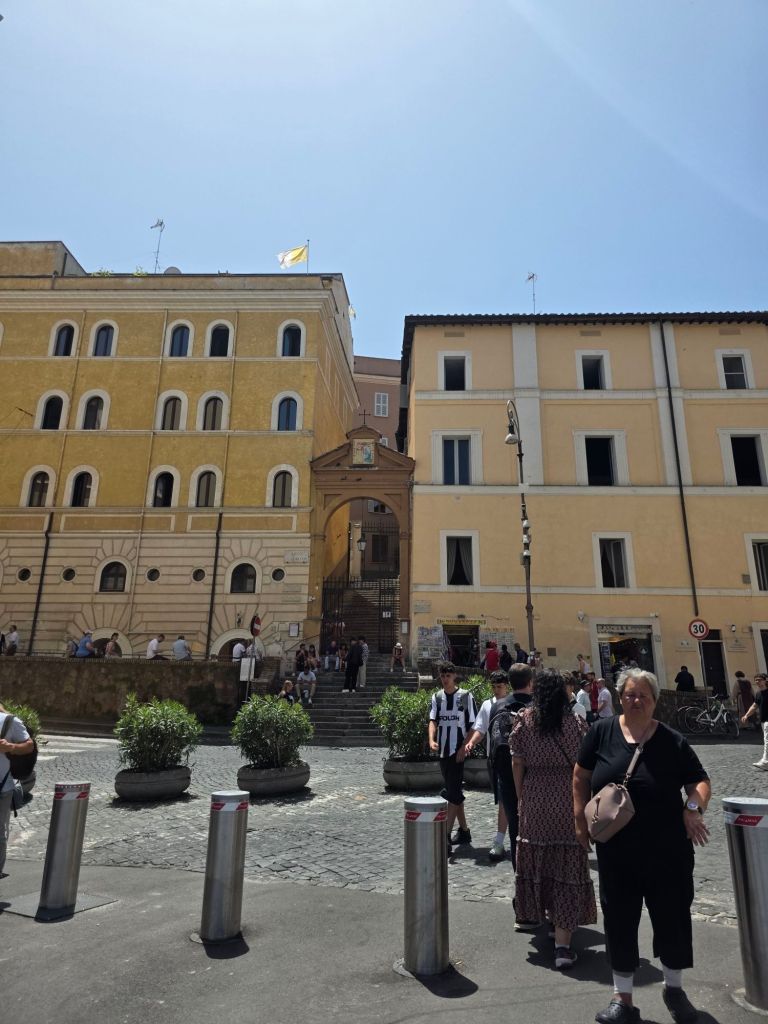
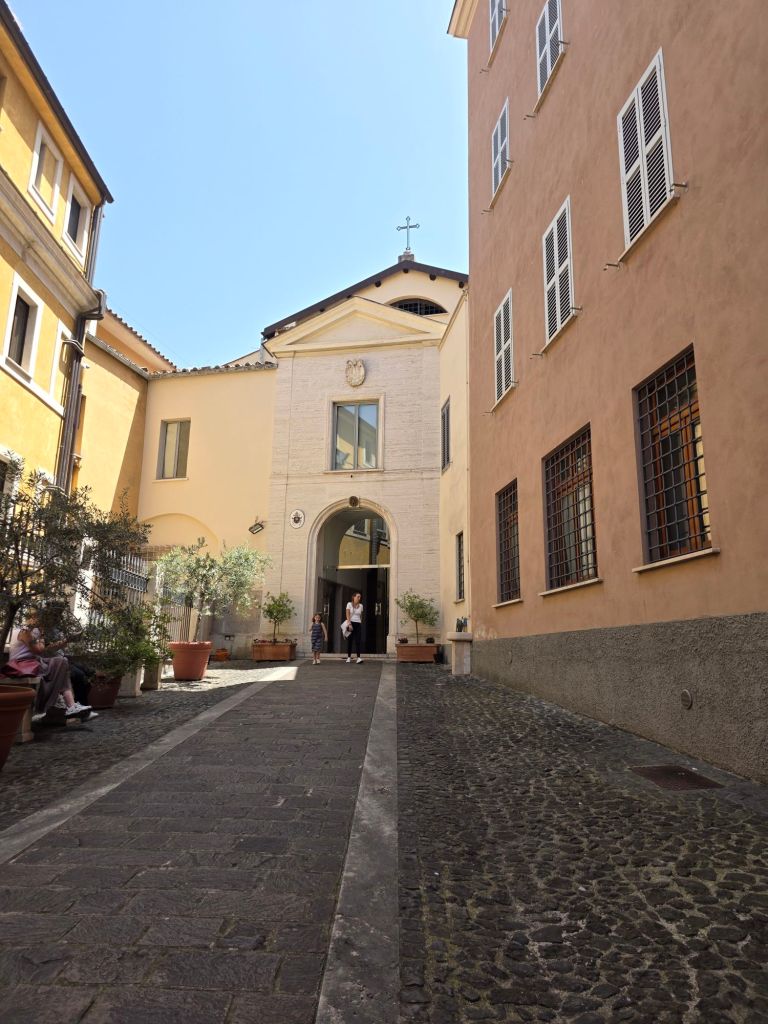
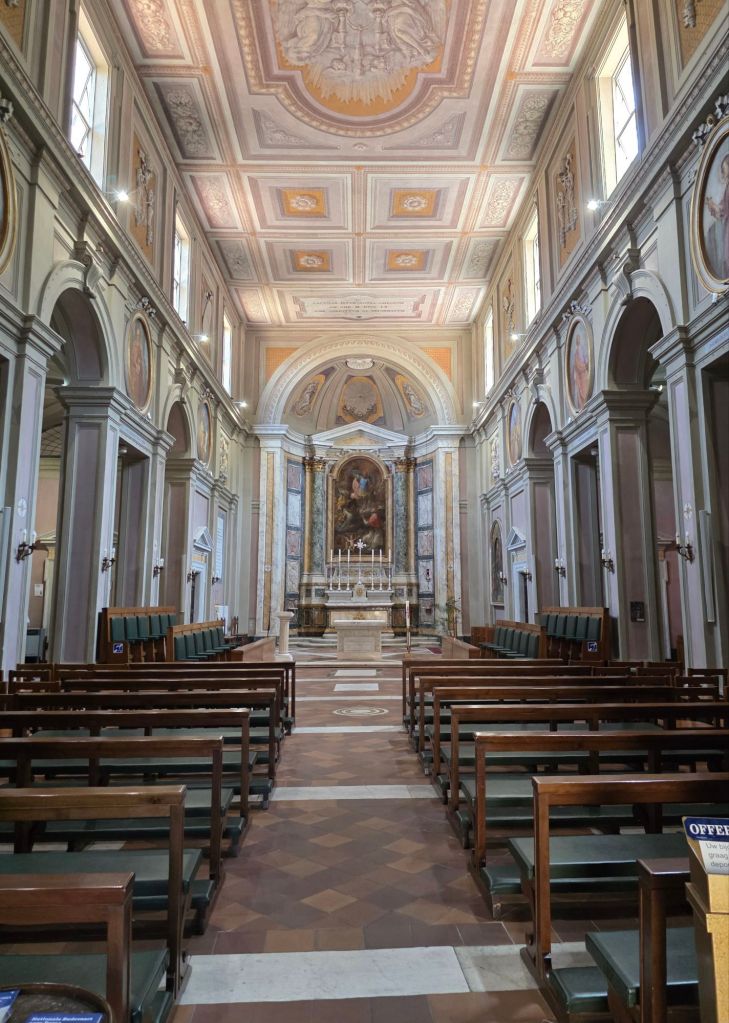
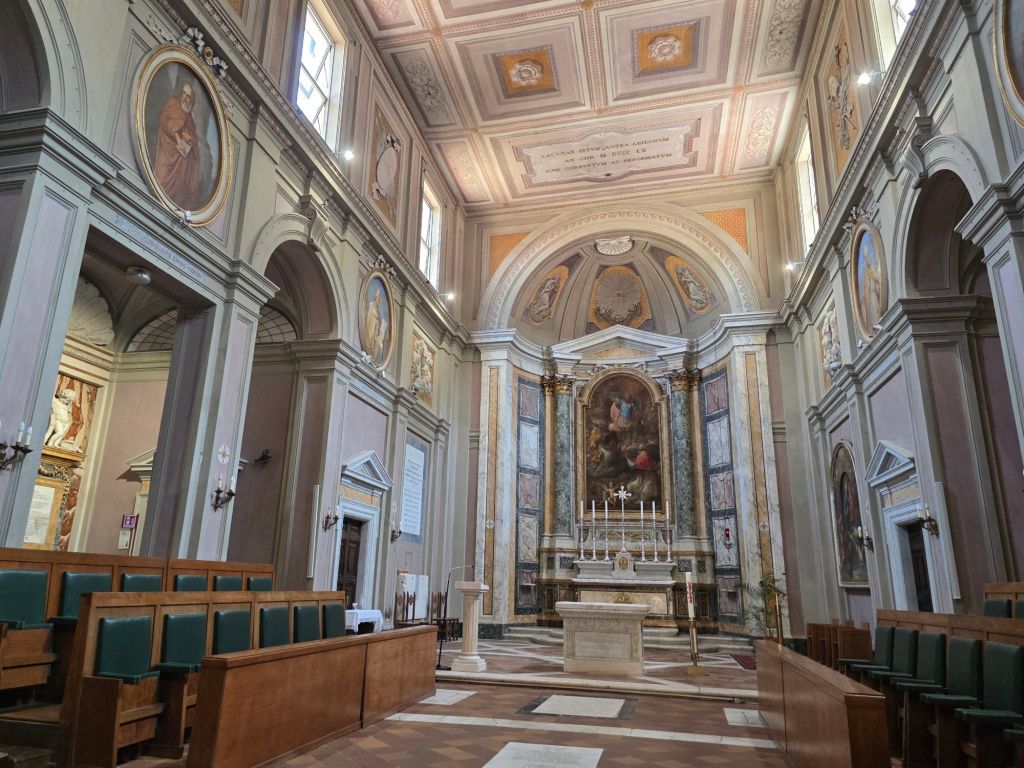
The Church of Saint Michael and Magnus is the oldest of the three, having connections to a colony of Frisians from the 9th century (though it was completed in the 12th century). And of the three, this church was the emptiest- no doubt due to its mildly unconventional way of commute. Not too far from the busy Basilica of Saint Peter, to reach this quaint church, one must climb up a set of steep stairs and turn down a small path leading to the establishment. This hole-in-the-wall location opens a pocket in space- one separated from the bustle of Rome. The church is dedicated to two saints- Saint Michael (who had saved Rome from the 6th century plague and is honored in the Castel Sant’Angelo) and Saint Magnus who was added as a patron saint later. Tying to its Frisian roots, the church is also a national church of the Netherlands.
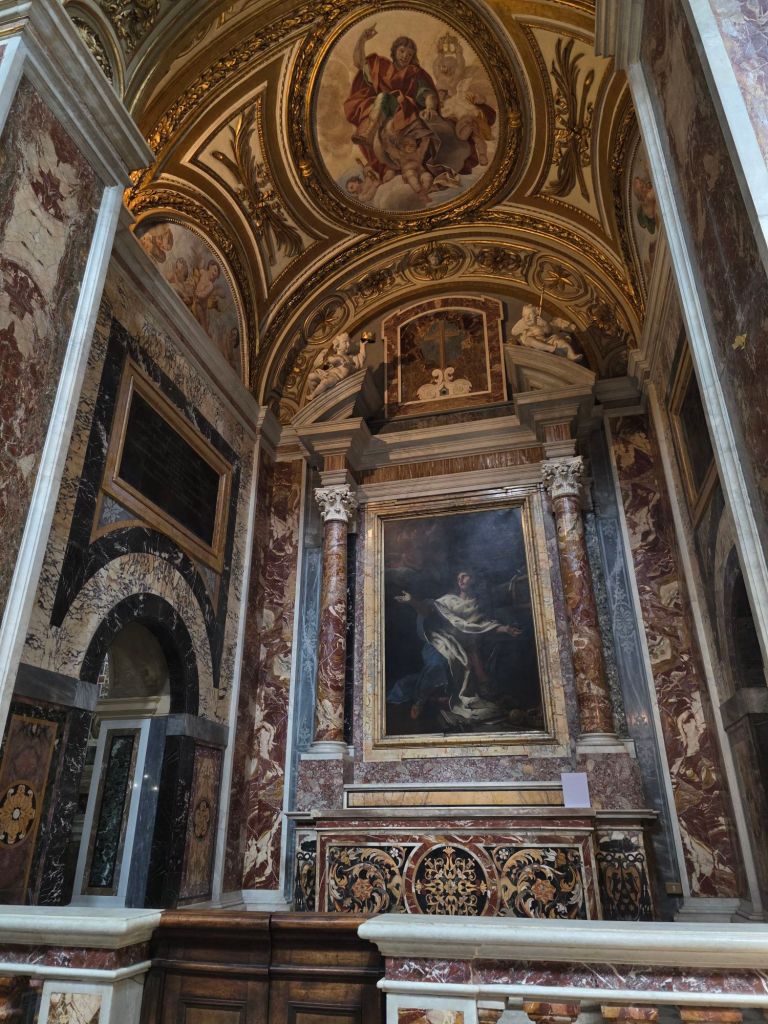
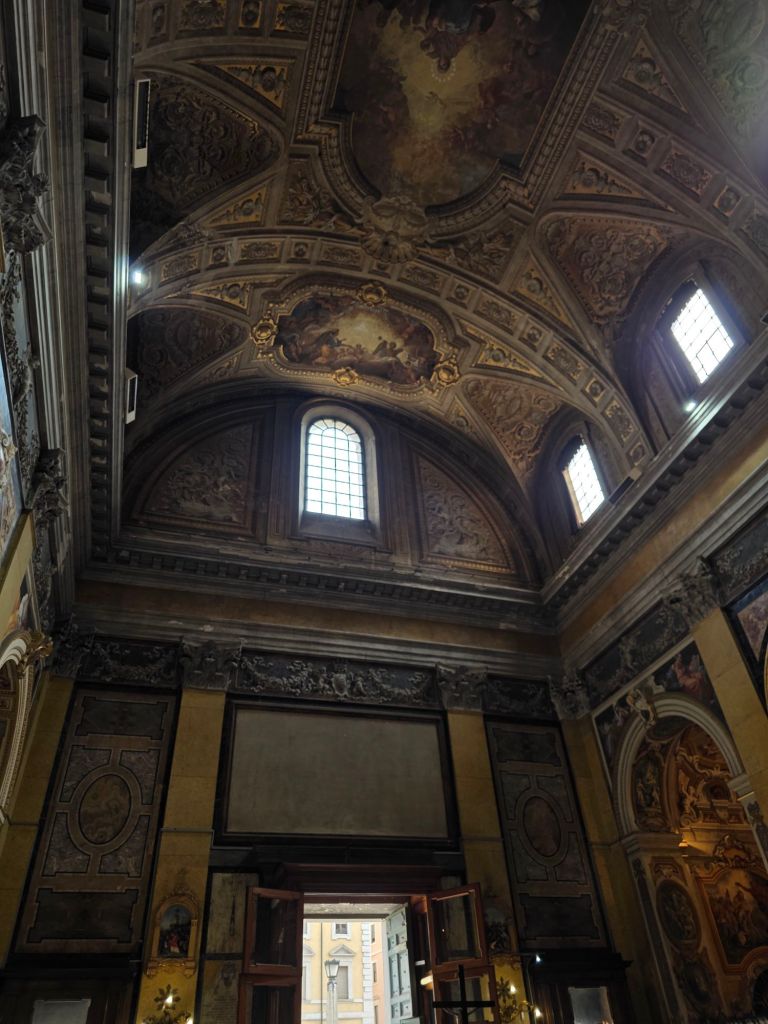
I’ve always preferred to connect with my faith in an empty church. When there are others with me, I’m able to enjoy the beauty of a church but I find myself unable to be in that vulnerable state. That is why the serenity of Santi Michele e Magno appealed to me greatly as it was the only church I could reflect and pray properly. There was also a nun present in the room who had greeted me silently before she left, which was a kind gesture. Although also Baroque in style (the church was originally a Romanesque building, but after much reconstruction, little of its original style remains), the decor of this church is far humbler than Santi Maria in Traspontina, with a majority of the interior being light marble and only accented by sparse colored marble. Even the frames of each altar piece seemed simplier. The honest nature of the church’s furnishing gave it a clean feeling, one that lent even more peace to a visitor. Although it’s one of the more modest presenting churches, I find myself drawn to its tranquility and will be visiting once more in the future.


 Rome via Brooklyn
Leave a comment