
468 words, 2 minutes read time.
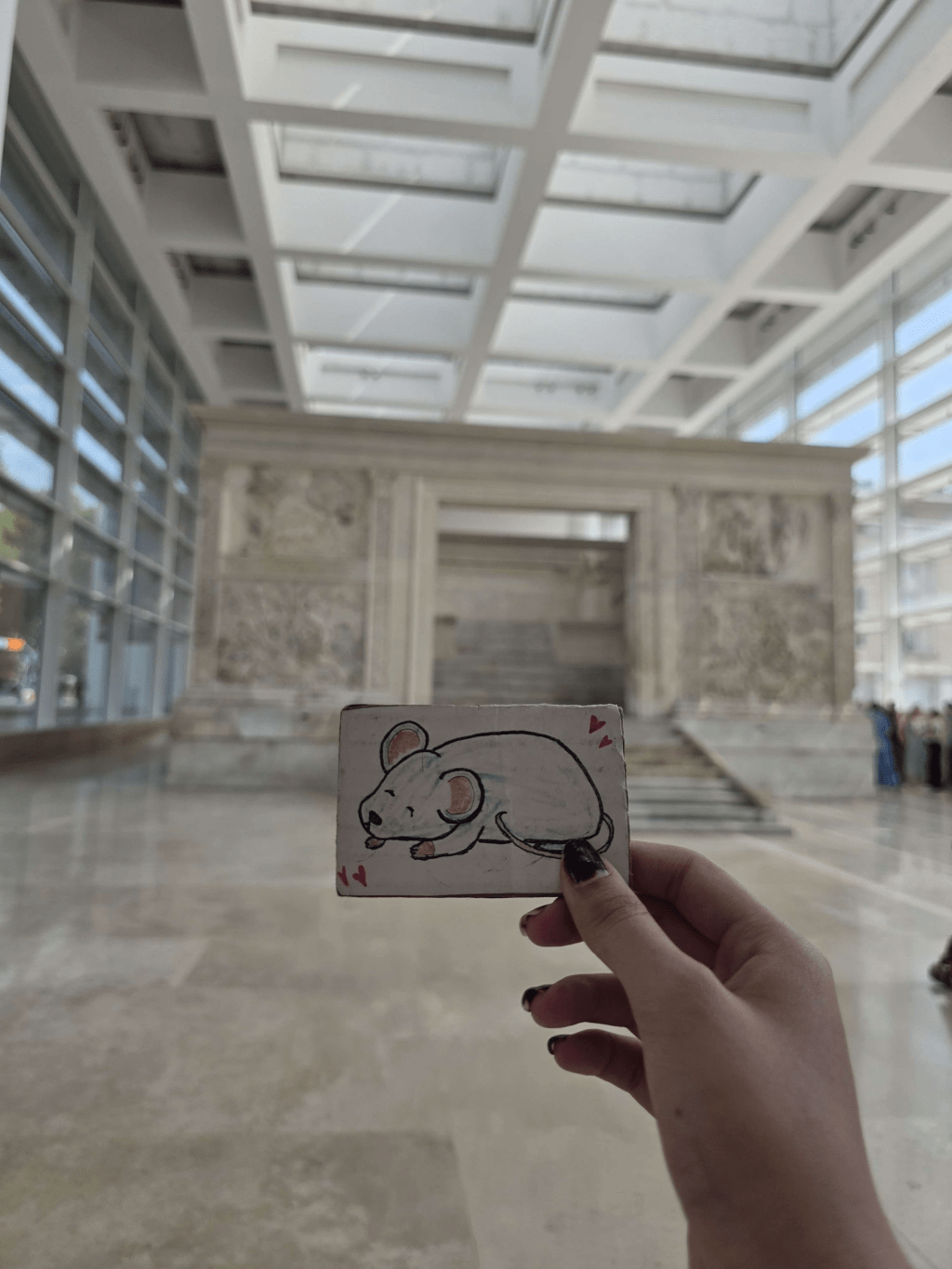
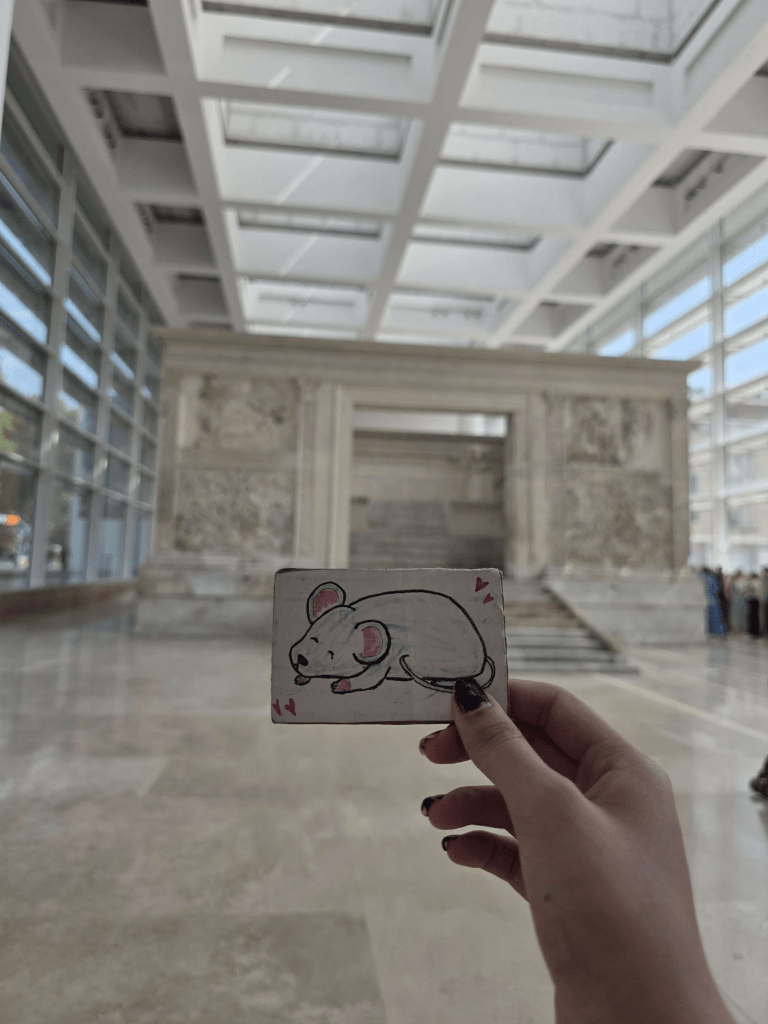
I was glad that museum was not far from our hostel- only a 20 minute walk (which retrospectively, is something I would never say back in NYC) and that we started at a later time, as it allowed me to stress less about punctuality. Today’s agenda was far laxer than yesterday’s trip to the Forum and the following exploration of the Palatine Hill that many chose to do. It’s good to have a simpler, yet educational, day so that we can recuperate and save our strength for our Naples trip while still learning about Roman History. Today’s excursion brought us to Museo del Ara Pacis, a location I had passed by a few times before but had no idea what it truly was.
One of the most unique aspects of the museum was that it was dedicated to a single artifact- the Ara Pacis Augustae, or the Augustan Altar of Peace. While it was a relatively small museum the concept of having a whole space for one ‘thing’ was astonishing to me. It really emphasized the importance it had to Mussolini and his intended political message to put so much attention and effort into showcasing this altar. According to Augustus’ achievements and Aicher, Augustus wanted the Ara Pacis to “be set up in the Campus Martius”, where the army trained, and “between the Sun Dial of Augustus and the Via Lata” (Augustus’ homecoming road from his 3 year-long trip in Spain and Gaul in 13 BC). Furthermore, the altar originally stood across from Agrippa’s Pantheon, a temple dedicated to the gods. This strategic placement of the monument, among the other monuments of Augustus’ achievements, on his road home is meant to echo the message of the altar’s reliefs- that Augustus will usher in an era of peace to the city of Rome with his reign.
Mussolini associated himself with Augustus, hoping to mirror his likeness onto his own with his Fascist campaign. It is for this reason he took massive strides to preserve and reconstruct the altar, relocating it to a specially built museum near the Piazza Augusto Imperatore, Plaza of the Emperor Augustus, among other Fascist complexes, and next to the Mausoleum of Augustus. In this way, Mussolini behaves somewhat similarly to Augustus. The altar echoes themes of prosperity and the foundations of Rome through mytholigical narratives & figures, but on the exterior friezes, it also showcases processions of the Roman higher society. The presence of such people is sign of Augustus expressing humility- by exhibiting the people of Rome onto an altar dedicated to him in a seemingly altruistic manner. Although Mussolini frames his work as something for the people of Italy, it’s a political ploy to garner favor while using the legacy of Augustus to imply his new Fascist empire will be the next Roman empire.


 Rome via Brooklyn
Leave a reply to josephpaige02 Cancel reply