

463 words, 2 minutes read time.
Having only seen the Colosseum in pictures or on the projector of my art history class, actually getting to not only see it in person, but walk through it was such a mind-blowing experience. The Colosseum is definitely one of, if not the most, famous historical site of Rome, and getting to see it and unlearn some common misconceptions was really cool. I had not realized how technologically advanced a lot of the mechanisms for the Colosseum, like the trap door. Getting to see the “behind-the-scenes” of how the different fights that would occur in the Colosseum worked was very interesting.
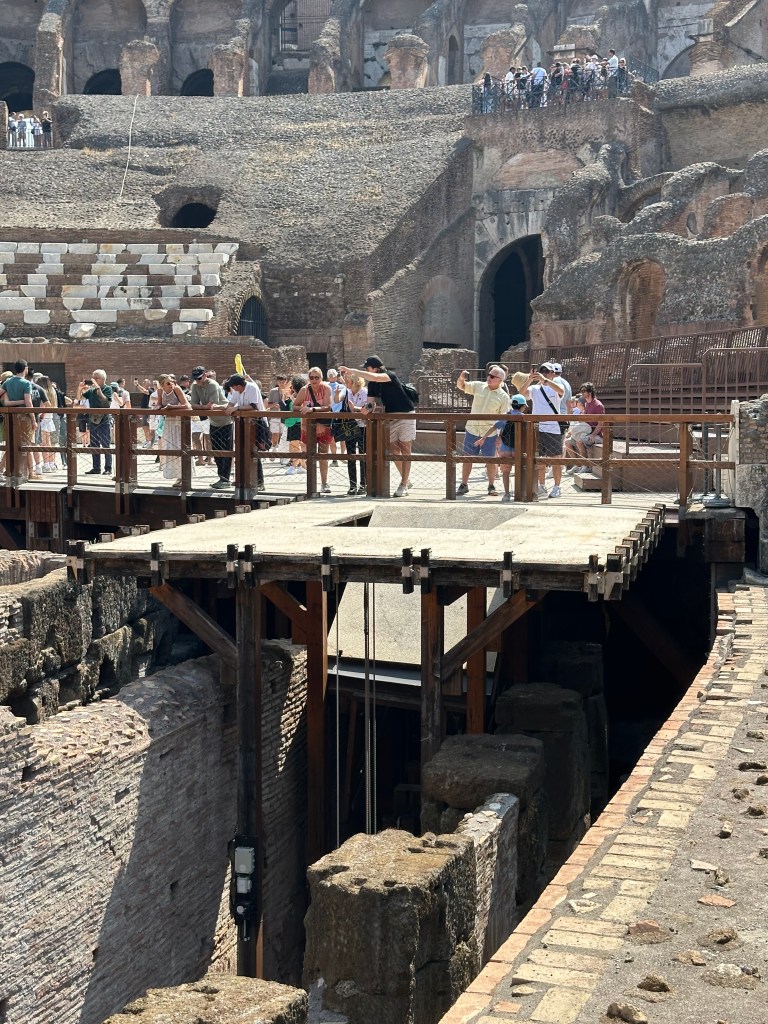
It’s also interesting the different ways the Colosseum had been inhabited as time continued. Claridge talks about the evolution of its use, with a small church being “installed [in the 6th century], using the arena as a cemetery, and the…vaulted spaces…as housing and workshops” (313). Even the stone which had fallen from the Colosseum had been used and repurposed to build a number of structures, which spreads its legacy throughout Rome.
I really appreciated that we talked about and considered the Colosseum beyond its physical mechanics. Its construction relied almost entirely on enslaved labor, and was an important place for amassing political power. Learning about the ways emperors utilized the spectacle of the gladiator games and other matches which took place in the Colosseum to garner political support or get an understanding of how the community feels about them put the purpose and overall existence of this landmark in a whole new light. Especially with my own and the other group presentation we had on Wednesday, it helped me see the ways emperors and rulers use things like architecture or historical landmarks to uphold and strengthen their power.

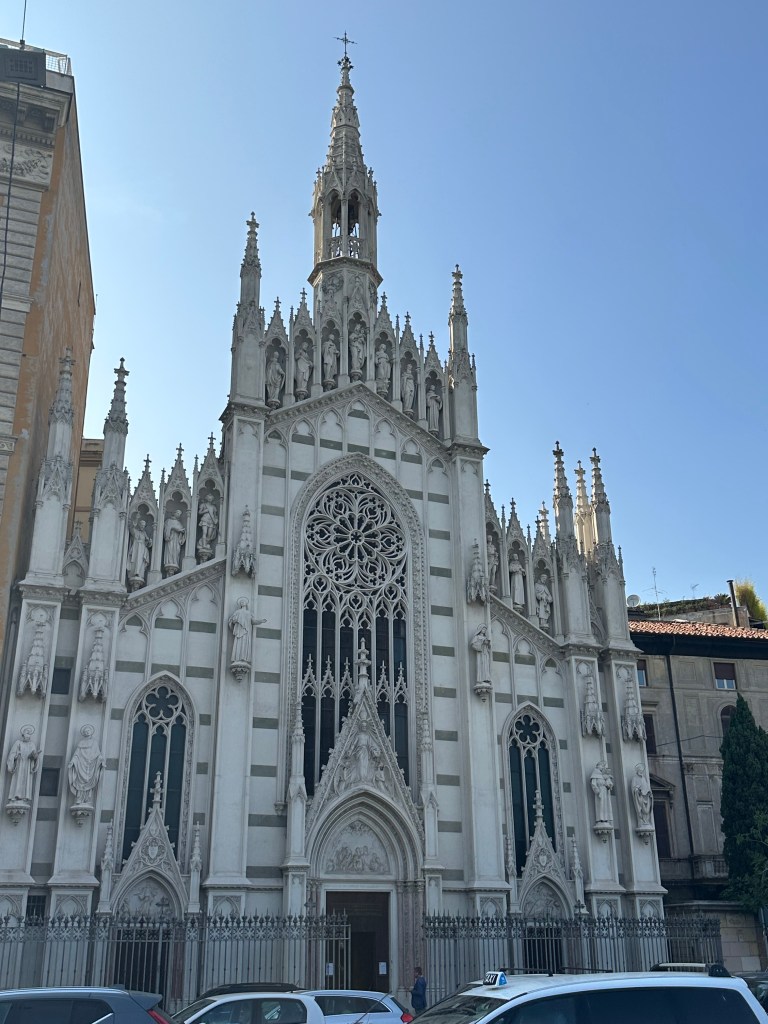
A bit after the Colosseum I had also made a second trip to a gorgeous Gothic church (somewhat) near my apartment, the Museo Delle Anime Del Purgatorio. The exterior is absolutely stunning and the inside is just as commanding. The stain glass windows, the beautiful artwork, and this one sculptor titled “The Veiled Christ,” which is one of the best pieces of art I’ve gotten to see in Rome so far, made the church such a gorgeous experience. With the conversations of power and the ways physical space have been used to exert and reinforce said power, I was thinking about the church, not just as an individual building but as an institution, and the power it has had and continues to have over so many people, including myself. With such tall walls and the illuminated eyes of the saints watching over you, how could you not fear some higher power?

Khadija Fall ❤


 Rome via Brooklyn
Leave a reply to rachel19281 Cancel reply