

365 Words, 2 Minutes
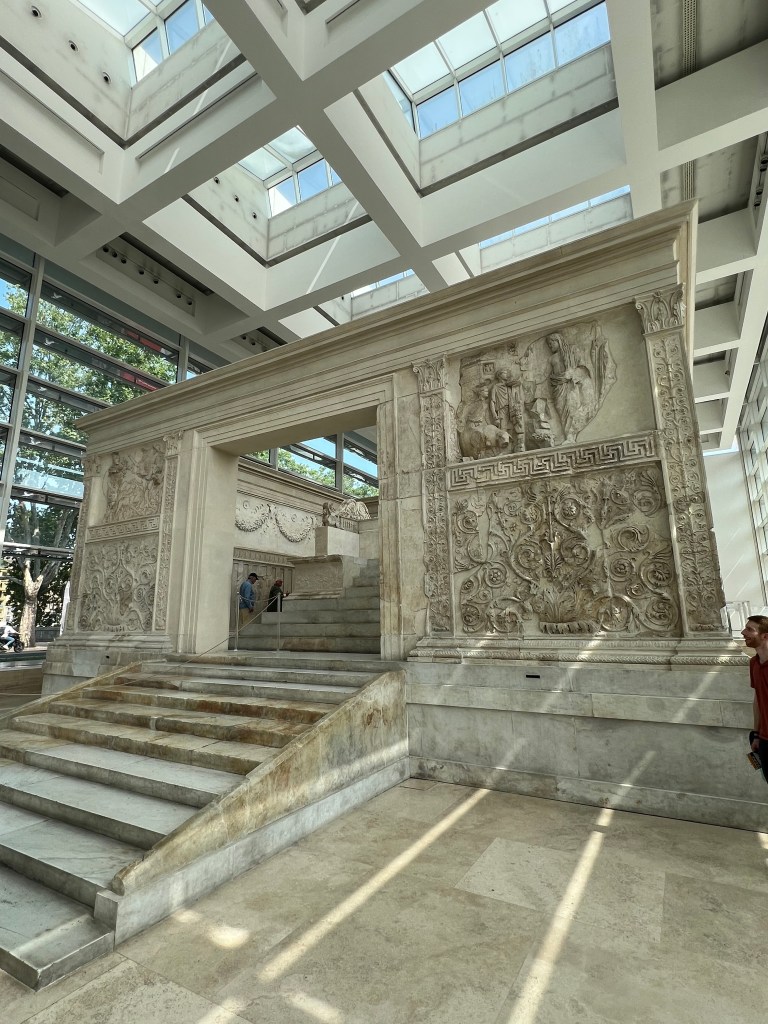
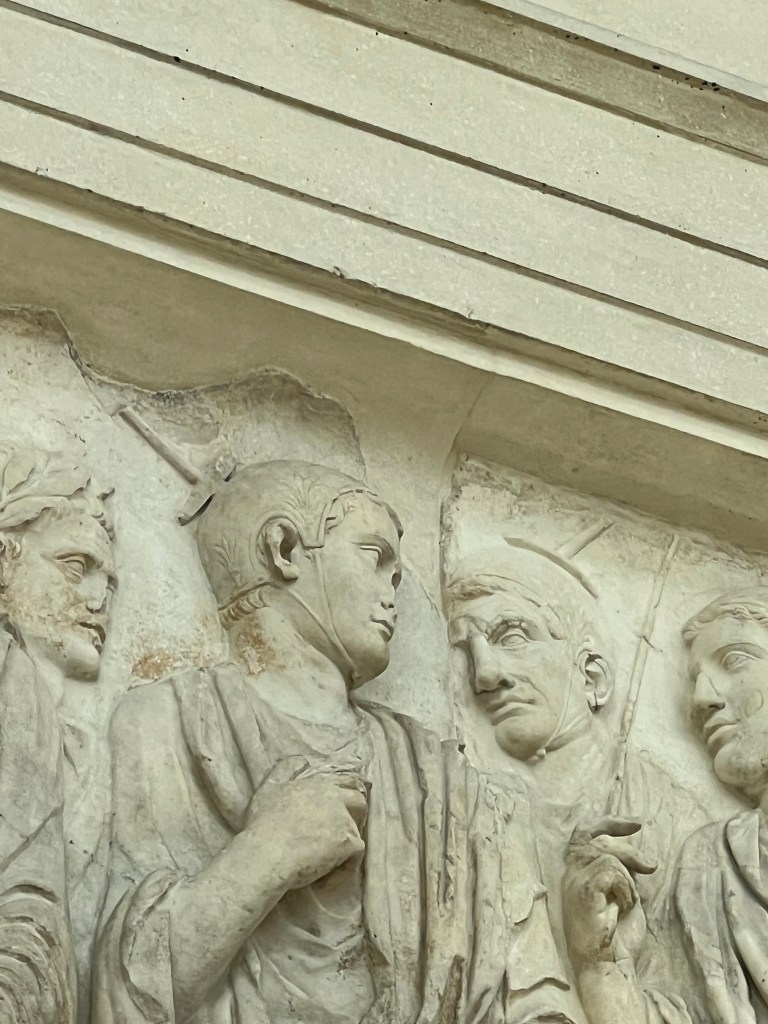
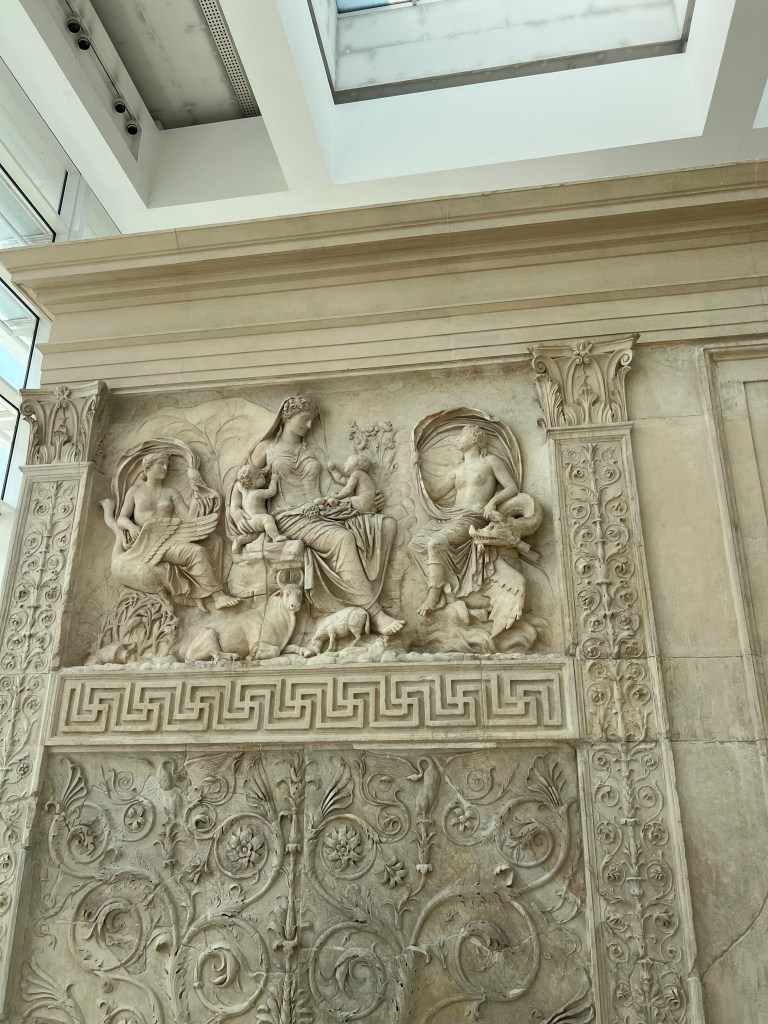
I had mixed feelings about the presentation of the Ara Pacis. The large glass building was one I’d seen and noted many times on my way to and from the sandwich shop, All’Antico Vinaio (delicious). The building is, of course, impressive. Additionally, I appreciate that it is housed in glass, allowing those passing by to survey it. However, upon visiting the monument, I couldn’t help but feel the surroundings took away from the power of seeing something so ancient and notable. The sleek, modern aesthetic did not help draw me into the world of Ancient Rome.
This is in contrast to the feeling of viewing antiquities in, say, the Roman Forum. Although you are surrounded by tourists and can hear the sounds of the city, it’s hard not to think about all the history that took place where you’re standing, to imagine all the ancient feet that walked on the same ground as you. Seeing the location of Julius Caesar’s assassination along with his temple was incredibly striking not only because of the power of the monument but also the knowledge that something so historically significant happened where I was standing. The connection between these monuments and their original locations should not be underscored when considering the experience of the surveyor.
Hearing about Augustus in a negative light was also a new experience for me (I am not disagreeing with the assessment). When I was taught about him it was freshman year of high school. My teacher, who I did not and still don’t like, spoke highly of him, praising his moral character and many of his actions. Additionally, the ancient authors we read to support him echoed this sentiment. Even in our readings for this course, the fact remains. Suetonius wrote: “Finding Rome’s architecture both lacking in imperial dignity and prone to floods and fires, Augustus improved the city so greatly that he could rightly boast to have found it sun-baked brick and left it marble. (Augustus 28.3)” Professor Yarrow’s perspective was not only fresh but also quite informative. I’d like to think that, if I’d studied Augustus for the first time as an adult, I’d arrive at a similar conclusion as her. However, it’s interesting to experience my view of him shifting from how I’ve felt for a large chunk of my life.


 Rome via Brooklyn
Leave a comment