
566 words, 3 minute read
What contrasts of new and old did you find aesthetically pleasing? What contrasts of old and new did you find too visually jarring and/or confusing? What did you learn on your own about life in Italy? Perhaps reflect on eating lunch or riding public transportation? Did Culture Smart! Help? What about the apps?
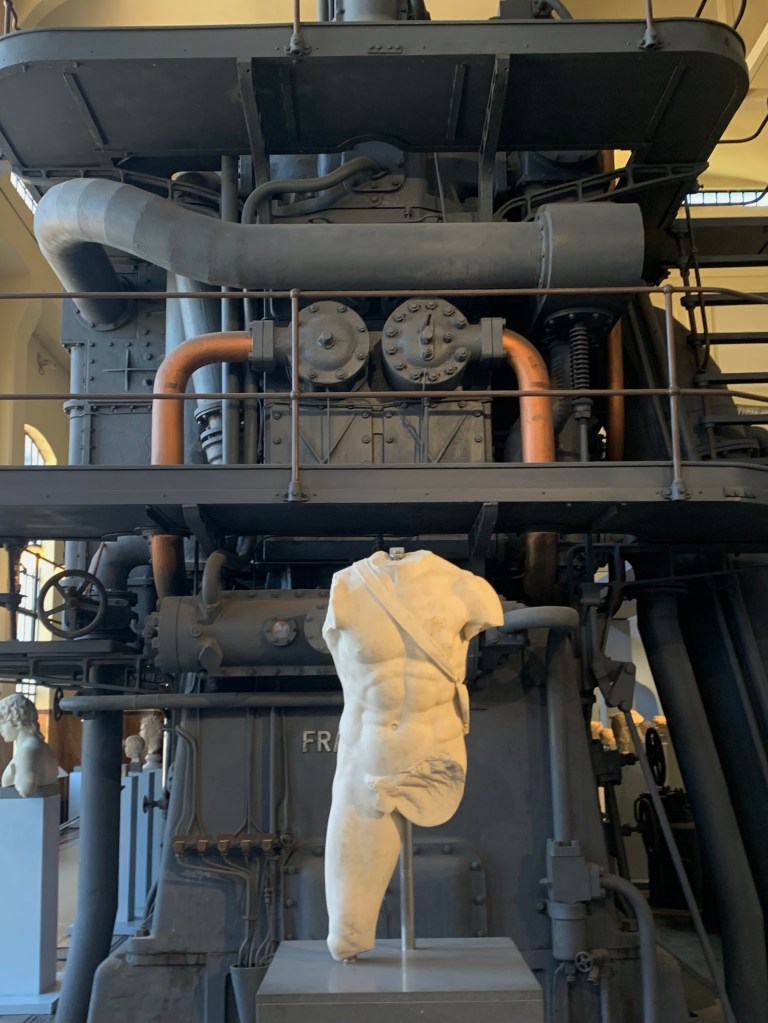
The museum was like nothing I had ever seen before! I found it incredibly fascinating- the cohabitation of two entirely different time periods and aesthetic values creates such a striking effect. I think it is precisely because of this aspect that it works together, even though it seems incongruous. This is even more so heightened by the fact that the museum was initially created for temporary use during the Capitoline’s construction, however was so successful that it eventually became a permanent installation. It is incredible to think on the idea that both of the objects of modernity and antiquity were built on the same grounds, in a sense, both of them true to themselves and each other. There is an argument to be made that both these objects and their aesthetics are equally valuable, both serving the people and their values practically and aesthetically. Both the classical and industrial aesthetics evoke feelings of strength and power, playing off each other- these robust, substantial muscular bodies juxtapose the adamantine machinery, in dialogue with one another.
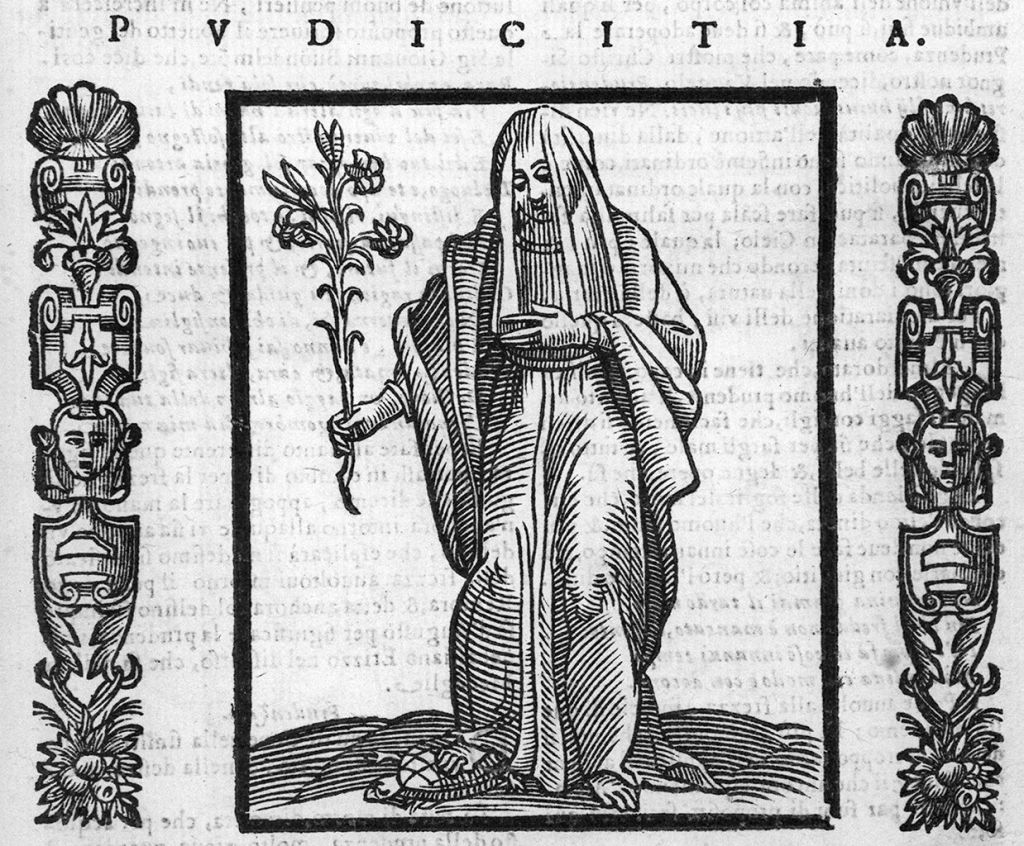
I found the concept of Pudicitia particularly interesting, as a symbol of purity. Visualized, this to the Romans looked like a sculpture of a woman, draped in fabric over her head and body, with her raised hand clutching cloth over her chest. It is very potent imagery, and admittedly, very beautifully done too. The geometric shapes of the carved marble representing fabric guide the eye to different significant parts of her body, and the pose itself evokes feelings of delicacy and intention- she moves her body with purpose and poise. It is also a motif that reaffirms feelings of this long-standing tradition of veiling to convey modesty, reason, and control. Pudicitia was both a personified abstract virtue, as a goddess with an active role in the lives of ancient Roman women, with her own shrines, yet also understood as a public display, a kind of performance of morality for women to act out every day.
Above all else, physical presentation was directly indicative of one’s moral character in the Roman world, something that I initially thought could possibly be difficult to understand today, although, the more I thought about it, I realized that we make moral judgements based on people’s appearance almost all the time, whether consciously or not. And yet, a woman’s appearance is still heavily scrutinized, so not much has changed in this way, both in the correlation between physicality and morality and in the methods in which women display modesty. It’s things like this that make me wonder if long-standing tradition continues to stand because time makes for well-established and undoubted concepts to stay that way, or if there ever really is rewriting of narrative, or if there is some kind of fated truth to these modes of being that are simply out of our control.


 Rome via Brooklyn
Leave a comment