
383 Words, 2 Minutes
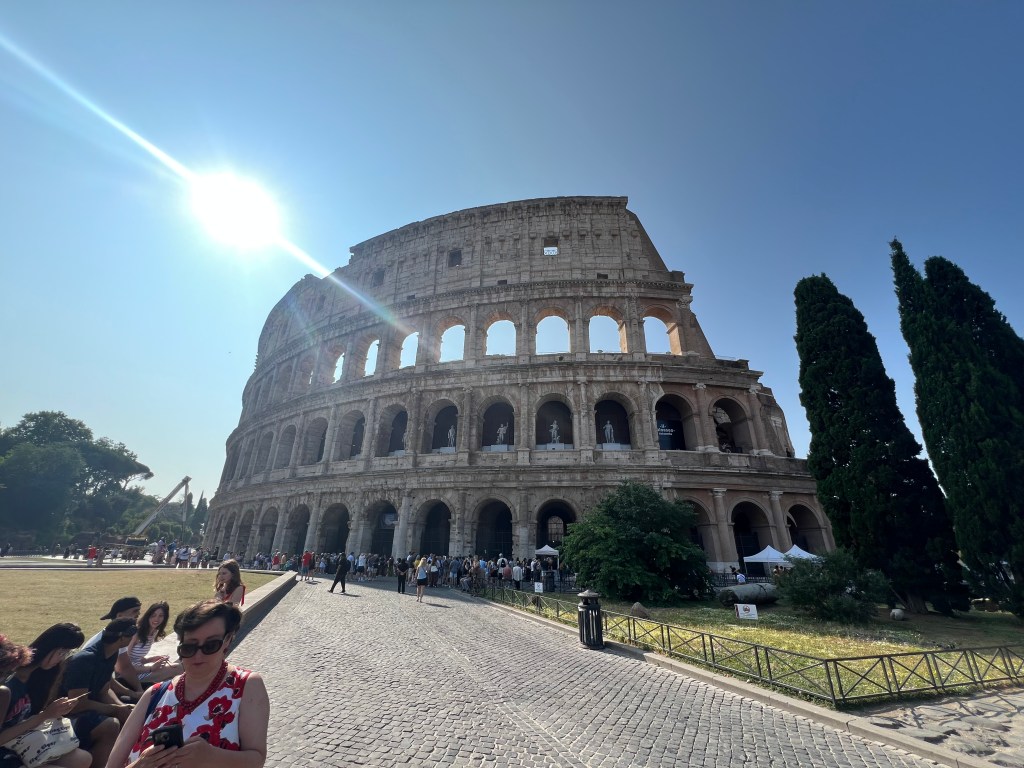
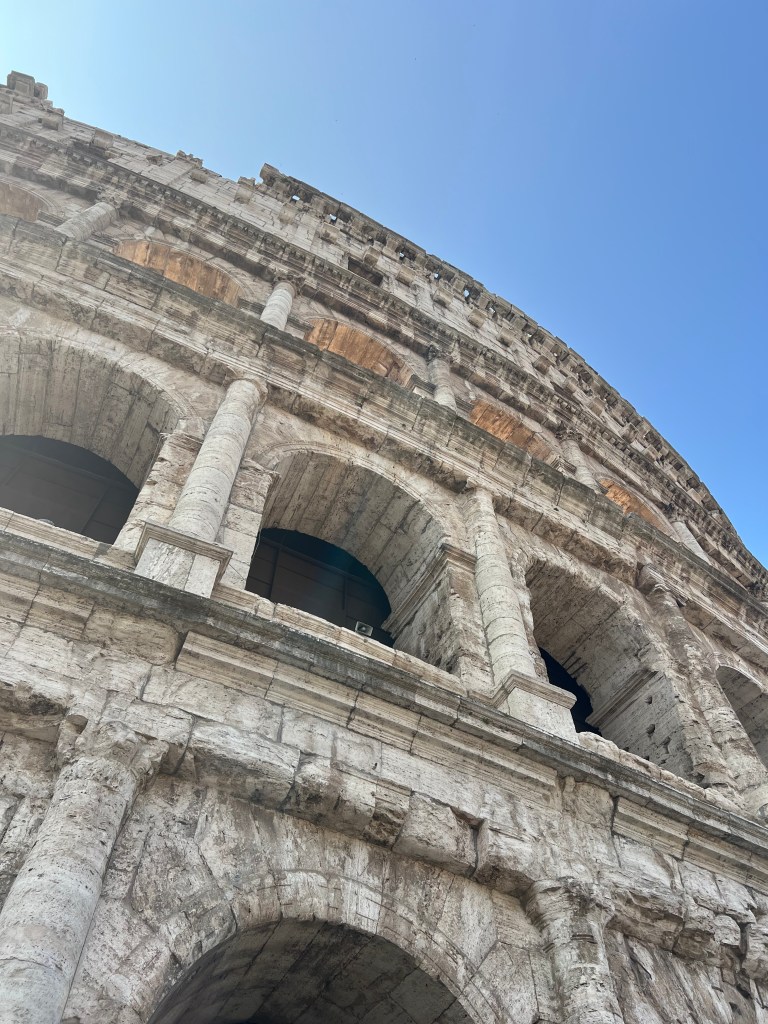
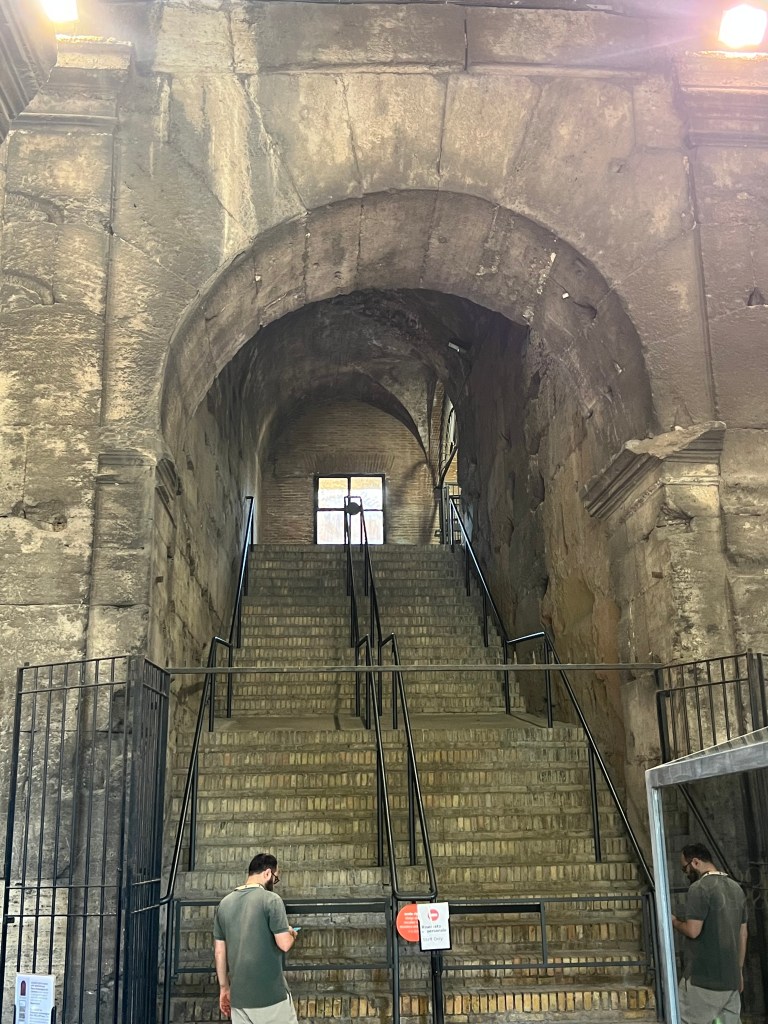
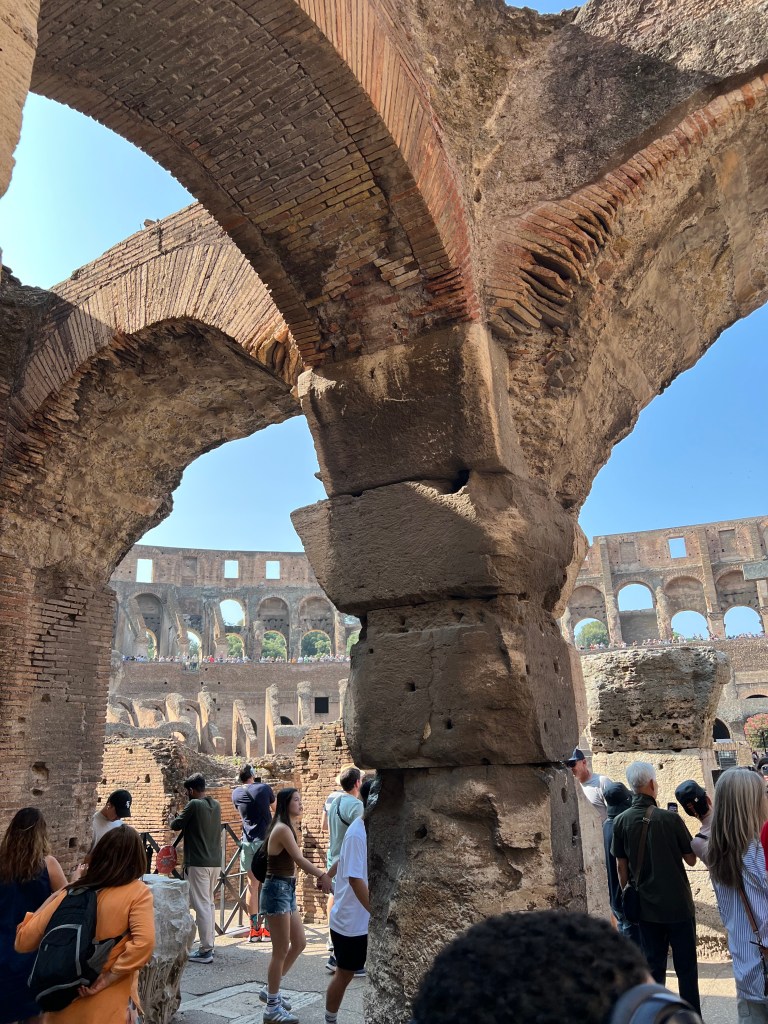
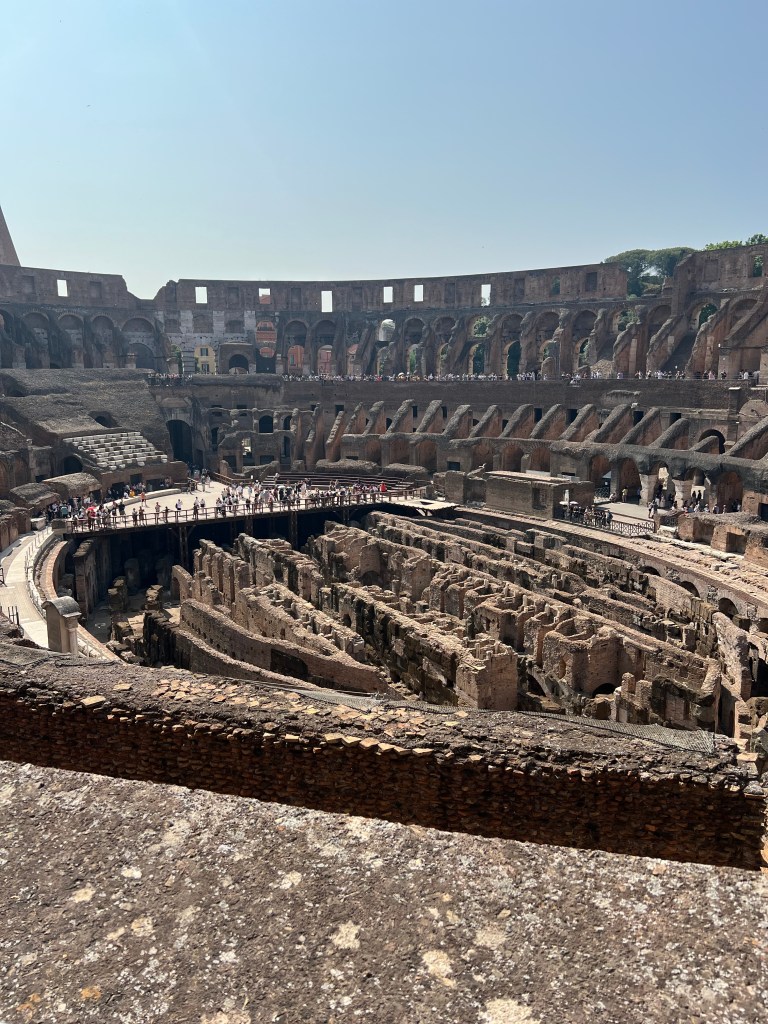
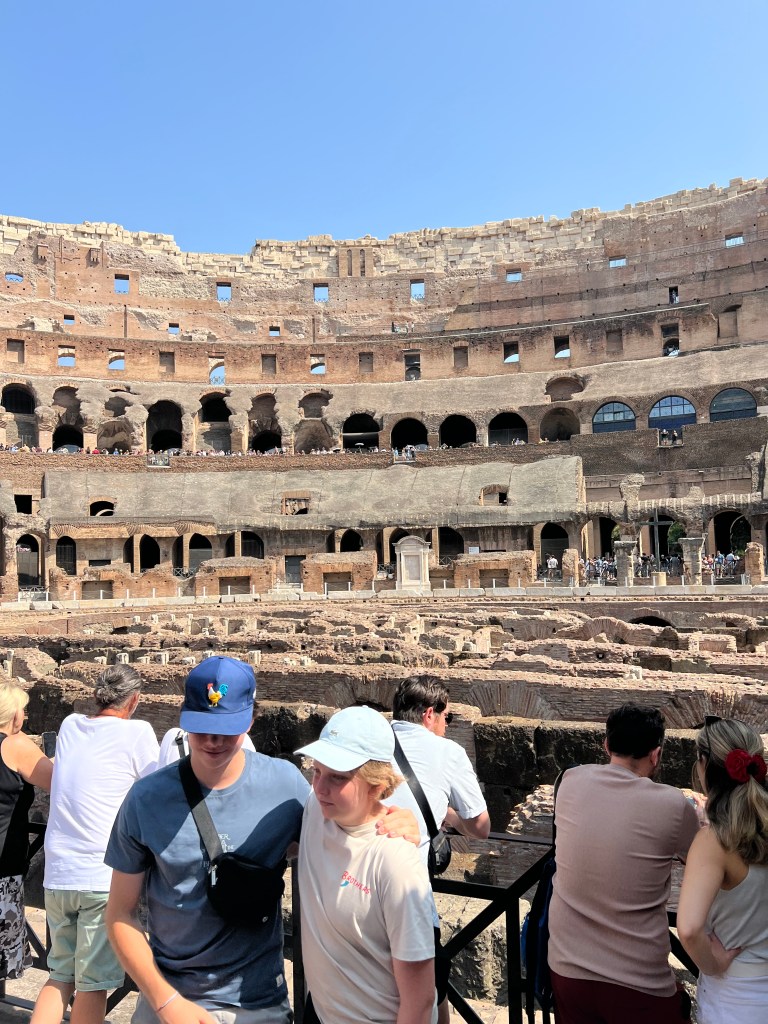
I was impressed by the technological aspects of the Colosseum, namely the trap doors, lifts, etc. While I knew about the theatrical element of the location, the extent that the Romans went to “put on a show” was interesting. I’ve always thought the disturbing, over-the-top spectacle of violence and peril showcased by interest in gladiatorial games, public executions, etc., has its modern iteration in increasingly violent video games, television, and movies (Gladiator won Best Picture, after all). That theory was bolstered by the showy, almost story-telling aspect of the Colosseum.
Growing up Catholic, the persecution of Christians in ancient Rome was stressed often. It was highlighted in history books, historical fiction, and religious education classes. A few times on this trip it’s been mentioned that we lack evidence for Christian persecution as widespread as has been traditionally taught. This shift in my perspective has been informative.
However, learning about the incidents that are documented has ignited a sort of piety in me. The reading in Rome Alive discussed Nero’s scapegoating of Christians after the great fire in 64 AD, and the cruelty of his punishments towards them (talk about violence as spectacle). Tacitus writes: “Mockery attended their death: dressed in the hides of animals they were torn apart by dogs, nailed on crosses, or were themselves set on fire after dark and used as torches. Nero opened his gardens to this spectacle and made a show of their executions in his circus, dressed as a charioteer and mingling with the people, or riding on a chariot. (Annals 15.44)” It was even tradition that Saints Peter and Paul were killed in these executions. It’s interesting that many Christians, when visiting Rome for religious reasons, enthusiastically flock to the Colosseum as part of their historical tourism, given its dark history.
The necessitation of slavery in the building of such fantastic, impressive structures has not been lost on me. People today, especially in America, often decry the loss of beauty in public architecture. While, in my opinion, there are a variety of factors contributing to this (late-stage Capitalism, the prioritization of practicality and mass production over aesthetics, etc.), one proposition could be the lack of slave labor, and the expense of having to properly pay the workers necessary to assemble such a building. A disturbing thought.


 Rome via Brooklyn
Leave a reply to moussatonicisse Cancel reply