
DOUBLE POST
Word Count: 634
Time: 3 minutes
Focus your post on just one museum object or at most two (say a compare/contrast). What about it reminded you of things we’ve seen earlier on the trip and why? Does it speak to any of the following themes: militarism, the role of women, the role of religion, social hierarchies, other themes? Please also consider sharing your Neapolitan adventures with photos just for fun (and maybe some extra credit)!
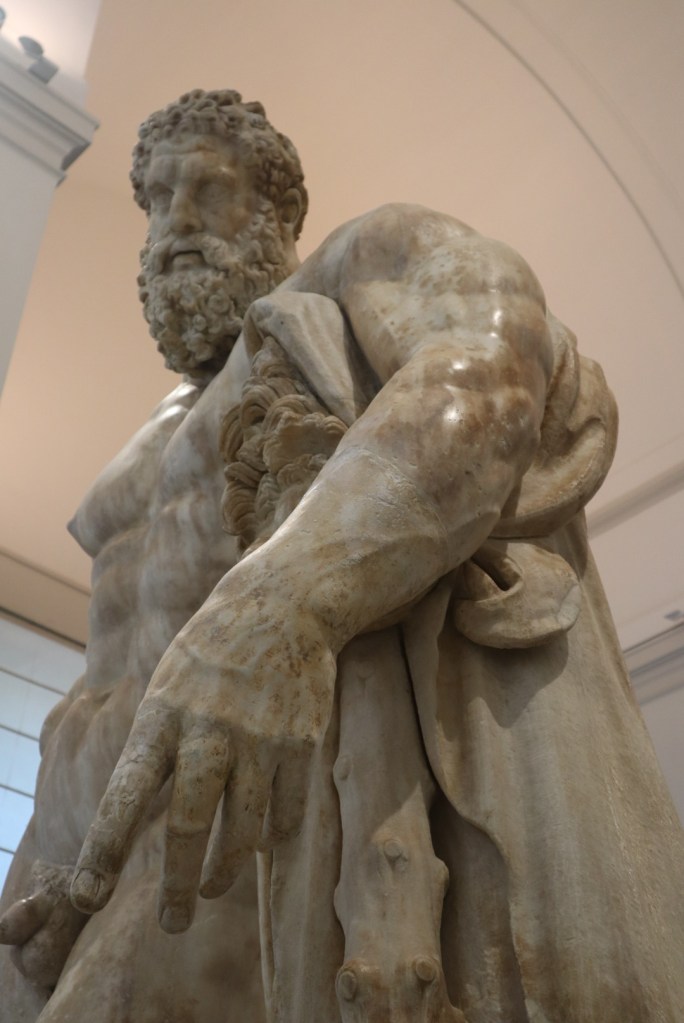
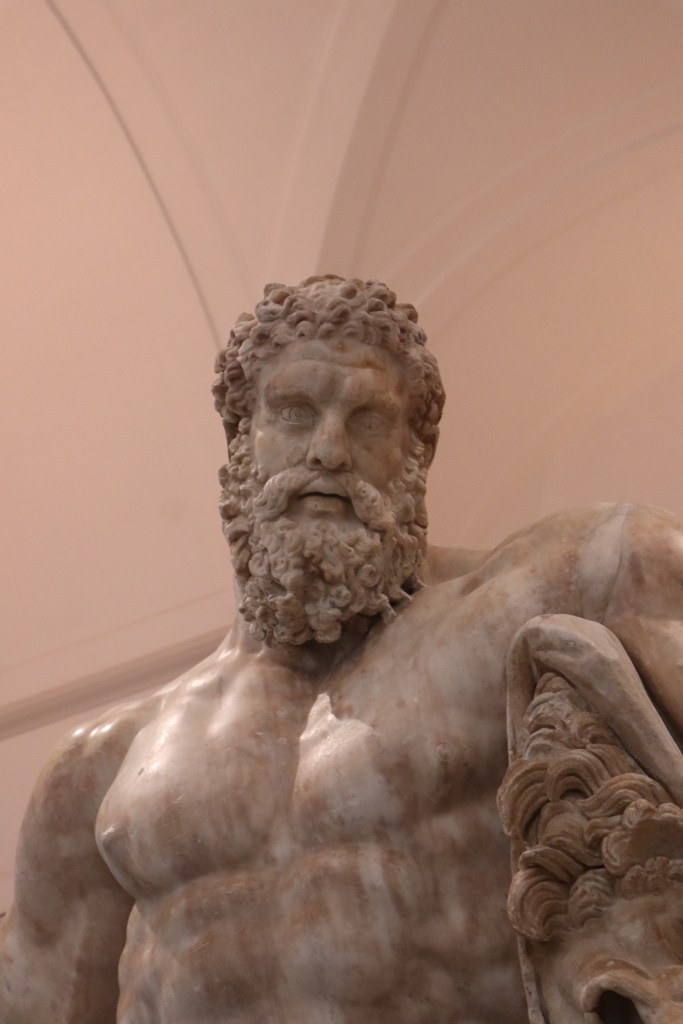
I really enjoyed this Museum and the exhibits that were shown. I really liked the Hercules monument (my favorite) and the personification of days–Monday, Tuesday, Wednesday, Thursday, Friday, Saturday, and Sunday–using Gods.
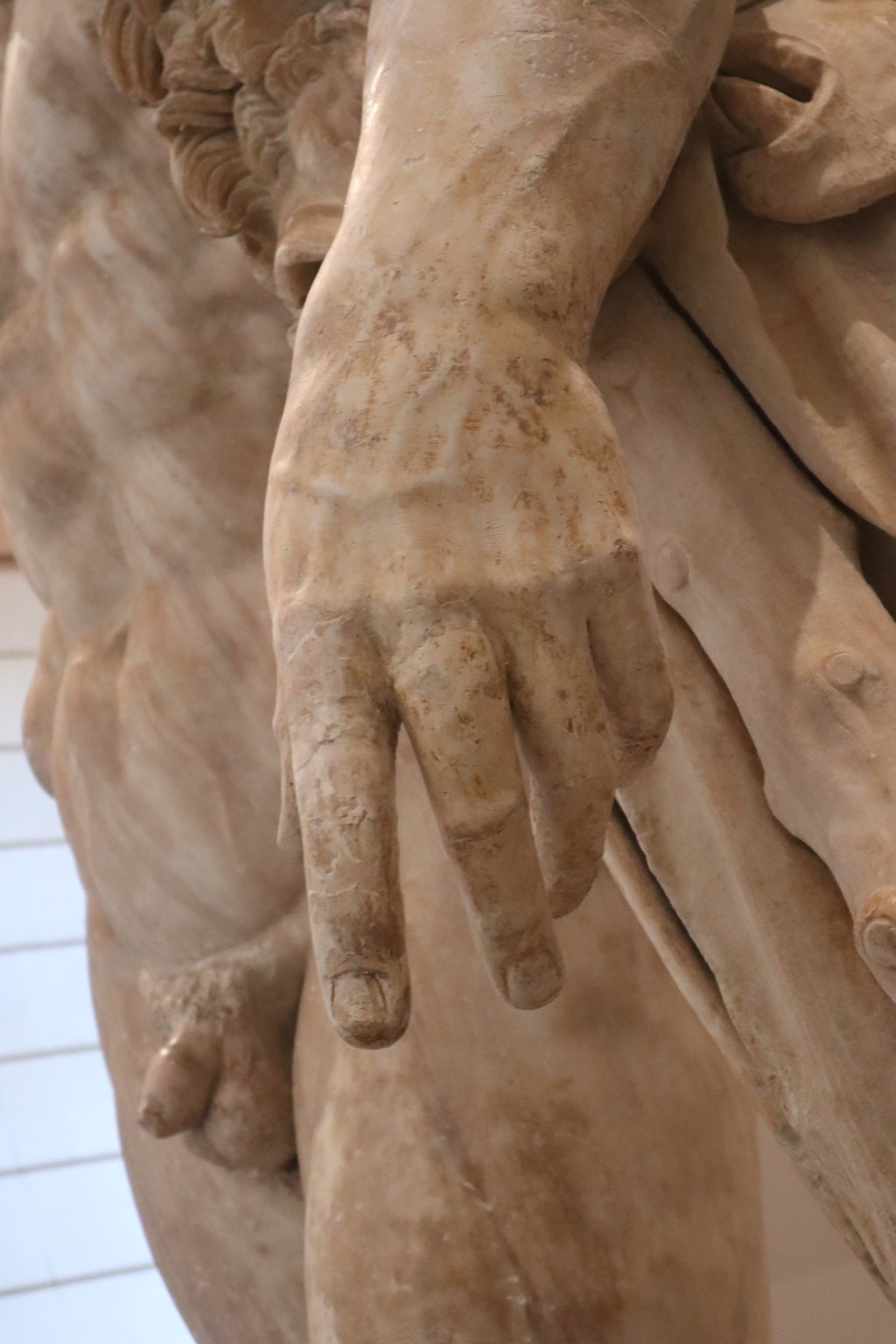
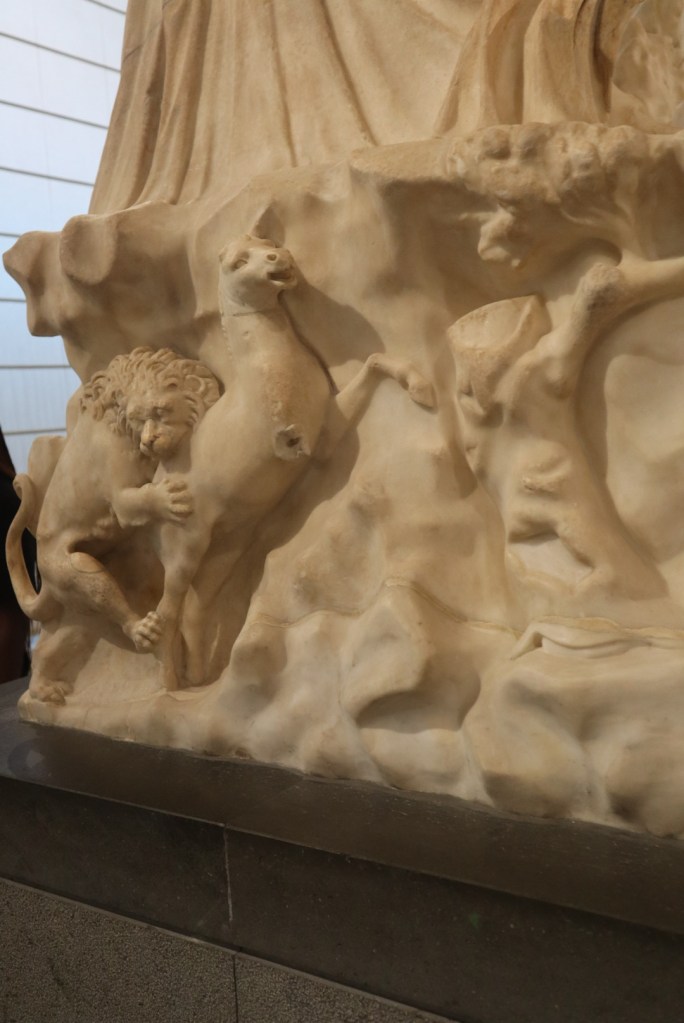
I liked the artistic design of the Hercules monument/statue. I found it super interesting because of all of the different muscles and veins that protrude in alliance with the way that he was positioned. For example: he was leaning on his object with his arm covering it, and the butt of the object attached to his arm-pit. The arm was hanging, looking very limp, and his veins signified that relationship.
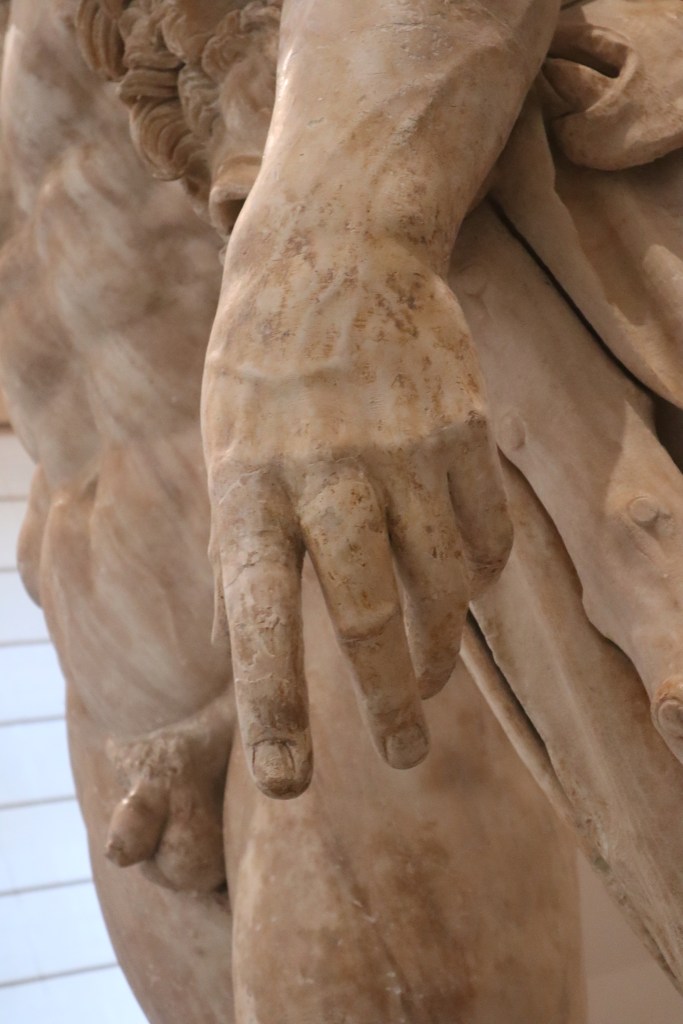
Most of all though I really liked Ace’s presentation on Hercules looking tired and almost defeated. The whole monument is somewhat counter-intuitive because Hercules is big and powerful, while this specific statue is somewhat opposite of that. But why would the artist depict Hercules like that? Well, I think that the artist wanted to show that Hercules was not a God. When we think of Gods–especially in antiquity and mythology–we see them as undefeatable and tireless. But the prior statement is challenged by this statue. Now, Hercules is not simply a God but a demi-God. So, this monument thus shows us the human side of a half-god. There is something uniquely human about the monument and that being stamina. Hercules is tired, exhausted, and looks defeated. All people can connect with this feeling. It happens and the artist wanted to portray it. This extends to how statues and monuments play a role in the empire and by extension to its civilians. To be related to a demi-God like Hercules is nothing short of amazing–I know that he is a myth but let’s act like he was the real thing because after all myths are just normal stories that are on steroids (hopefully this makes sense). To show that someone as great as him gets tired draws the viewer closer making them connect with him. The monument is sort of depressing at first glance, but its function is quite the opposite. The monument reassures the viewer that they too can be powerful like Hercules while sharing the trait of getting tired.
I really liked this monument/statue.
Sneak in something else:
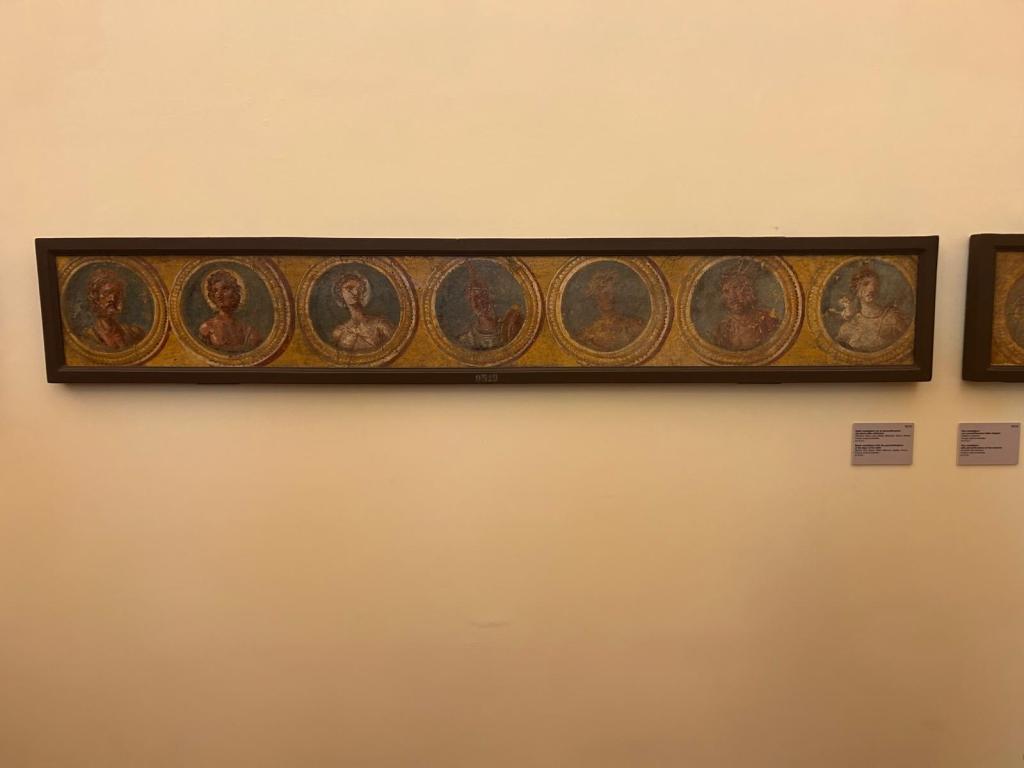
I also really liked the personification of the days of the week. This to me was another highlight of that expansive museum. The personification of deities is seen throughout Rome. For example, the rivers Tiber and Nile getting personified as living Gods, symbols, and deities.
Something that I have been questioning throughout this trip is women and their role in Antiquity. A lot of the personification of things include women, for example the fertility Godess. I think that the Romans had a lot of respect for women and how they contribute to society. I know I sound a bit priggish and all but I do truly think that the Romans did. During the Vestal virgin presentation I was a bit confused. Starting off this experinece in Rome I thought that women were highly respected individuals in Roman society. Though, after the presentation mentioned above, I retracted my thoughts.
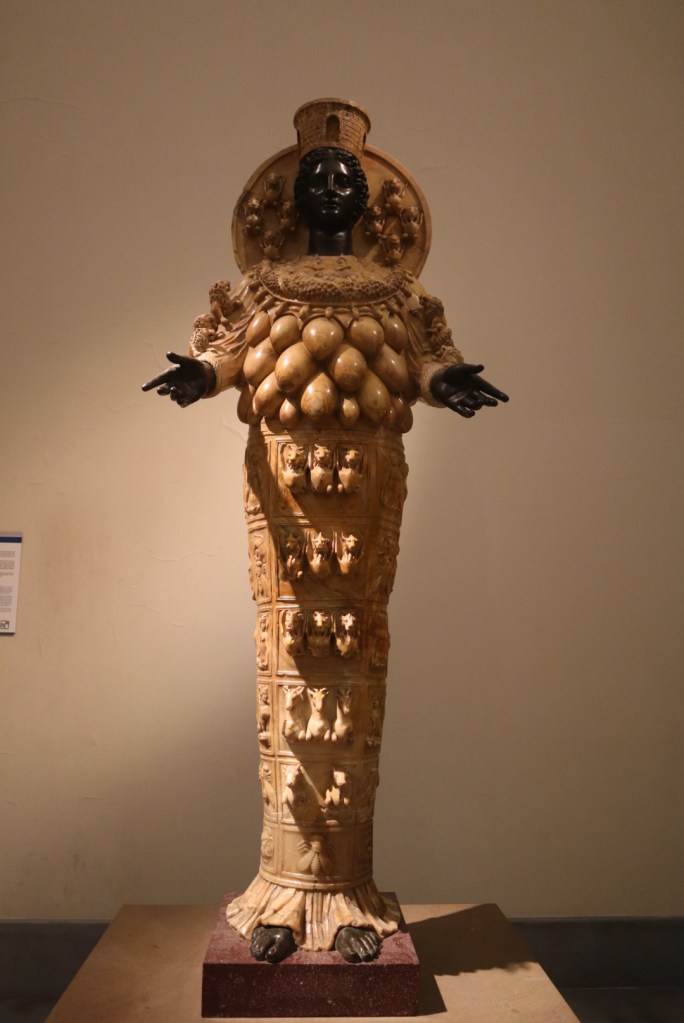
Another thing for thought is how a lot of the personification of concepts that are women usually revolve around something that has to do with their sexuality.
The blog quote section says: TBD
More Pictures:
–Moussa Toni Cisse


 Rome via Brooklyn
Leave a reply to Tina Cancel reply