
DOUBLE. 648 Words, 3 Minutes.
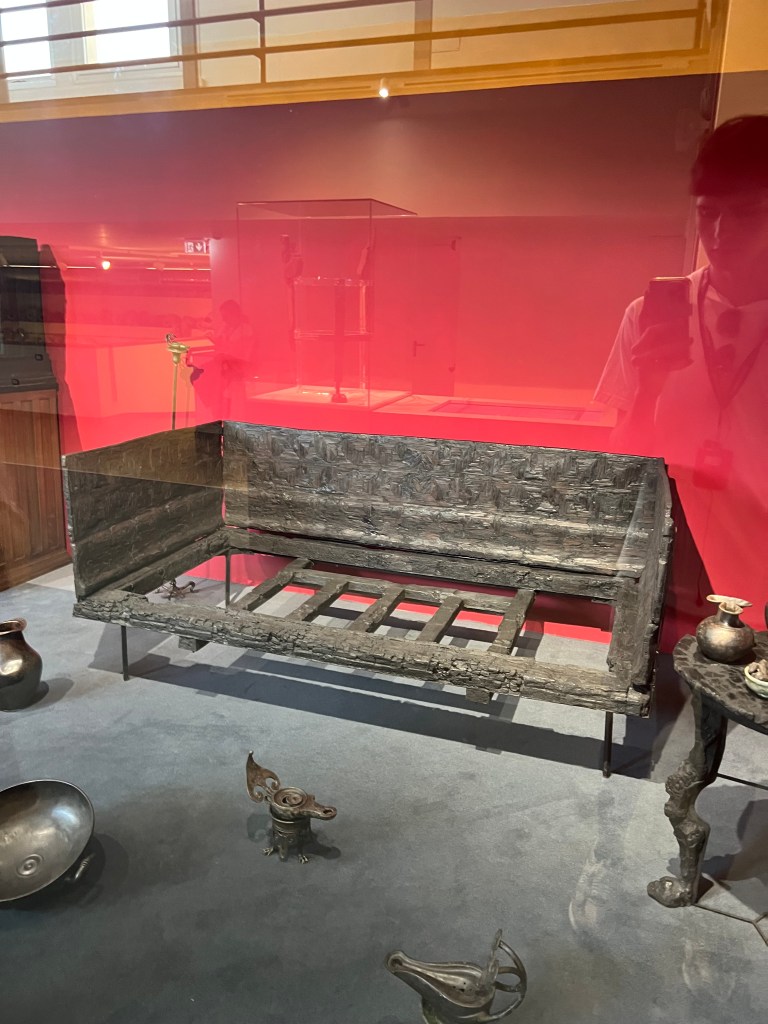
One of the most fascinating things about Herculaneum to me was the wood preservation. The ability to touch wood structures built in the first century was just another moment of strong connection with our species’ past on this trip. I have included three examples: a wooden couch, the large boat we saw as a group, and a wooden doorframe.
The finest craftsmanship on display here is, I believe, the couch. Simple, sure, but it’s remarkable how sturdy and compact the design is. As Professor Yarrow remarked on the trip (paraphrased): “Once humans find a solution for something, they tend to stick with it.” I think this is aptly exemplified by the couch, which bears a strong similarity to modern iterations.
The boat also stands out for its design, although I do think it’s a bit sloppy. Part of this could be its wear over time, but it lacks to harmony and simplicity that makes the couch aesthetically pleasing. Still, its resemblance to our modern boats is remarkable, and seeing the preservation of small things such as the nails was particularly intriguing.
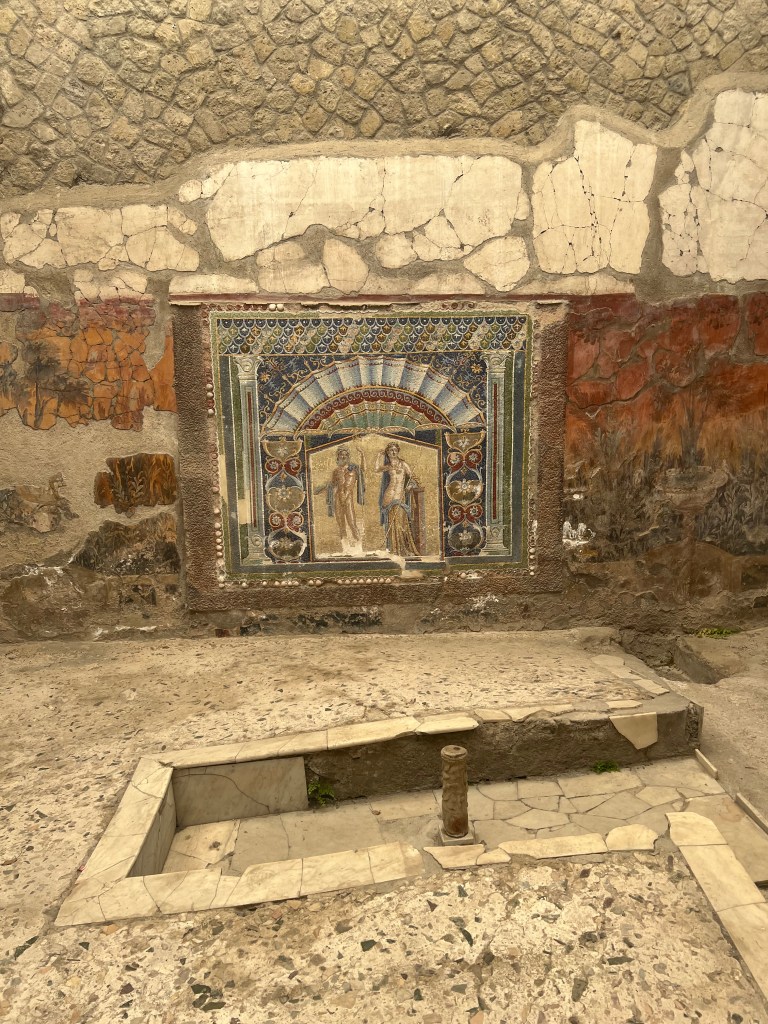
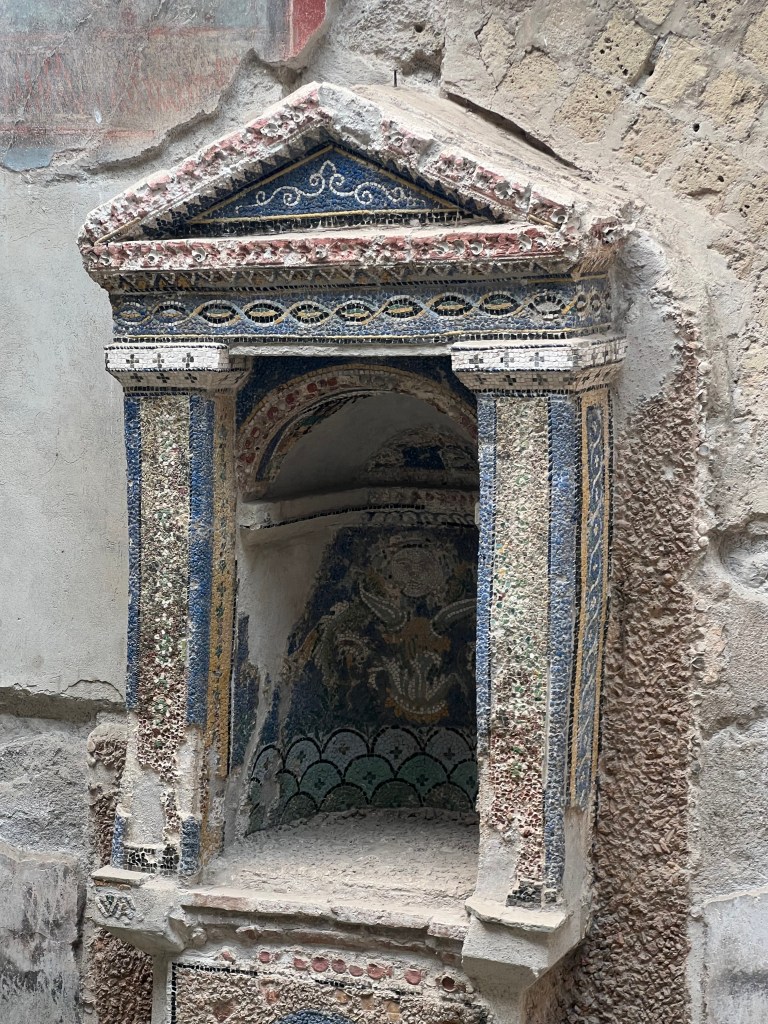
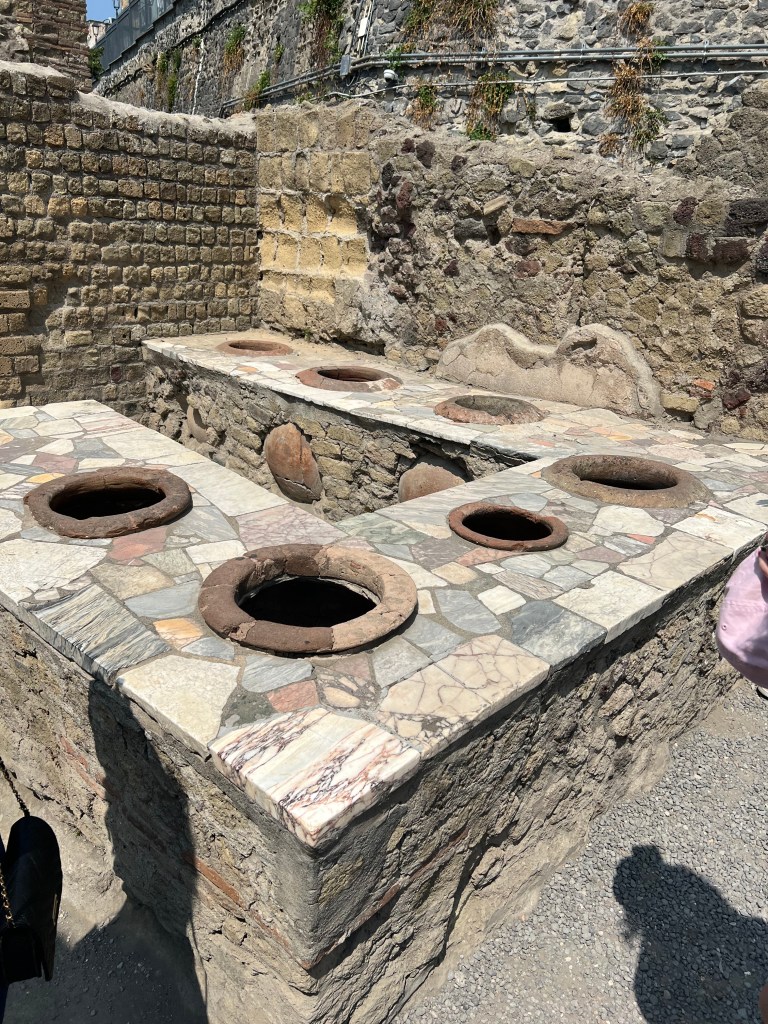
The last of the wood is the doorframe. This is the most simple of the three, but sometimes seeing such simple things preserved can be slightly moving. The presence of small design elements like this that normally would have rotted away humanizes our past; a material like wood has a vitality to it, a freshness. Seeing an ancient example works to transport you to the past. I’ve already brought this up in many blog posts, but in sites like this, it’s hard not to feel like you are walking with the ghosts of its previous inhabitants. This is especially true in a more “working class” site like Herculaneum. Attached are a few more photos from the city.



After lunch (I chose a beef and onion pasta dish, which was delicious), I went to Pompeii with Dante, Rachel, and Jessica. This city was quite a bit larger than Herculaneum, and the scenery around it more idyllic. This is not Herculaneum shade, but yeah, I’d rather live in Pompeii. Outside of the horrible fiery death.
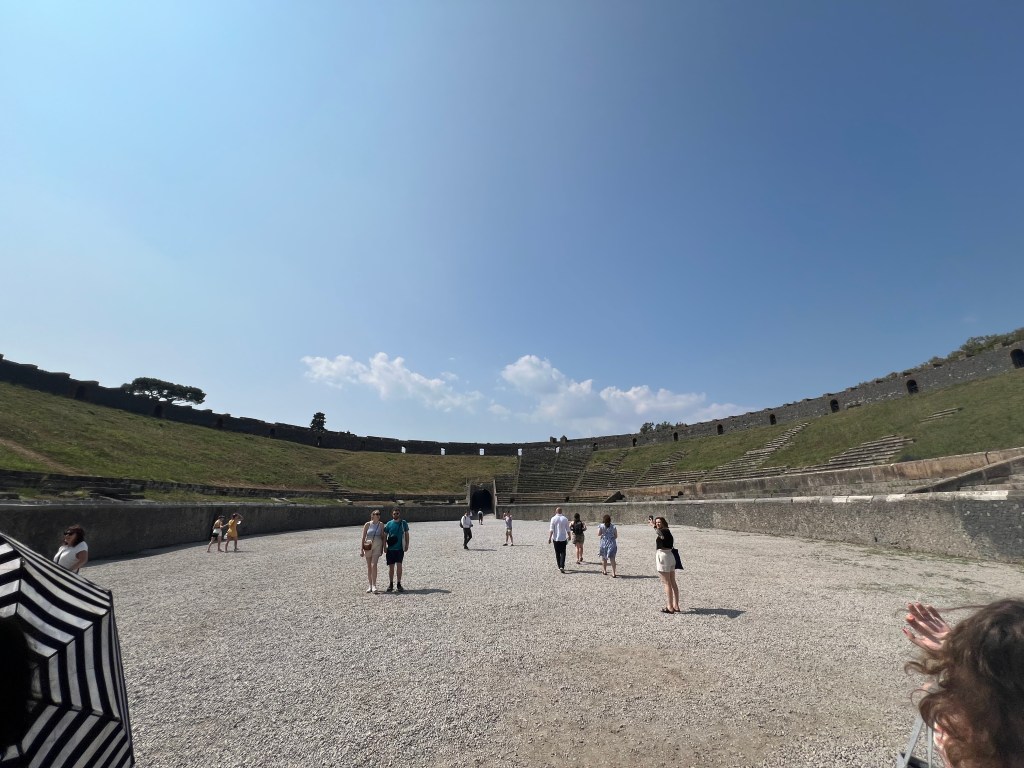
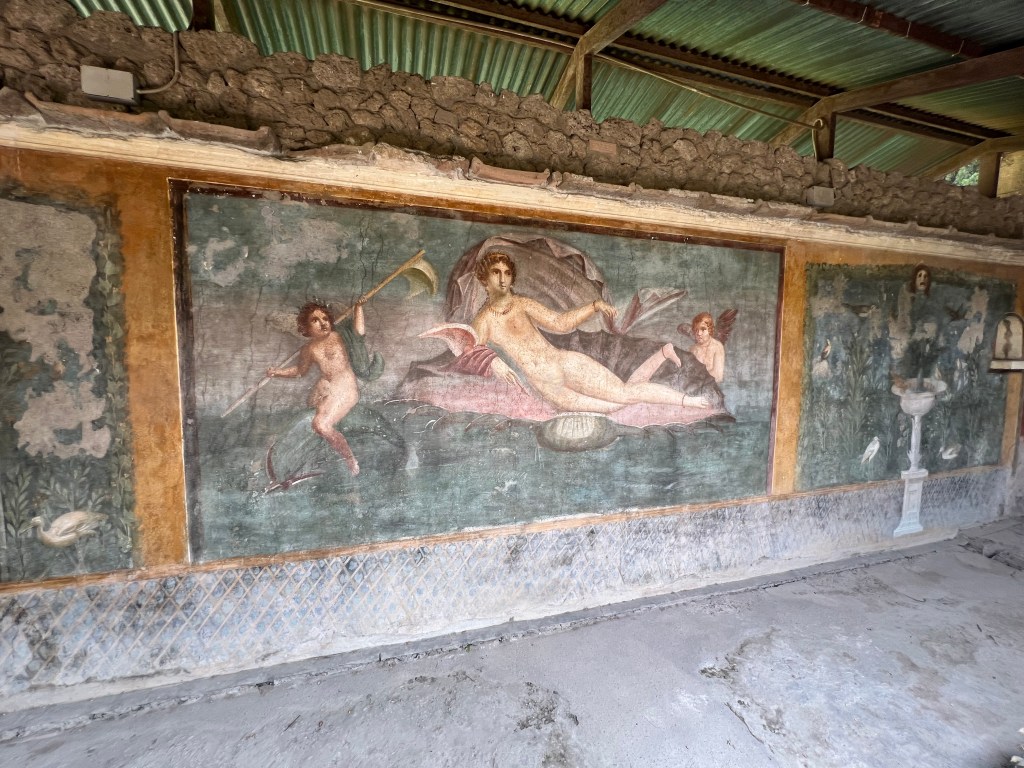
We explored the amphitheater first. The structure was impressive, and it was amusing to learn about the Pink Floyd concerts held there in the 70s. A very odd moment in recent history for sure, but I’m jealous of the attendees. Next, we were able to view some very impressive frescos, and then it was on to a set of necropolises. These large, looming monuments to the dead, sometimes including statues in their honor, continued the spectral feeling of much of this trip. The idea that, out of every person to have existed throughout time, this select group of people are preserved, is existential. It begs the question of whether or not they could have predicted their memories living on for so long, if they could imagine their graves being observed by onlookers two millennia later.
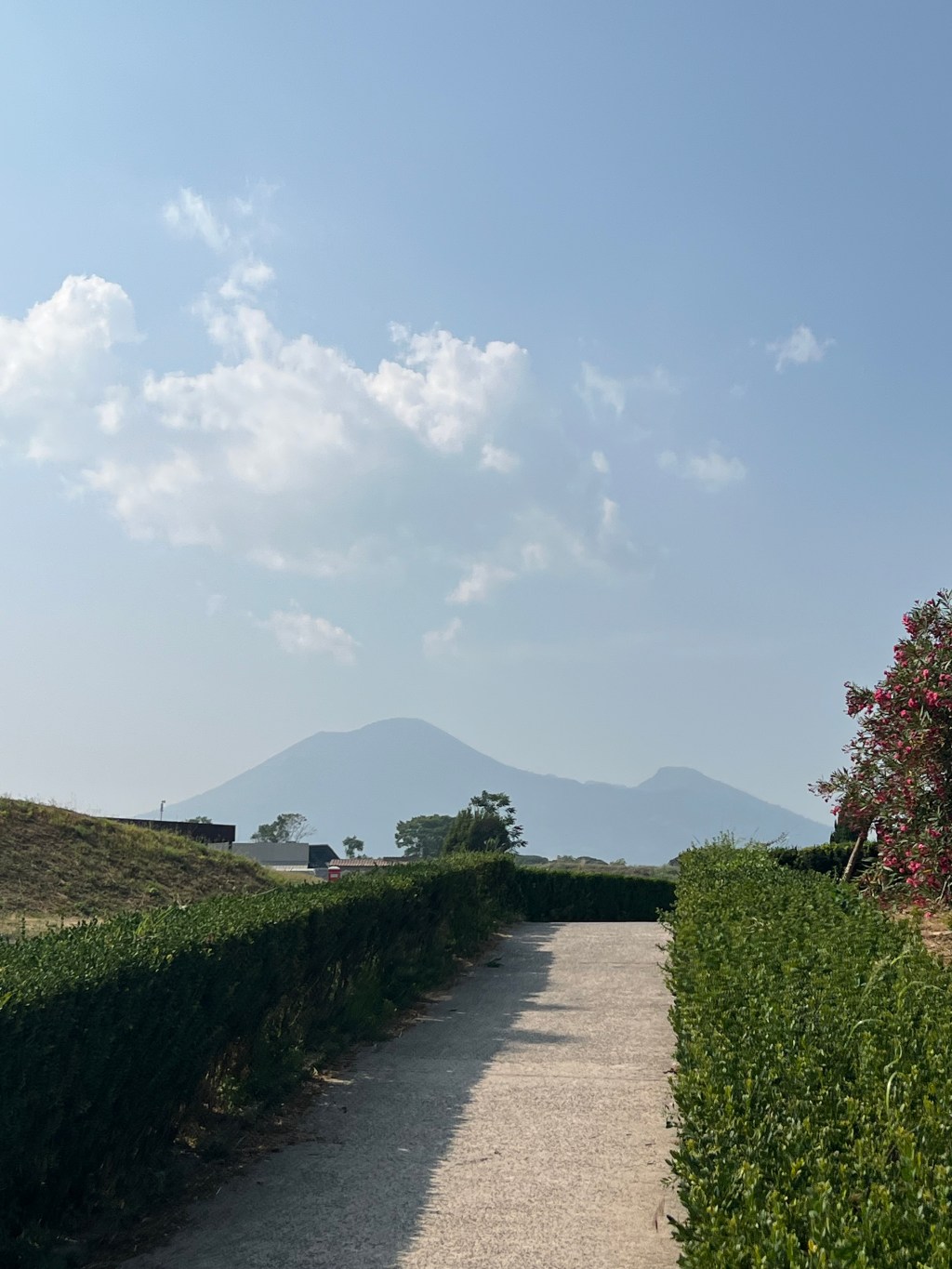
After a bit more strolling (and a wonderful view of Vesuvius, another reason I’d rather live in Pompeii), Jessica and Rachel left for the train station, and Dante and I set out to find the brothel. This was a more difficult task than we anticipated, and we were wandering for about 20 minutes before we stumbled on Khadija, Tina, and Isabel. They led us to the brothel, which they had just exited. It was small. Interesting, but slightly depressing. The rooms were cramped and the beds were short. There were about 5 I think, and a bathroom towards the exit. Not to get into too much detail but like, the humidity… come on. We left and headed back to the hotel, where we met Julia and Nico and headed for the train station. They departed for Rome, I made my way to Castellamare di Stabia.



 Rome via Brooklyn
Leave a reply to rachel19281 Cancel reply