

735 words, 4 minutes read (double post)
What is the rhetoric of decline and how does it empower claims to “restoration”? What is truly traditional about Augustus’ reign? What is wholly unique? What socio-political messages are conveyed by these Monuments?
Decline, though a word with negative connotation, is often synonymous with loss: of power, vitality, and popularity. This however, for the right ruler, can be a tool for greatness. One can take decline and turn it on its head. Instead, it can be an opportunity- of rebirth, revitalization, and reform- to ‘make things right.’ This is what we are able to witness with Augustus and his monuments, as they both course-correct and demarcate important events of prosperity, making them synonymous to his rule.
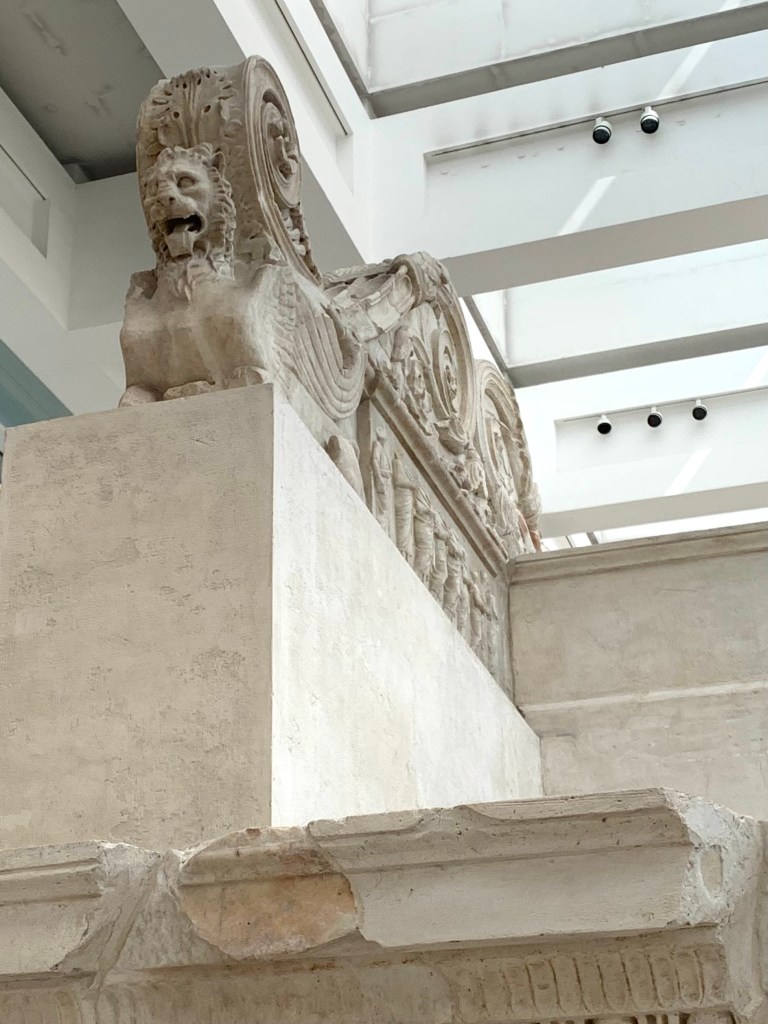
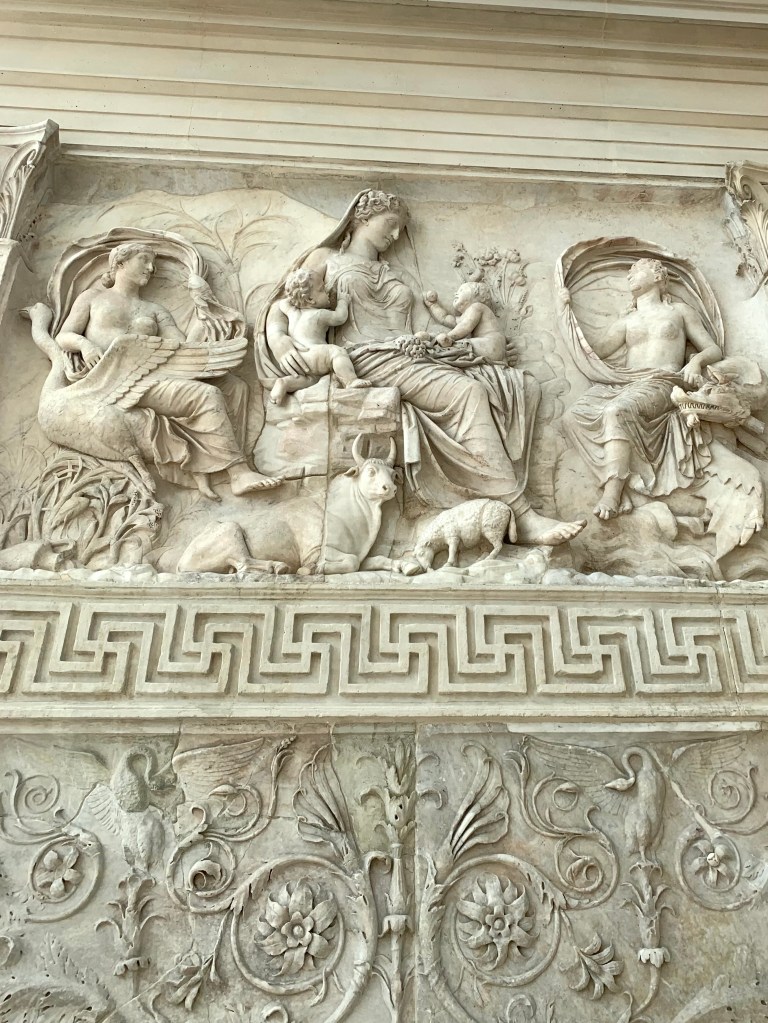
In the case of the Ara Pacis, the altar was decreed to celebrate the emperor’s return after his several year absence regarding imperial duties. The altar originally stood facing the Via Flaminia, the road that Augustus used to reenter the city. The altar itself features scenes intrinsic to the Roman identity: Aeneas in Latium sacrificing to the Penates, Romulus and Remus with their father Mars, the god of war, Venus genitrix, the goddess Roma, as well as
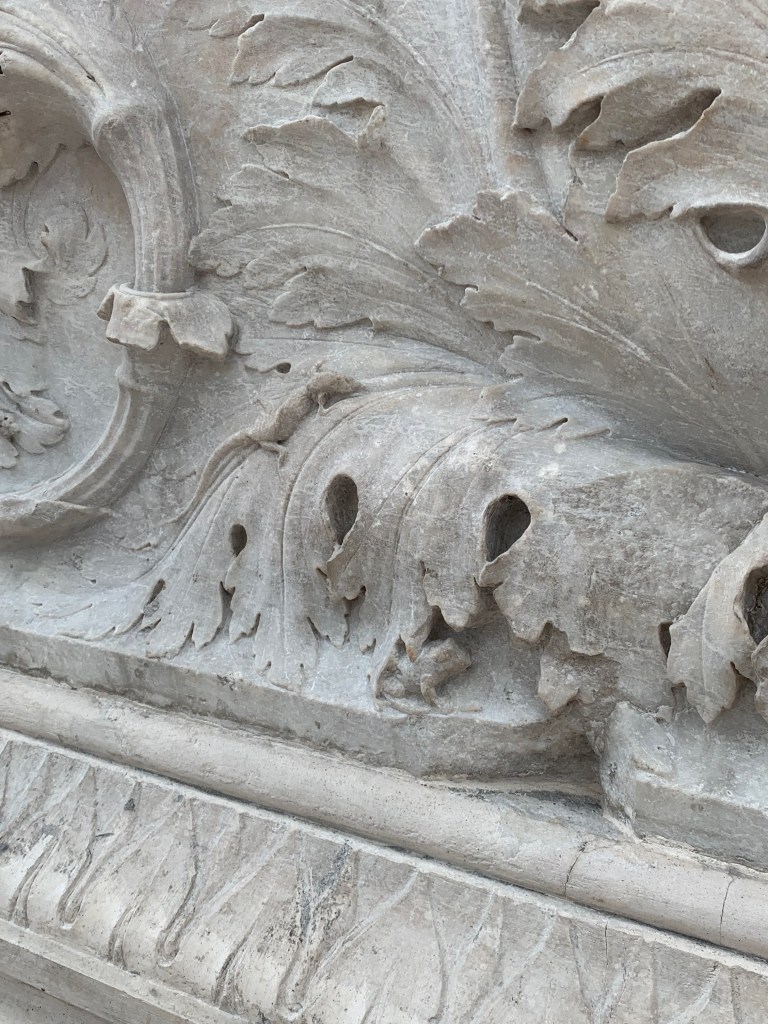
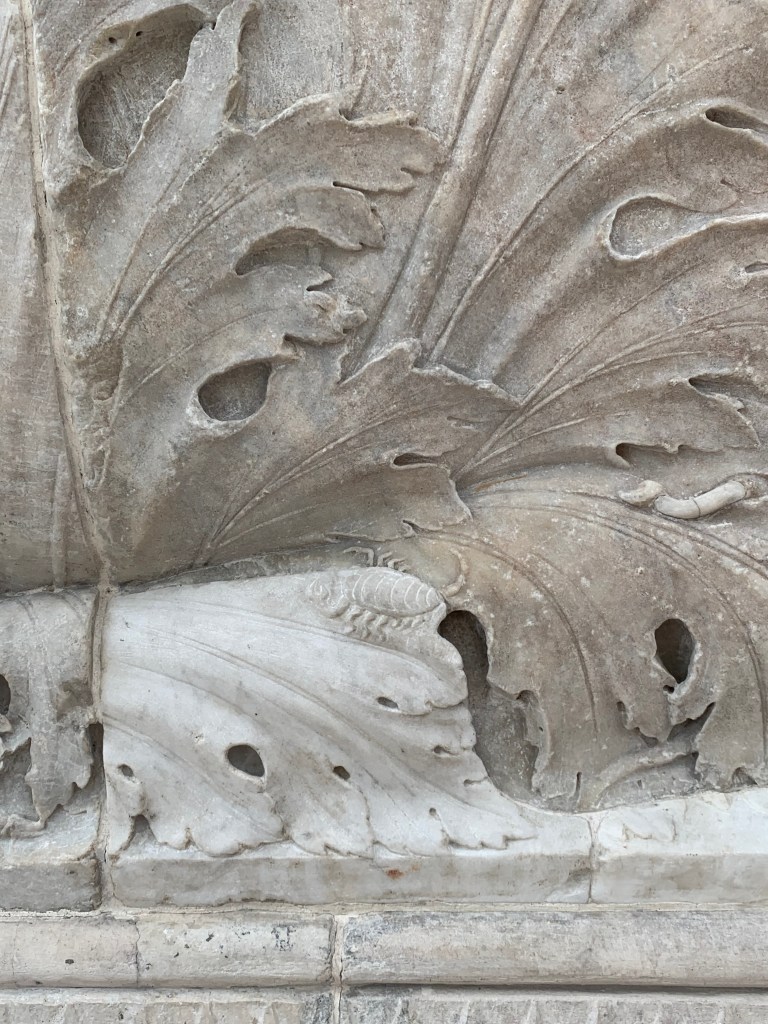
processional friezes highlighting the emperor himself along with the most notable figures of Rome. The form of the altar itself is a religious reform, a kind of return to order and stability of ancient rites. (Museo dell’Ara Pacis) The abundance of vegetal motifs and nature depicted in the reliefs of the altar attest to Augustus’s rule, as a representation of his flourishing and thriving reign, as a part of a potent visual language he is creating. Regarding the altar, Augustus writes this in Res Gestae, his autobiography:
“…when I returned to Rome after my successful conduct of affairs in Spain and Gaul, the Senate resolved that an altar to Augustan Peace, consecrated to my return, should be set up in the Campus Martius, and ordered that the magistrates, priests, and Vestal Virgins should perform an annual sacrifice.”
With this, what Augustus does is make his return analogous with the return of peace on ancient Rome after the civil wars. The emperor further popularized the goddess of peace, Pax, previously practically unknown to most ancient Romans before his rule. This has a critical impact, as the word even became synonymous with the Roman Empire, dubbed the ‘Pax Romana’, with the deity even receiving a temple in Vespasian’s Forum of Peace.
The Emperor’s Obelisk plays to a similar motive: to celebrate the 20th anniversary of his conquest of Egypt, Augustus erected an ancient Egyptian obelisk, as well as a solar meridian. The purpose of this monument was to display the accuracy of the new calendar, (as the calendar held great importance to both religious, political, and judicial life in ancient Rome), the emperor took the opportunity to fix a miscalculation and with its rectification, Augustus demonstrated with this monument that he was in control, communicating to the empire that everything was in order. The inscription on the base of the obelisk reads:
“The emperor Caesar Augustus, son of the deified Caesar, Pontifex Maximus, triumphing general 12 times, consul 11 times, with tribunician powers 14 times, gave this obelisk as a gift to the Sun after Egypt had been brought under the power of the Roman people.”
Monuments like the obelisk act as visual proof of the emperor’s victory, as their existence in Rome serve as evidence of both conquest and the great resources of the empire to transport such treasures through skillful maneuvering from the Nile, through the Mediterranean, and across the Tiber. This is a kind of political messaging that Augustus understands, and utilizes very well to promote his rule. This was especially true in the world of ancient Rome: public monuments were the communicators of ideology of the current political regime of the time. These monuments, both in their visual and literal, are in dialogue with both one another and with the citizens that interact with them. Collectively, they reinforce each other and create a historical narrative of attestation in the emperor’s greatness.
 Rome via Brooklyn
Leave a comment