
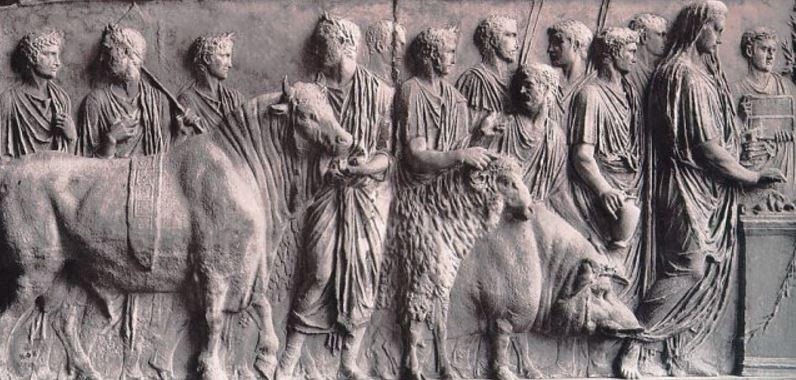
Animal sacrifice was one of ancient Rome’s most important rituals. The Romans believed their many gods controlled everything from war and weather to agriculture and health. Citizens gave gifts to the gods through sacrifice to keep them pleased. They practiced a religious concept called do ut des, meaning “I give so that you may give.” They believed that if they offered the gods something valuable in sacrifice, the gods would protect and provide for them in return. Sacrifices were also not exclusive to the upper class, as the average citizen partook in them during state-sponsored festivals. In these festivals, priests would perform sacrifices on behalf of those not fortunate enough to buy large animals themselves.
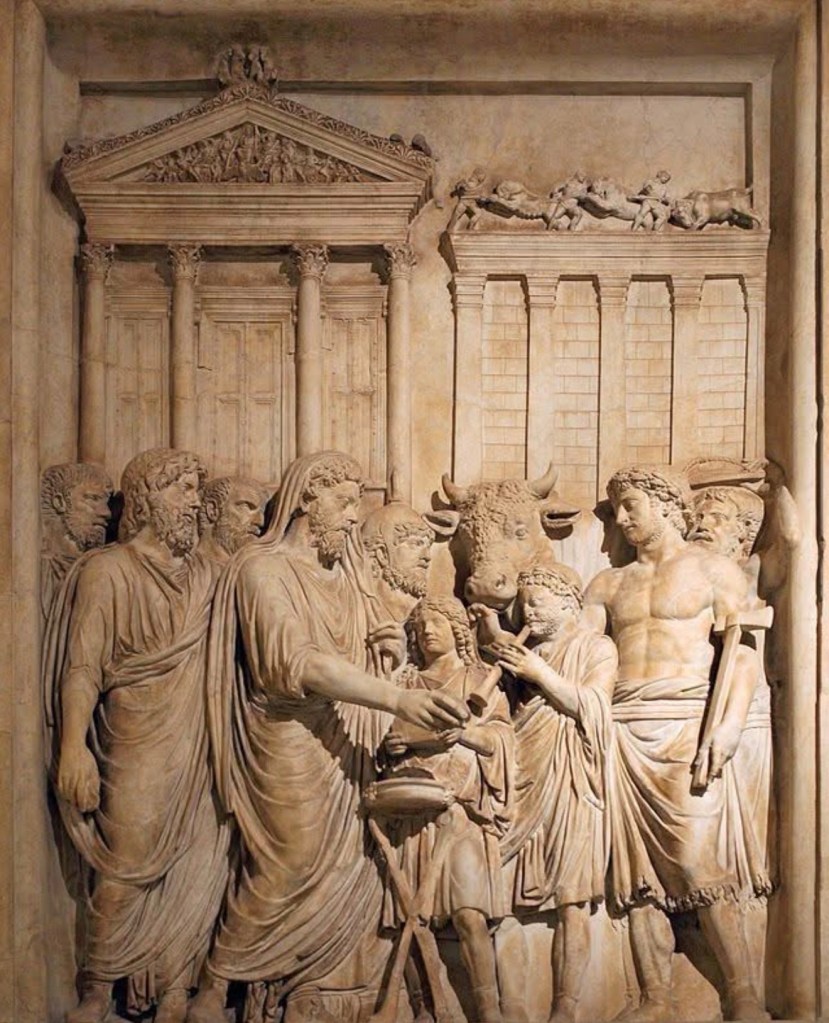
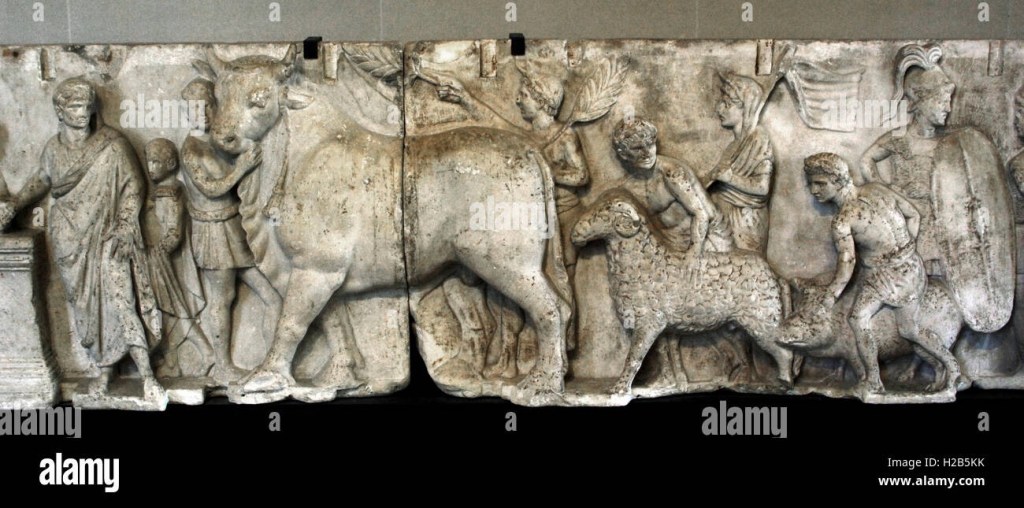
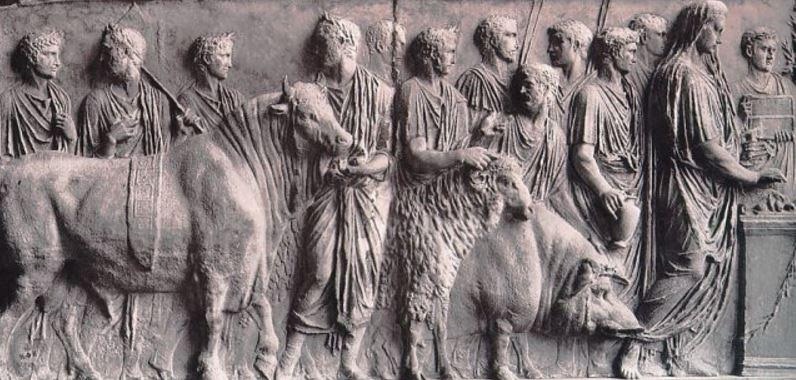
Different animals might be sacrificed depending on which god someone wanted to honor and why they wanted favor. Bulls were among the most prestigious animals that the Romans sacrificed. Powerful gods like Jupiter commonly received bulls as sacrifices. Sheep and pigs were usually sacrificed as part of purification rituals and prayers for good crops. Families who couldn’t afford expensive livestock would often sacrifice chickens and birds. Before any animal was sacrificed, it had to be healthy, though, as the Romans did not want to provide damaged or defective animals to their gods.
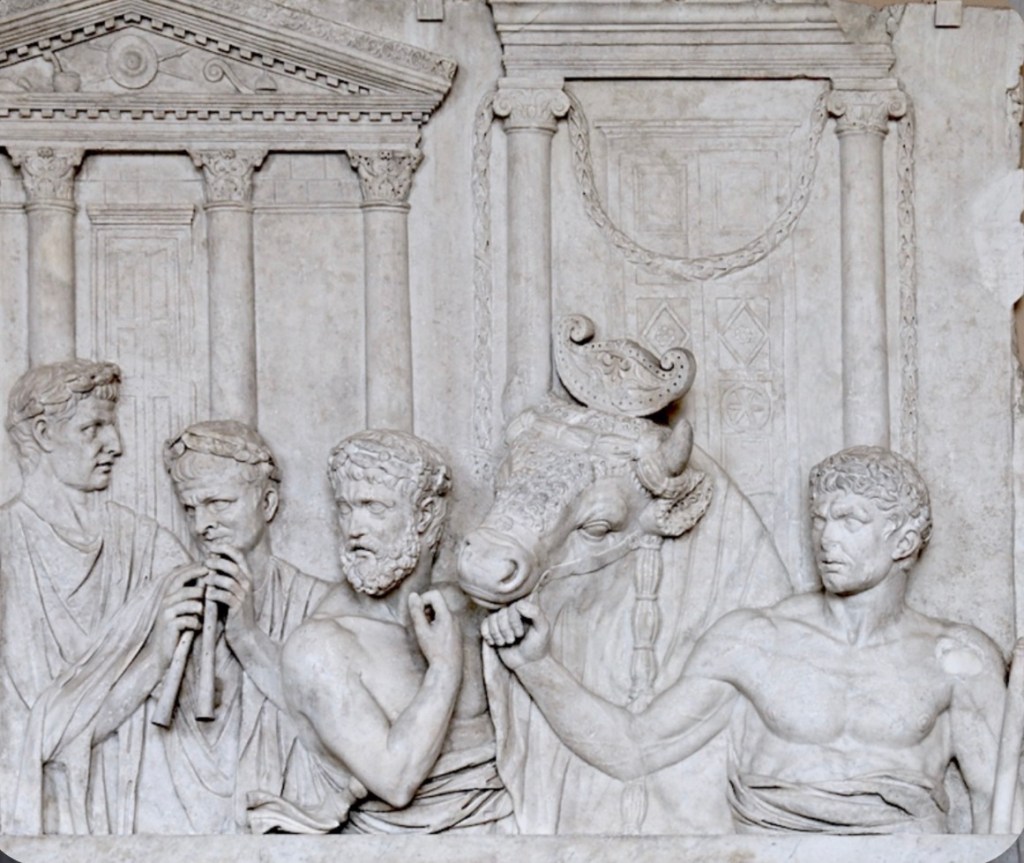
Priests decorated the animal with ribbons, flowers, and garlands before sacrifice. The animal would be led in procession to the altar, with flute players leading the way. Priests recited prayers to the god they were sacrificing to. Finally, they would pour wine and a grain paste called mola salsa over the animal’s head. Mola salsa was a mixed salted flour prepared by the priestesses. Sprinkling it on the sacrifice animal both purified it and made it property of the gods.
– Di Superi (heavenly deities) required white, unblemished, and infertile animals of the same sex as the deity)
Di inferi (underworld deities) required dark-coated animals in a nocturnal sacrifice
Aesculapius, the god of medicine, was frequently offered a white rooster.
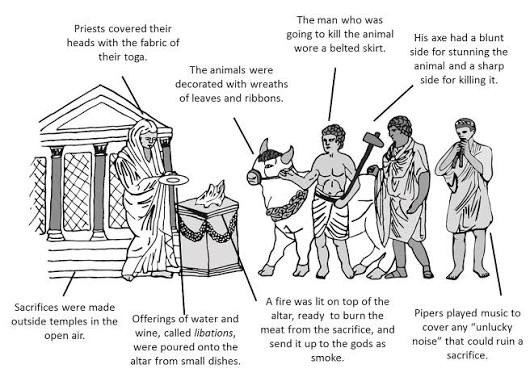
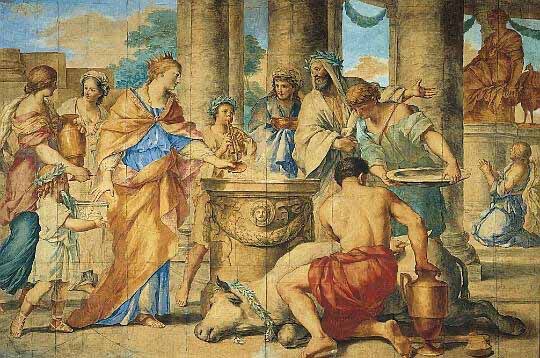
The slaughter of the animal had to be carried out according to strict religious guidelines. The animal was normally stunned with a hammer or axe by an assistant. The assistant’s job was to make sure the animal did not suffer. Another official cut open the animal’s throat and let the blood drain onto the altar. Blood was an important sacrifice to the gods as it was revered as the most vital aspect of human life. If they did not follow proper procedure, they worried the gods would refuse the sacrifice.
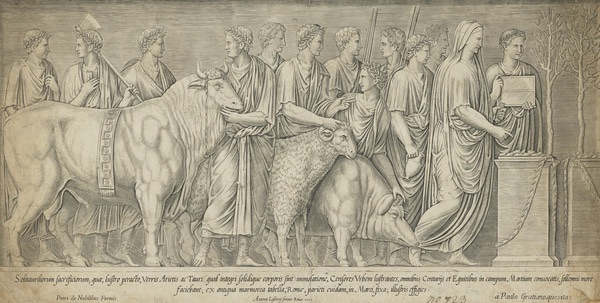
Priests inspected the sacrificed animal’s internal organs to see if the gods had accepted it. Officials called haruspices inspected the animal’s liver, lungs, and heart. They looked for odd shapes, colors, or patterns that they believed were signs from the gods. This was called divination, and it allowed Romans to consult their gods on military actions, political decisions, and new laws. An unfavorable sign from the gods might cause officials to delay an election or continue with a planned sacrifice.
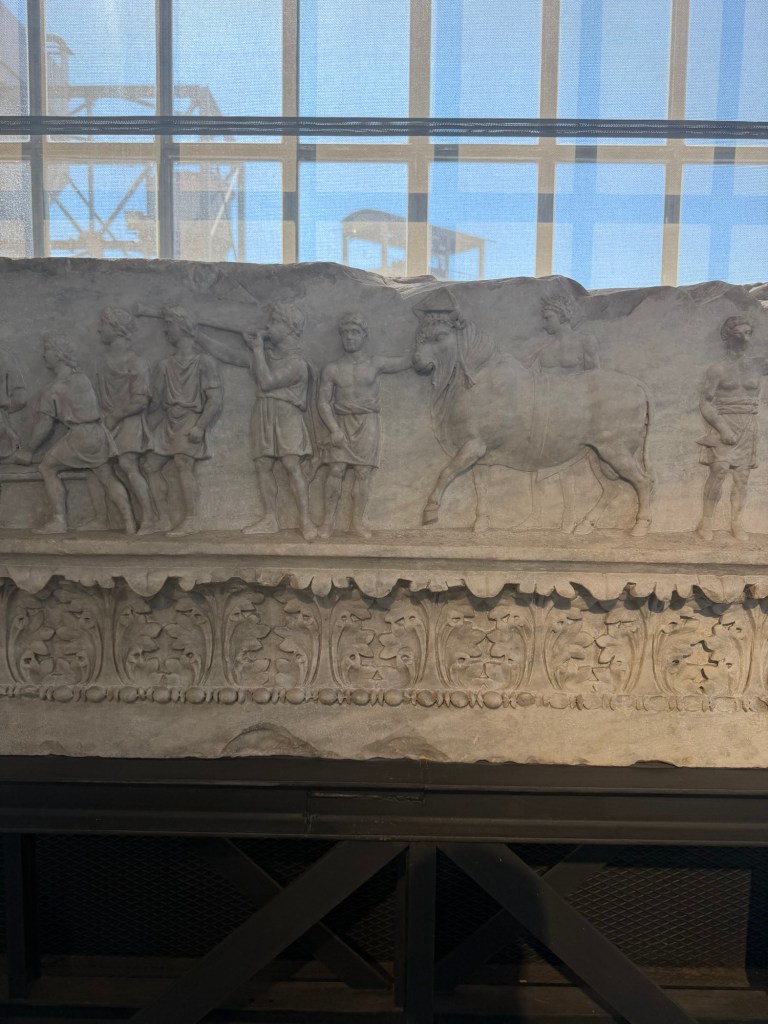
You might be surprised to learn that the Romans did not burn entire sacrificed animals when offering them to the gods. Priests burned certain fatty parts of the animal and specific organs on the altar as sacrifices. However, much of the meat was saved and cooked for the priests, officials, and the public. Roman religious festivals commonly concluded with large celebratory feasts. For many poor Romans, these festivals were among the few times they could consume large quantities of meat.
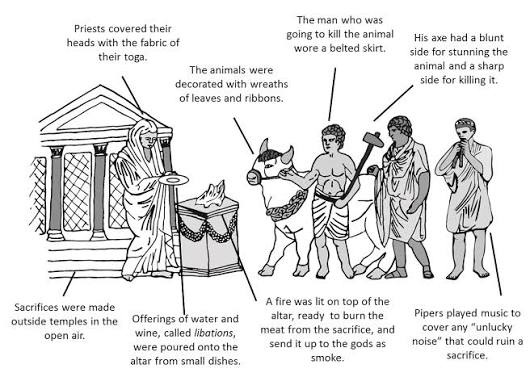
Roman sacrifices can be divided into two categories: public and private. Public sacrifices were government-funded events. Romans performed them during religious festivals, military triumphs, temple inaugurations, and important public announcements. Private sacrifices were done by families at home or at local shrines. These sacrifices could be made to celebrate births, marriages, good harvests, or any other occasion when people wanted to thank their gods.
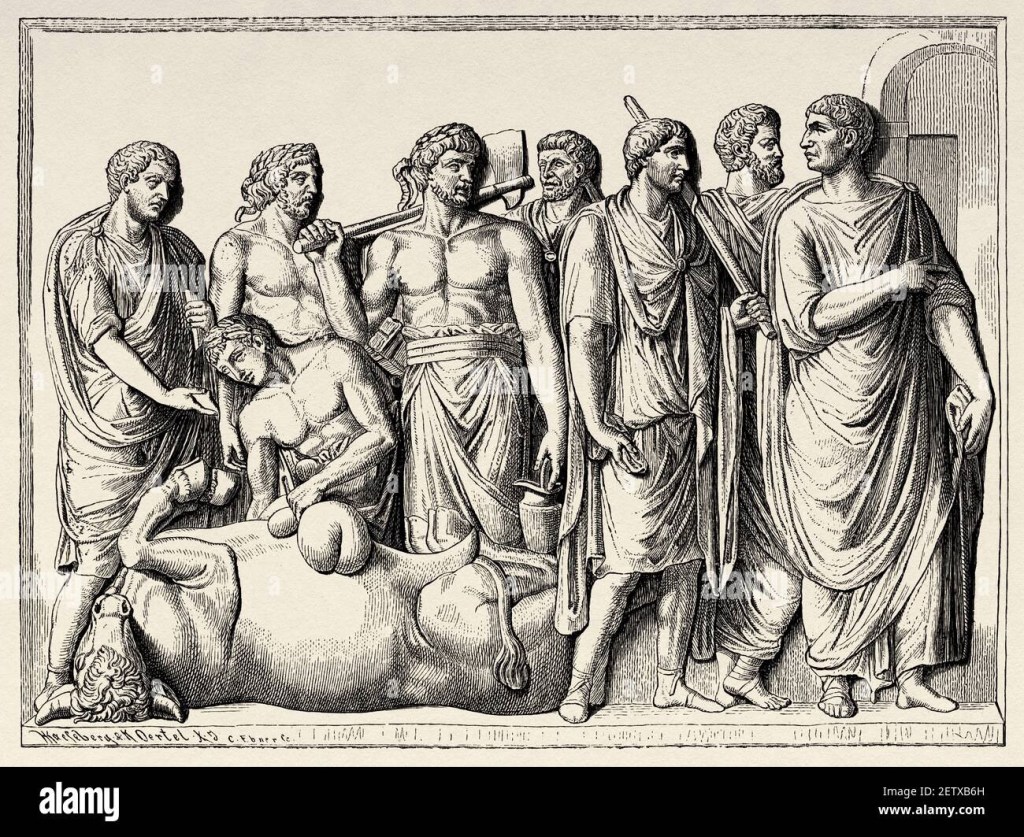
Animal sacrifice was central to Roman religion because it allowed humans to communicate with their gods. Many Romans believed that sacrifice kept the gods happy and ensured peace between humanity and humanity. Bulls, sheep, pigs, and birds were the most commonly sacrificed animals. Priests conducted sacrifices using detailed rituals. After the sacrifice was completed, officials would read signs in the organs to communicate with the gods. Much of the sacrificed animal was eaten by spectators after the ceremony, so the practice was about community as well as religion.
References
Facts and Details. (n.d.). Roman rituals and sacrifices. Facts and Details.
Khan Academy. (n.d.). Preparations for a sacrifice. Khan Academy. https://www.khanacademy.org
Medievalists.net. (2025). The decline of animal sacrifice in the late Roman world, with James Rives. Medievalists.net.
Milani, M. (n.d.). Ancient Roman sacrifices. Roman Empire.
Rives, J. B. (2008). Review of Greek and Roman animal sacrifice: Ancient victims, modern observers. Bryn Mawr Classical Review.
Roman Mythology. (n.d.). The symbolism of the bull in Roman myths: Strength and sacrifice. Roman Mythology.

 Rome via Brooklyn
Leave a comment