
(979 words – 5 min read)
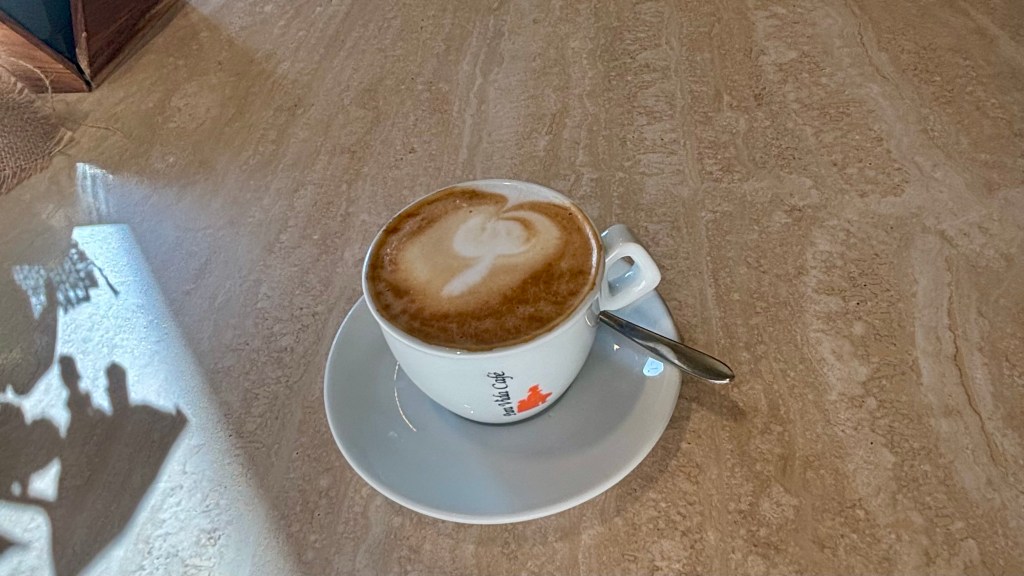
Today started far earlier than I would have liked, the immense jet lag catching up to me, as well as the new living environment. But I was able to go out for a cappuccino at a local cafe. I can’t believe how much better Italian coffee tastes to American. I was able to finish the whole thing, without any sugar or flavored syrups (usually I am an oat milk lavender matcha kind of guy, and the only time I’ve had black coffee was when I was training as a barista.) I also stopped to get some breakfast at the supermarket across the street (and gape at the low prices).
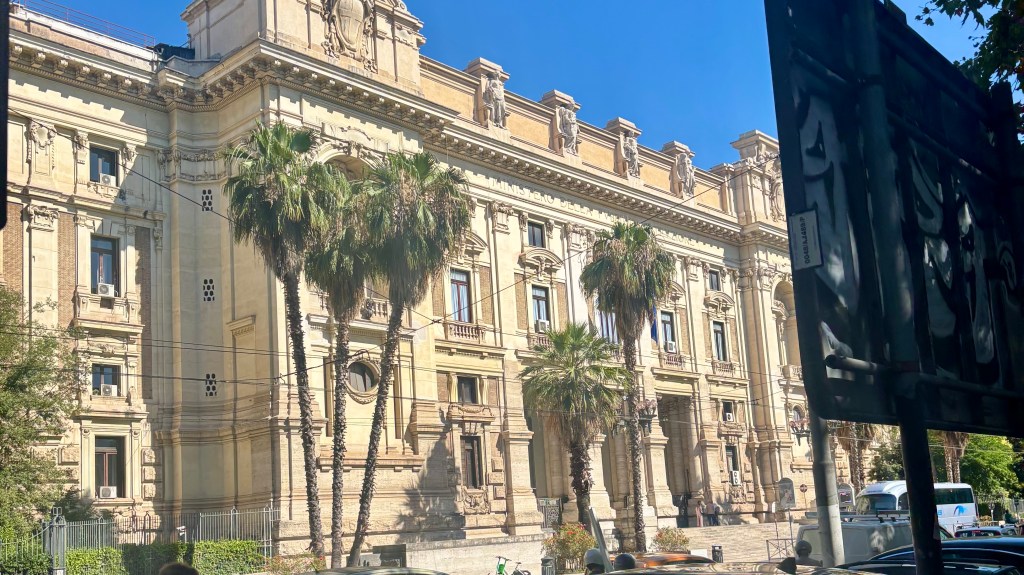
After eating, I ventured out with my roommates to meet up with the rest of the class at a local market. The market was full of fresh fruits and vegetables, all grown in Italy, like most if not all the produce in supermarkets as well. After trying some of the most delicious cherries and strawberries, we grouped back up to learn about Roman bar and market cultures. We then walked over to a nearby fountain so sit and fill our water bottles. Did you know Rome has constantly circulating running water all over the city? It’s truly amazing. It’s cold and tastes SO much better than some tap water I’ve tasted. We also heard a bit about how ancient the Roman’s connection to water is. The Tiber, the main river through the city, is a crucial part of why the city rose up as it did, bringing people from all over together because of the shared resource of water. We also took a look at the exterior of the Chiesa di San Cosimato, a local church, to learn about some archaeological details – spolia (the repurposing of ancient columns), Corinthian columns (they have foliage on the tops), and the key stone (isn’t that the nickname for Pennsylvania, the keystone state?).
My roommates and I then headed to go grocery shopping and back home for a quick lunch before heading right back out to our next stop: the Villa Giulia and the Etruscan Museum there.
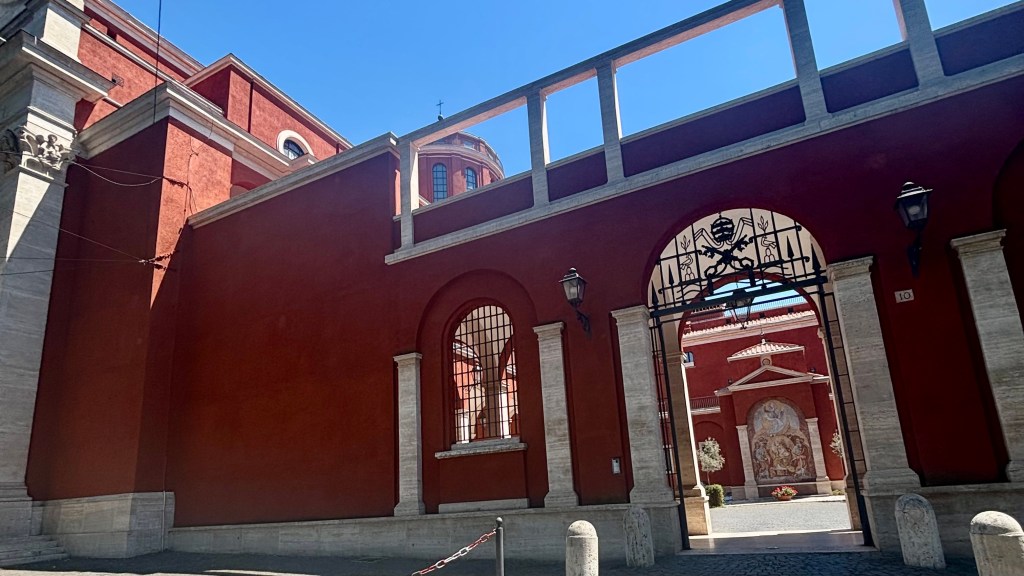
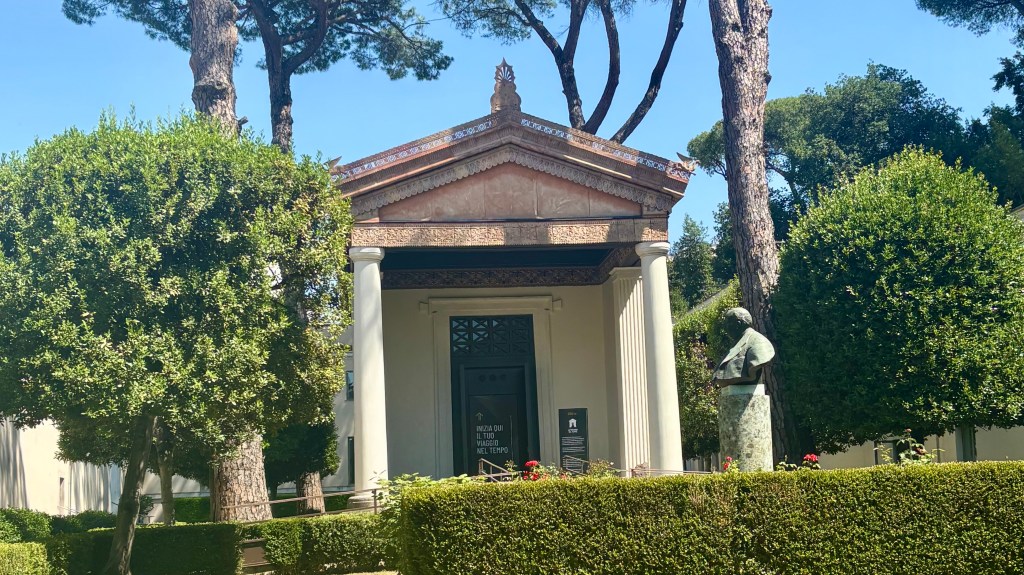
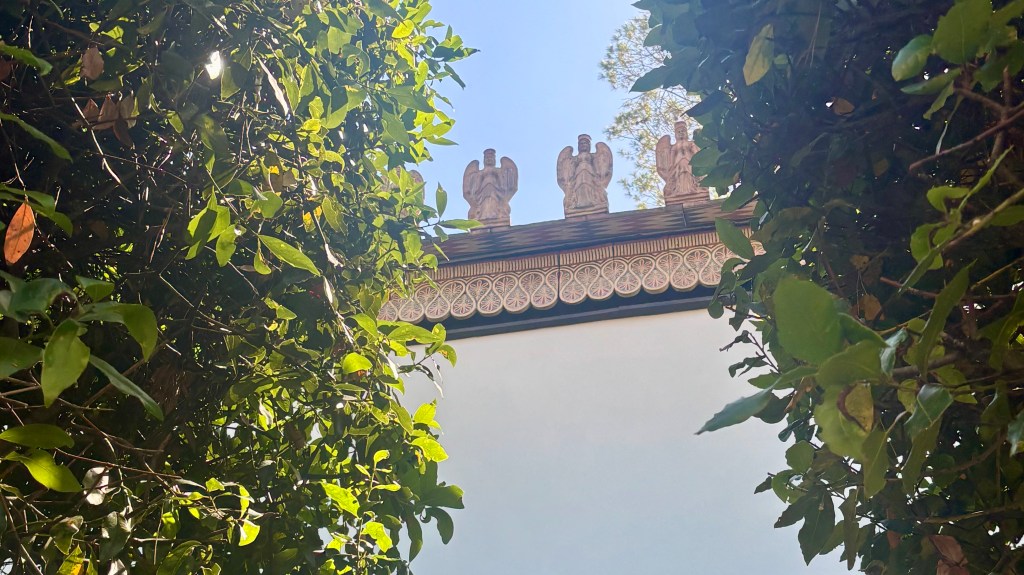
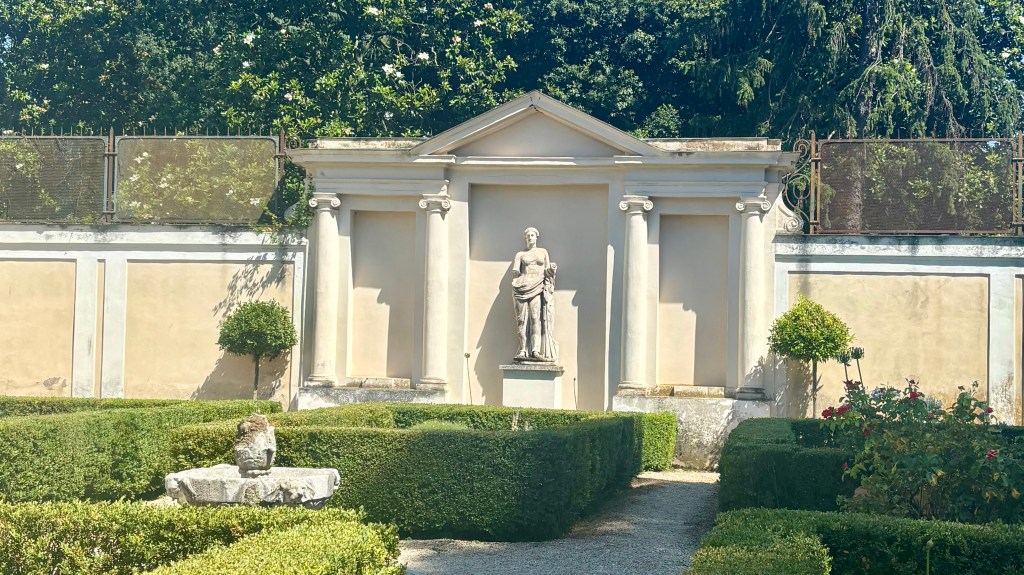
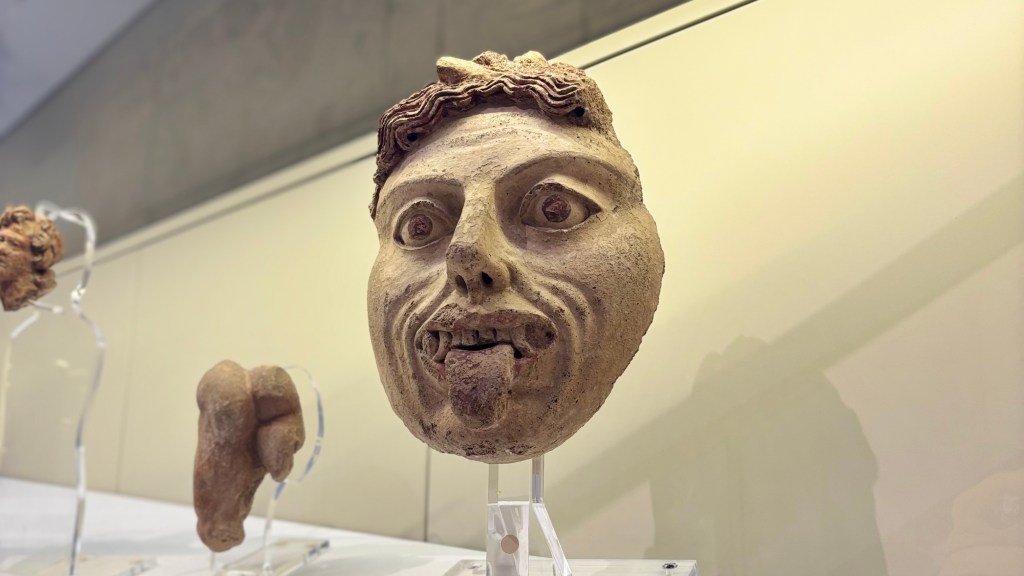
When we arrived there, we first walked through the outside/garden portion of the museum, including a recreation of an old temple, and learned about some native types of Italian rocks. Inside the museum focused on the history and art of the Etruscan people, Rome’s northern ancestors and neighbors. They had their own language, culture, and artifacts! Different from what we think of as Roman, but still we can tell what their successors stole culturally. Most of what we know about them comes from tombs and burials, both what they were buried with and buried in. Despite dehydration, I really liked being a nerd and seeing all of these artifacts up close. It’s a little crazy to me how much more recent Roman history is to Greek, that “prehistory” spans up to the rule of Alexander the Great. I’m always amazing at how long of a span the ancient world can take up, and how much it changed in all that time.
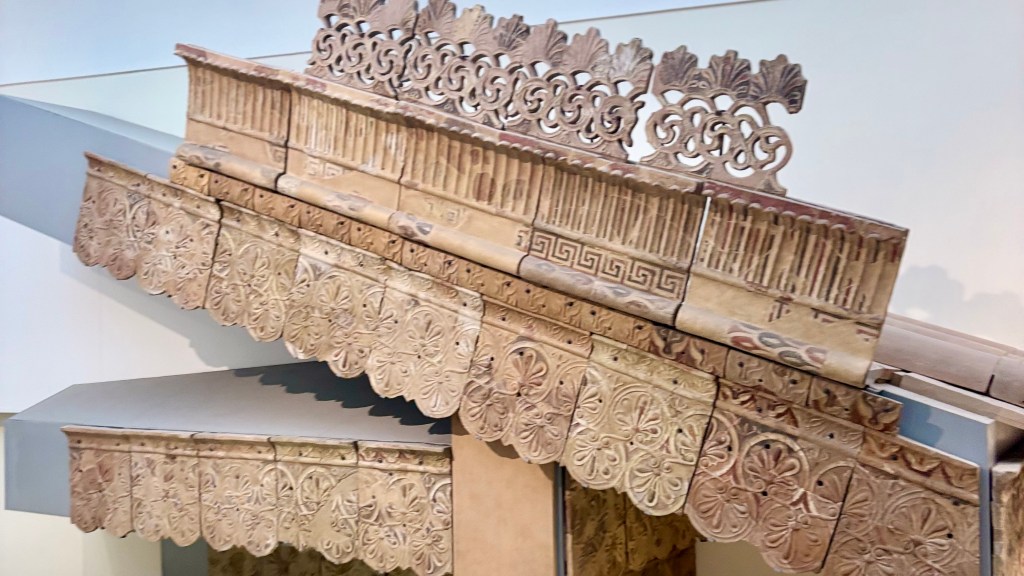
A question that will likely keep coming up for me is that of memory and the archives. Recently I watched a very poignant video essay on the topic of archival violence, but the Etruscans really brought it back to my mind. I think the idea of who and what we forget and who and what we commemorate is really important, not only as a historian, but as a human living in a digital age where nothing seems quite permanent, not even this blog post. That’s why I carry my notebook wherever I go. I found myself in the museum really in awe of the depth of the lives of these people that we really don’t talk about outside of the context of the Romans, they had their own traditions, religion, dress, food, even daily lives. What did the woman who looked into the mirror see looking back? What did the person praying at that temple pray for? What did the average citizen think when he heard about elephants for the first time? I think I will keep coming back to this, but I am always going to be a little sad when thinking about all the stories we cannot tell, despite how much we can.
After walking the inside of the museum, we sat outside to learn about the mythical origins of Rome, that of Romulus and Remus (the famous twins raised by a wolf) and Aeneas (son of Venus and Trojan war hero). These stories, like all types of history I run into, are wildly patriarchal and violent towards its women. I’m sure this will not be the first, or last, time I comment on these tropes.
Today really tied together Ovid’s description of the river Tiber meeting Aeneas (the mythical founder/ancestor of Rome: “When Aeneas finally slept the god of the lovely river / The ancient Tiber himself appeared to the troubled hero / Rising above the poplar leaves that lined its banks / veiled in a grassy cloak and shaded by a crown of reeds / He spoke and with his words he calmed the hero’s cares”. I think it really goes to show how important water, especially the Tiber was to Roman society to intertwine it with its origin story like this. The description of all the plants and the river as a source of comfort also really speak to the beauty of it, as we saw briefly on the bus earlier in the day.
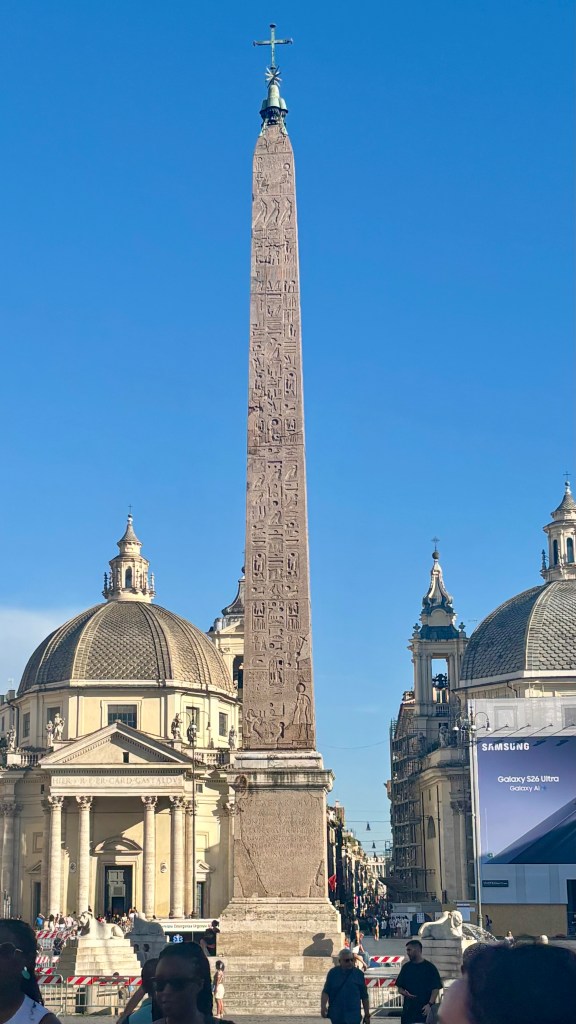
After the lesson we walked to a dinner spot near the Piazza del Popolo, where Augustus brought a giant Egyptian obelisk. The pizza we ate wasn’t great, and the bus crowded on the way home, but it felt well worth it to see a landmark not otherwise on our itinerary, and to bond a bit as a group. Ciao for now!


 Rome via Brooklyn
Leave a comment