
Time to Read: 3-5 minutes
Word Count: 742
Small, Average and Huge told through horses, birds, and of course, myself.
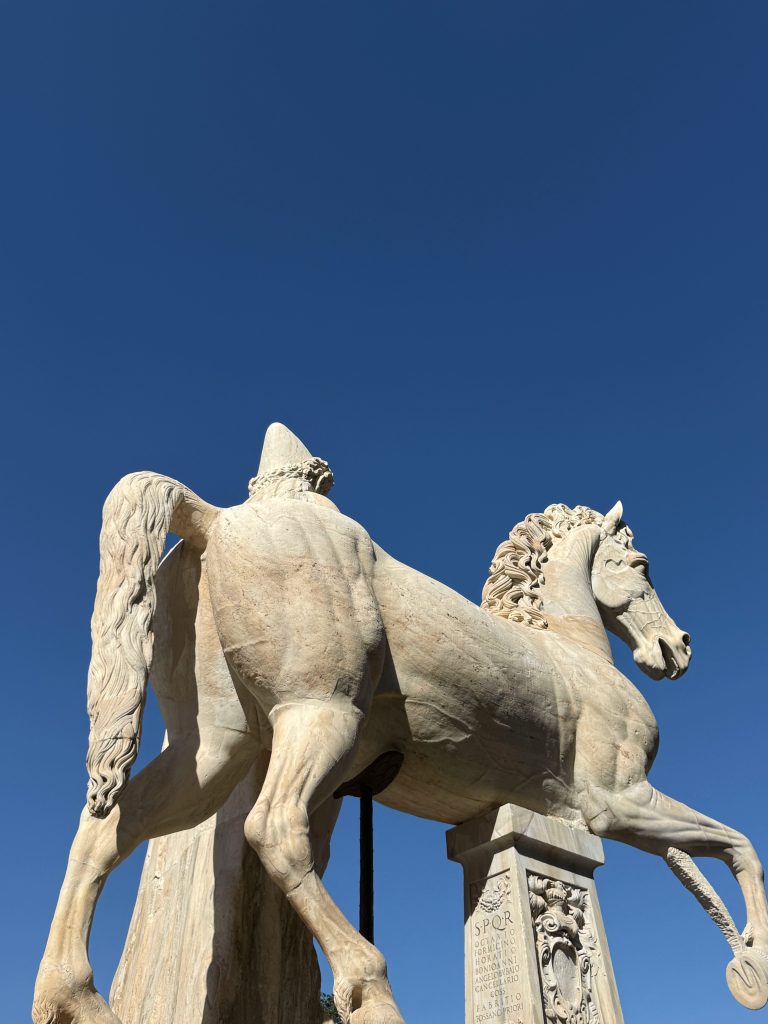
In the Claridge reading about the Capitoline Hill the origins of the statues of Castor and Pollux (twin brothers) are revealed. We find out that these statues were discovered in fragments and likely came from the front of a temple dedicated to the two. The fragments were then restored.
The text acknowledges the possibility that the statues were indicative of something else besides just Castor and Pollux, “they might have portrayed Augustus’ grandsons Gaius”…”and Lucius”…”Both were already identified with Castor and Pollux during their lifetime and became more so after their deaths.” (265).
I began to think about what I am starting to perceive about the past and what we do with what we find. If it’s big and impressive enough it will be fixed, almost perfectly restored, be largely and publicly displayed, and sometimes even have it’s own room in a museum. I also began to think of the multiple identities things can take on and what that means for ones interpretations. If you’re an ancient coin you’ll be shoved with all the other coins, no specific museum label, hard to find or distinguish from the rest.
A thought that has been bubbling in my brain is the scale of things. Rome, to me at least, often feels larger than life, I feel as though I am living in something bigger than me and myself. With all the history Rome carries I couldn’t imagine anything else other than that being the truth.
Due to the blog post prompt today I also began to think of the small, the things that get lost or outshined by things that seem to be larger than life. What is size? What does size as a metric mean for how impressive things are then determined?
I began to ask myself, “If something is small do I then disregard its value?
I feel this happens all too often especially in the world of artifacts, size means how visible you are, if you stand out you can take all the air out of a room.
I wont lie, today I was impressed by the size and scale of many things, but I also tried to appreciate the small.
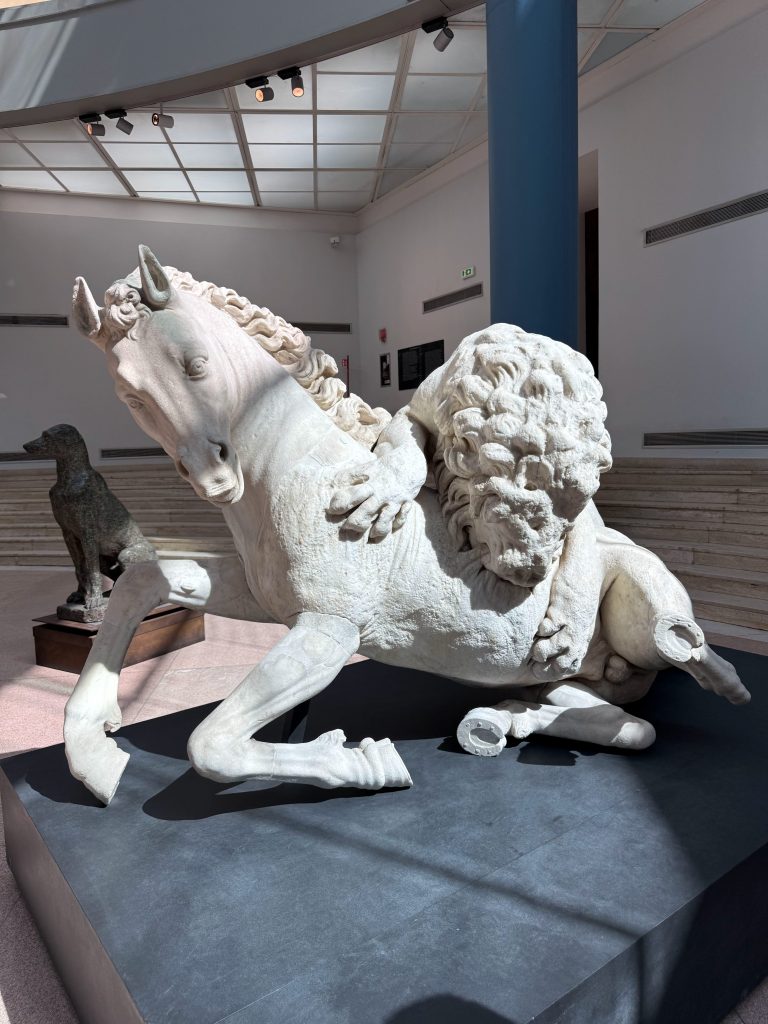
The statue of Castor was very large and quite impressive. The statues of the Twin brothers welcome you into the Piazza. This horse and lion statue was part of the Atrium of the Capitoline Museum that housed perhaps in the eyes of most people a more significant artifact. An original statue of Marcus Aurelius from the time of his reign.
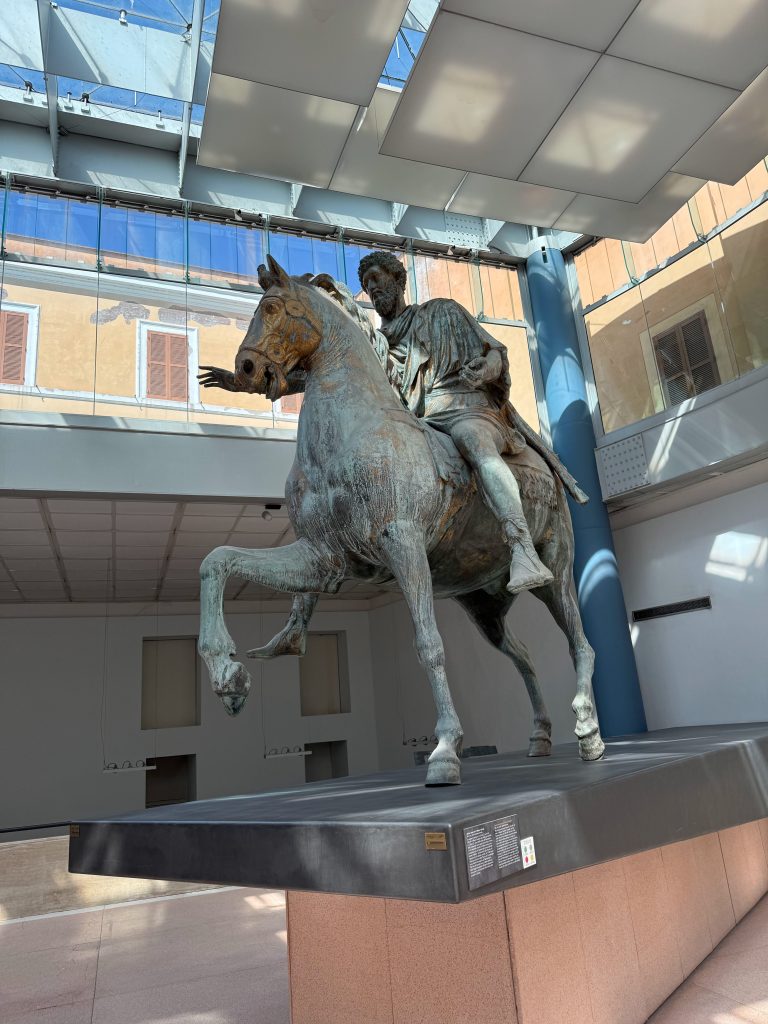
I won’t lie, when I saw Marcus Aurelius it sucked the air out of my lungs, and yes, he is certainly large and in charge, but the smaller horse stuck with me. It’s surprise, it’s pain. It is made of stone but it is also a look from the human perspective of this animals last moments.
After leaving the museum I made a concerted effort to pay attention to the small and the differences that exist within that range, whatever small really means.
To the Colossus of Constantine everything is small, even Marcus Aurelius.
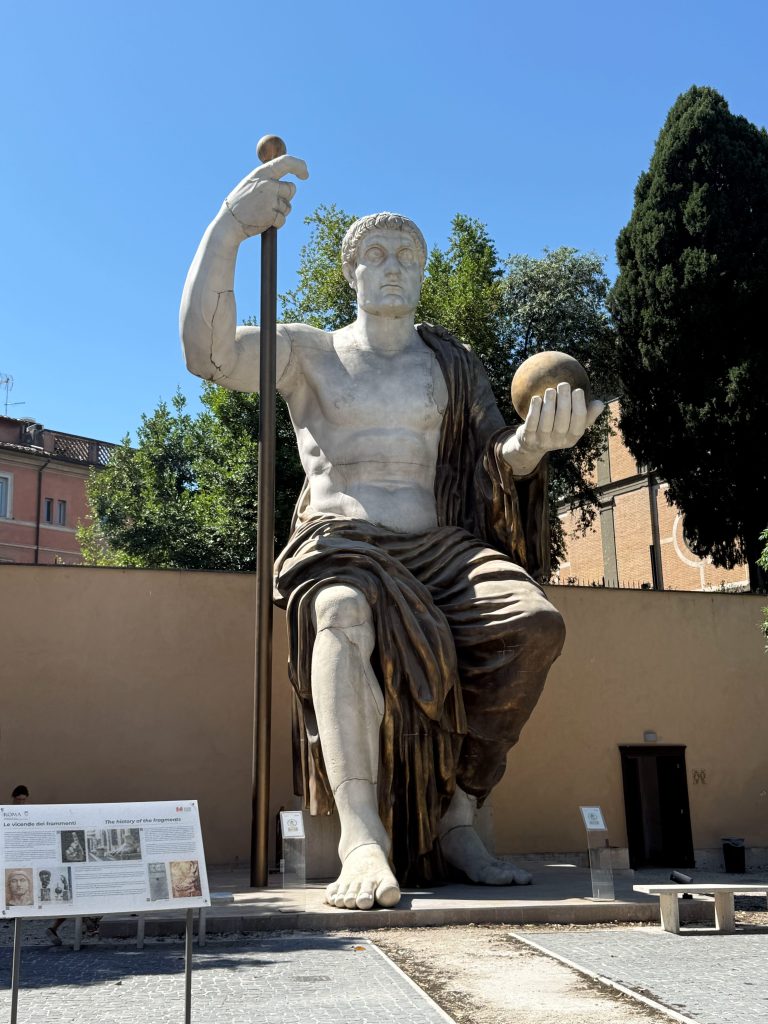
So my average-sized-self went along and went looking.
I decided if I’m going to do the Equine I might as well look at the Avian.
I looked at the birds.
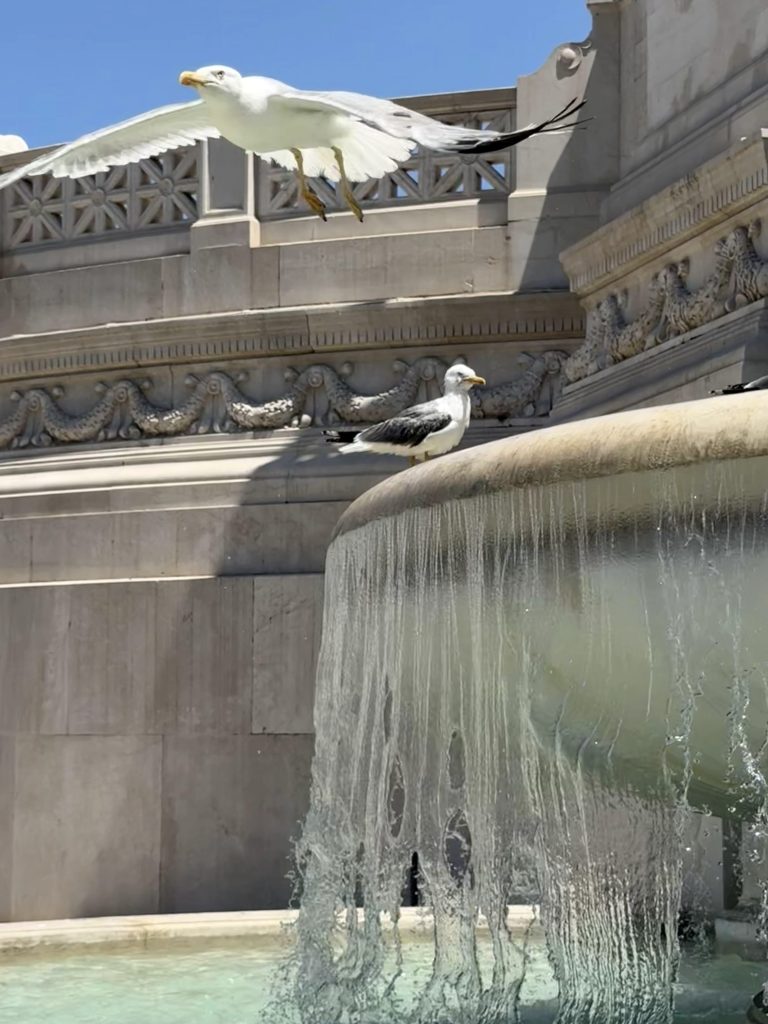
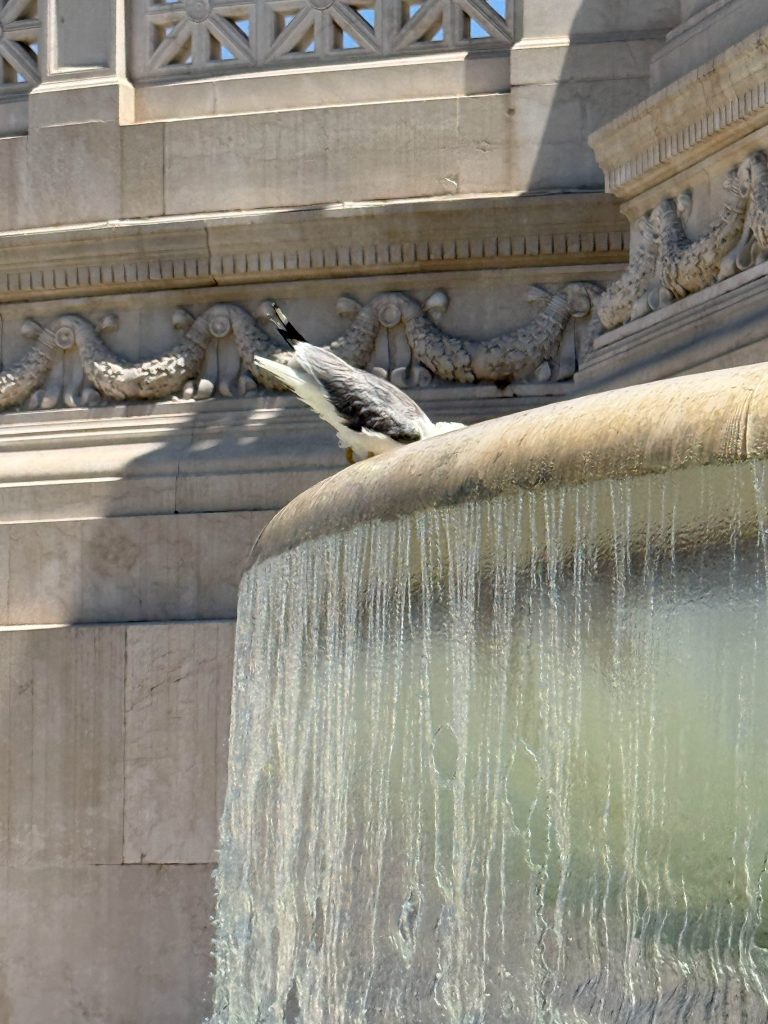
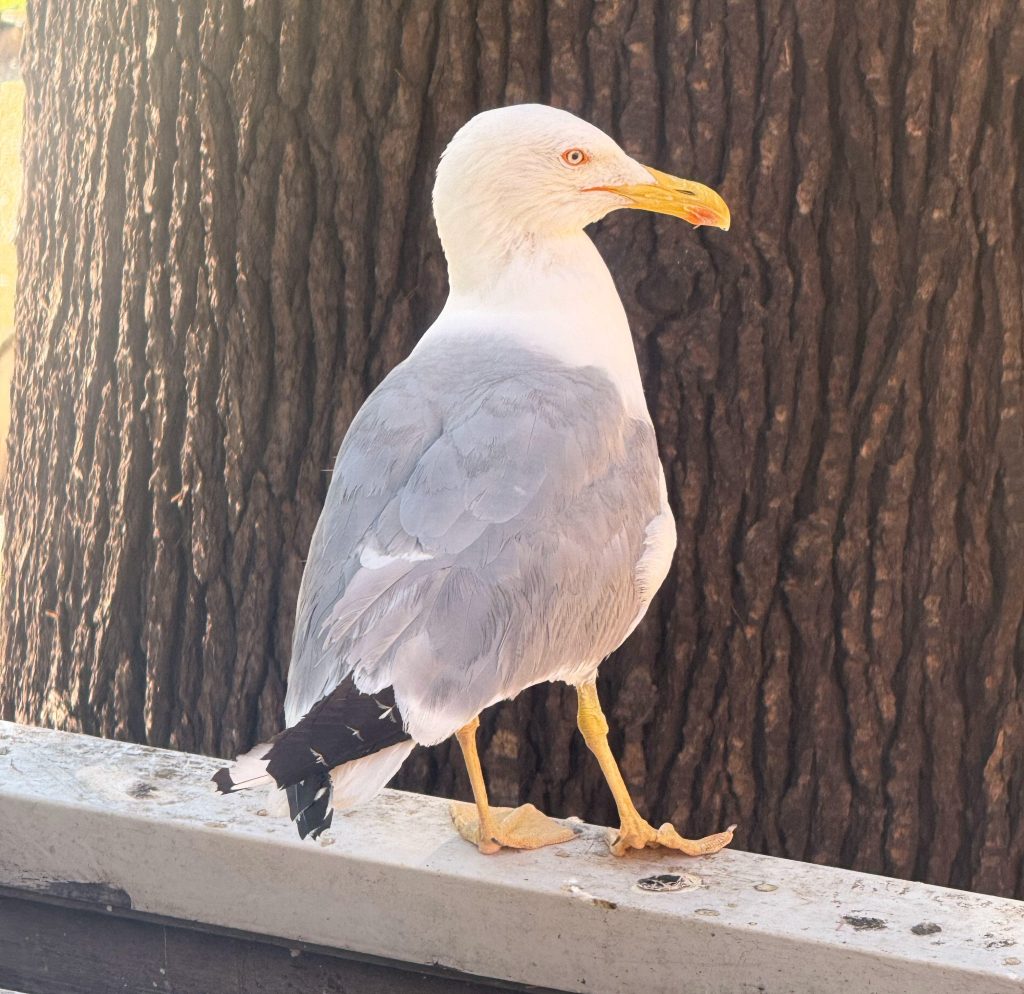
Above we can see a seagull in the fountain. It kept dunking it’s head in the water and popping back up, this is right by the entrance to the Capitoline Hill.
Later on in the day I went out for a walk with my roommates. We were hunting and searching for water. It was then that I saw the funniest thing.
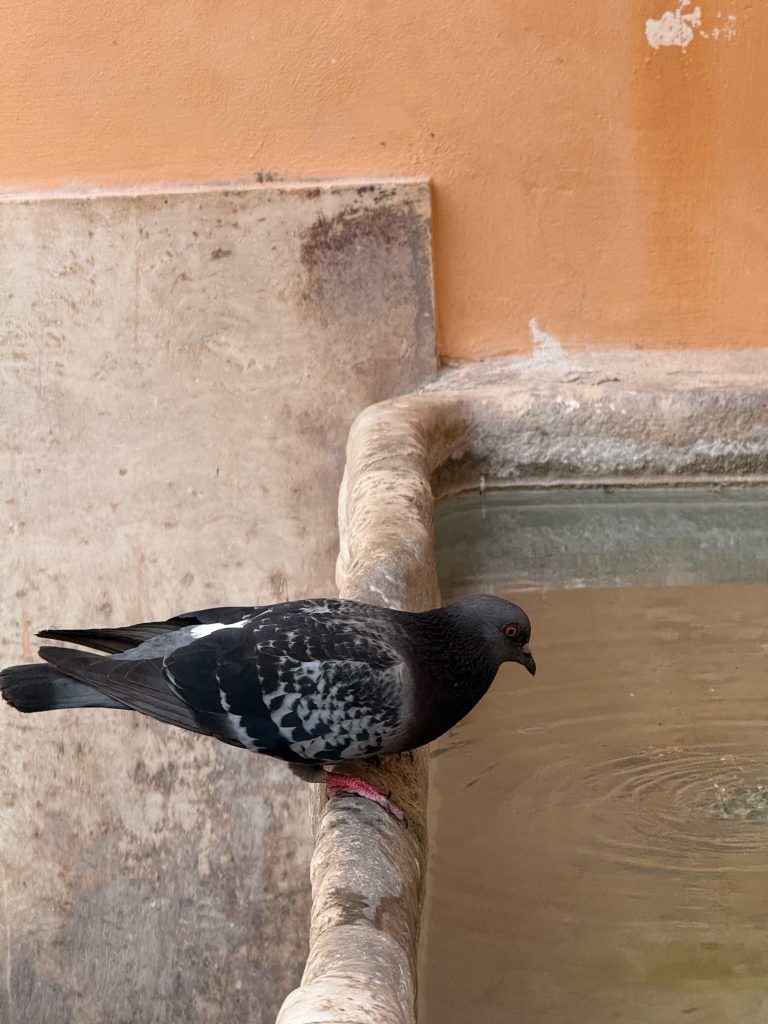
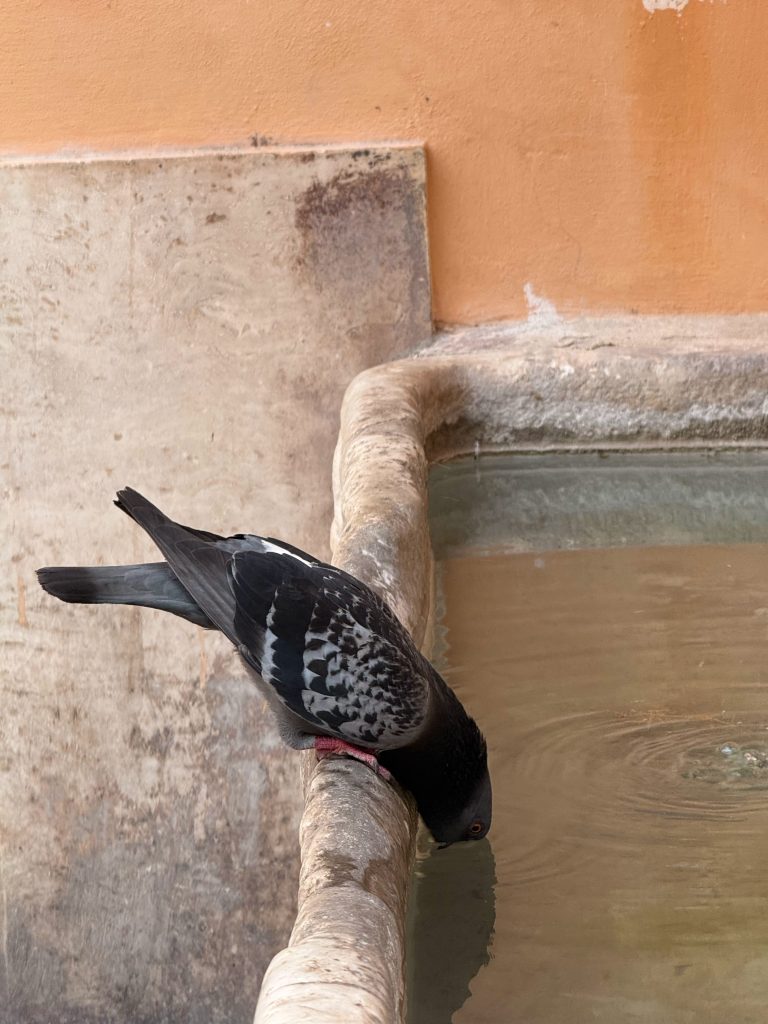
There I saw a pigeon, doing just the same. I thought to myself, “A pigeon is smaller than a seagull, and this water spout is certainly smaller than that large fountain.” Ultimately the truth was they mirrored one another and took part in the same action, regardless of their size.”
It may even be better to be a pigeon or seagull than a large or medium sized horse, at least they don’t get bitten by lions or have Marcus Aurelius on their backs for eternity.
– Paola ❤


 Rome via Brooklyn
Leave a comment