
Word count: 934
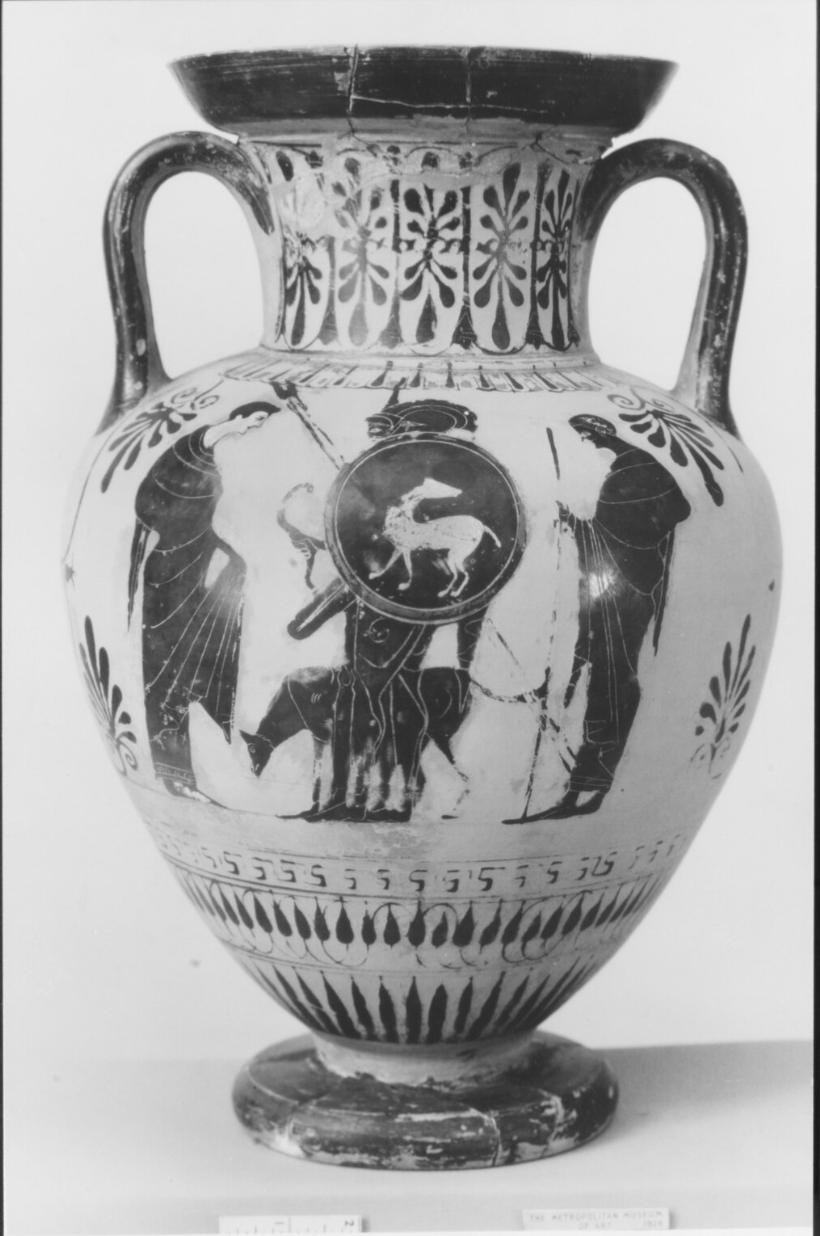
In the twentieth century, red figure pottery pieces were excavated from Etrurian gravesites in such an abundance that they were initially believed to be native to Etruria, despite their difference in appearance to Etruscan bucchero pottery. Over time, they were recognized to have been imported through trade from Athens, as shown through evidence of Greek inscriptions paired with later additions of graffiti in the native Etruscan language. Scholarship has also shifted from focusing solely on the Athenian potters and painters, to more recent consideration of the role of the Etruscan patrons, viewers, and buyers.
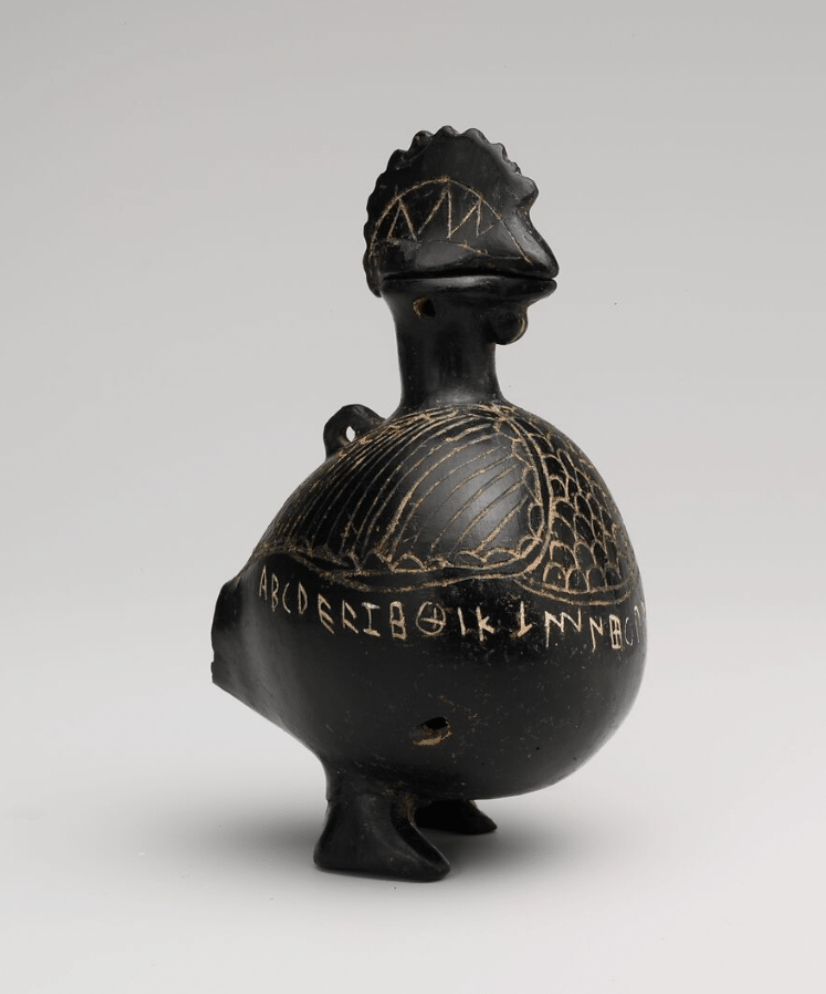
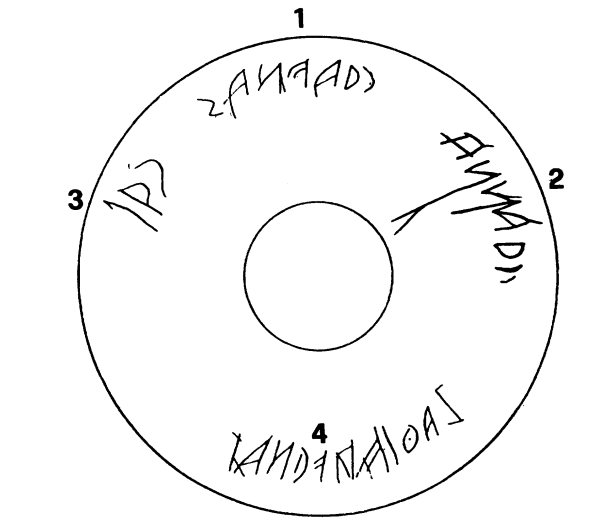
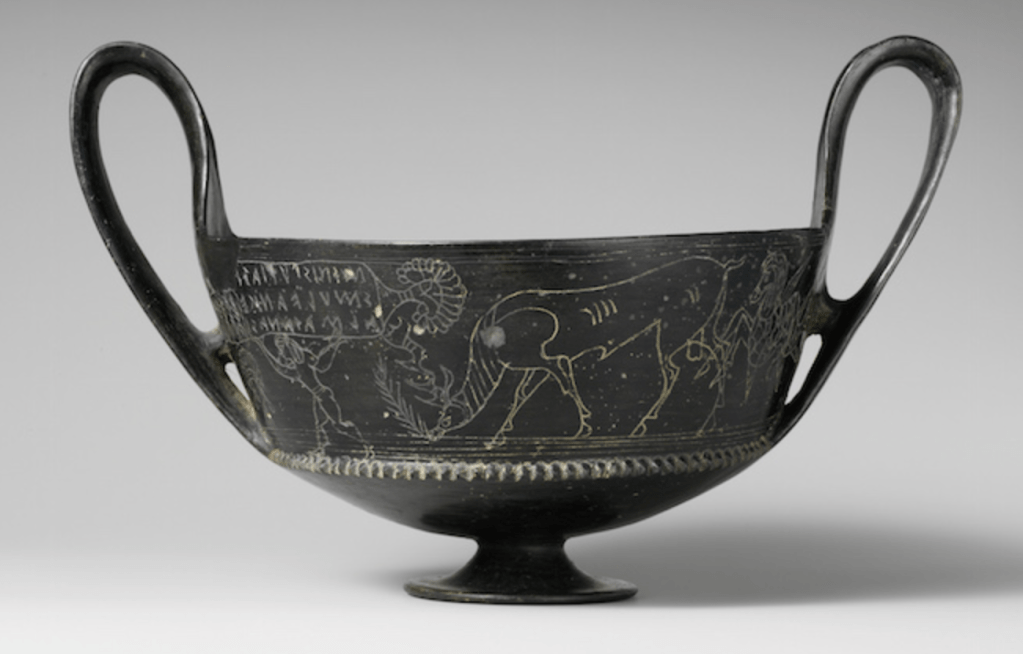
An example of traditional Etruscan bucchero pottery
Image from: https://www.metmuseum.org/art/collection/search/251482
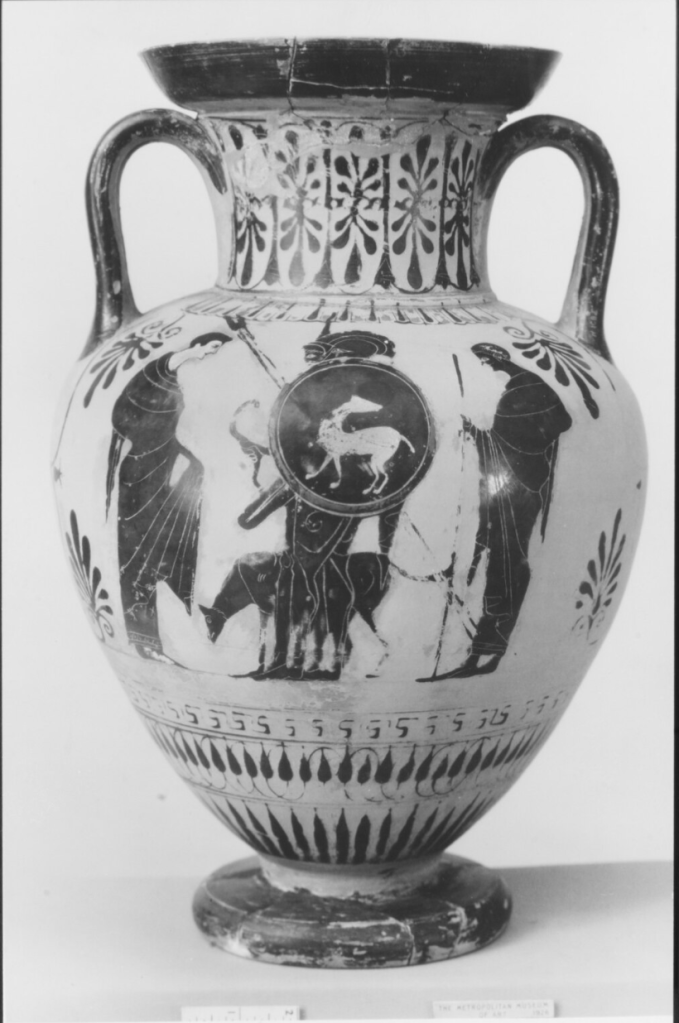
Most scholars believe that the pots ended up in Etruria mainly through trade. According to an article from The Met, the Etruscan city of Spina was a heavily used and favored destination for the trade of Athenian pottery in the fifth and fourth centuries BCE. As time has gone on and research has further developed researchers are now acknowledging growing evidence such as vase shapes, images on vases, and the method of production as showing that Athenian workshops targeted other regions and cities besides their own. This shows a growing relationship between potter and local buyer.
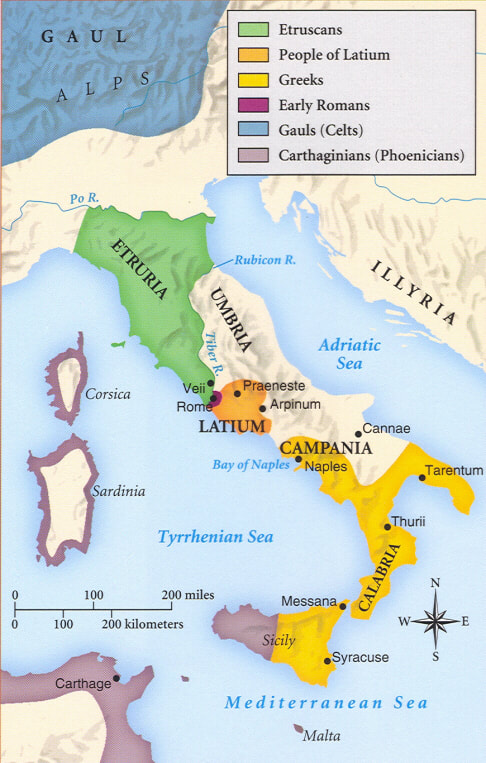
to Etruria. This allows us to be able to visualize and possibly conceive how this trade
could have worked.
Image from: https://www.internationalschoolhistory.com/lesson-2—republic.html
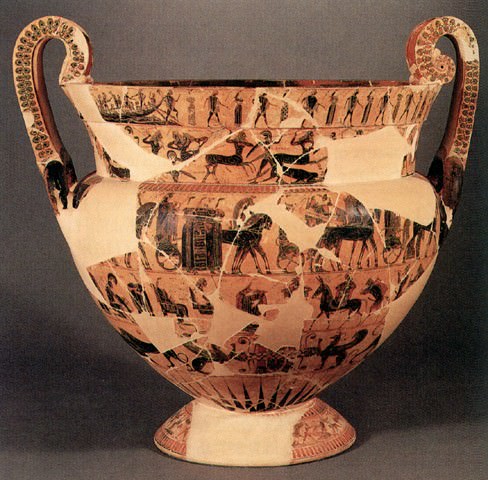
was found in an ancient Etruscan chamber tomb.
Image from: http://13classicswithallaker.pbworks.com/w/page/727179/The%20Francois%20Vase
Pots could be purchased as secondhand goods as well as customized commissions (like the volute-krater, shown below). Although they showcase a wide range of imagery, there were common repeated scenes such as symposium, war and combat, athletics, and Greek mythology, particularly scenes of Dionysius. The popularity of these images points to the Etruscans’ familiarity with Greek culture. Similarly, Athenian potters were aware of the Etruscan demand and focused on what they knew would be profitable, even sometimes imitating native Etruscan pottery shapes.
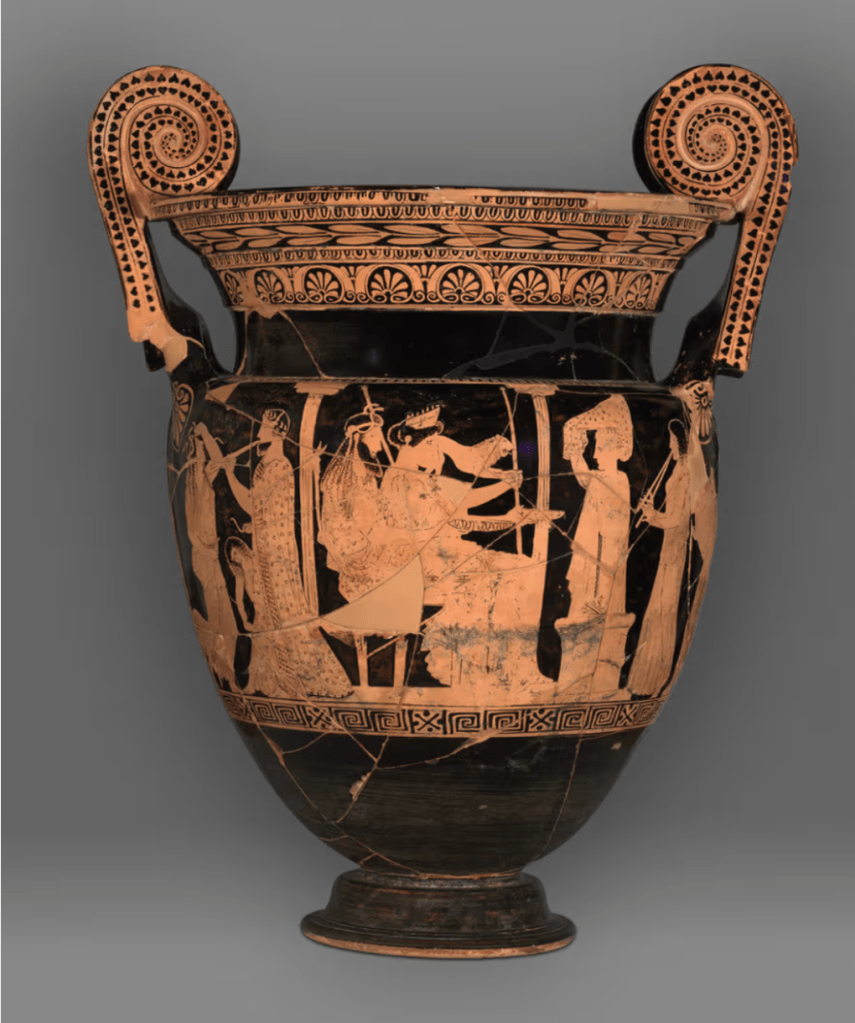
This vase was used for mixing wine and is a possible example of a special commission requested by an Etruscan to a famous pottery workshop in Athens. It was discovered in Spina, an Etruscan city that was very popular on the pottery trade route.
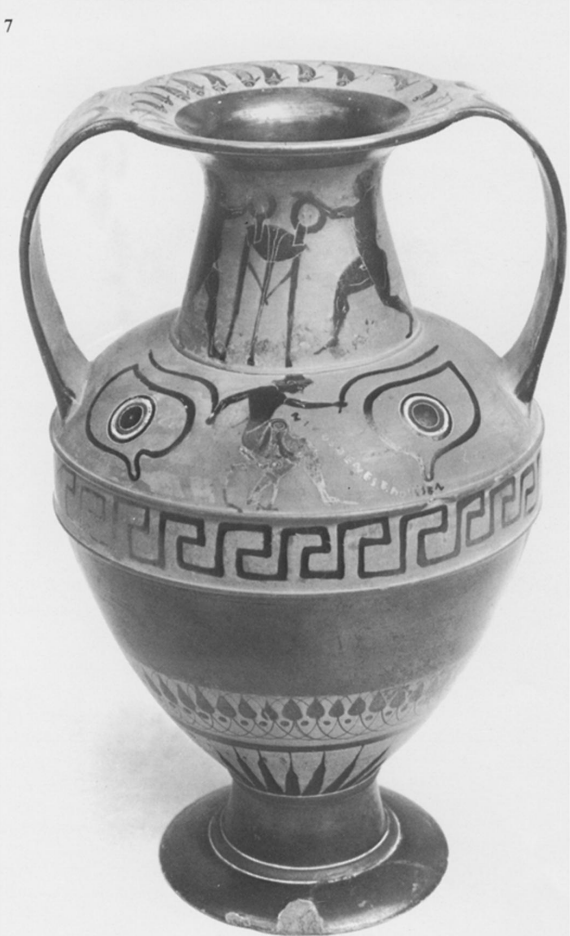
These images done by Athenian painters are not perfect depictions of the Etruscans and their actual beliefs, rather they reflect the Athenian painters and potters’ understanding about the cults of the Etruscans. Likewise, the Etruscan consumption of these goods is not representative of or for the purpose for interpreting these goods as perfect reflections of Greek culture or religion. Rather the Etruscans are putting these pots and vases into their own belief and own context, not forcing the puzzle piece to fit but rather using these secondhand vases and goods in a way that reflects their own identities. Through these vases we can see a diffusion of understanding regarding cultures and traditions on both sides.
There has been much debate over how much value these pots actually carried in the ancient world, with some scholars describing them as luxury items, while others depict the Etruscans as passive consumers of an oversaturated art form whose value has been distorted by the modern art market. The answer likely lies somewhere in between, as the range of customization of said vases would make them personally valuable and depending on the level of craftsmanship or origin the monetary value would increase or decline.
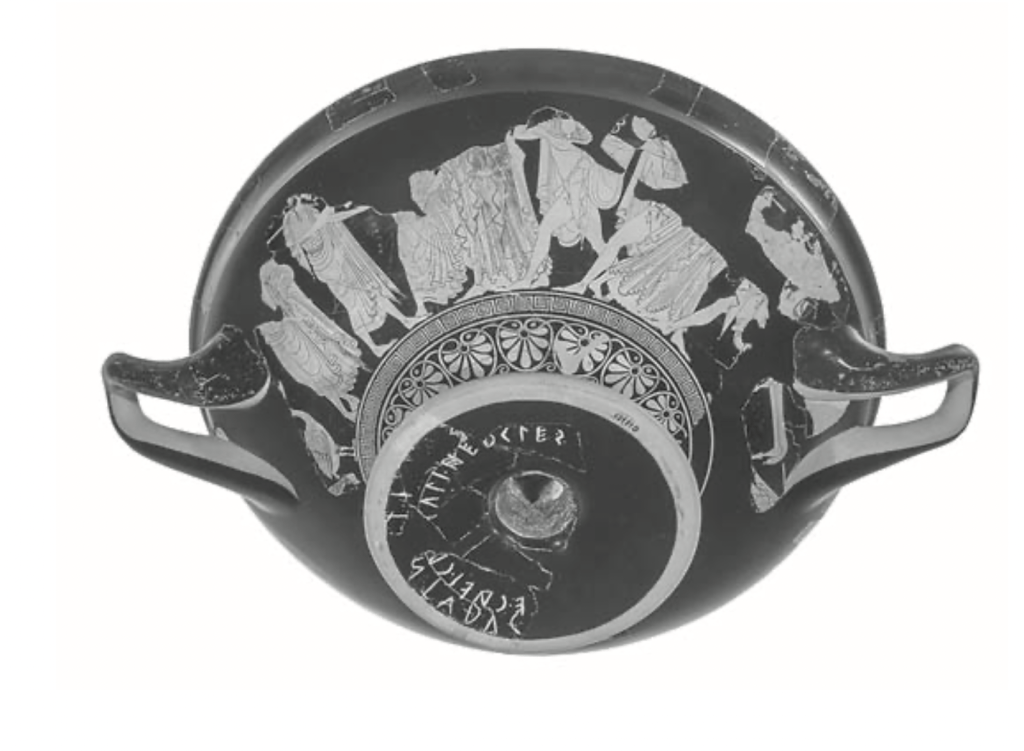
At the very least, it is evident that they carried value to the Etruscans on a sentimental level. Many pots found in tombs bear evidence of repairs over time, such as that of an Attic kylix signed from Care. This kylix was not only repaired in Etruria, but inscribed multiple times to its owner, showing a level of care towards the vessel. The very fact that so many of these were found in graves shows that the Etruscans found them valuable enough to be kept by their side for the rest of time.
Bundrick, Sheramy D. Athens, Etruria, and the many lives of Greek figured pottery. University of Wisconsin Press, 2019.
Hander, Gina and Debby Sneed. “Find Spots: Greek Vases or Etruscan Vases?” University of Colorado Boulder (2018). https://www.colorado.edu/classics/2018/06/14/find-spots-greek-vases-or-etruscan-vases
Osborne, Robin. “Why Did Athenian Pots Appeal to the Etruscans?” World Archaeology 33, no. 2 (2001): 277–95. http://www.jstor.org.brooklyn.ezproxy.cuny.edu/stable/827903.
Spivey, Nigel. “Review Article: Greek Vases in Etruria.” American Journal of Archaeology 110, no. 4 (2006): 659–61. http://www.jstor.org/stable/40025064.
Tonglet, Delphine and Chiara Pizzirani. “Athenian Masterpieces in Etruscan Tombs” The Metropolitan Museum of Art (2024) https://www.metmuseum.org/perspectives/underwater-necropolis
Tsingarida, Athena. “Oversized Athenian Drinking Vessels in Context: Their Role in Etruscan Ritual Performances.” American Journal of Archaeology 124, no. 2 (2020): 245–74. https://doi-org.brooklyn.ezproxy.cuny.edu/10.3764/aja.124.2.0245
Webster, T.B.L. Potter and Patron in Classical Athens London: Methuen & Co Ltd, 1972.
 Rome via Brooklyn
Leave a comment