
Word Count: 932
Time to Read: 4-6 Minutes
Today was a day of many challenges for me. I have been feeling so many mixed emotions. While every day it has been getting easier being away from home, the real struggles for me come at night.
When the night comes and the day is done I follow the same routine, I get home, shower, brush my teeth and get ready for bed.
Initially I am happy, thankful to be in Rome and thankful to have had such an amazing and full day. It is in the downtime that I struggle, when my mind is not occupied.When I am not actively doing something is when I miss back home the most. My brother, my dog, my parents, my partner.
I miss them when I am doing nothing because I am not used this sort of downtime, my empty moments not being filled with them and their presence even if they are in the background.
When I sit down to write the blog, when I go to reflect I am filled with memories of back home.
I am thinking now how lucky I am that I have such beautiful people and beautiful things waiting back home for me.
I feel better when I remember they have not disappeared, they are still there, just waiting. I will be there soon and while I am here I am trying to ensure I can and will make the best of every situation.
I will explore on my own even when I’m scared, I will push forward even when it is hard. It is in that pushing forward that I will talk about my first true obstacle in the class itself, my first real presentation.
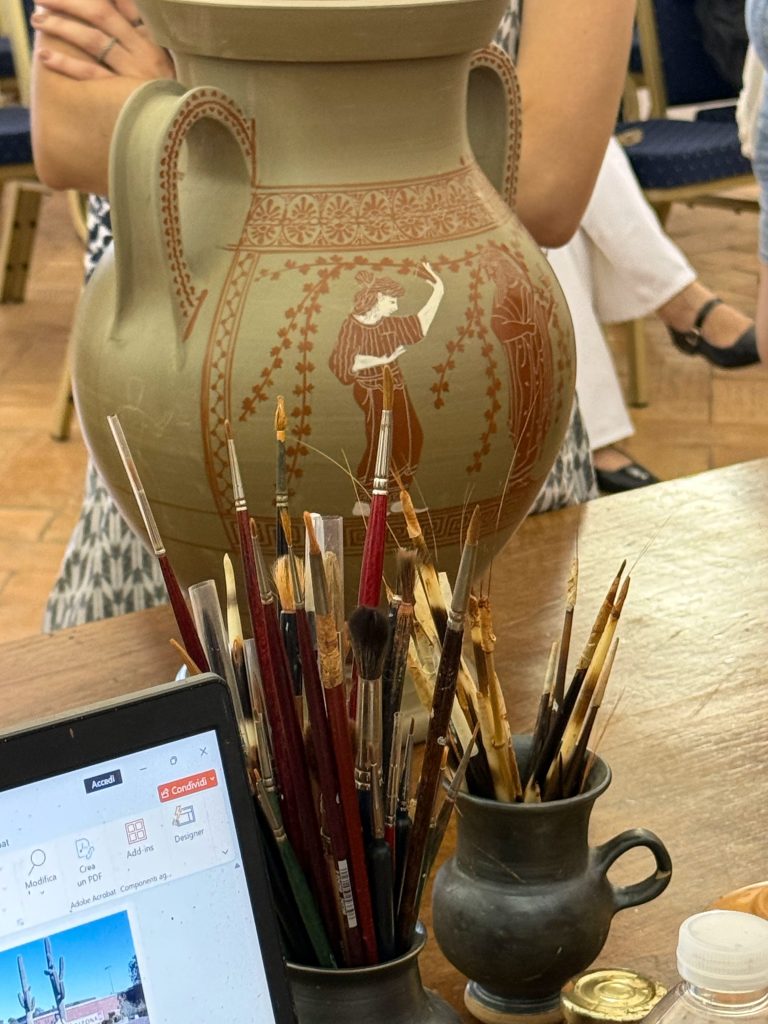
The question my classmate (Lucy) and I set out to answer in our presentation was, “Why are there so many ‘Greek’ Pots in Etruria?”
And though we spent probably cumulatively over 11 hours researching, writing and preparing our presentation I was still nervous.
And if you ask me now why there are so many the answer is one that seems so simple and so obvious, trade. There was also something important that Lucy and I noted while researching. This sort of cultural diffusion between the Etruscans and the Greeks. These Attic vases were being used in an Etruscan context and were treasured possessions, some showing signs of being mended and repaired in antiquity as well as being buried in tombs.
The traditional Attic shapes influenced shapes and motifs on traditional Etruscan Bucchero Pottery and Bucchero Pottery had an influence on Attic vases that were then created to be catered to the Etruscan market.
It was fascinating to see how people connected themselves and how ideas and communication between two peoples manifested themselves through art in antiquity.
Despite researching all these things and seemingly being well prepared I was still nervous.
Perhaps I was nervous to present these findings, I feared somehow being wrong, I feared failing in front of everyone, especially people like Professor Yarrow, Sebastiano and Lavinia (who is a pottery expert).
Lucy and I presented anyway and the truth was that it was fine; it went well, I would say good even.
And so they day moved on.
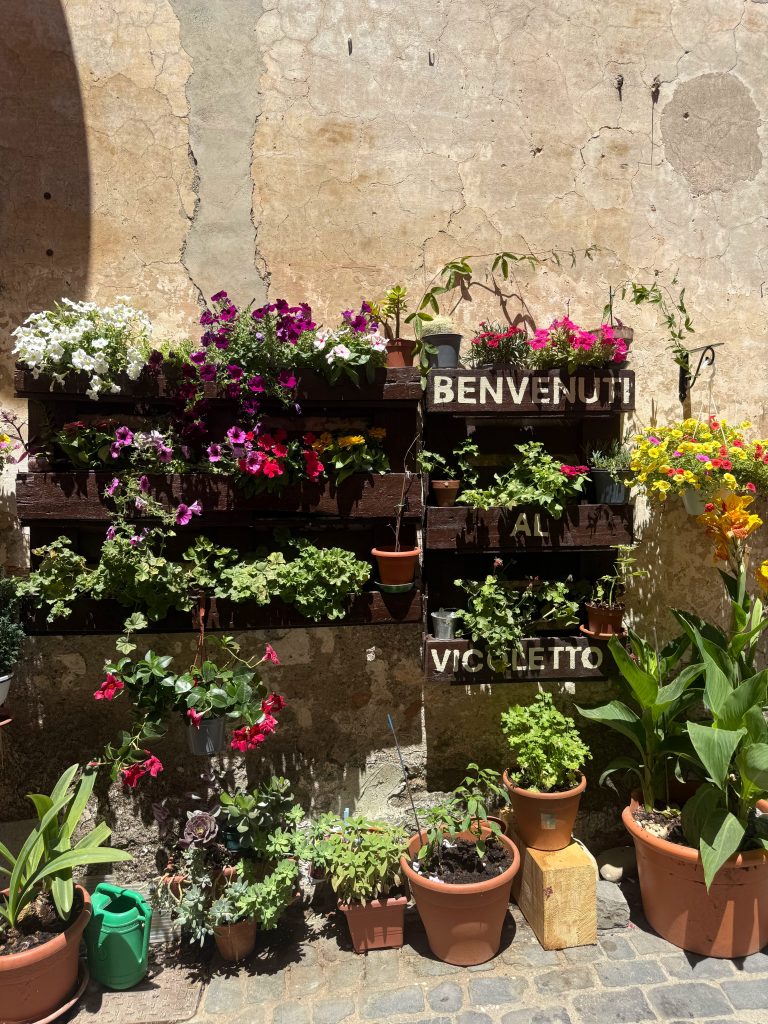
We explored the city of Cerveteri, the modern name for the ancient city of Caere. In one of the readings after the city had been conquered the ancient city is described as, “flourishing and populous as any city in Tyrrhenia.” (Dionysius of Halicarnassus 3.58.1, writing in the Age of Augustus).
I would certainly corroborate this statement to an extent. The city was not immensely populous (in my perception) but it was certainly flourishing. The streets were beautiful, the people were kind, and at every point I was immensely moved.
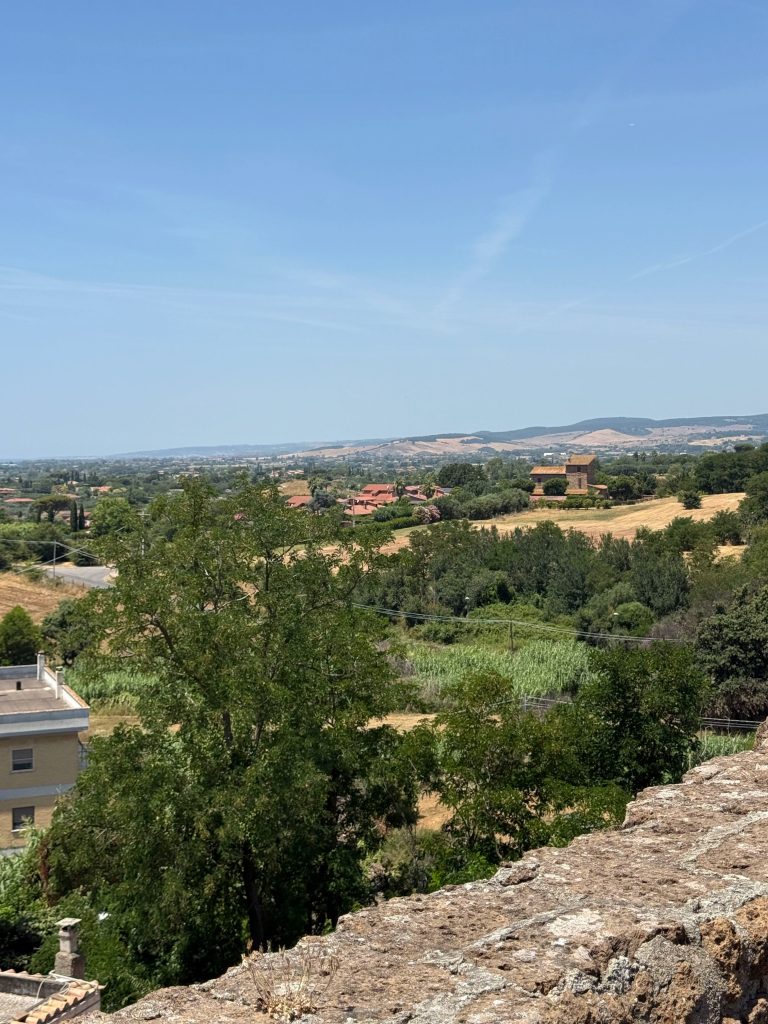
Walking through this city there were so many areas, intersections where the modern, the medieval, the ancient came to life.
Something that I realized about Rome is that it is a city that exists between all time, I found this is also true of Cerveteri.
This was probably my favorite place I’ve been to so far in Italy with some of the best food, I only tired one restaurant but I’m sticking to my guns on this one.
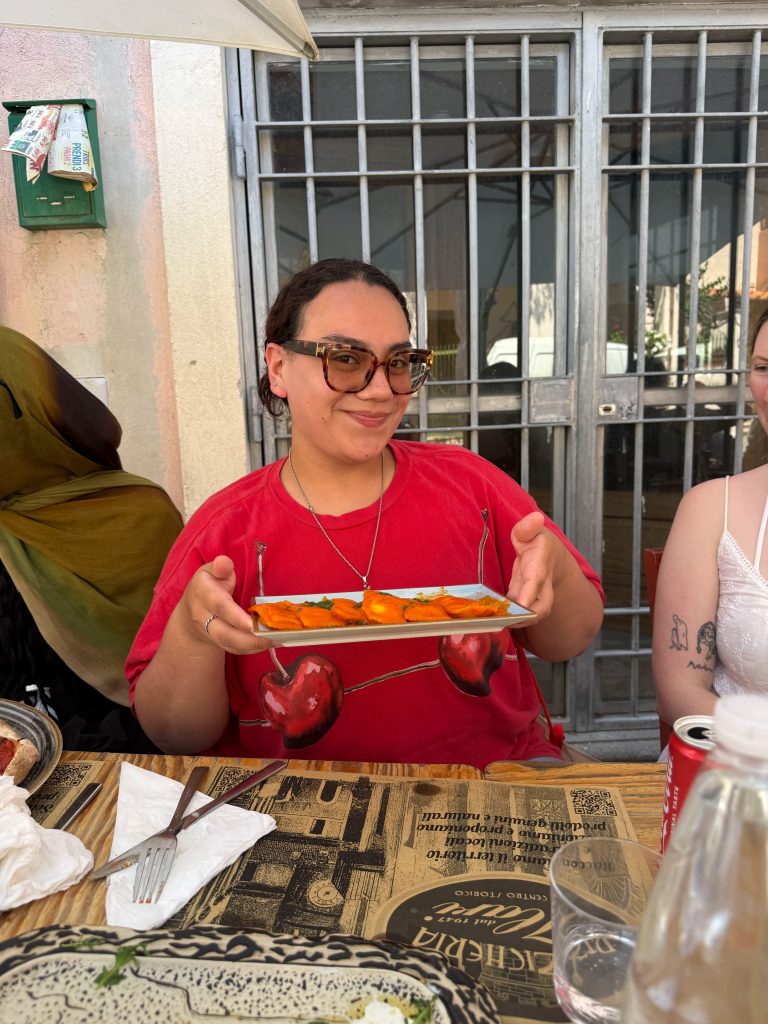
This town felt so surreal to me, I loved and felt so lucky for the opportunity to be moving through it. I saw so many beautiful things.
One of my favorites was a fun fact pointed out by Sebastiano, Cerveteri is home to one of the very few 6 hour time clocks in Italy.
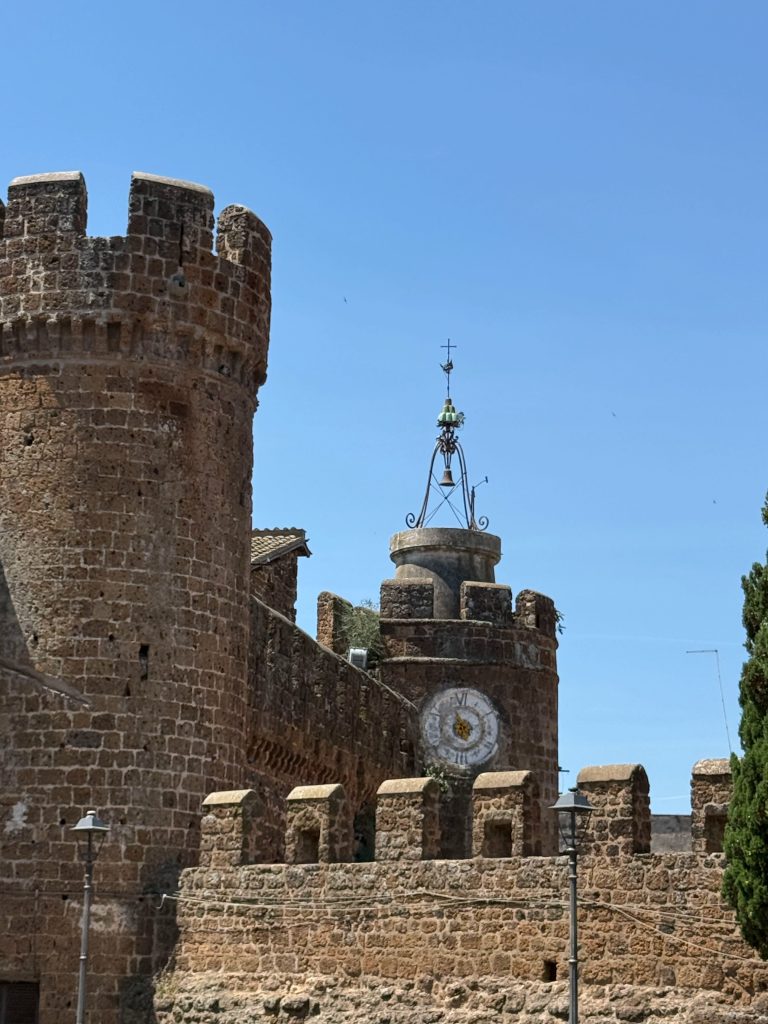
In another one of our readings about the Etruscan people it ends with the authors reflection and how to gauge how much western culture owes to the Etruscans. Although the answer is unclear we can see their impact, an example the article brings up is that of, “the cities of Europe would not be the same were it not for Etruria’s early urbanization and organization” ((Jean MacIntosh Turfa, “The Etruscans” reading, pg. 662).
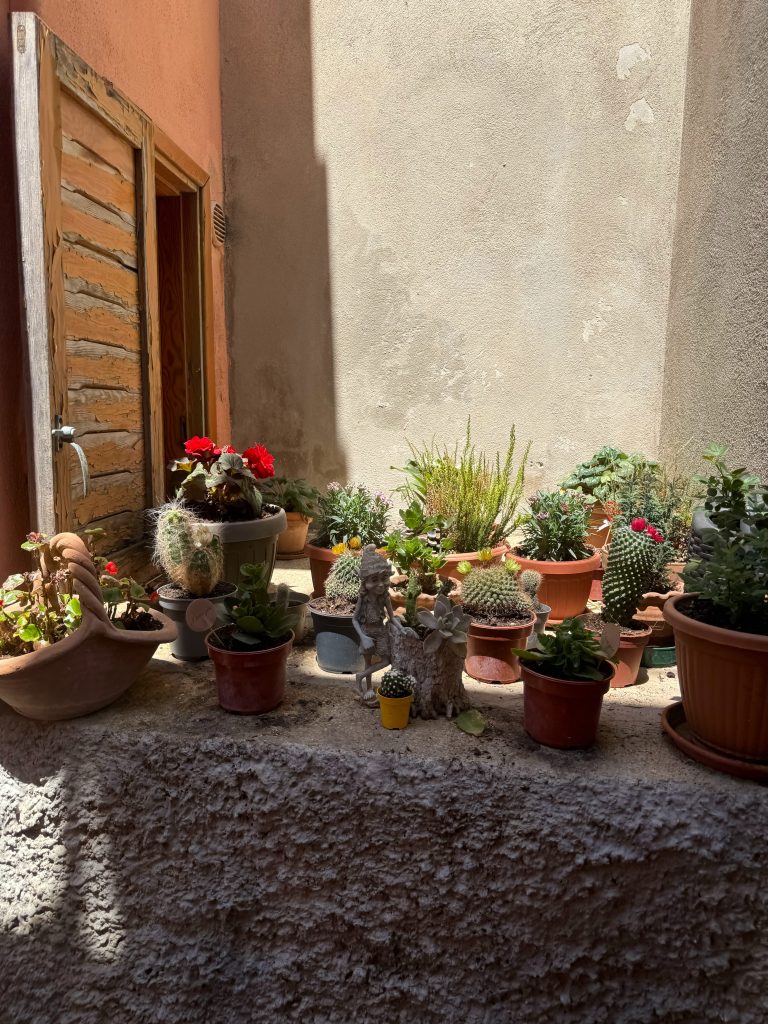
I believe this is true, especially after setting foot in Cerveteri the once ancient city of Caere. A city filled with Tufa and filled with friendly neighborhood florals.
I am so happy I presented and I am so happy for the opportunity to have explored and looked at this city.
– Paola ❤
 Rome via Brooklyn
Leave a comment