
(1297 words – 7 min read)
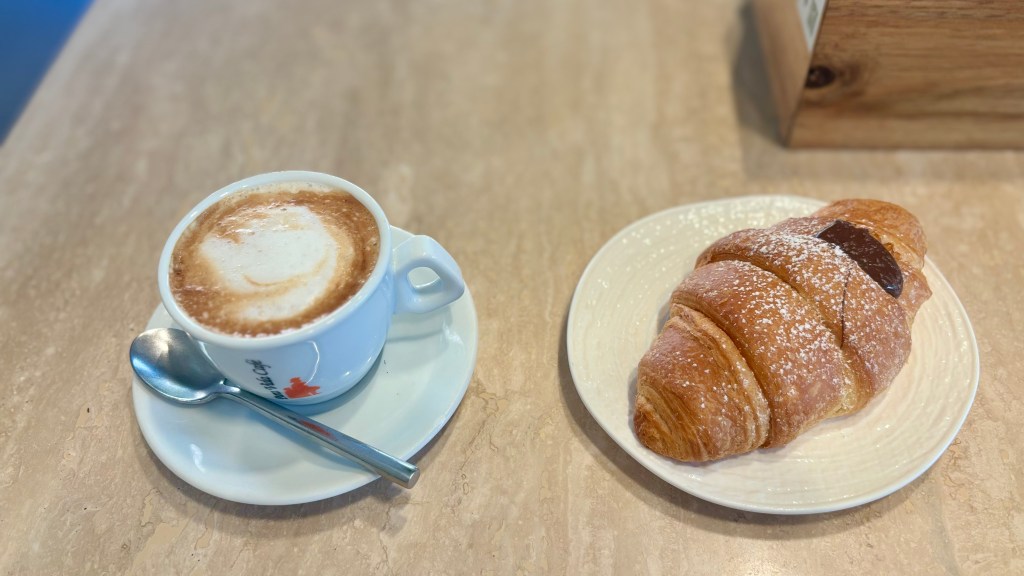
As every day, I started with a little walk to my coffee and cornetto breakfast, before meeting up with Shamiqua and heading to meet up with the group. We accidentally got on the wrong bus, but a very kind local woman told us that the one we were on did not go where we thought it did, and we were able to transfer and still make it to the museum early! Thank you again to that local woman.
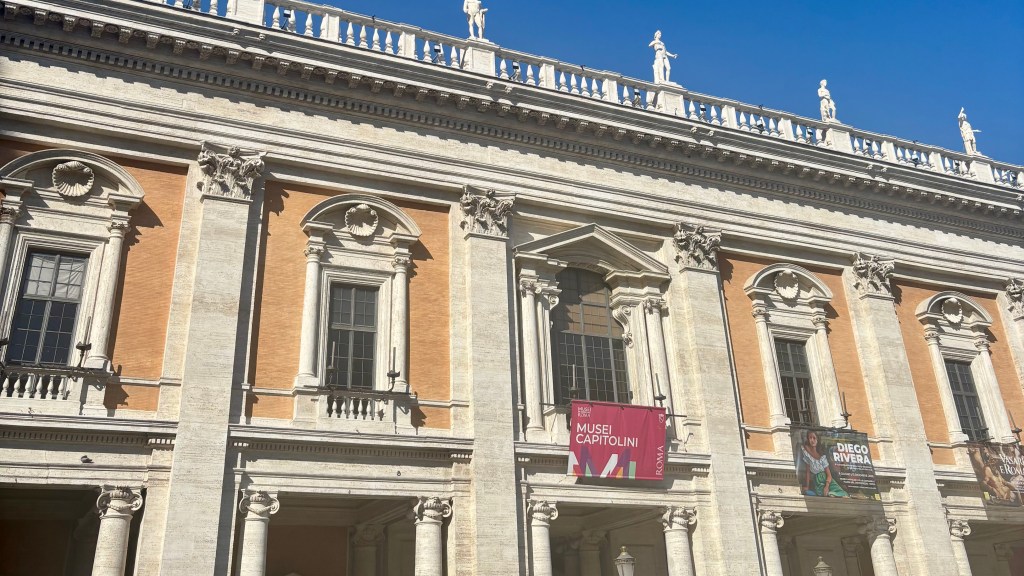
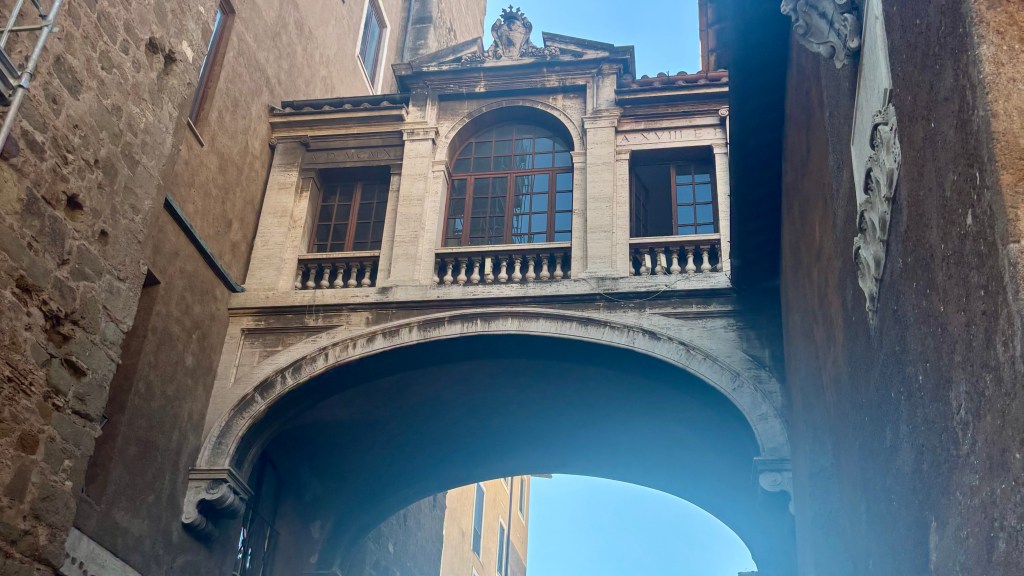
Outside the museum, we learned a little about the Capitoline hill and it’s origins both fake – like the myth that the Romans dug up a head (caput) and saw it as a sign from the gods that the hill needed to be the head of the government, and real – that Michelangelo designed the gorgeous square and building surrounding it.
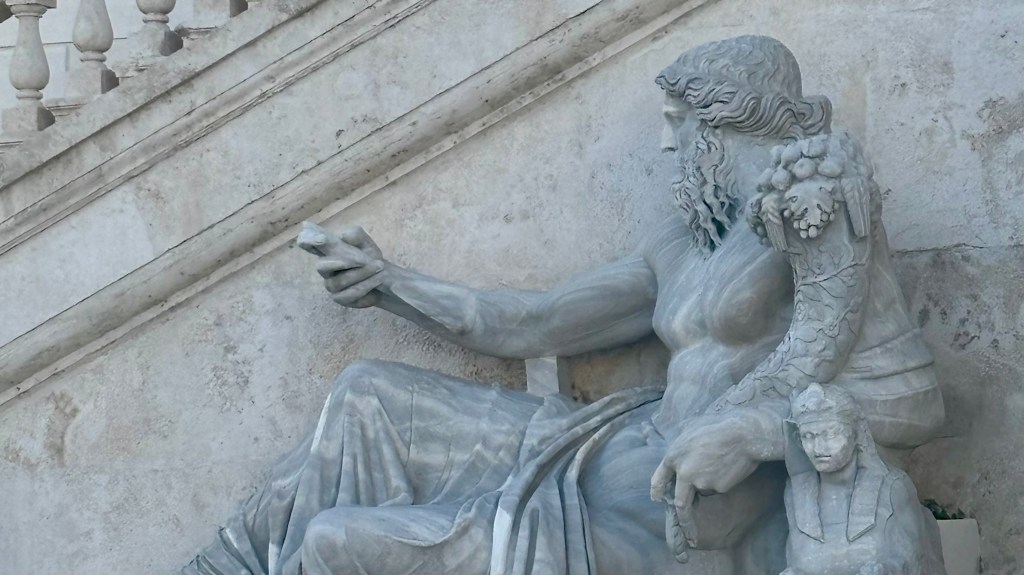
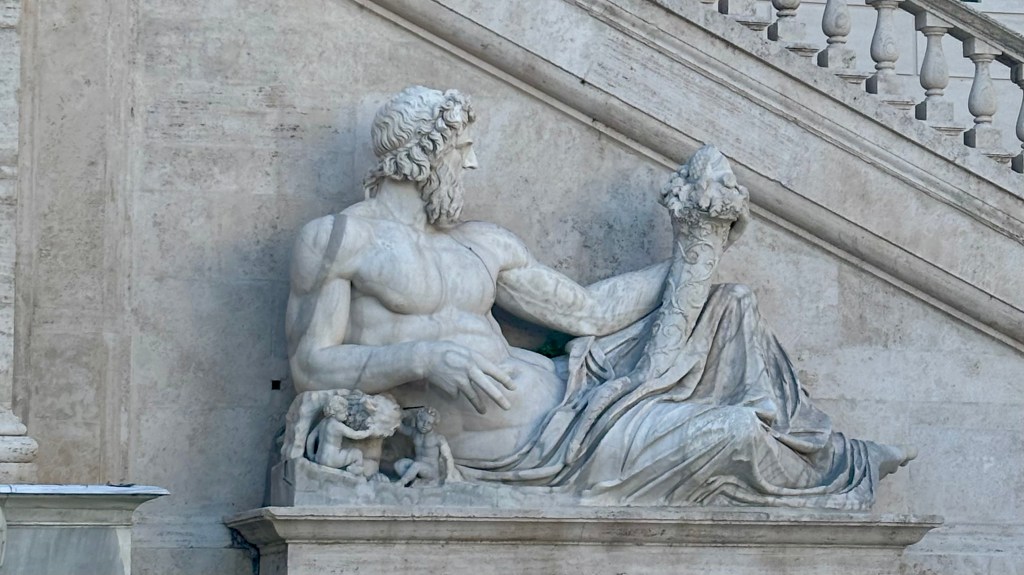
We learned about the way the personifications of rivers are represented in sculpture, and not to brag, but when were were asked to guess what rivers the two in the center of the plaza were representing, I recognized both the Nile (featuring a sphinx) and the Tiber (featuring Romulus and Remus).
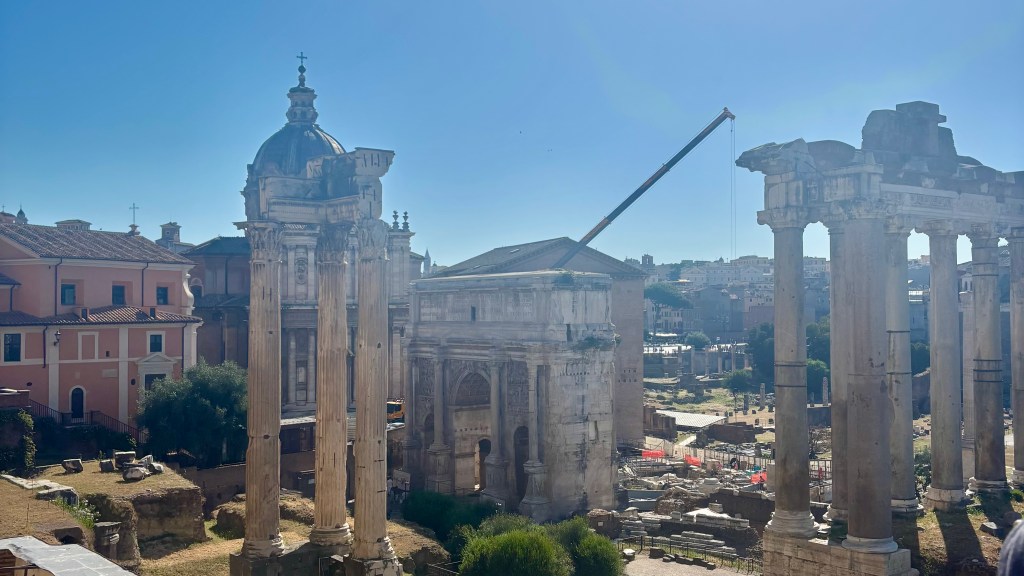
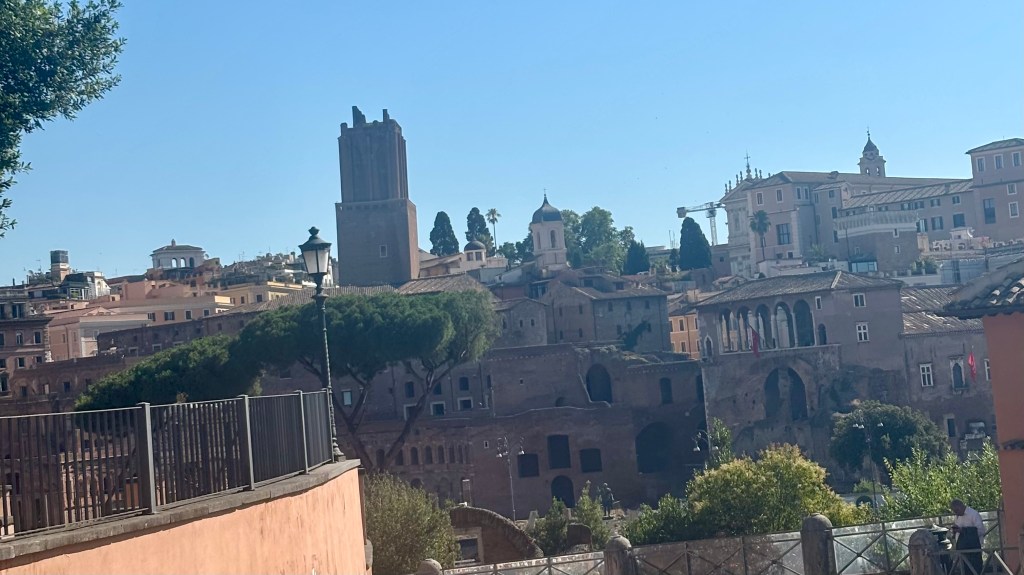
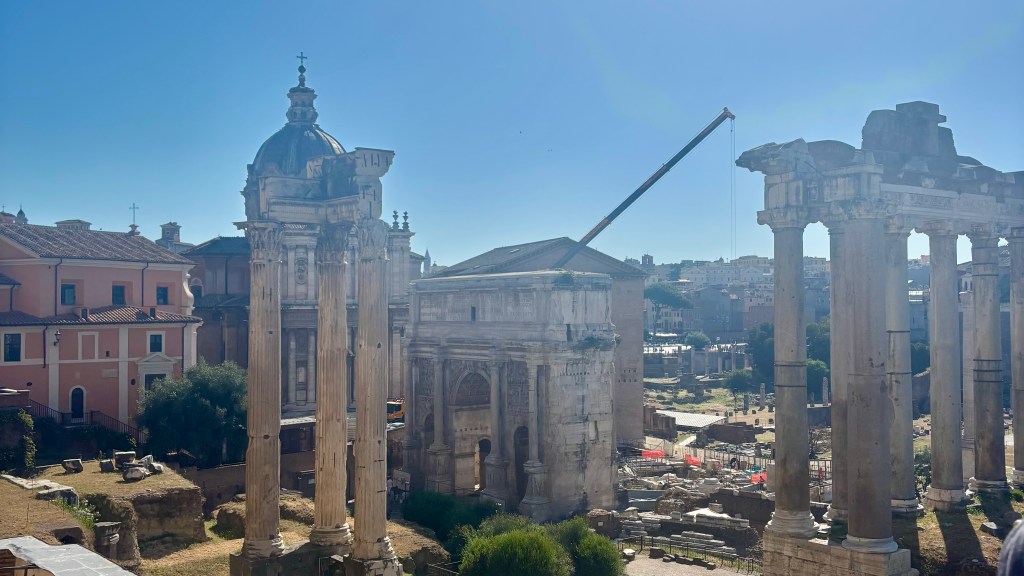
We also got a quick glimpse down at the Forum – which we will see again early next week.
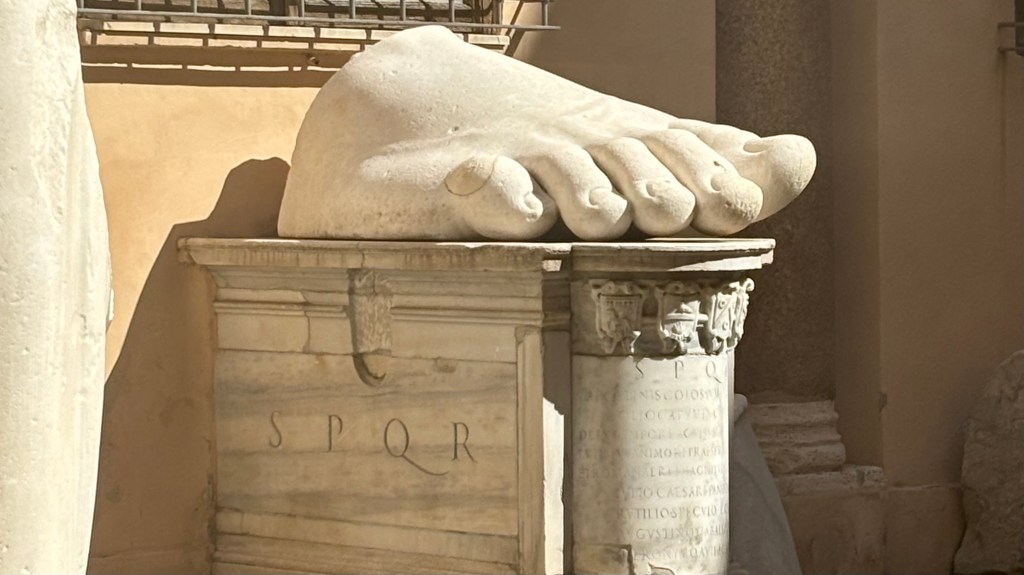
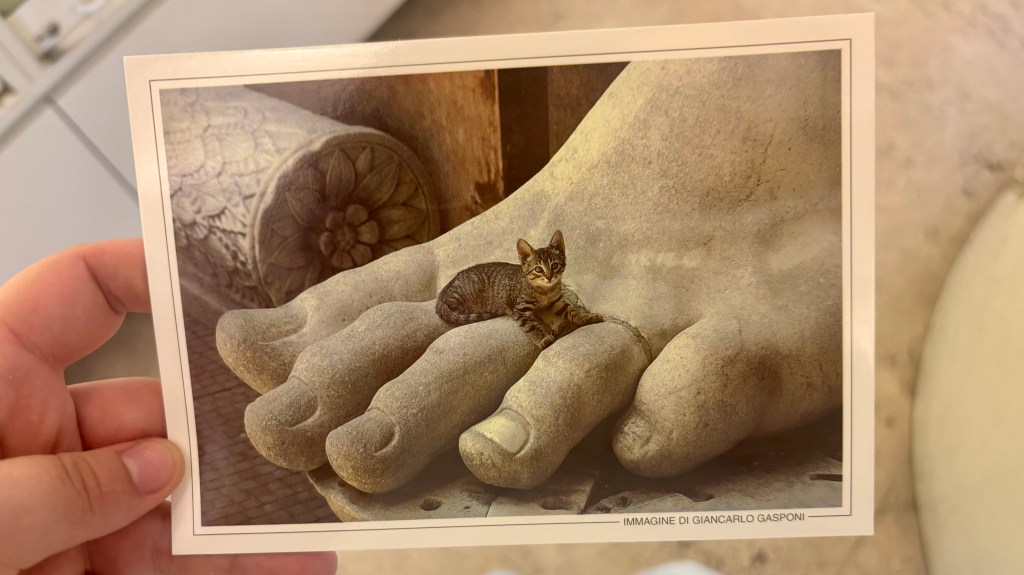
Once inside the immense museum, we saw pieces of a giant sculpture of Constantine, the first Christian Emperor, that we would later see a recreation of in the garden. It really is a wonder the detail sculptors can get at both very small and very large sizes like this.
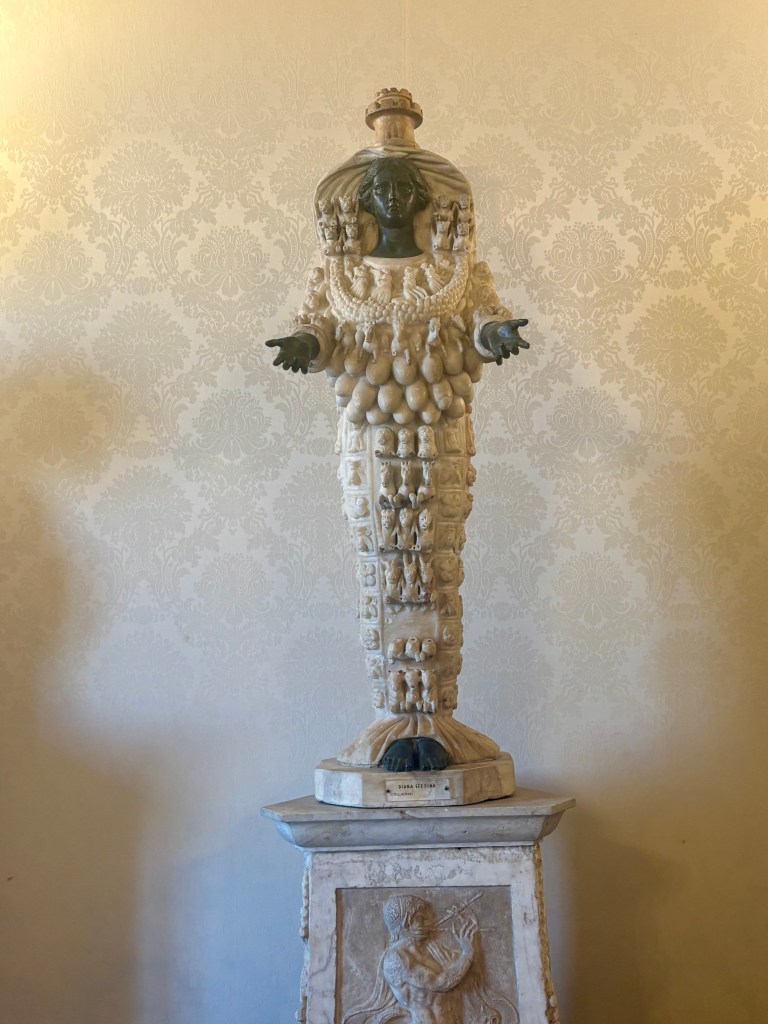
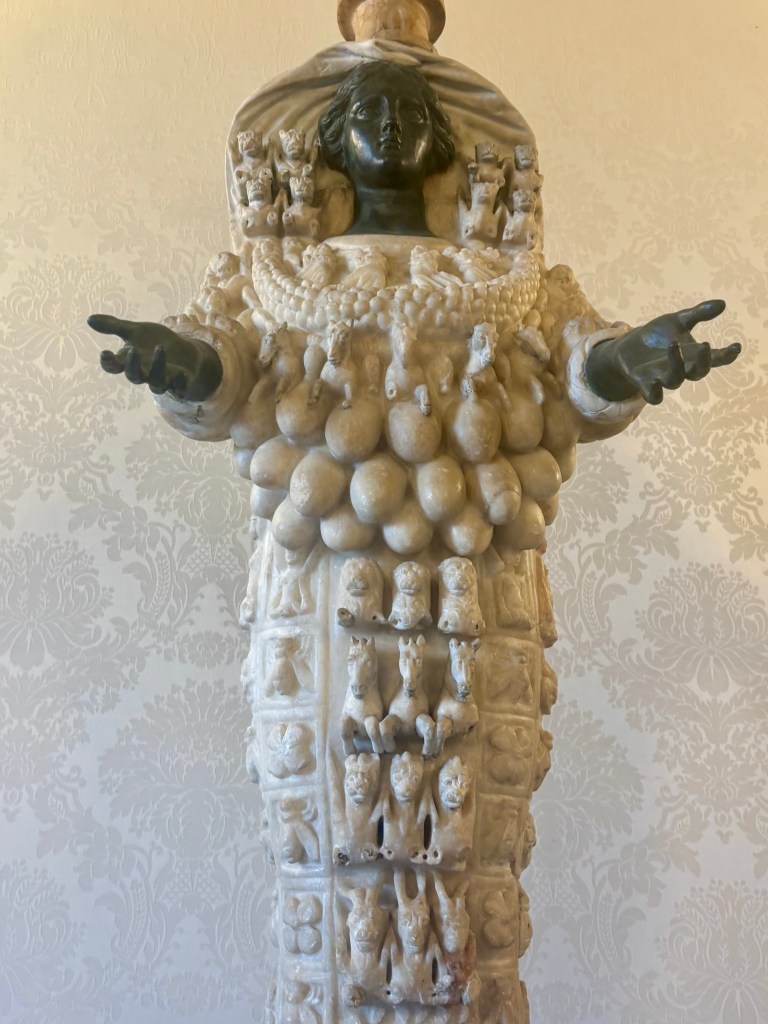
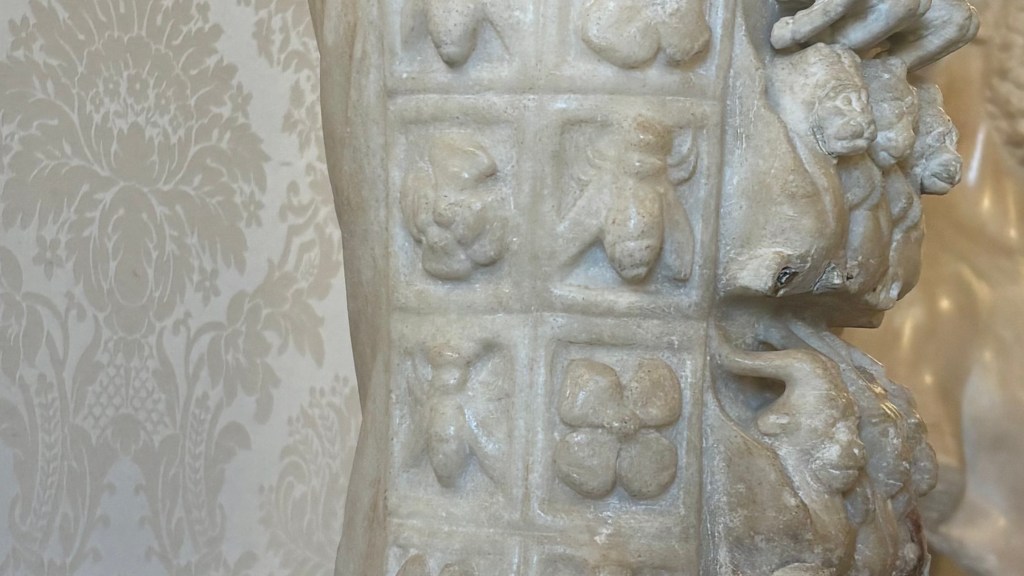
We saw a lot of art today. And I mean a LOT. I could probably could spend days in just the museum, and write a whole blog post about every piece I saw there. But for the sake of my readers, I chose a few select pieces to write about (mainly since they cropped nicely into my format). We saw many statues around the first building – many busts, but this one of Artemis of Ephesus stuck out to me. I took a myth class last fall where we learned about syncretism – the act of merging gods from different beliefs into one (like in this instance the absorption of a local deity into a more “palatable” and empirical one); and this Artemis is a key example of this. She is covered in various animals and plants, with bees and flowers lining her sides, as this epithet of Artemis is associated more with the natural world than the traditional hunting. I like the mixture of metal and stonework here, as well as the repeating motifs along her outfit.
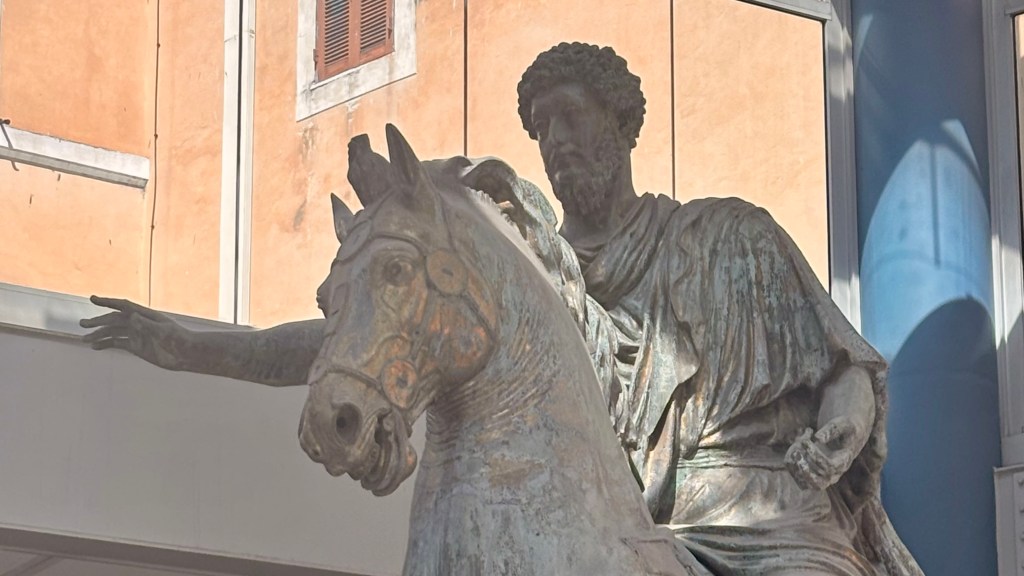
We also saw a giant statue of the emperor Marcus Aurelius, which has a replica outside in the square. This statue shows the emperor riding a horse, with a beard alluding to Socrates. Even in his writings (the Meditations) it is clear he wants to be depicted as a sort of philosopher and thinker, like the Greeks. The thing that is interesting here is that he also depicts himself as a great military leader, and these things really come into contact with me: the peaceful philosopher and the brutal solider. Maybe this wasn’t so strange to the ancient Romans, but it really goes to show how much ones image can be edited, especially as the emperor over time. I also ask myself how we define the truth about historical figures like this. Is it in the art that depicts them, their own writings, the writings of others….
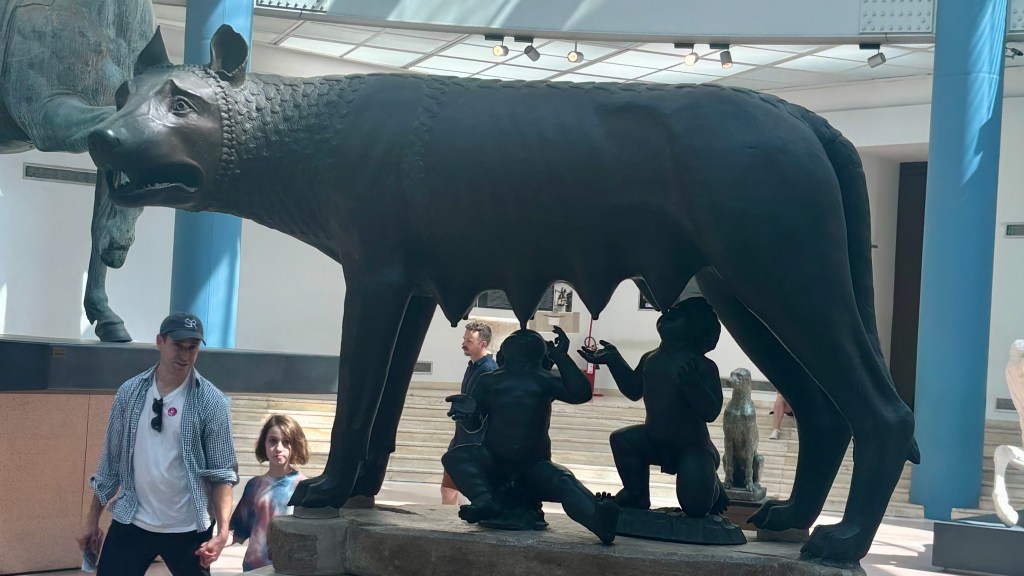
We also saw the famous statue of the wolf feeding Romulus and Remus. It is so famous, but I’ve never actually seen it outside of photos! Also it’s not really ancient! Well, the museum has to say it is, but I learned that the wolf part of the statue is likely medieval and the babies are from the renaissance. It’s so interesting that such famous pieces of art can just be fibbed about on such a large scale like that.
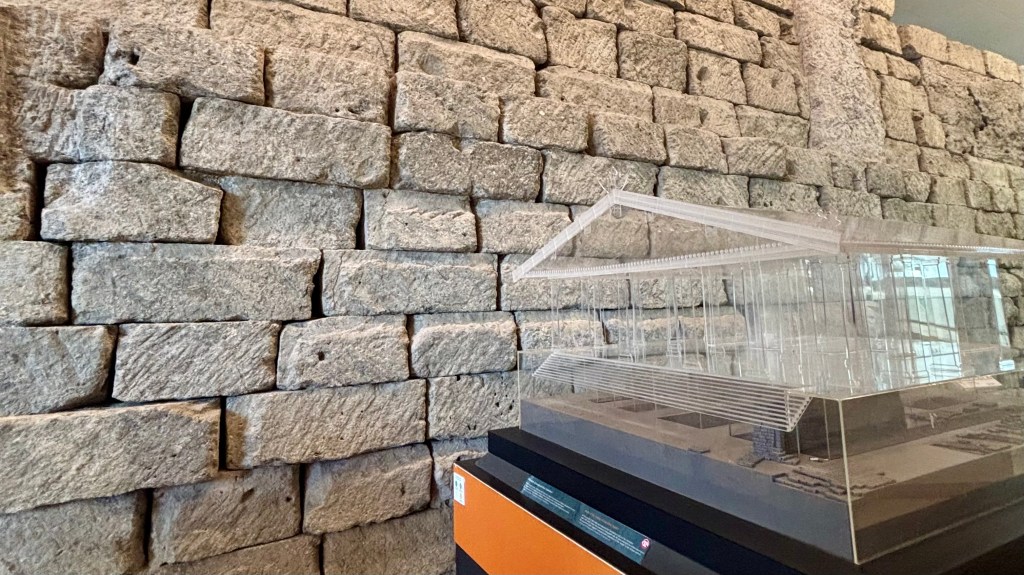
We then saw a very small piece of the Temple of Jupiter Optimus Maximus, at one point the most magnificent temple in Rome. There is a glass representation of the full temple in the corner of the piece of the wall they have inside the museum, and it’s mind-blowing how large it is and how little we have left. It really shows how important Jupiter was as a god to the Romans, as so many ancient authors write about its splendor. Plutarch speaks about how “even the gilding alone of this temple’s roof, costing more than 12,000 talents, is beyond the means of the richest private citizen in Rome today” and Pliny talks about the “coating [of] ceilings with gold”. Of course, none of this survives until now, but one can imagine the glory of the structure at its peak, even just by looking at the singular wall that remains.
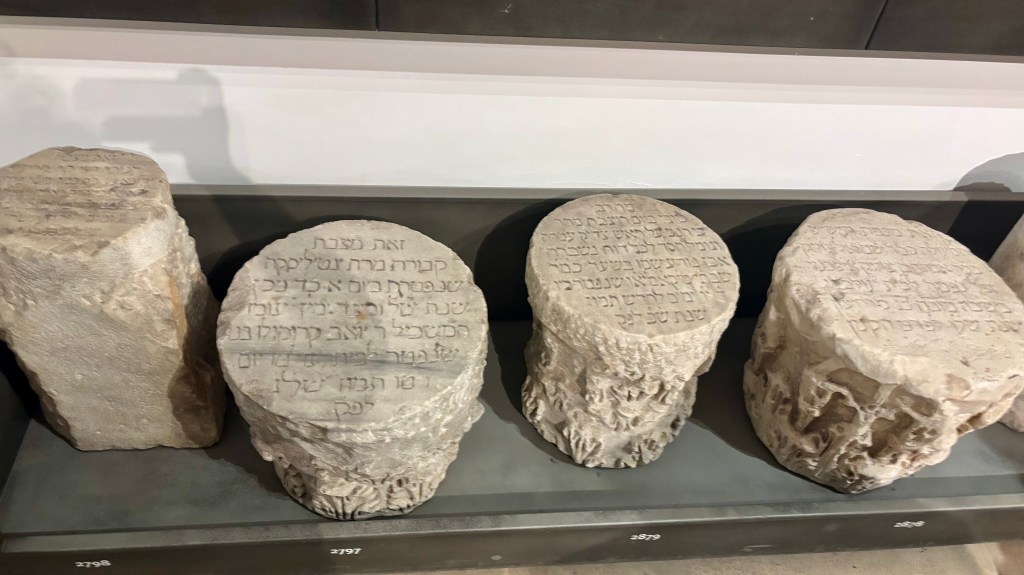
We descended into the tabularium part of the museum, where we saw a lot of inscriptions in Latin, Greek, and even Hebrew! There is so much to this museum, I cannot even learn enough about it in one day.
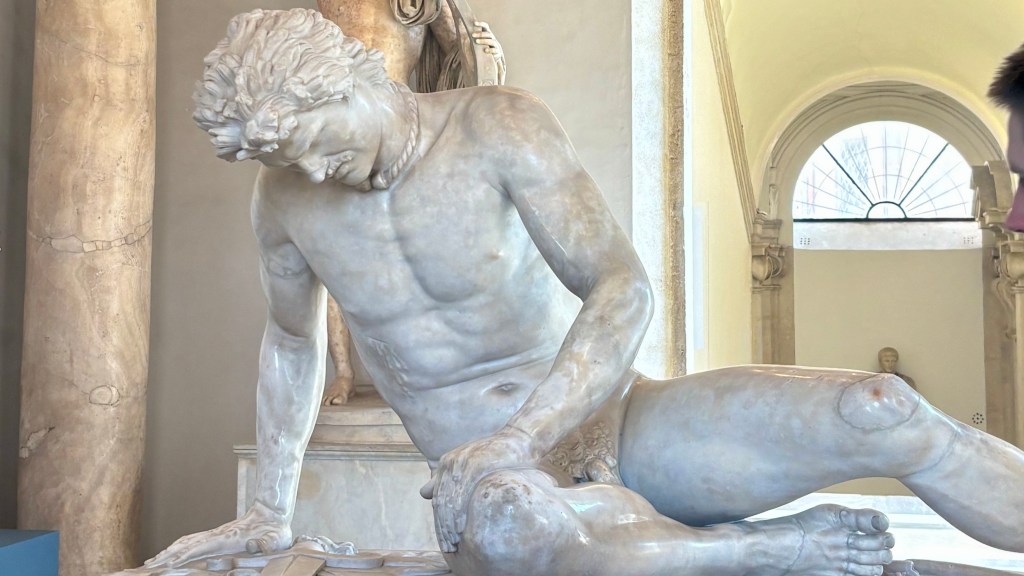
We then journeyed through to the other side of the museum, where we saw even more statues, notably the famous Dying Gaul. Since I was educated a lot in French history as a child, it is interesting to see the other side of the depiction of the Gauls. I was taught a lot about the colonization of Gaul (modern France) and how the poor Latin spoken by Roman soldiers became the French language. Seeing their depiction of the Gaul really shows the settler colonialism of the Romans, even if the sculpture is incredible. The blood coming out of the wound and the look of defeat on his face will stick with me for a long time.
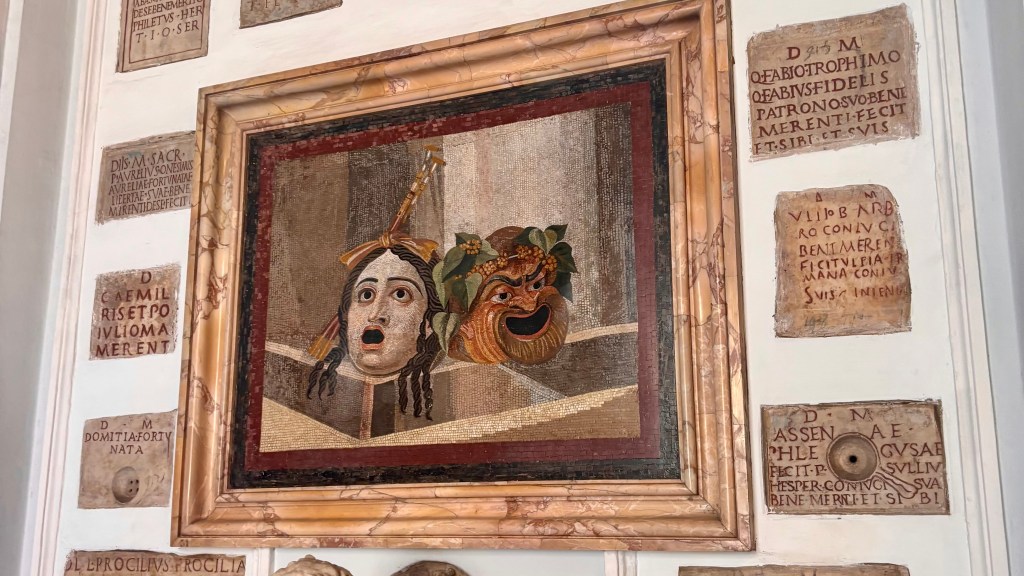
We also saw this very beautiful mosaic of the two famous theater masks. I think this is great because they are not usually depicted as colorful, or as masculine/feminine, but just as pure masks, and I think the intricacies of this mosaic is really incredible. It’s also striking that it seems less that it depicts joy and sadness, but that it depicts shock and mischief. I wonder if this is a cultural difference, or if we’ve warped the emotion of these masks past recognition. It’s also worth noting that the feminine mask (sadness/shock) is paler than the masculine (happiness/mischief). This is typical of Roman art, and I wonder if it was typical of Roman theater as well.
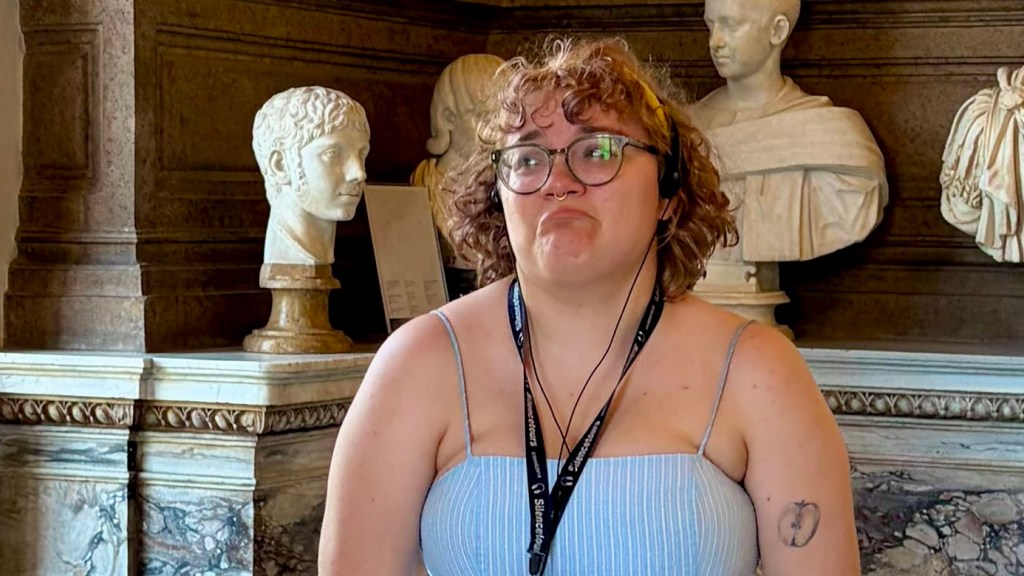
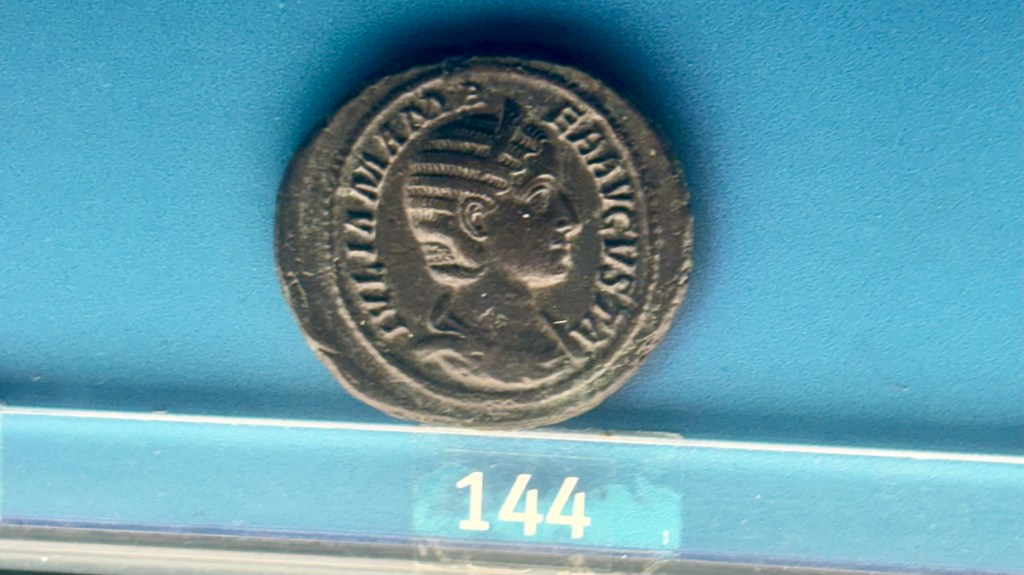
I also saw a bust of Elagablaus, and a coin depicting Julia Mamaea. More on them later, but I have done much reading on both of them for my research project later in the class, and it was nice to see them represented. I look very sad to see him, as the professor said she would not be playing “guess the emperor” with us, but I was in reality a very big fan of this room.
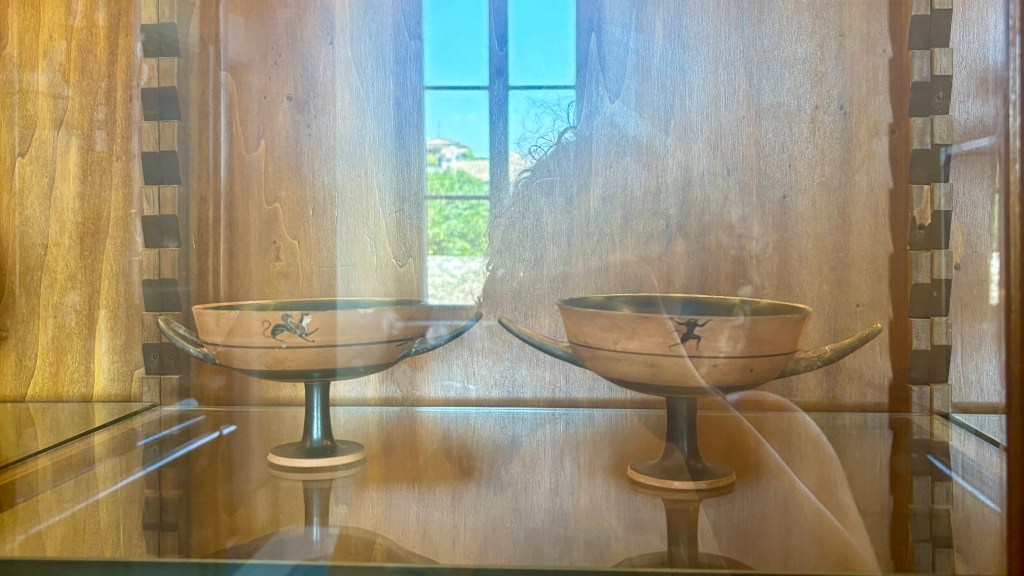
After the class part of today, me and my roommates grabbed food before they headed into the medieval part of the museum. I want to save some of the museum when I come with Cyd later, so I skipped out to come back to the apartment. On my way out though I took this picture of a greek pot, as I find the reflection of myself into against the past really interesting. At some point I would like to write a whole other blog post about the interesting museum curation I’ve seen on the trip, but I have to collect my thoughts a little more.
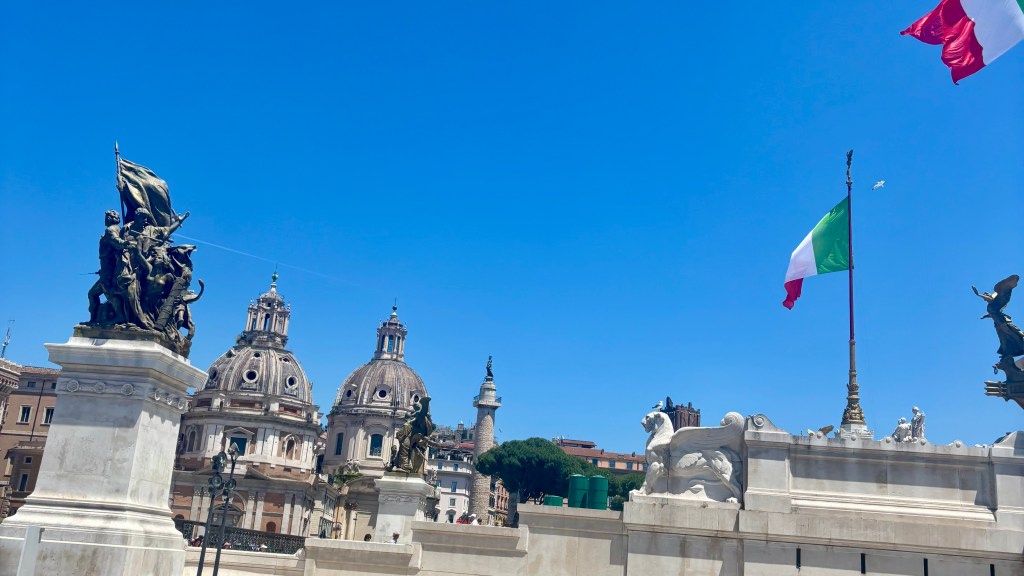
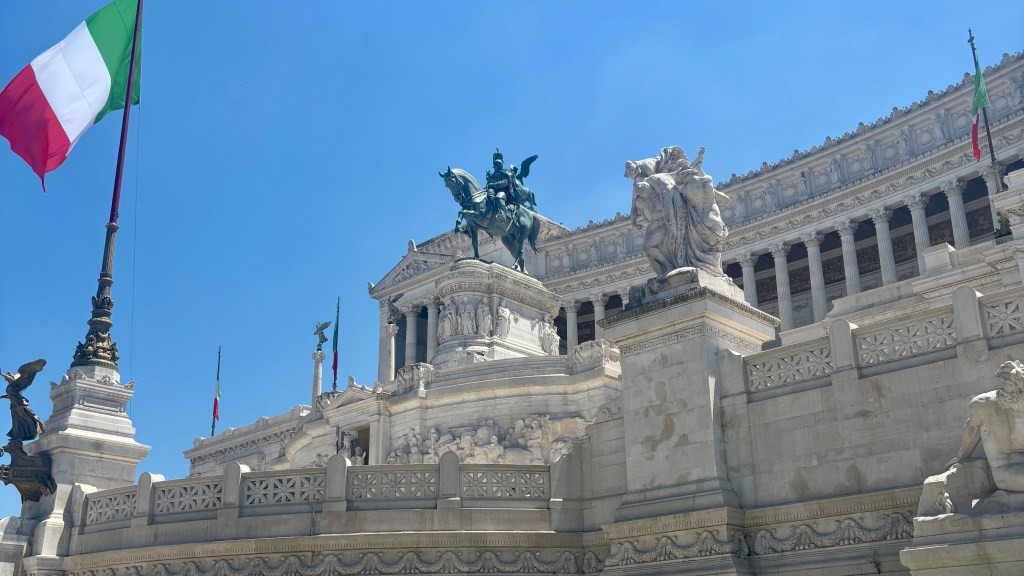
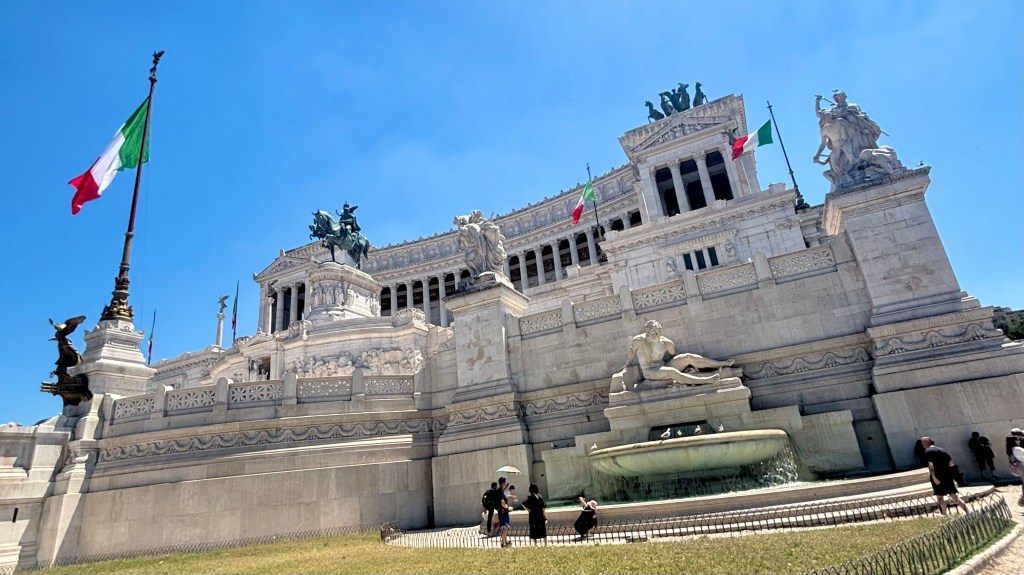
I also briefly saw the Piazza Venezia on my way back home, which was beautiful. I grabbed gelato with friends and wandered around, before heading back to get some rest before a very long day tomorrow.


 Rome via Brooklyn
Leave a comment