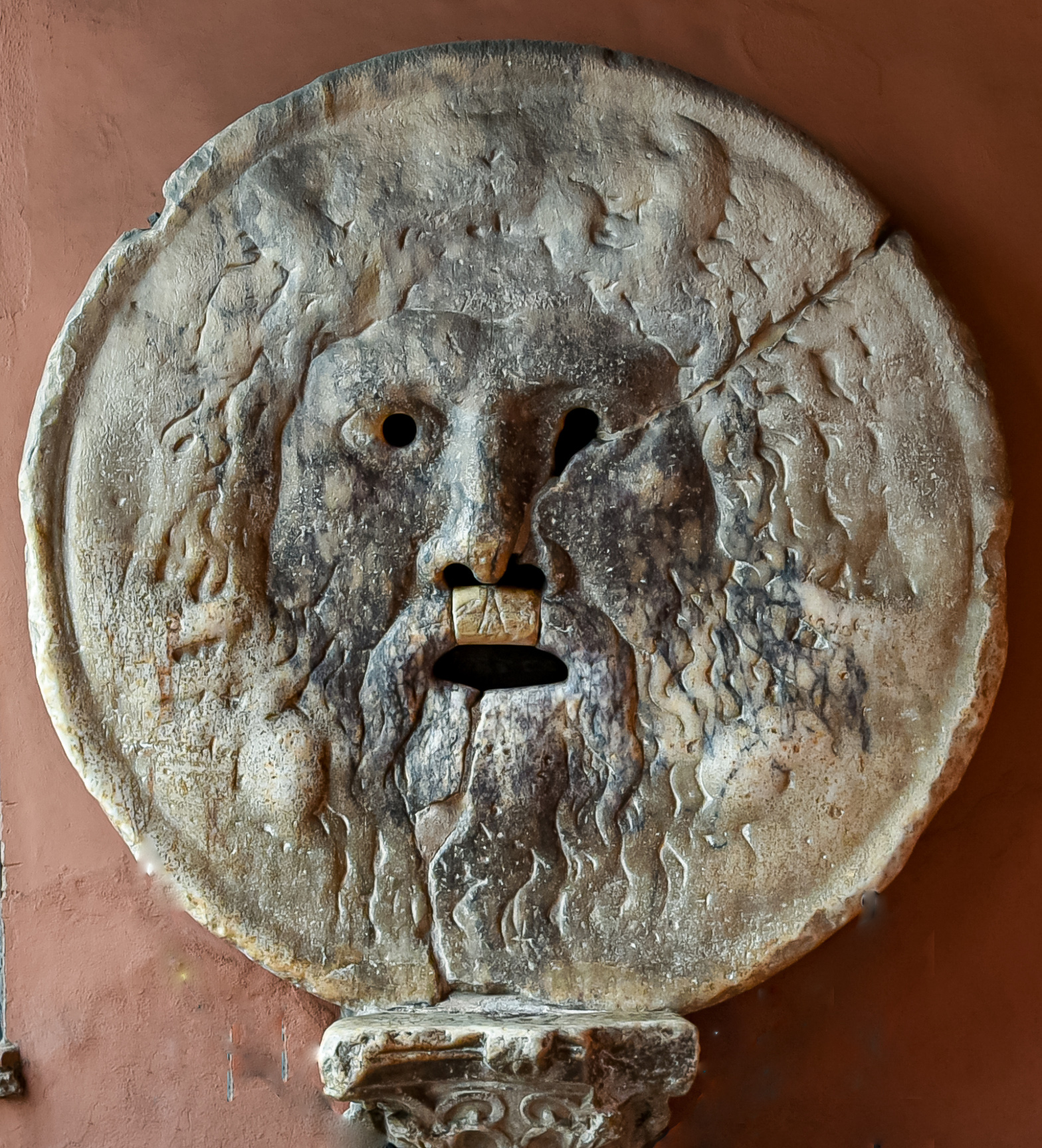

All over the known Roman Empire, game boards (tabulae lusoriae) and pieces have been found: carved into stone, buried in graves, and even scattered in the streets of the forum. But what were these games and how were they played?
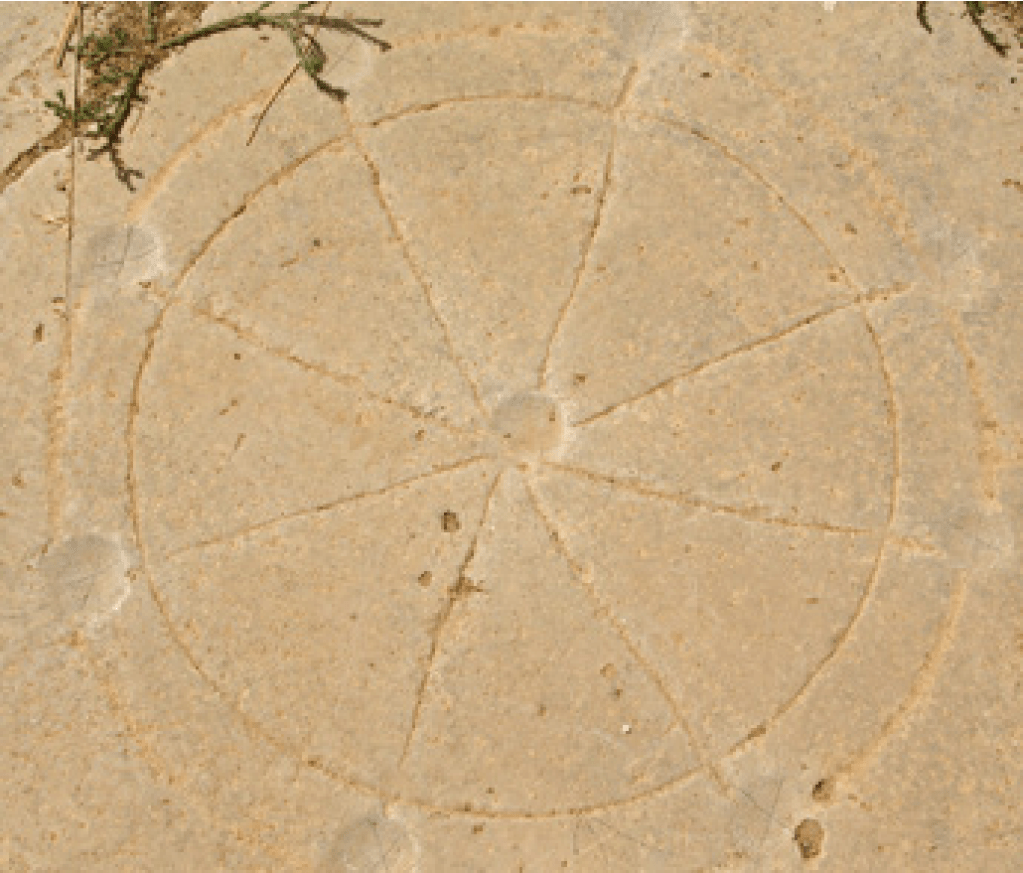
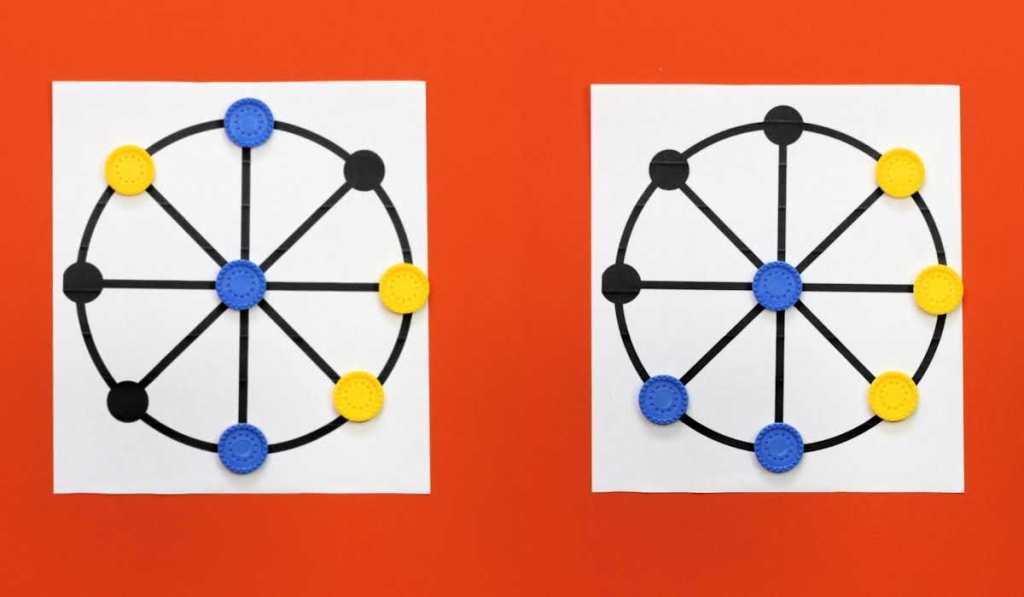
The first type of game found is a circular game dubbed Terni Lapilli (Three Pebbles) or Rota. It looks like it was an ancestor of tic tac toe. Here is a website where you can play an online version of the game: https://archaiology.org/terni-lapilli.html
Another game that we know a little about is Ludus Latrunculorum (sometimes called Roman Chess). It seems to be a strategy battle game, directly between two opponents, compared sometimes to real war. There was an importance put on the association made with real military skill and strategy. We do not know the rules of this for sure, as they were not written down and the game pieces found don’t give a strong hint to how it was played. Historians think that the game was played with counters for each player, though there is debate about an extra piece called the dux. We think the pieces started off the board and moved onto with play, but I also read that there was a specific starting position for pieces – sometimes referred to as little soldiers.
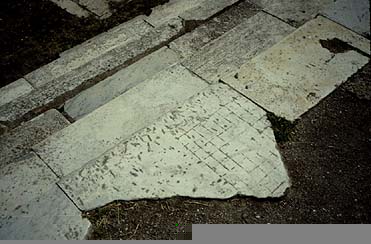
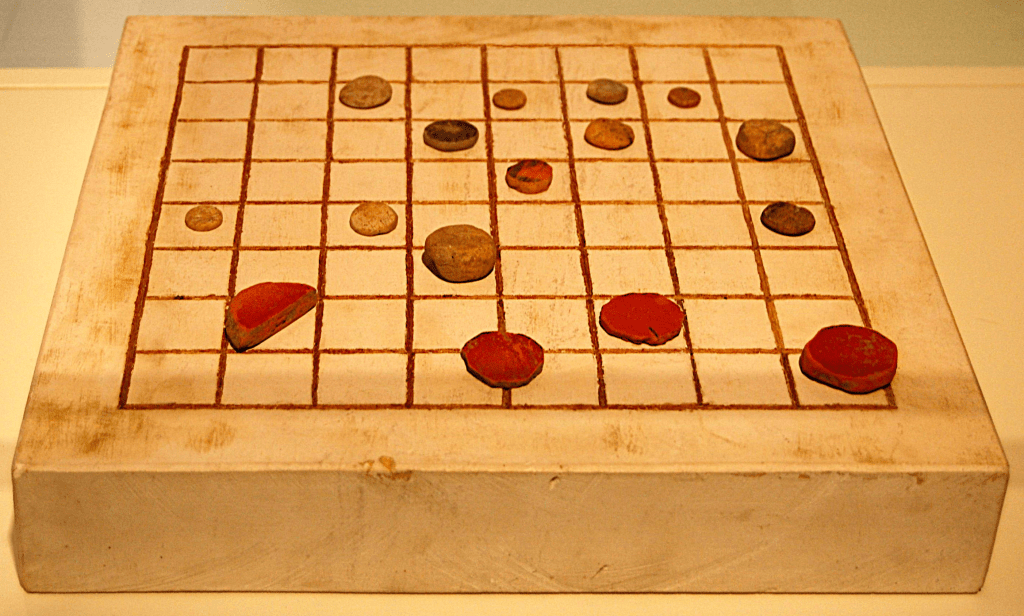
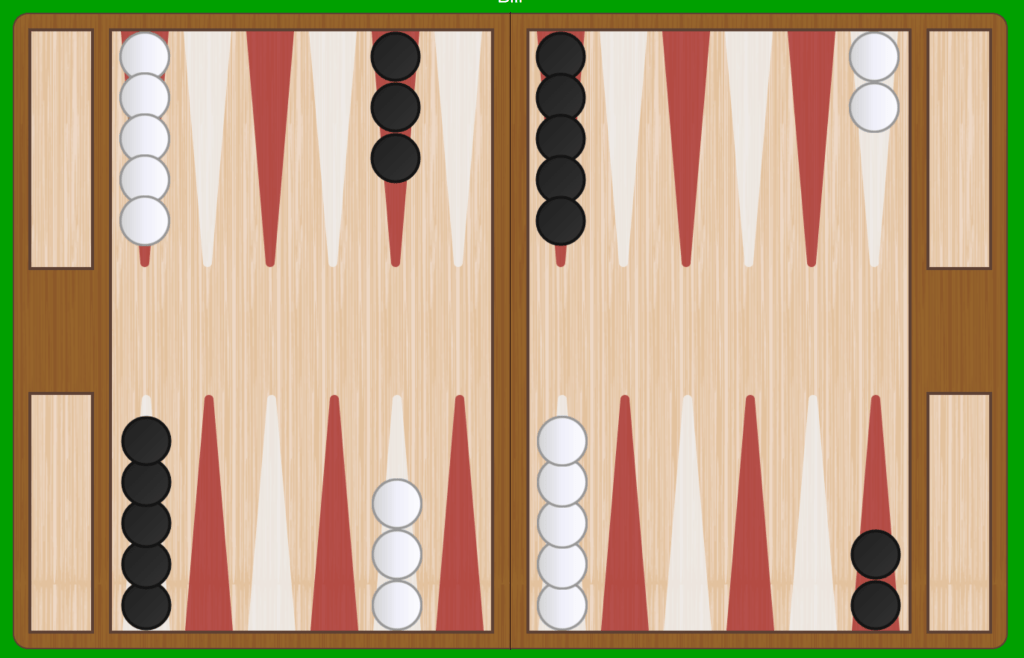
But maybe the most important game that has been found is Duodecim Scripta (Twelve Writings/Marks) also called Alea. It was played with three rows of 12 squares each with circles or triangle symbols in the middle. A later evolution called Tabula only used two rows. We know very little of how it was played but we do know a played had 15 pieces and 2 or three six-sided dice. The name of the game – Scripta – refers to the dice faces. We think it was a race and strategy game, where the player attempted to move pieces along these square spaces by rolling the dice.
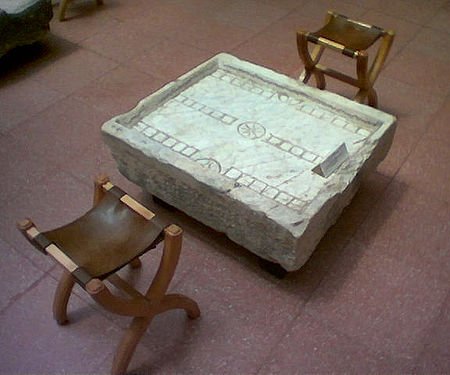
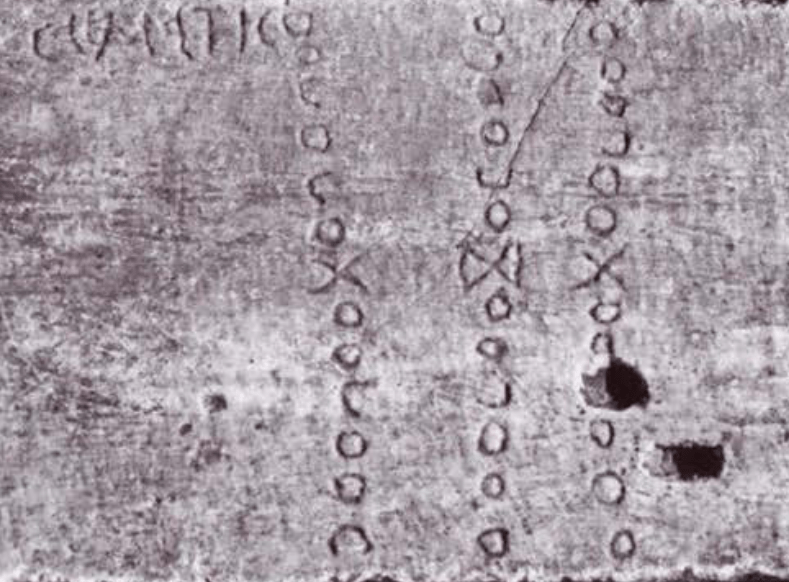
Other versions of Alea had letters instead of the square spaces – spelling out various messages such as: “The game board is a Circus, retire when you’re beaten, you don’t know how to play!” or the more hopeful “play without worry, keep you money in your money box” or even military praise “The Picts defeated, the enemy wiped out, play without fear”.
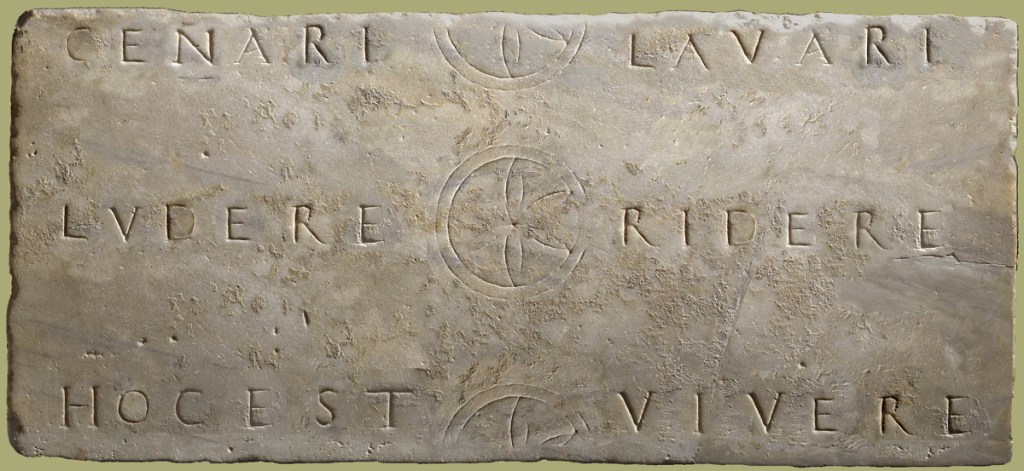
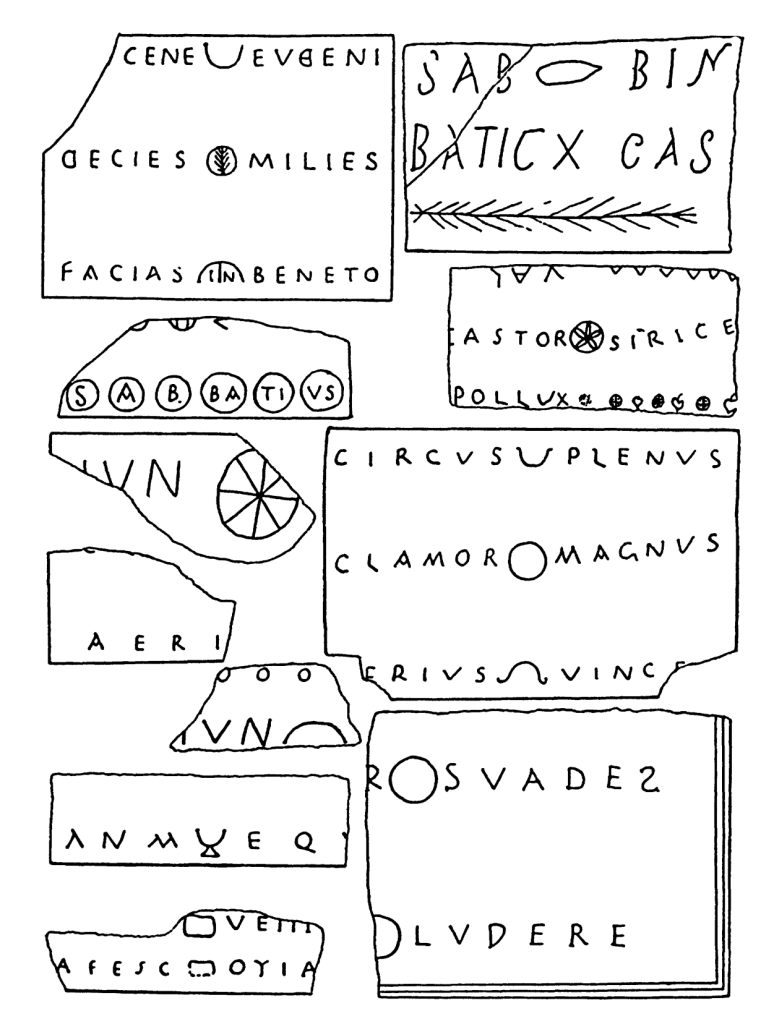
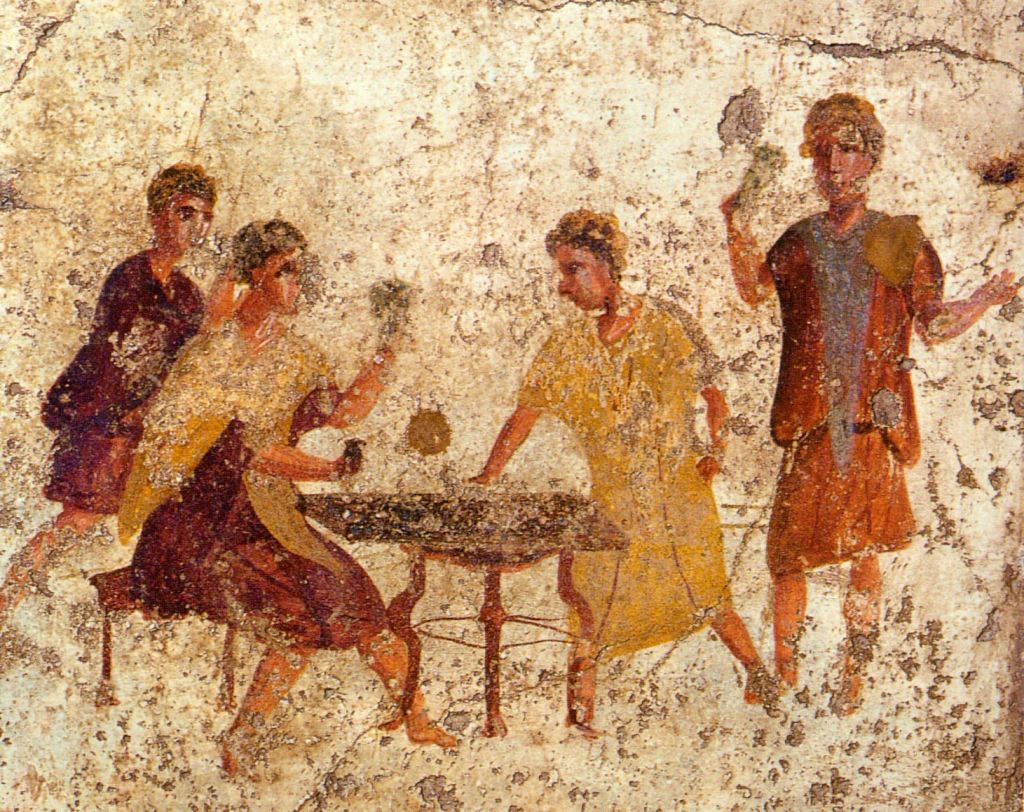
It was overall frowned upon by ancient authors to play Alea, as it not only involved gambling, but also was a waste of time. Everyone from Emperors (Augustus is noted to have had an affinity for the game) to commoners (looking to elevate their status in life) played the game. It was prevalent all over the empire, especially with bored soldiers during long sieges. It was less frowned upon for them to play it, as they had the time to waste, the same with the elderly, and even some women. It was also less frowned up to play in private, though we have found game boards carved into public streets and bathhouse game rooms, as well as ivory and wooden tables found in elite graves.
Bibliography:
Durnagölü, Nihal, and Bilal Söğüt. “A Study on the Late Antique Board Game Duodecim Scripta/Alea from Stratonikeia and Lagina.” Board Game Studies Journal 19, no. 1 (December 1, 2025): 25–57. https://doi.org/10.2478/bgs-2025-0002.
Muzzy, Walter. Ancient “Game Boards” etched in the Roman Forum, April 6, 2003. https://www.jeffbondono.com/TouristInRome/WaltersTours/AncientGameBoards.html.
Purcell, Nicholas. “Literate games: Roman urban society and the game of alea.” Past & Present 147 (1995): 3-37.
“Roman Board Games.” History Games. Accessed June 22, 2026. https://www.historygames.it/en/roman-board-game/.
Schädler, Ulrich. “Some Misconceptions about Ancient Roman Games.” Board Game Studies Journal 15, no. 1 (April 1, 2021): 79–97. https://doi.org/10.2478/bgs-2021-0004.
Whittaker, Helene. “Board games and funerary symbolism in Greek and Roman contexts.” The Norwegian Institute at Athens, 2004.
 Rome via Brooklyn
Leave a comment