
Word Count: 855
Time to Read: 4-6 minutes
On our first real day of class together we all met up and went to the Villa Giulia which serves as the site for The National Etruscan Museum.
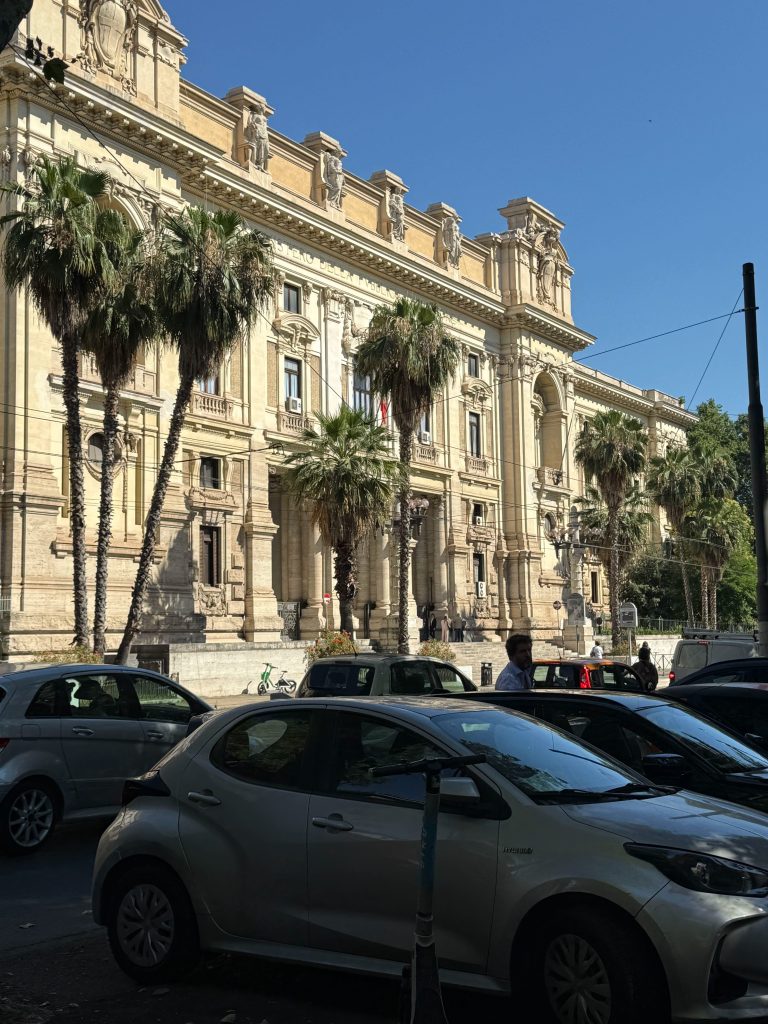
But before that as a class we all brought our shopping bags and headed to the market near the closest Piazza to us and we received a lesson from Professor Yarrow on how to shop in one of these Italian markets.
One of the very important lessons we learned was that of loyalty, you don’t hop around food vendors and buy different produce from each one.
In the culture of the market it is about finding your vendor and sticking with them. If you buy strawberries from one and avocados from another, especially when the person you bought strawberries from also sells avocados, it is something looked down upon.
Not only will you offend your vendor but you will also be making a fool out of yourself as you are betraying a pillar of Italian culture which is loyalty.
Now if we were at the grocery store…
We’re talking something different, that relationship is purely transactional and these same rules do not apply.
After this lesson we filled our water bottles in one of the many free flowing water fountains in Rome, received a lesson on the importance of water to the city and headed back to our apartments to meet up later and head out to the Villa Giulia.
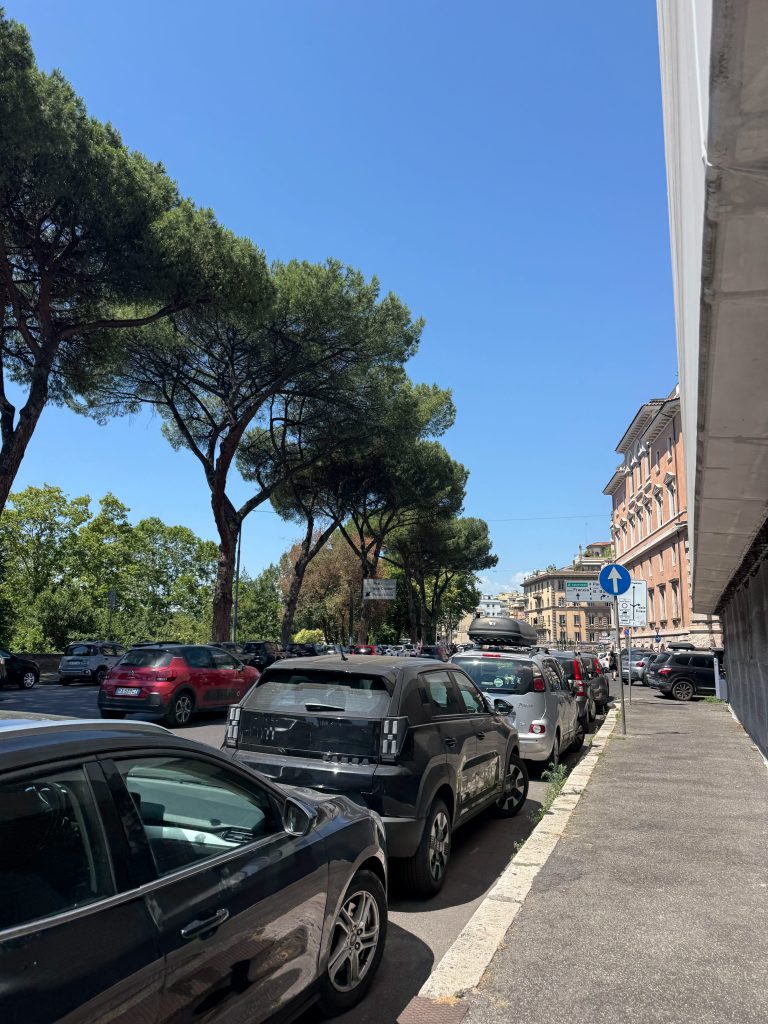
This visit to the Villa Giulia marked our first museum visit as a class and I was very excited but also nervous because a portion of the museum is outdoors and it was HOT. It ended up being fine though as there were many pockets of shade.
The museum hosts many contradictions or perhaps comparisons between the new and the old.
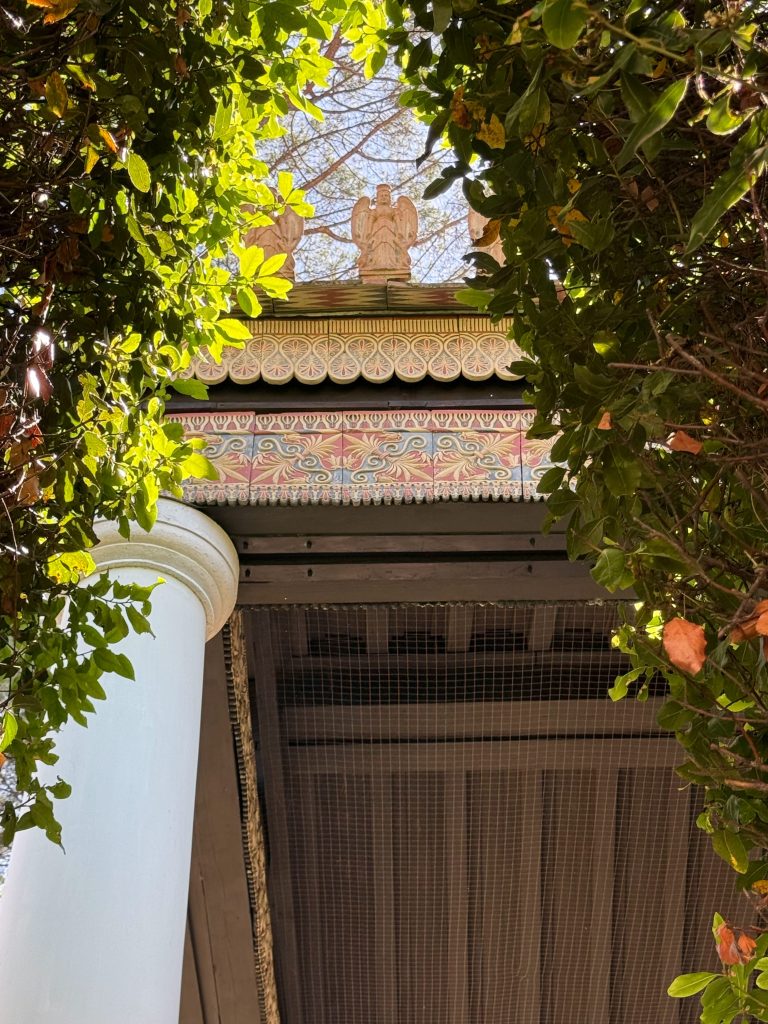
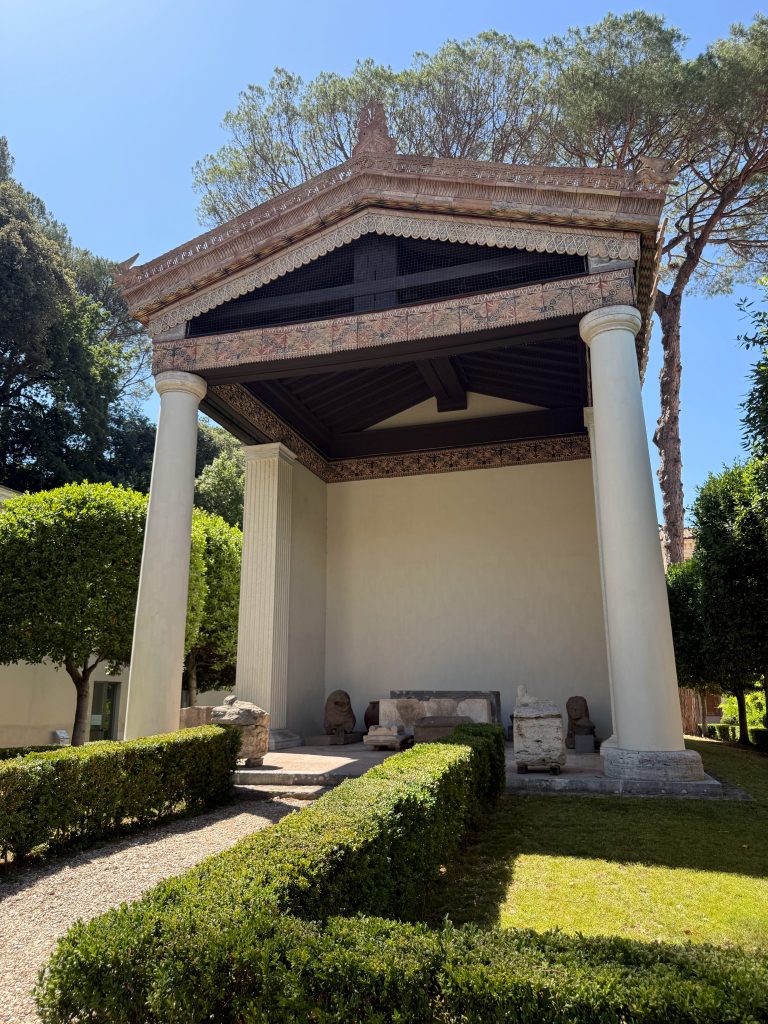
The Villa Giulia, the building which houses the National Etruscan Museum is one that was built around the Renaissance period but the artifacts within are all ancient and of a time predating and eventually, for a period, co-existed with the Romans.
But co-exist and the Ancient Romans is not a pairing that goes well together.
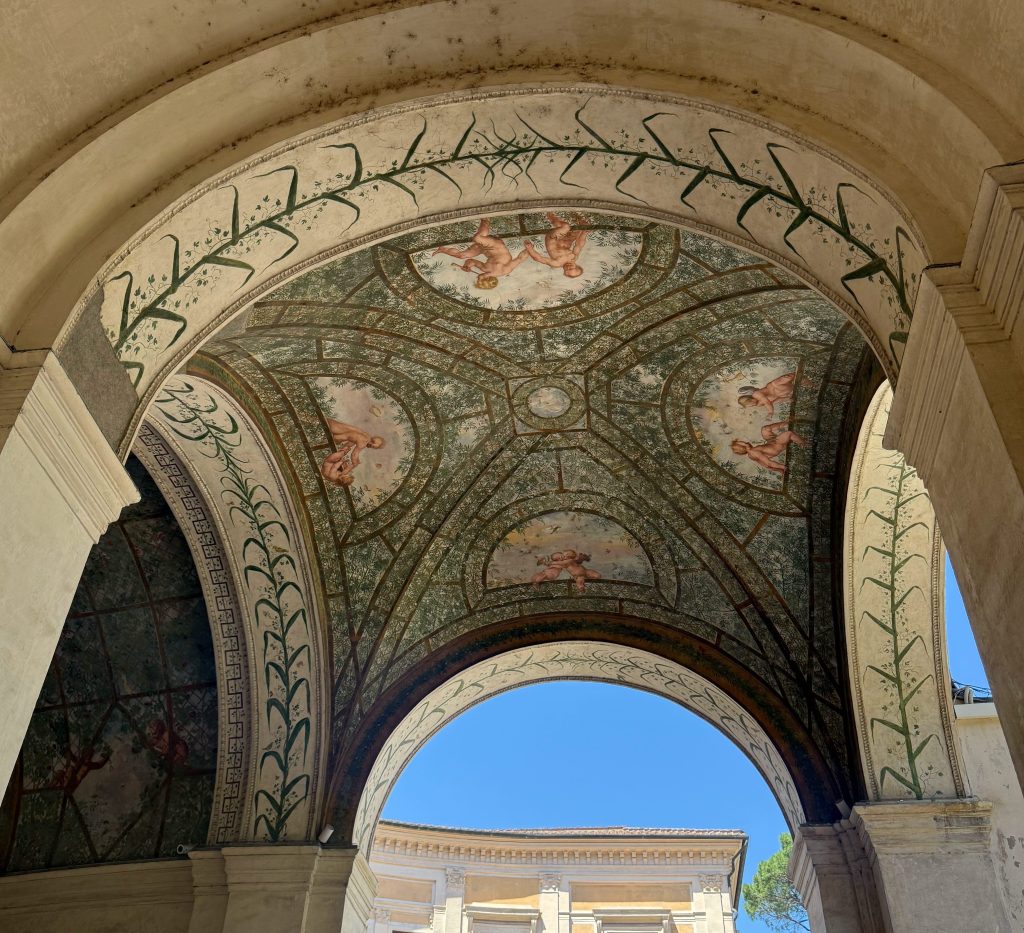
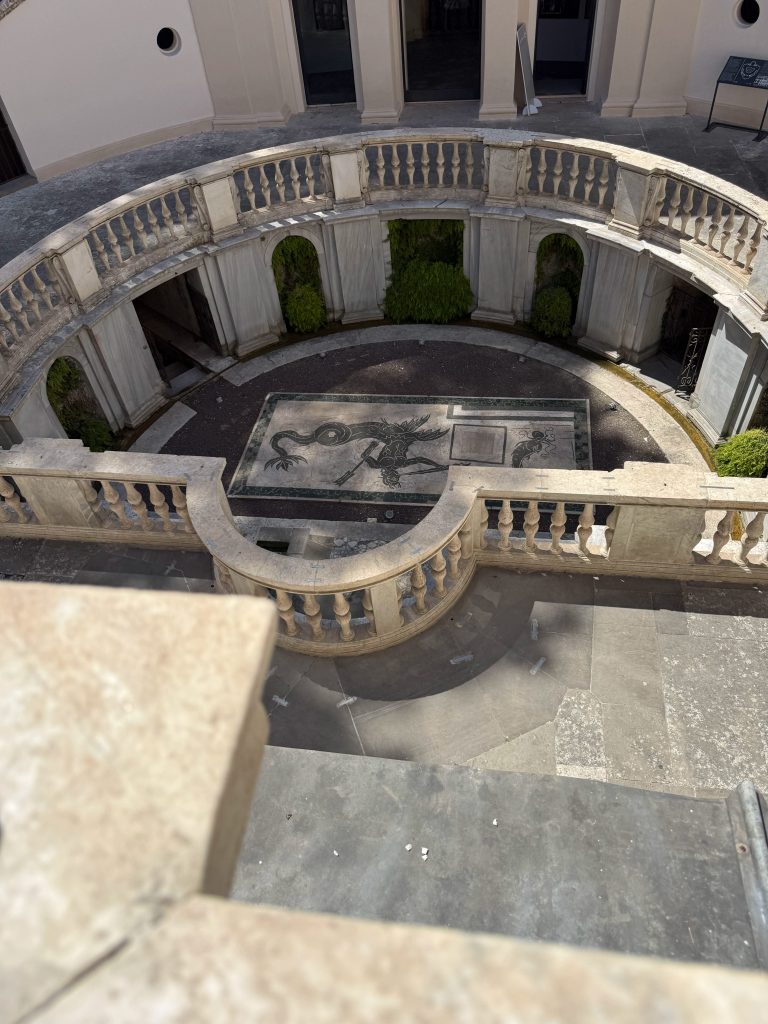
We see things like beautiful frescoes (pictured in the cover image) with things inside the museum like ancient pottery.
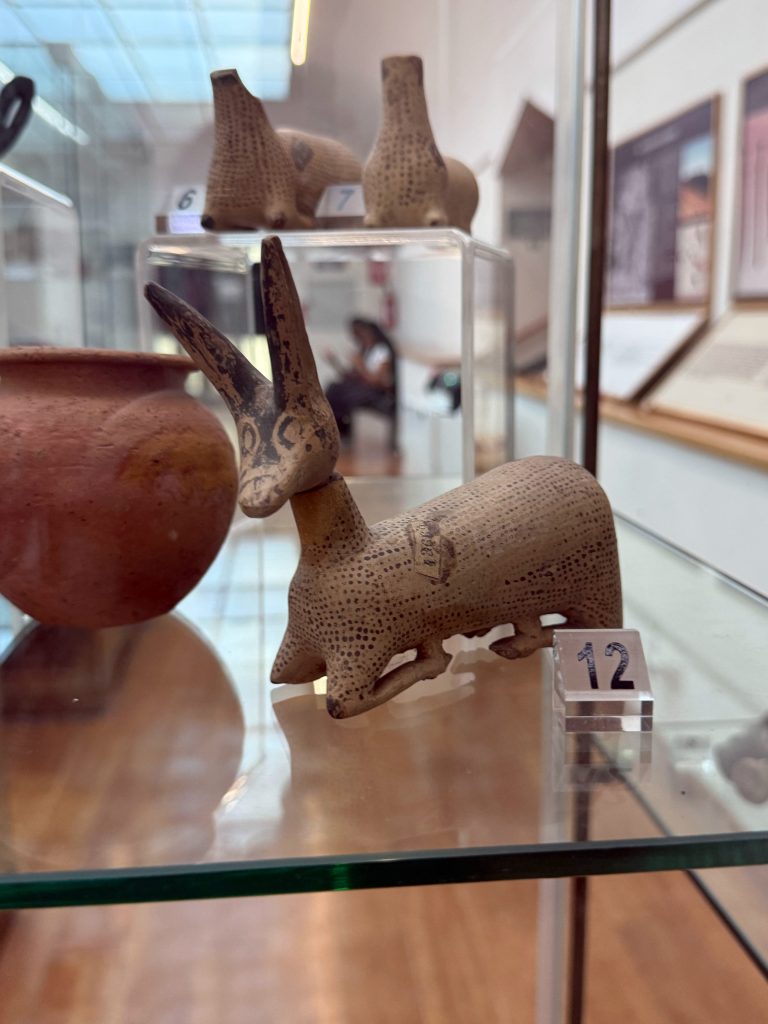
The museum is an active contradiction but a beautiful testament to Rome as it is housing the memories of two time periods simultaneously and making efforts to preserve them both.
The museum provided a beautiful setting and a beautiful backdrop for us to then be told about some of the origin myths of Rome, namely that of the two twins Romulus (the “namesake” of Rome) and Remus.
In the tale of Romulus and Remus we learn that they created Rome together, and Rome was a land of all peoples who were rejected from other places.
Eventually Romulus kills his brother and is the first king of Rome, we also learned that this was an origin story and it is more than likely, almost 100% sure that Romulus and Remus are mythical figures created for the purposes of making an easy history for the beginnings of Rome.
In the Rome Alive! reading the ancient writer Strabo makes an interesting point in his Geography writings. When speaking about the Romans and their selection of land for the future prosperous nation he says that the founders of Rome reasoned that, “the Romans ought to depend for their security and well-being not on their walls, but on their weapons and native valor. Walls, they reasoned, did not defend men, but men defended walls.” (pg. 6)
In this section Strabo is talking about how the Romans initially did not select the most fertile, prosperous, or easily defendable land. Strabo is arguing that through the virtues and strength that are characteristic of the Roman people’s they thrived and conquered, he goes on further to say, “But once the Romans acquired the territory around them by their own brave virtue and industry, there was an accumulation of resources that surpassed all natural advantage.” (pg. 6)
The selection of the area of the land was further proof to establish how great the Roman peoples are and how powerful they can be, they do not even need the perfect place to found their land because they can take from other peoples and do it on their own. The Romans have grown past the need for the perfect founding land because through their military power and strength they have shaped and created it, through this culture of dominance.
With the foundation myth like Romulus and Remus and through a text like Strabo’s Geography we can see the Roman’s are creating a mythical line and connection to greatness, legacy, power and taking what’s someone else’s because they decided it should be theirs.
– Paola


Leave a comment