
Word count: 489
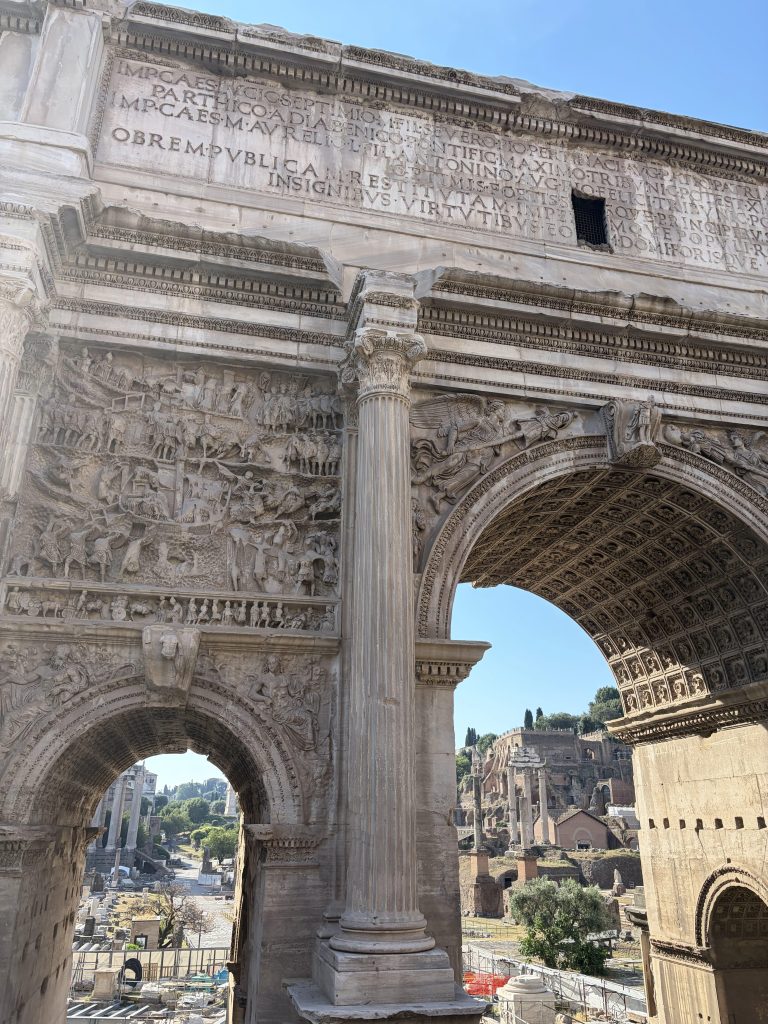
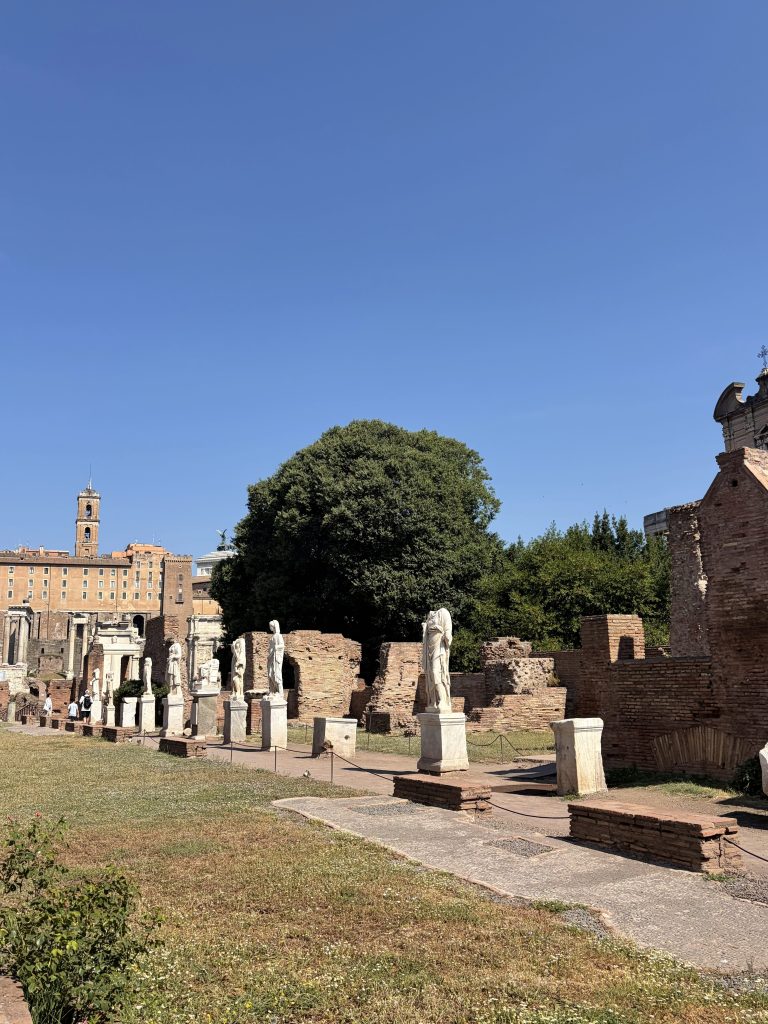
I always find it a bit ironic that erasing something often has the opposite effect. Instead, it draws more attention to it, such as the statue of the Vestal whose name has since been erased, or the re-carvings on the arch of Septimius Severus. As for the arch, there was new text added over the old, but the fact that it was once something else is a large part of what makes it so interesting, and one of the things that we focus on when learning about it.
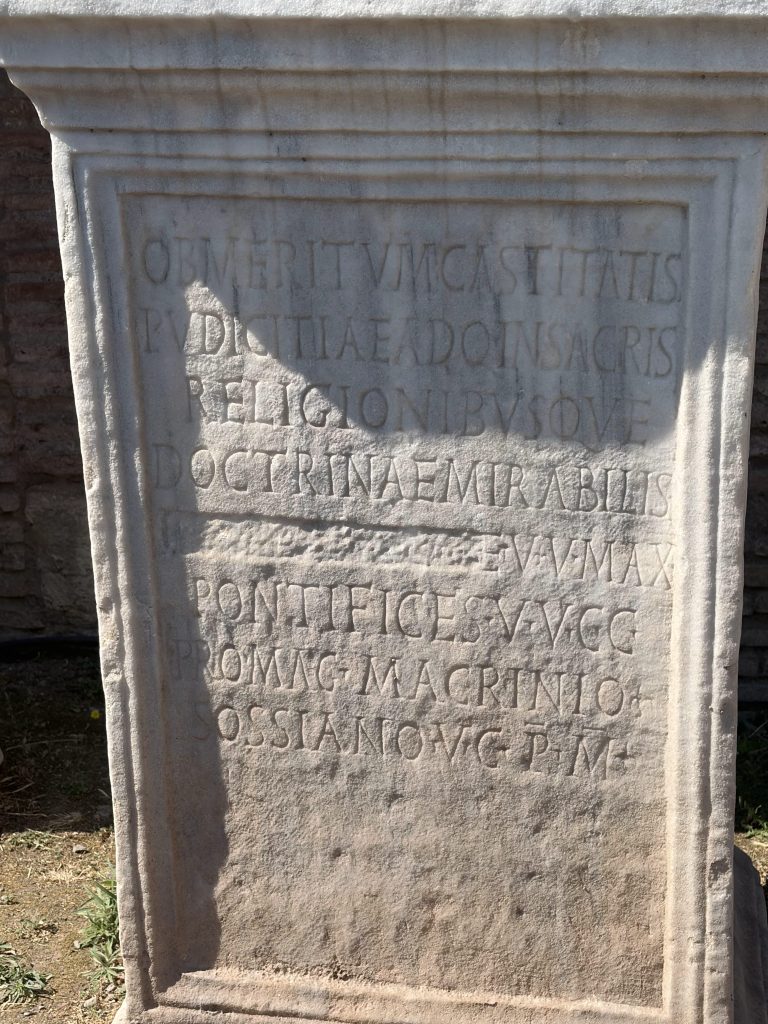
In the case of the Vestal, they didn’t even try to hide that it was removed. The removal itself is the point. It instills the one who did the erasing with power, while at the same time cementing the memory that remains as one that is worth being forgotten. It’s a really interesting problem of iconoclasm, one that kind of leads me in circles.
More often than not, it leads me to curiosity, especially in instances like this specific Vestal who, according the the reading, is theorized to have been a head Vestal named Claudia. It makes me dwell on her memory, wonder what she did that was so wrong, and considering the story of how they would be chastised for merely laughing in public, I’m assuming it was probably nothing all that bad. Few things can be so bad to deserve being buried alive.
On the death penalty for Vestals, the reading says that “While still alive, she is carried out on a bier in a funeral procession proper for the dead, accompanied by a keening procession of family and friends. When she has been brought to the Colline Gate, she is entombed in an underground chamber prepared for her inside the walls, dressed in funeral clothes but given no monument or libations or any other customary funeral rites.” The whole inside the walls thing threw me off, because the Romans (almost) always bury their dead outside the city.
However, the reading also states that “The Vestal Virgins, however, are not bound by Rome’s legal system, and have their tombs within the city.” It makes me wonder more about the standard burial for a Vestal, and how that differs from the version above (minus the being buried alive part.) Are they typically buried in their sanctuary, or are they all buried on the city limit? What kind of statement does it make to bring them to the edge of the city but not past it?
If it is only the exiled Vestals who are buried on the edge of the city, then it almost seems to be a message that they are not wanted by the dead nor the living. Either way, it’s interesting that they maintain their Vestal status even when they have strayed from their duties. Like the instances of iconoclasm, maintaining some of what they originally were is part of the point being made.


Leave a comment