
Word count – 500
Time to read 3 minutes
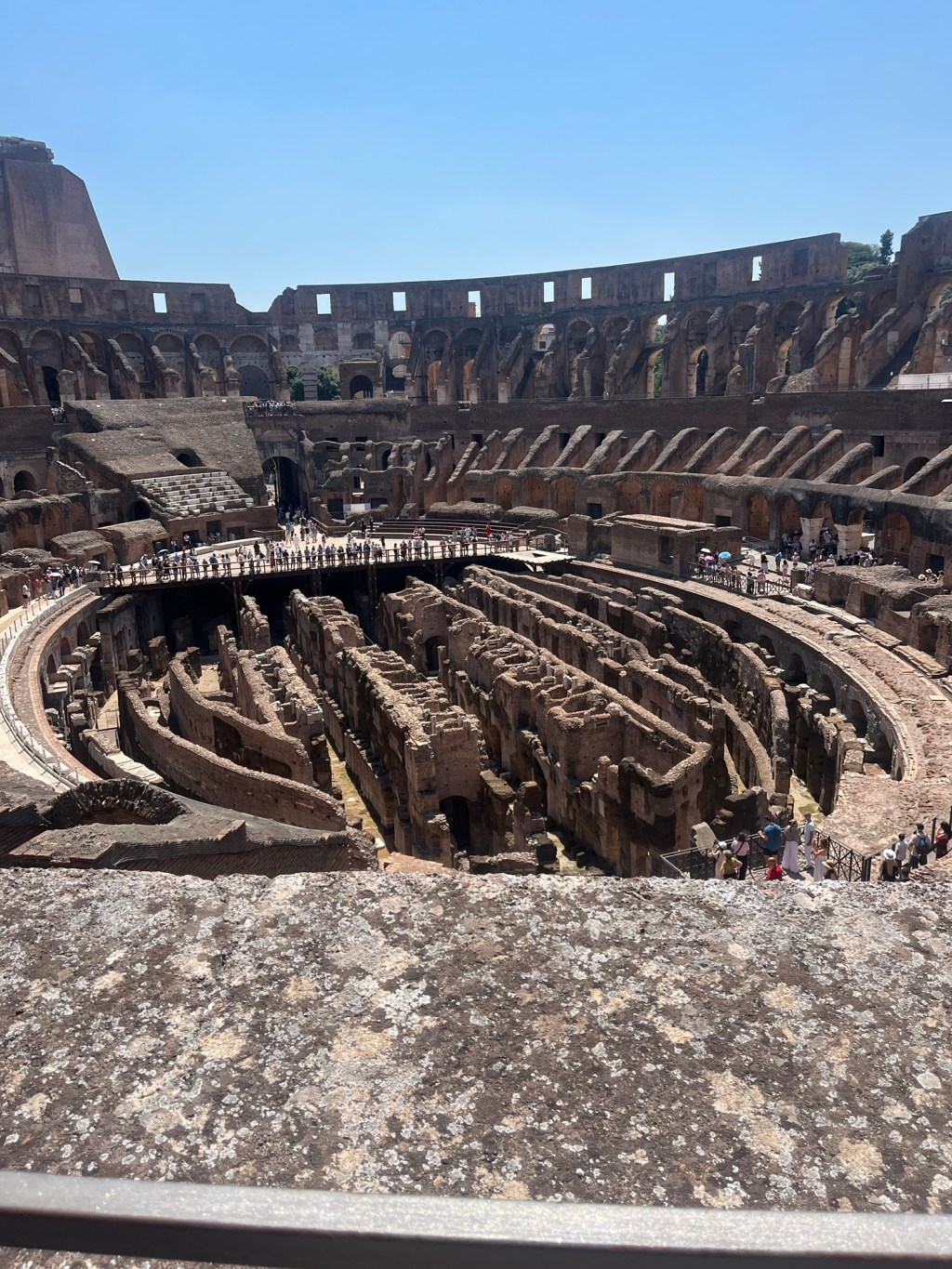
Walking through the Colosseum, I was thinking about how Roman emperors would appropriate space. In the reading, it says, “Where the Colosseum now stands was part of a valley nestled between the Palatine and three other hills. As Rome grew, the valley became densely populated. Wealthy Romans constructed sprawling gardens and estates on hillsides…” After Nero burned much of Rome in AD 64, he “appropriated huge swaths of central Rome for his personal estate, the Domus Aurea, or Golden House. His architects transformed it into an architectural grotesquery of endless vaults and tunnels that expanded over much of central Rome, converting private imperial quarters into a space larger than anyone had ever lived.” I think this raises an interesting question about what constitutes public and private space. Gardens, estates, and public areas once occupied the land before the Colosseum, but then became part of the palace. I thought it was interesting how an emperor’s household blurred the lines between public and private spaces. An emperor took up so much space with his home.
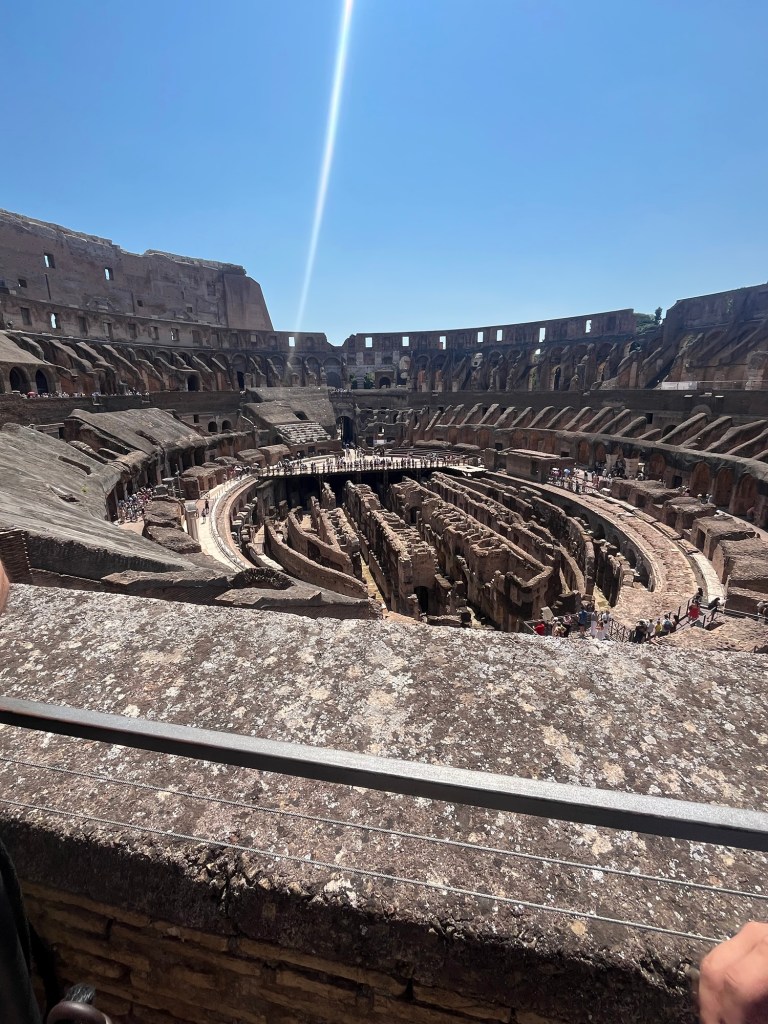
Something that stood out to me during our visit was learning about gladiators. I had always assumed most died in battle because that is what many popular movies and shows portray. I never realized that only 3–8 percent of gladiators died during their time in the arena. This made me think about the games in a different light. Gladiators were expensive, so they had to be well cared for. They needed trainers, food, housing, and medical care when they were injured. I know the games were extremely violent and many gladiators did die, many fights were somewhat staged in order trying to entertain the crowd. I found this particularly interesting because when I think about the Colosseum, I think blood, death, and violence. But there was so much more that went on that we don’t learn about. On another note, I think it is fascinating how people were able to gather and watch others kill for sport. But I also think about whose death was considered entertaining and acceptable.
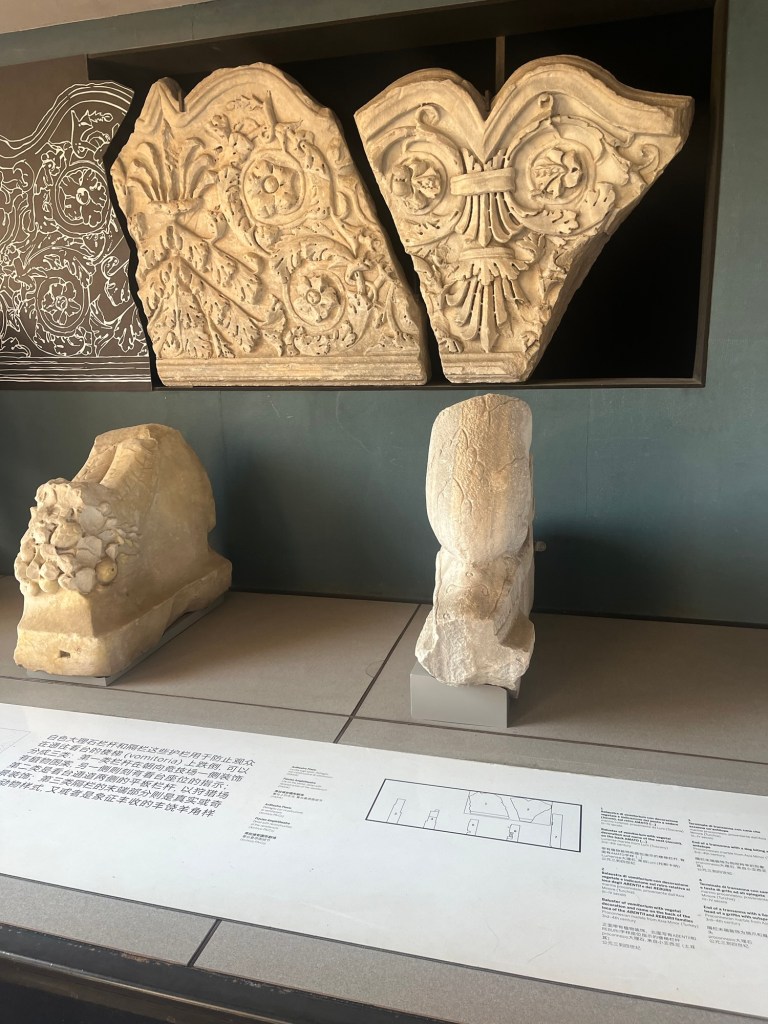
I also thought it was interesting how the Colosseum interacted with previous landscapes. In the reading, it said that Nero’s Golden House reached across spaces that were already occupied by landmarks and private homes, taking over parts of the city built for different purposes. Emperors would continue this pattern after Nero. They would build on the previous land and change how the space was used. Emperors were able to leave their architectural signatures on the landscape and change history through buildings. And lastly, the main surprise during our visit was the size of the Colosseum. Although I had seen pictures of the Colosseum before visiting, I had no real idea of its size until I actually walked around inside. It could fit 80,000 spectators which is bigger than any stadium I can think of in New York. I also cannot believe how much is still standing after almost 1,900 years.


Leave a comment