
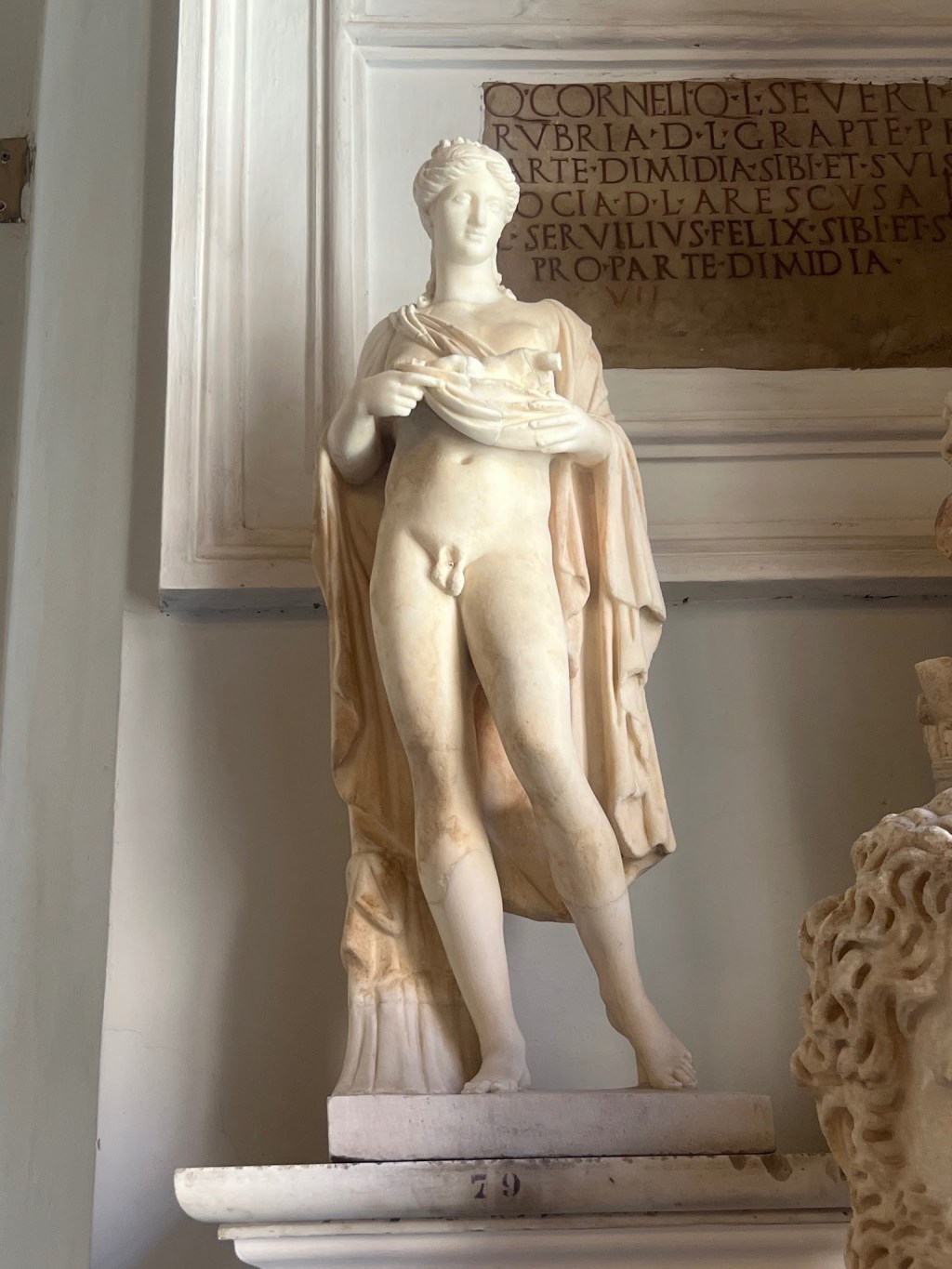
As a trans woman I felt an immediate strong connection to the statue of hermaphroditus shown below.
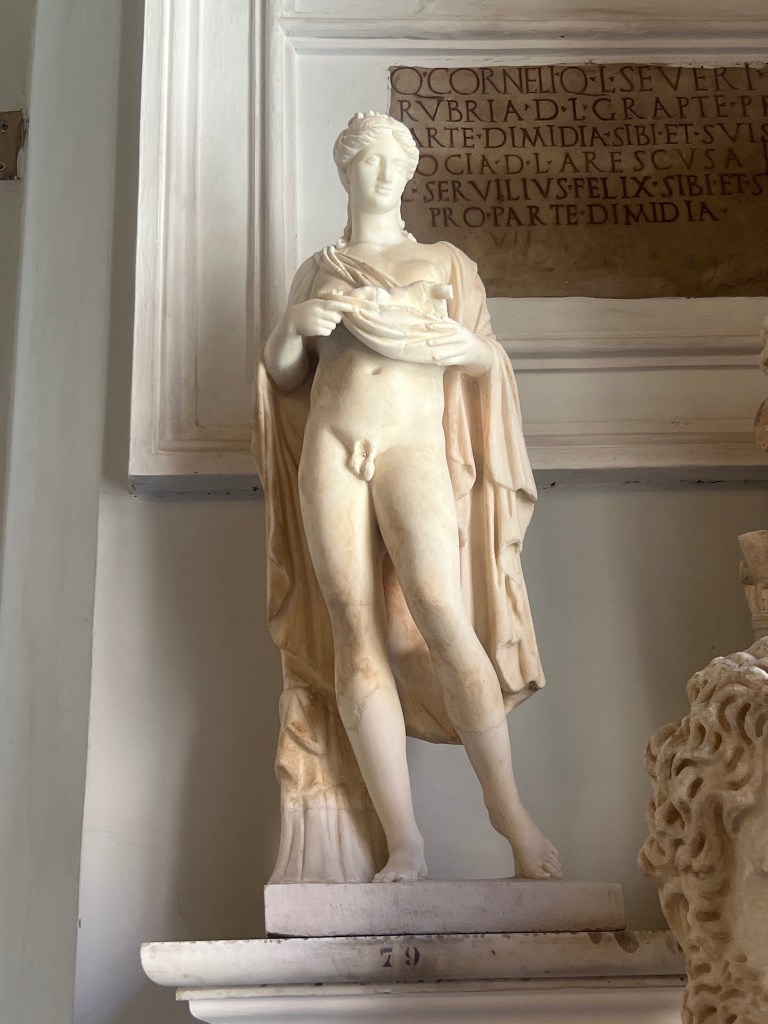
Though I am not intersex, to the best of my knowledge, like Hermaphroditus appears to be based on our modern understanding of the distinction of trans women and intersex people. I still felt a unique connection because of the similarities in our bodies’ features and both being under the LGBTQ+ umbrella.
Unfortunately there are limited remaining texts on the mythological story of Hermaphroditism and how she was worshiped by ancient people. That being said a poet named ovid who was a citizen of the roman republic wrote a series of books called the metamorphosies that catalogs stories of transformation in roman mythology. In this series we find one of the most complete stories of Hermaphrodius. As I stated in my previous blog post Hermaphridus gets their name from combining the names of their parents, hermes and aphrodite. Hermaphridus was originally born a boy and grew up near mount ida, south of troy by a group of naiads. Naiads are lesser deities of Greek mythology associated with water and are similar to nymphs or female spirits. When Hermaphroditus was fifteen years old he ventured south stopping and resting by a spring that was the home of a nymph named Salmicus. Salmicus fell instantly in love with Hermaphroditus and threw herself at him and in some stories attempting to rape the young Hermaphroditus. Hermaphroditus rejected Salmicus’ advances, but due to Salmicus’ obsession with the young god she prayed to the gods of Olympus for them to be united forever. The gods granted her wish by uniting the two into one body so they could never be separate ever again. The poet Ovid describes their form as “no longer two beings, and no longer man and women, but neither, yet both.” They had been transformed into a form between the sexes that had aspects of both male and female anatomy. Because of this union of the sexes, the spring that was previously the home of Salmicus was now believed to be cursed and would transform anyone who drank from it to a person between the sexes.
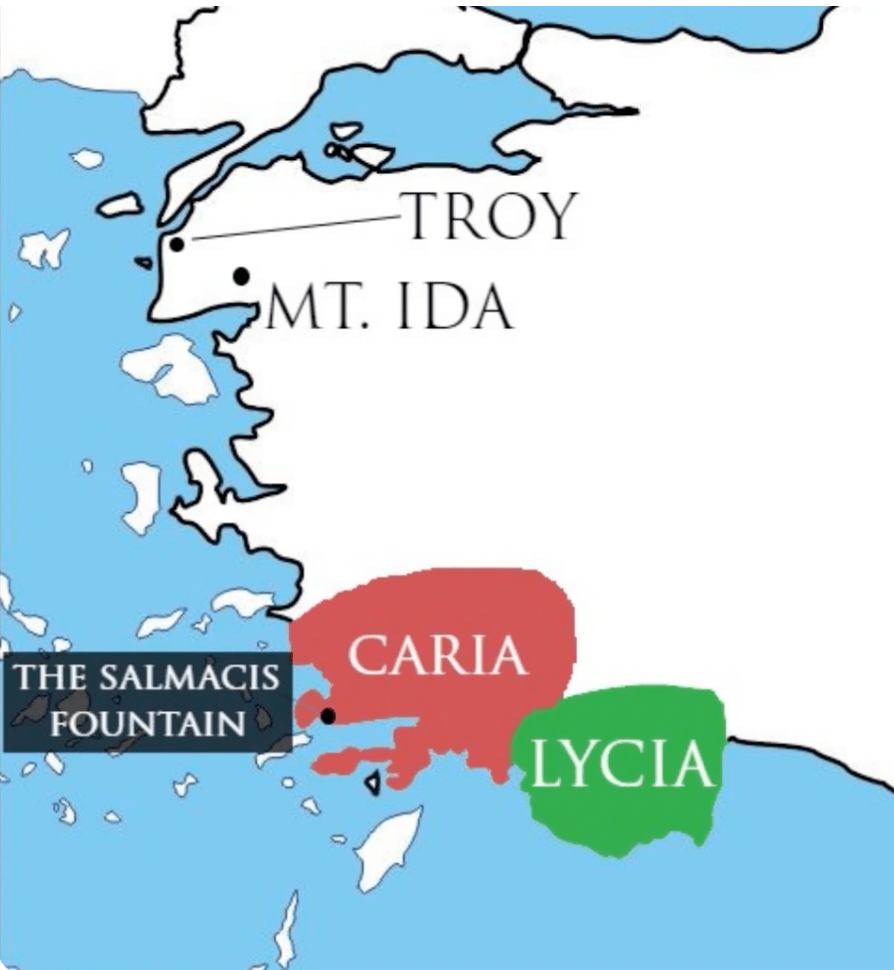
The spring described in the stories is a real life location in Turkey that you can visit called “kaptan kalesi sokak”.
People of ancient Greece and Rome had mixed views of intersex people. Some saw it as a blessing and believed intersex people were soothsayers, while others believed it was a curse from the gods. These beliefs are evident in the text “Biblioteca Historica” by Diodorus Siculus, an ancient Greek writer who lived in Roman ruled Sicily, “But thore are some who declare that such creatures of two sexes as monstrous … they have the quality of presaging the future, sometimes for evil and sometimes for good.” Too often when children were more intersex in the ancient world were they abandoned by their parents, often being left in the forest to fend for themself as a new born infant. The same way that Romulus and Remus were in their mythological story. These children would supposedly only survive if the gods willed it.
Though there aren’t many surviving texts on the worship of Hermaphroditus there are few that give us a little insight into why they were worshiped. Hermaphroditus was the goddess of marriage, and was seen as both a fertility symbol and an aprotropaic symbol. An apotropaic symbol is meant to ward off evil and prevent harm to those protected by it. Male genitalia was seen as an apotropaic symbol and because Hermaphroditus has male genitalia depictions of them were believed to ward off evil. She was also used as a symbol of fertility due to her possessing both breasts and male genitalia, which were both symbols of fertility in ancient Rome and Greece. People of the ancient world would often keep depictions of Hermaphroditus in their homes and give offerings to them in an attempt to help conceive a baby or help their crops grow. According to historian Catherine T Von Stackelberg in her paper “Garden Hybrids” images of hermaphroditus were often found in homes that had gardens, she drew the conclusion that this might be due to Hermaphroditus being a fertility symbol. On top of all this Hermaphrodius was believed to be a goddess of marriage as they were a literal union between a man and a women.
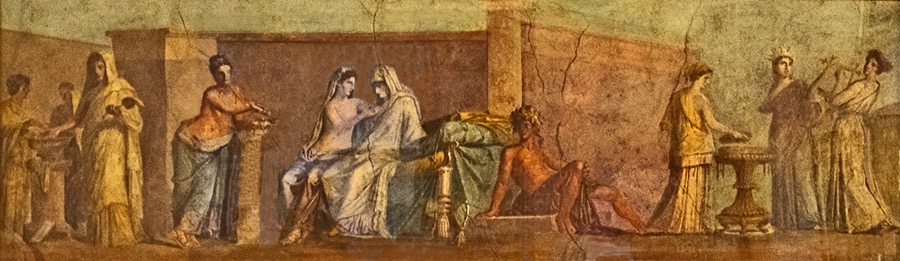
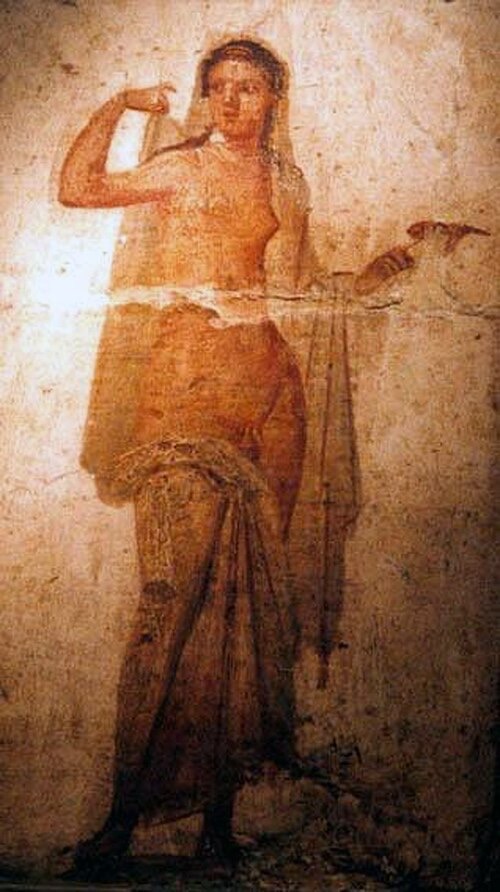
Fresco painting of Roman marriage one the 1st century.
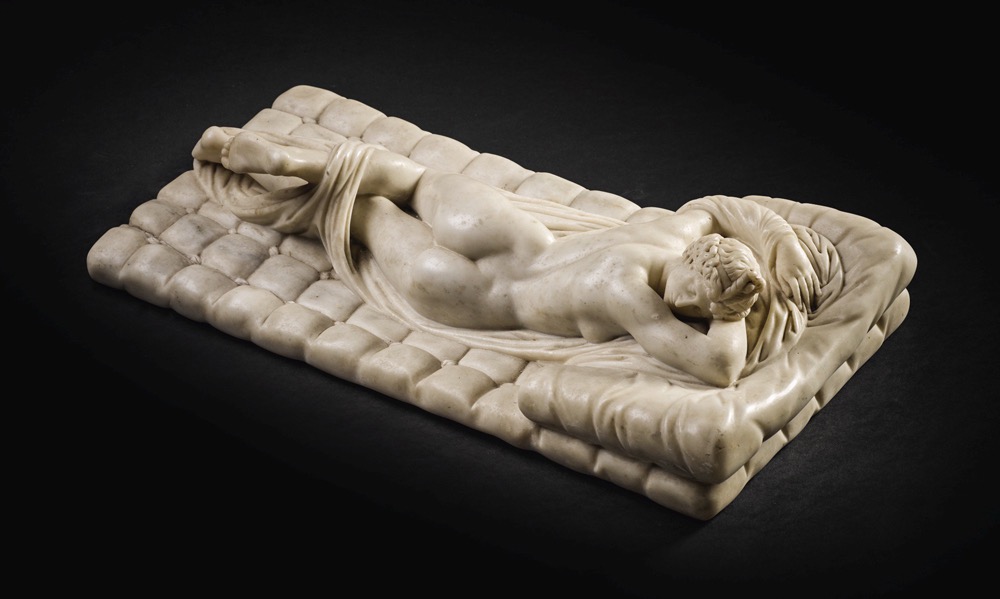
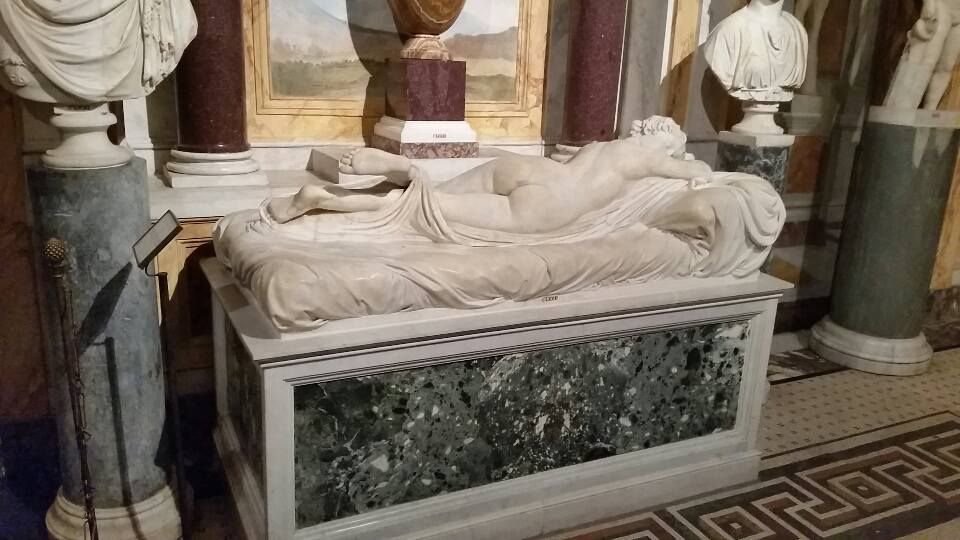
One of the most famous statues of Hermaphroditus is located in Paris as shown in the photo above. There are many copies of this statue, one located in the Uffizi Galleries, which unfortunately I did not get to see on my trip to Florence, and another in the Galleria Borghese in Rome shown in the image below.
Sources:
- Fantham, E. (2004). Ovid’s Metamorphoses. Oxford University Press.
- Stackelberg, K. T. V. (2014). Garden Hybrids. Classical Antiquity, 33(2), 395–426. https://doi.org/10.1525/ca.2014.33.2.395
- Nieto Orriols, D. (2015). Recepción y crítica de la biblioteca histórica de Diodoro Sículo: Consideraciones historiográficas sobre sus problemas de originalidad y calidad como fuente.


Leave a comment