
634 words, 3 minutes read time
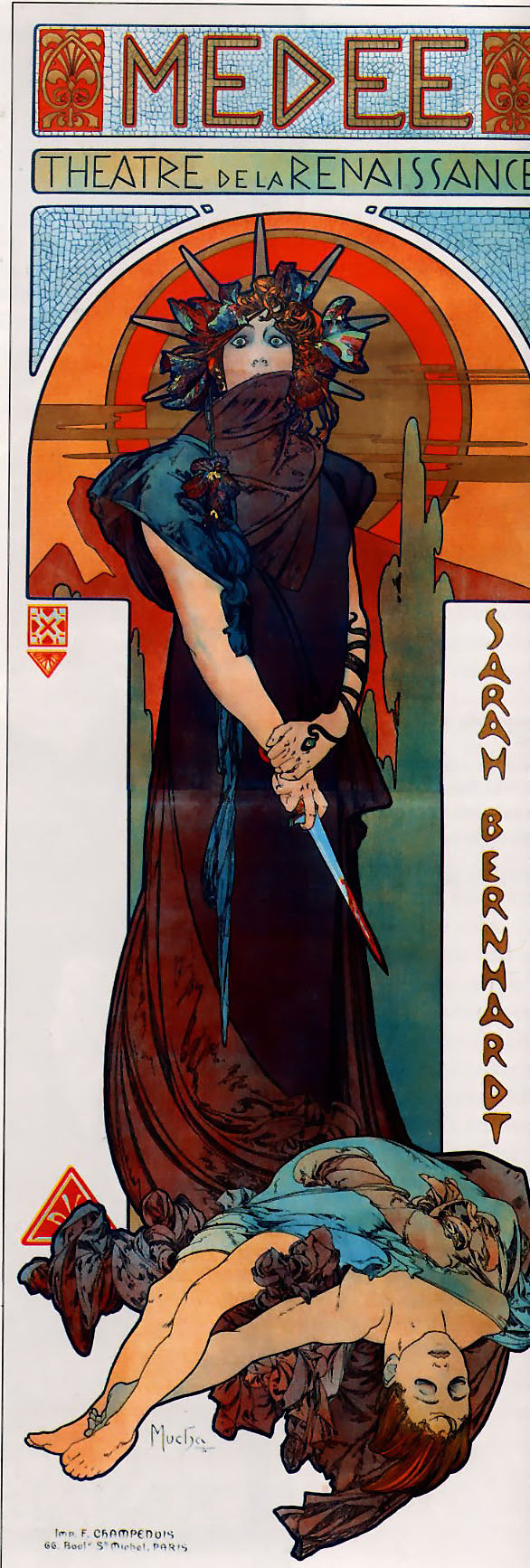
At first glance, the ancient Greek tragedy by Euripides of the myth of Medea seems like a questionable choice for a wealthy Roman family to carve into their loved ones sarcophagus. It is a story of love, betrayal, revenge, murder and escape. Medea fell in love with Jason and helped him steal her father’s golden fleece. They run away together and remain in love until Jason betrays her and decides to marry Creusa, the daughter of King Creon. As an act of revenge, Medea poisons her wedding gifts to Creusa, killing her. Medea then kills her own children she had with Jason and flees with their bodies with the help of the Sun God Helios.

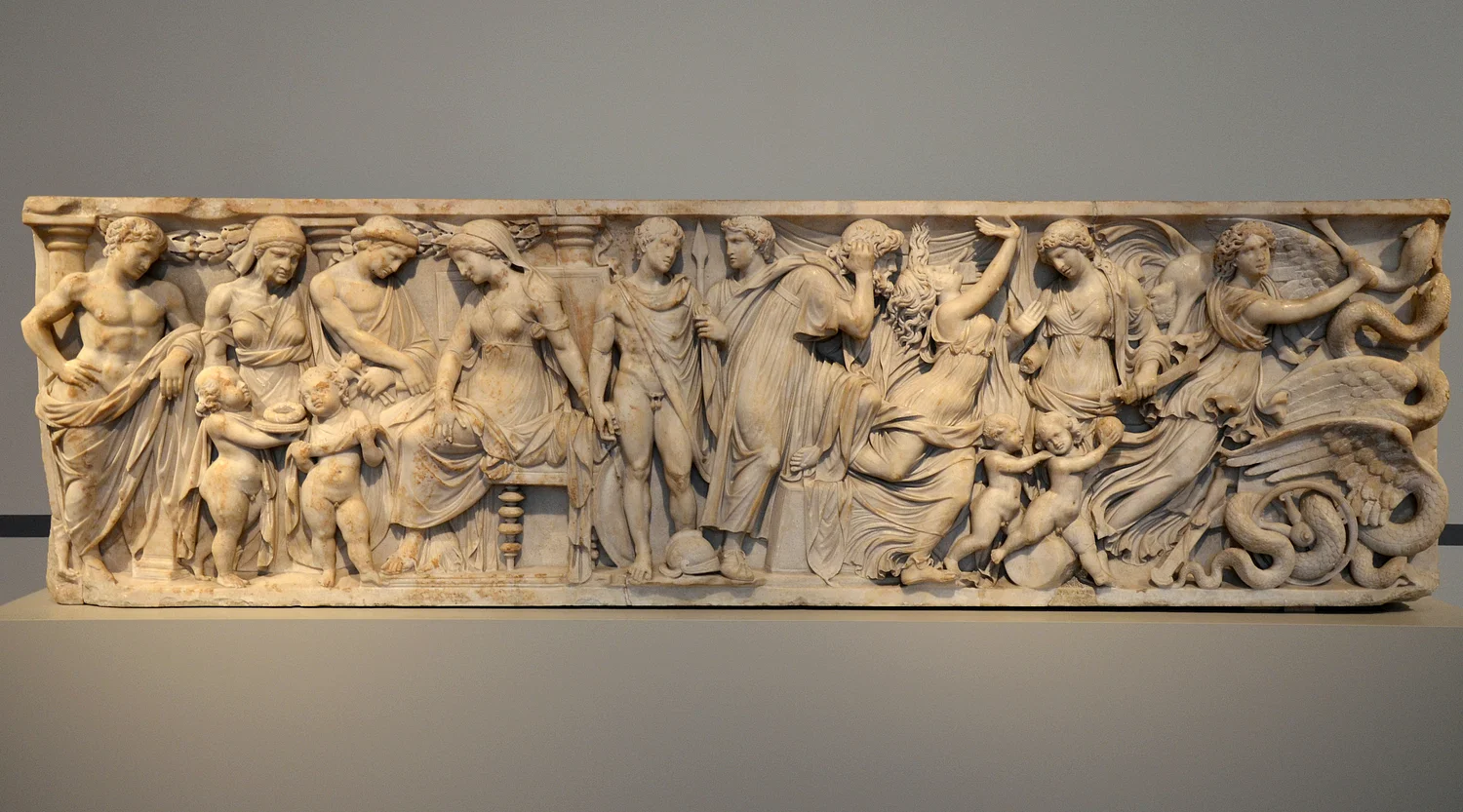
These sarcophagi depicting four scenes from the tragedy Medea are read from left to right. The first scene is set in Creusa’s father’s palace, with doric columns and garlands carved behind the relief figures. Jason is the first figure on the left, looking down at his two children he had with Medea. The children are bringing Jasons new wife Creusa a wedding gift from Medea, a crown and a gown. Creusa is sitting, watching the children bring her the wedding presents.
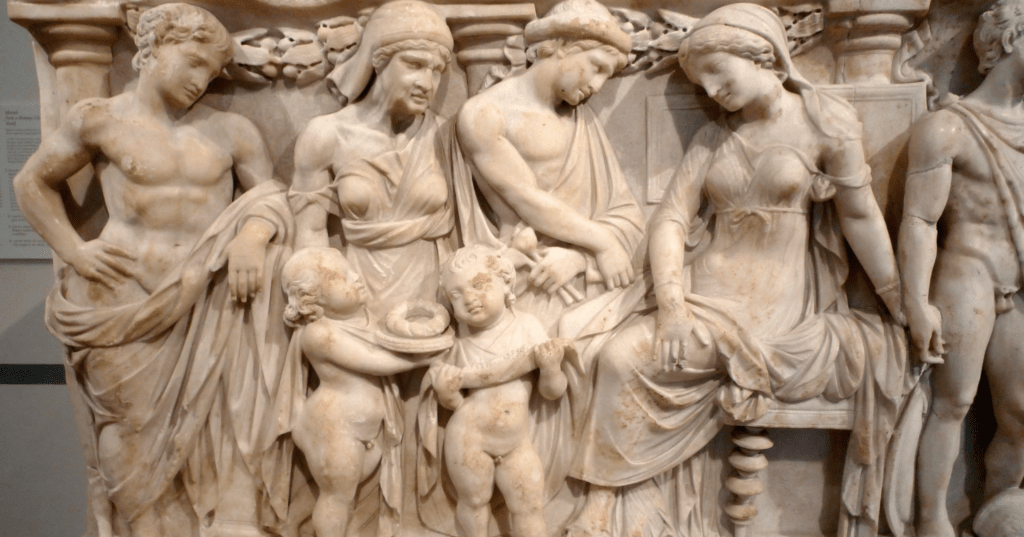
Her hand is interlocked with Jason of the next scene which creates an interesting transition. In this scene she has put on the crown and gown which were poisoned by Medea, making Creusa burst into flames and die. The nature of her pose reflects the flames and pain. Her father is next to her trying to save her, but gets engulfed as well.
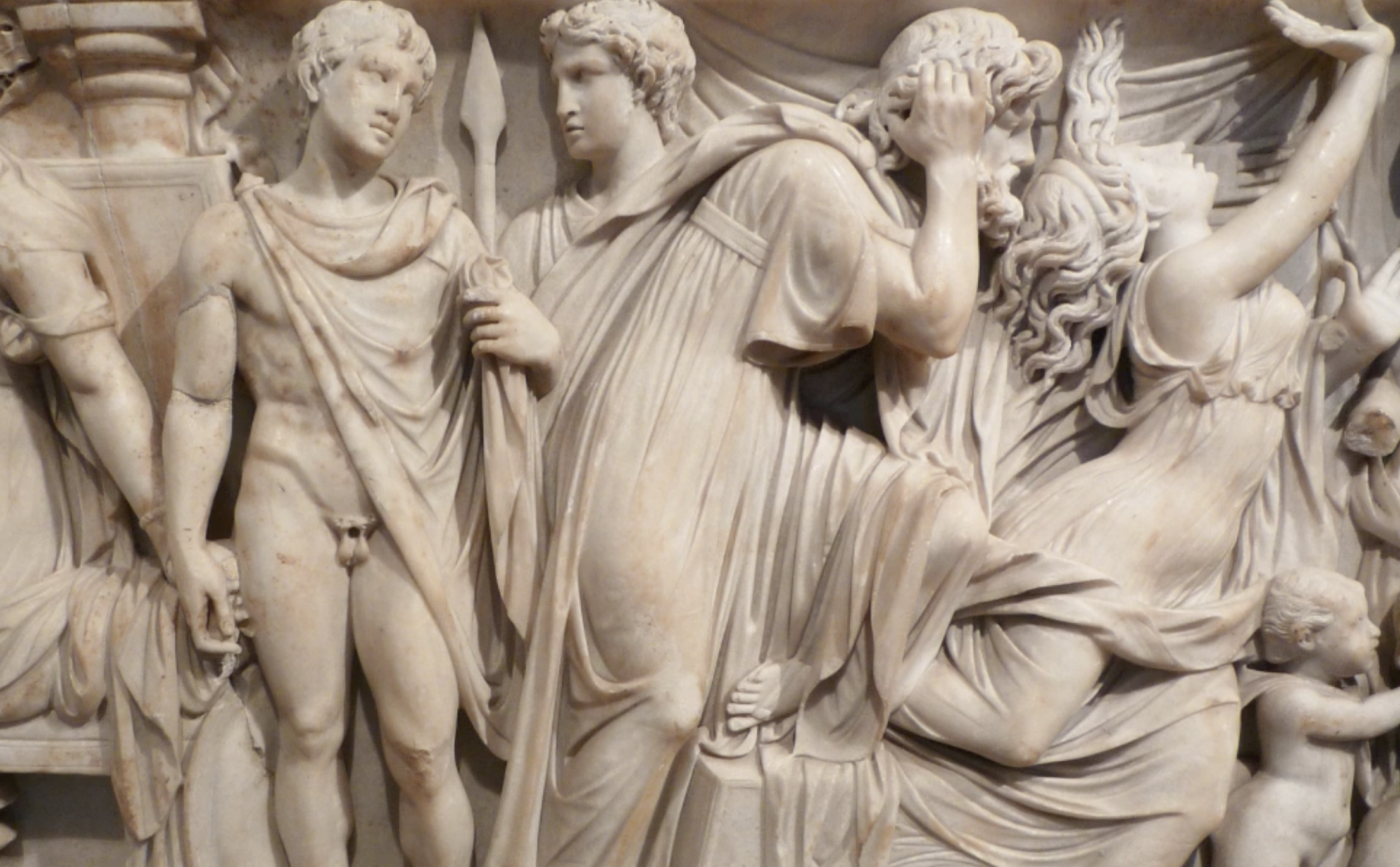
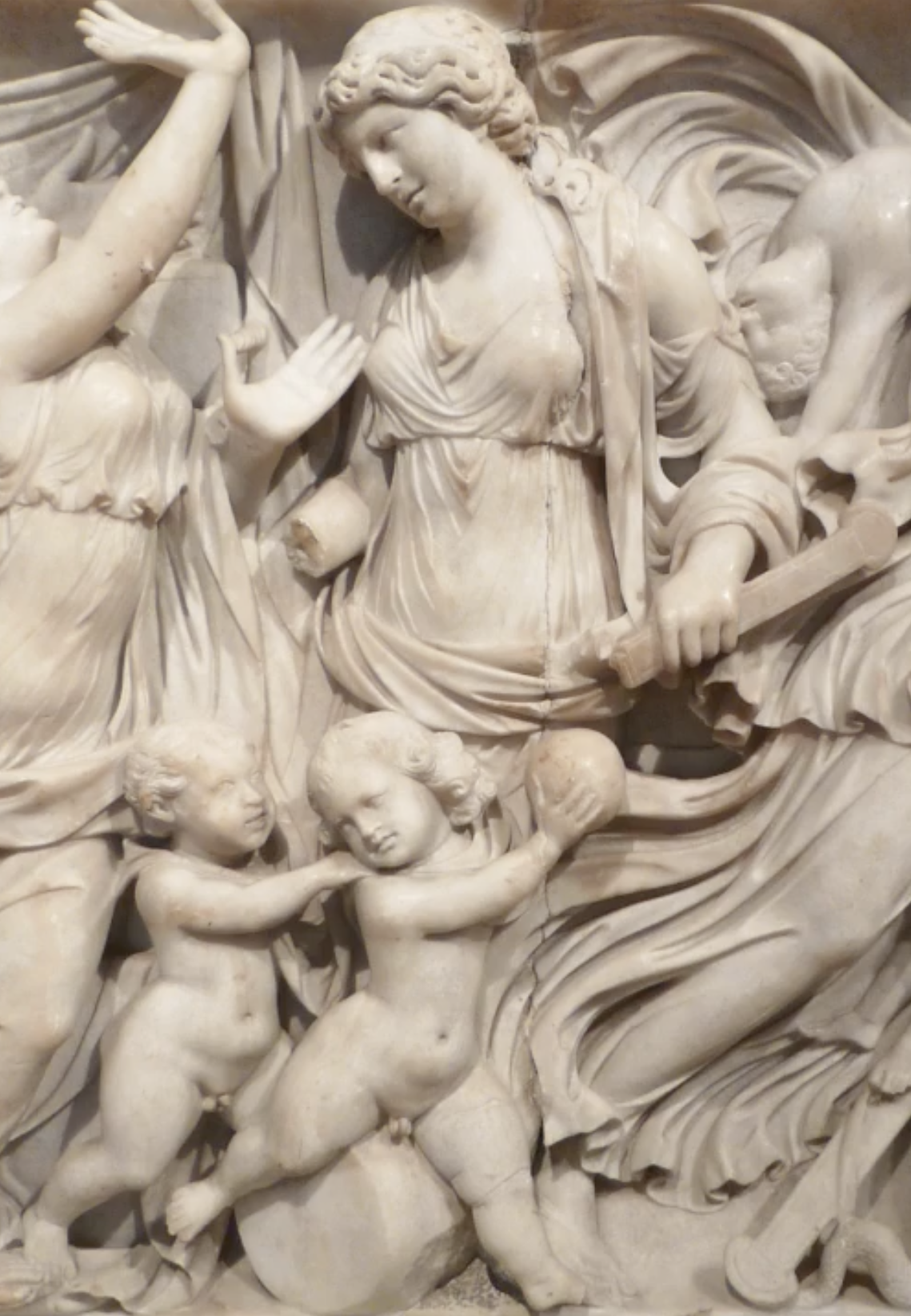
In the next scene we see Medea pulling her sword to kill her children she shares with Jason while they are playing ball. This is seen as another act of revenge towards Jason. Some interpretations suggest she was sparing her children for they may have been punished for her deeds.
In the fourth scene Medea is fleeing with the bodies of her children on a chariot provided by the god Helios.
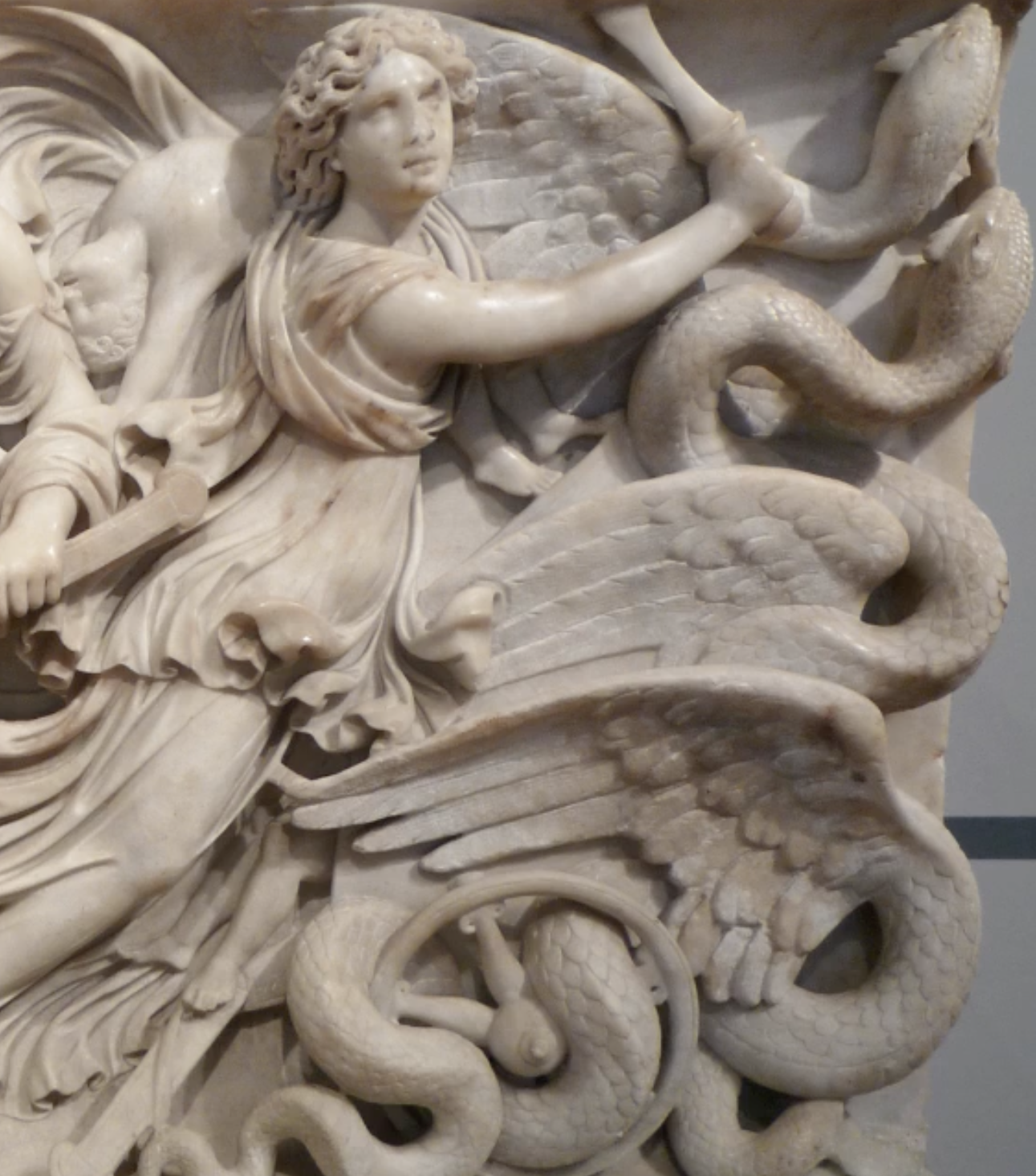

There are many reasons why Ancient Romans might have decided to carve the tragedy of Medea into sarcophagi. Some believe the family of the deceased imagined their loved one as Creusa, emulating them as someone who was happy and beautiful but had their life tragically taken by untamed jealously and desire. Another interpretation may be a representation of the transition to the afterlife, escaping the multitudes of human suffering on a Gods chariot. We typically see this transition into the afterlife represented by a door being slightly opened.
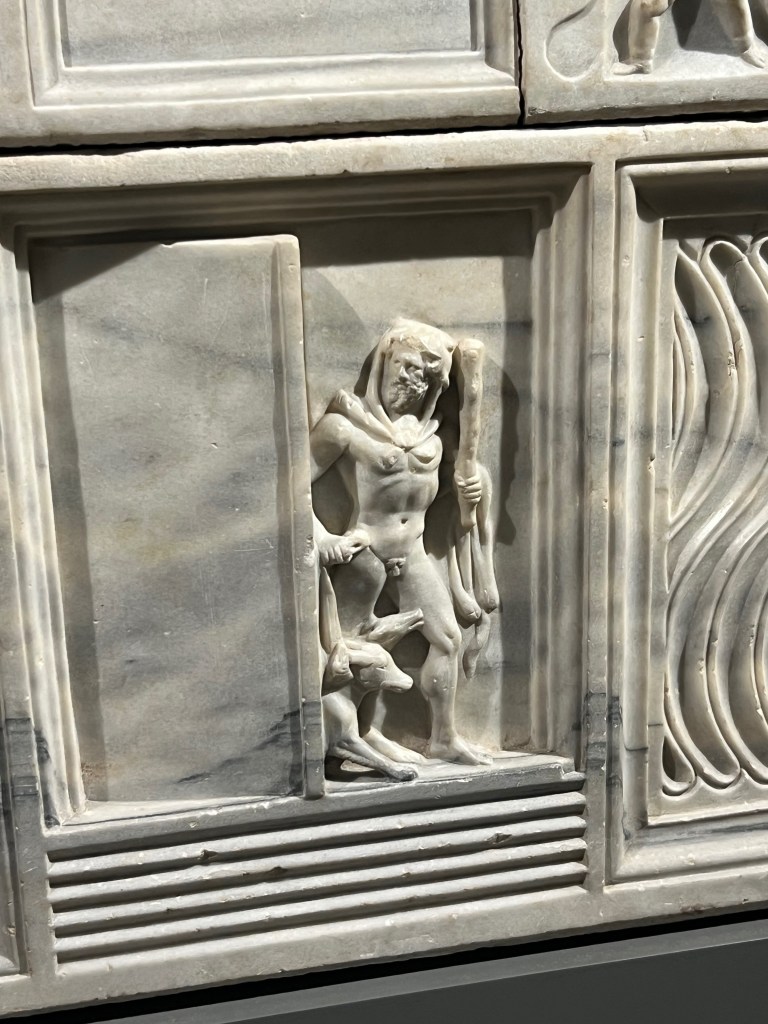
Medea may also be a warning of the suffering that can be caused when humans let their emotions spiral and the terrible actions this can cause them to take. Medea let her emotions over power her rational self, even going as far as killing her own children. This shows the destruction humans are capable of. But Medea still gets to escape, which may be a representation of the soul’s escape from the body and human limitations. Evil exists in the human realm, as we make our transition to the Gods after death, we are saved. All these interpretations are appropriate iconography on a sarcophagi that are meant to represent, honor, and protect the human life buried inside. Just because these are scenes of horrific actions motivated by betrayal, doesn’t mean there was any evil intent by the family. It is a myth that gives a raw depiction of the complexity of human emotions and suffering.


Bibliography
Life, Death and Representation : Some New Work on Roman Sarcophagi, edited by Jas Elsner, and Janet Huskinson, Walter de Gruyter GmbH, 2010. ProQuest Ebook Central, http://ebookcentral.proquest.com/lib/brooklyn-ebooks/detail.action?docID=689634. Created from brooklyn-ebooks on 2026-06-22 18:23:06.
Euripides., Michael Collier, and Georgia Machemer. Medea. 1st ed. Oxford University Press, 2006.
Dr. Steven Zucker and Dr. Beth Harris, “Medea Sarcophagus,” in Smarthistory, December 4, 2015, accessed June 29, 2026, https://smarthistory.org/medea-sarcophagus/.
Raddato, Carole. 2018. “Medea Sarcophagus.” World History Encyclopedia. February 20, 2018. https://www.worldhistory.org/image/8161/medea-sarcophagus/.
“File:Sarcophagus Medea Terme.jpg – Wikimedia Commons.” 2022. Wikimedia.org. 2022. https://commons.wikimedia.org/wiki/File:Sarcophagus_Medea_Terme.jpg.
T. Macfarlane, Roger. 2026. “MedeaANCIENT_BerlinSarcophagus.” Byu.edu. 2026. https://ogcma.byu.edu/MedeaANCIENT_BerlinSarcophagus.htm.
“Myth on Marble: The Roman Sarcophagus.” 2026. Ancient Rome. May 5, 2026. https://www.ancientrome.org/myth-on-marble-the-roman-sarcophagus/.
Wikipedia Contributors. 2019. “Ancient Roman Sarcophagi.” Wikipedia. Wikimedia Foundation. February 21, 2019. https://en.wikipedia.org/wiki/Ancient_Roman_sarcophagi.
“Category:Medea Sarcophagi – Wikimedia Commons.” 2022. Wikimedia.org. 2022. https://commons.wikimedia.org/wiki/Category:Medea_sarcophagi.
“The Pergamon Museum – Medea Sarcophagus – HOME.” 2026. Seeartv.org. 2026. https://www.seeartv.org/en/the-pergamon-museum-medea-sarcophagus.html.
Wikipedia Contributors. 2019. “Medea (Play).” Wikipedia. Wikimedia Foundation. May 15, 2019. https://en.wikipedia.org/wiki/Medea_(play).


Leave a comment