
One of the most recognizable figures in early Christian funerary art is Jonah. Throughout the Roman Catacomb of Priscilla and other early Christian catacombs, as well as on marble sarcophagi, scenes of Jonah being swallowed by the great fish, emerging safely onto land and resting peacefully beneath a gourd vine appear repeatedly. At first glance, it may seem unusual that a prophet from the Hebrew Bible became one of the most common images decorating Christian tombs. However, for early Christians, Jonah represented one of the clearest symbols of resurrection and hope after death.
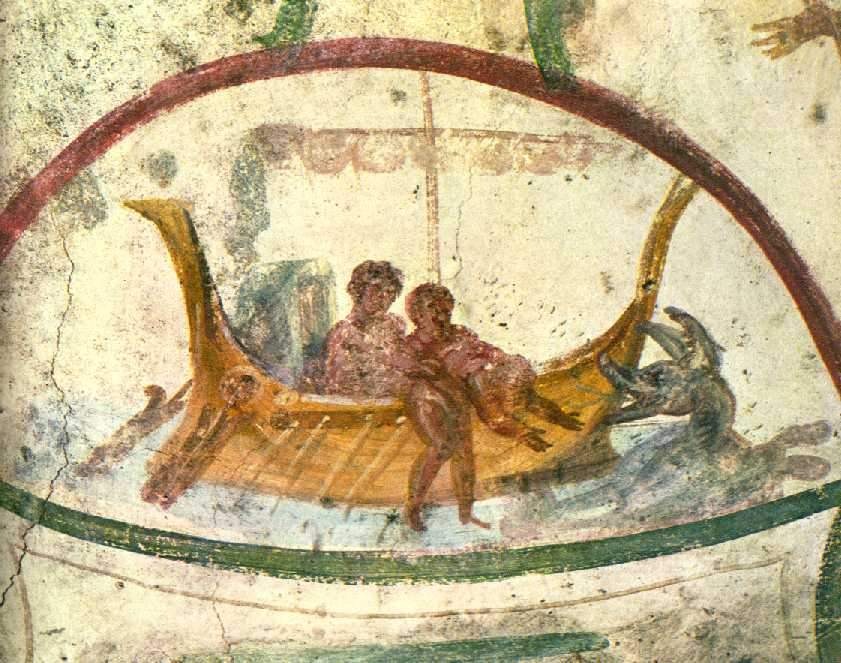
Figure 1. Jonah thrown overboard. 4th century. Fresco. Catacomb of SS. Peter and Marcelinus, Rome
Early Christians understood Jonah’s three days in the belly of the fish as a foreshadowing of Jesus Christ’s three days in the tomb before His resurrection. Jesus Himself makes this comparison in the Gospel of Matthew, making Jonah one of the earliest symbols of Christian salvation. Because of this connection, images of Jonah became especially popular in funerary art. Families buried their loved ones surrounded by scenes of Jonah because they represented God’s promise that death would not be the end. Rather than focusing only on Jonah’s suffering, early Christian artists often depicted him resting peacefully beneath a gourd vine after his deliverance. This image symbolized God’s protection, eternal peace, and the hope of resurrection.
Judaism understands Jonah differently. Rather than viewing him as a symbol of resurrection or as a foreshadowing of Christ, Jewish tradition emphasizes repentance, God’s mercy, and His willingness to forgive those who sincerely turn back to Him. The Book of Jonah is traditionally read during Yom Kippur because its central message is that sincere repentance can lead to forgiveness, even for the people of Nineveh. Unlike Christianity, Judaism did not develop Jonah into a common figure in funerary art, since the story’s primary message centers on repentance rather than resurrection.
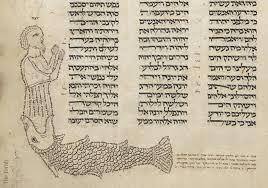
Figure 2. The Book of Jonah is traditionally read during Yom Kippur, emphasizing repentance, forgiveness, and God’s mercy rather than resurrection. Image from TheTorah.com.
The Islamic understanding of Jonah, known as Yunus, shares the same foundational story as Christianity but differs in its artistic representation and theological interpretation. While early Christians painted Jonah on the walls of catacombs and carved his image onto sarcophagi to symbolize resurrection, Islam is an iconoclastic religion which means it prohibits depictions of living beings, especially in religious places and burial sites. Because of this, Yunus is not represented in Islamic funerary art. Instead, his story is preserved through the Quran and Islamic tradition.
Despite the difference in artistic tradition, Christianity and Islam share an important similarity in their emphasis on divine deliverance and mercy. Both early Christian art and Islamic interpretations focus heavily on Jonah’s physical vulnerability and the care God provides after his ordeal. Early Christian artists frequently depicted Jonah resting peacefully beneath a gourd vine after emerging from the fish. Similarly, the Quran narrates this same detail: after the fish cast the exhausted and ailing Yunus onto a barren shore, God caused a gourd vine to grow over him to provide shade and healing (Quran 37:146). In both faiths, God brings peace and tranquility to a prophet who has survived a terrifying ordeal. The vine therefore becomes a symbol of God’s protection, compassion, and favor.
The Islamic interpretation diverges sharply from the Christian view of Jonah’s character theologically. In early Christian interpretations, Jonah is often portrayed as a rebellious and flawed figure whose disobedience serves as a contrast to the perfect obedience of Jesus Christ. In Islam, however, all prophets possess ʿiṣmah, meaning they are divinely protected from major sin because they are entrusted with delivering God’s message. The Islamic narrative describes Yunus’s departure from Nineveh not as a rebellion against God’s command but as a serious error in judgment. He believed his mission had ended after the people rejected his message and left before God had commanded him to do so. Rather than being portrayed as deeply flawed, Yunus is held in the highest esteem in Islam. The Prophet Muhammad even protected the dignity of Yunus by saying, “No one should say that I am better than Jonah,” emphasizing the respect and honor given to him within Islam.
The greatest theological difference, however, concerns the meaning of Jonah’s time inside the great fish. For early Christians, Jonah’s three days in the belly of the fish became one of the clearest foreshadowings of Jesus Christ’s death and resurrection. This explains why Jonah became one of the most frequently depicted figures in Roman funerary art, especially in places such as the Catacomb of Priscilla. His deliverance from the fish gave Christians hope that death would not be the end and that they too would experience resurrection through Christ.
In Islam, however, Jonah’s experience inside the fish is not understood as a symbol of death and resurrection. Instead, the belly of the fish is viewed as a place of intense spiritual isolation, repentance, purification, and remembrance of God. Unlike the Christian interpretation, which points toward the resurrection and the afterlife, the emotional and theological center of the Islamic narrative is Jonah’s prayer from within the darkness:
“There is no deity except You; exalted are You. Indeed, I have been among the wrongdoers.” (Quran 21:87)
For Muslims, this prayer is far more than a historical event. It continues to be recited during times of hardship and distress as a reminder that sincere repentance and trust in God bring mercy, forgiveness, and relief. Christianity, Judaism, and Islam all preserve the story of Jonah, yet each tradition emphasizes different theological lessons. Early Christians transformed Jonah into one of the most important symbols of resurrection, explaining his widespread appearance in Roman funerary art, including the frescoes found in the Catacomb of Priscilla. Judaism instead emphasizes repentance and God’s mercy, while Islam honors Yunus as a model of repentance, spiritual purification, and complete trust in God’s compassion. Although the artistic traditions differ greatly, all three faiths preserve Jonah’s story as a powerful reminder of God’s mercy, protection, and deliverance.
Figure 3. Quran Surah As-Saffat Yunus calligraphy 37:114


Leave a comment