
Mithra was a God, like many others, reconstructed over various religions. Some alleged that his origins stem from the Asian mountains of Hindukush, and his influences were later found in India and Iran with variations said to have been caused by environmental factors.
Now we already know that each religion and culture has its own form of record keeping whether religious or political and in Hinduism, the most sacred form of records kept are known as the Vedas. In the Vedas Mirtha was portrayed as a light God and connected to Varuna, who was a deity of the water, celestial ocean and was said to have guarded cosmic and moral law. In Iranian history on the other hand, Mirtha was portrayed as an archangel who was usually an angel of higher power and a messenger.
To skip forward some, Mithra grew to have many adaptations, but became especially popular with the growth of the Persian empire between 550 BCE and 486 BCE. The diety’s popularity grew so much so that it gained worship endorsement from Persian kings and eventually became its own independent religion known as Mithraism. One article states that it was “ constantly borrowing ideas from other cultures” which includes the astral religions of the Near East that viewed the stars, moon and sun as deities themselves, as well the mythologies of ancient Babylon and some influence from the Hellenistic period of Greece.
Finally, the religion reaches Rome in 1st century AD but is gone by the 4th. Between this time, the cult practiced in near secrecy, using underground temples and not personally speaking of membership. Most of the known members were male and military personnel. The cult, because of its secrecy, didn’t have many written records and what historians know comes from archeological records. Word of the cult was said to have spread through the military who left traces of adulation throughout Germany, Asia, Spain, and Scotland . There were also the slaves who were missionaries for the religion and spread the word while also bearing the role of tending to the temples.
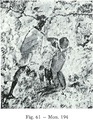
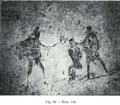
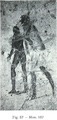
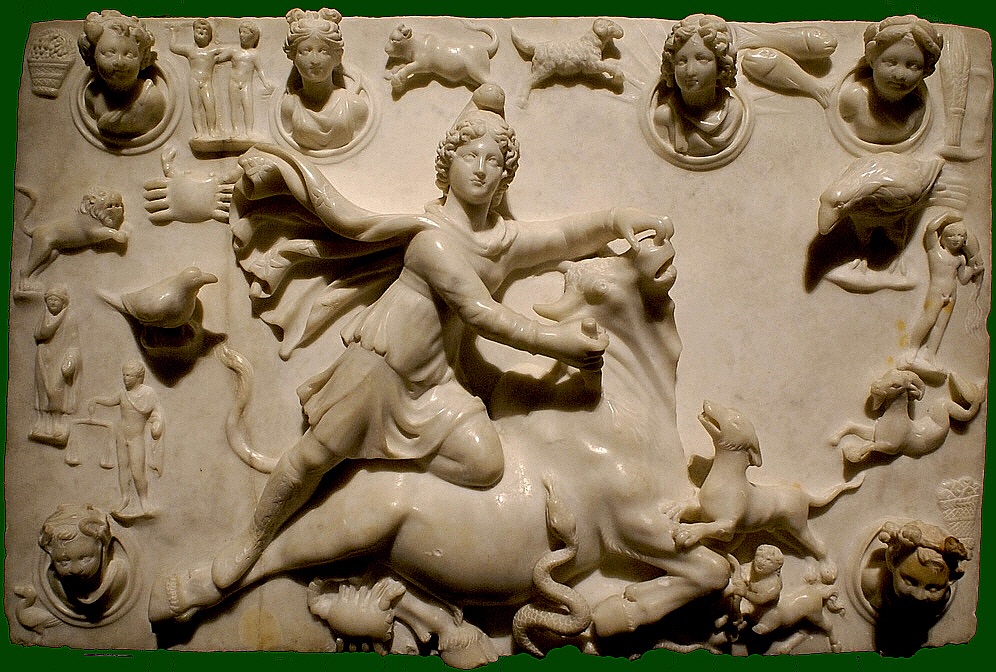
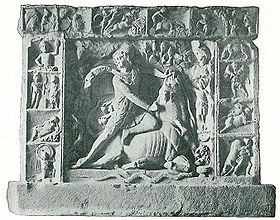
One of the most recognizable symbols associated with Mithraism is the image of Mithras slaying a bull, known as the tauroctony. This scene appeared in almost every Mithraic temple and is believed to have held deep symbolic meaning for followers of the cult. Though historians still debate about the exact interpretation, many believe the act represented themes of creation, rebirth, and the renewal of life, while the death of the bull was thought to bring forth new life and fertility. Becoming a member of the religion involved a series of initiation rituals in which members progressed through different ranks, each associated with specific symbols and spiritual lessons and even had a different dish representative of each stage.
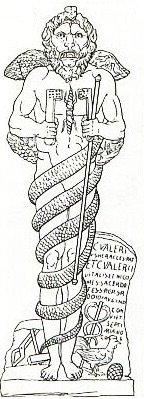
Another interesting aspect of Mithraic worship was the mysterious lion-headed figure often found in Mithraic temples. This figure is usually depicted with a lion’s head, wings, and a snake wrapped around its body and is believed by scholars to represent time, cosmic power and or the changing seasons. Though its exact identity remains unknown, the figure highlights the symbolism within Mithraism and suggests that followers believed in powerful cosmic forces that ruled both the universe and human life.
References:
- King, Martin Luther, Jr. “A Study of Mithraism.” The Martin Luther King, Jr. Research and Education Institute, Stanford University. Accessed June 30, 2026. Stanford MLK Institute page.
- Pearse, Roger, ed. “The Roman Cult of Mithras.” Accessed June 30, 2026. The Roman Cult of Mithras.


Leave a comment