
Word count: 488
Time to read: 3-4 minutes
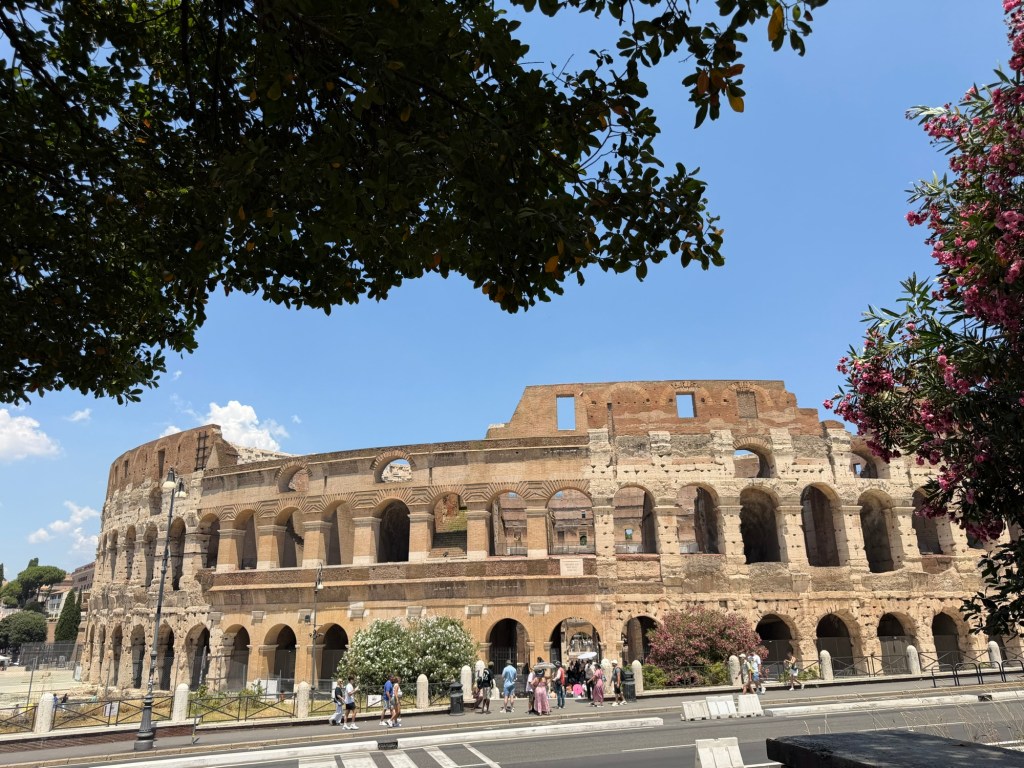
The day started off by me sulking and feeling downtrodden. I decided this was a great opportunity to do a solo walk to the Colosseum. I can get in my head about things and sometimes, it feels like a gladiator fight up there.
As some of you might have read in yesterday’s blog post, last night wasn’t great for me, but I’m determined to get it together for today. It’s Colosseum day, baby!
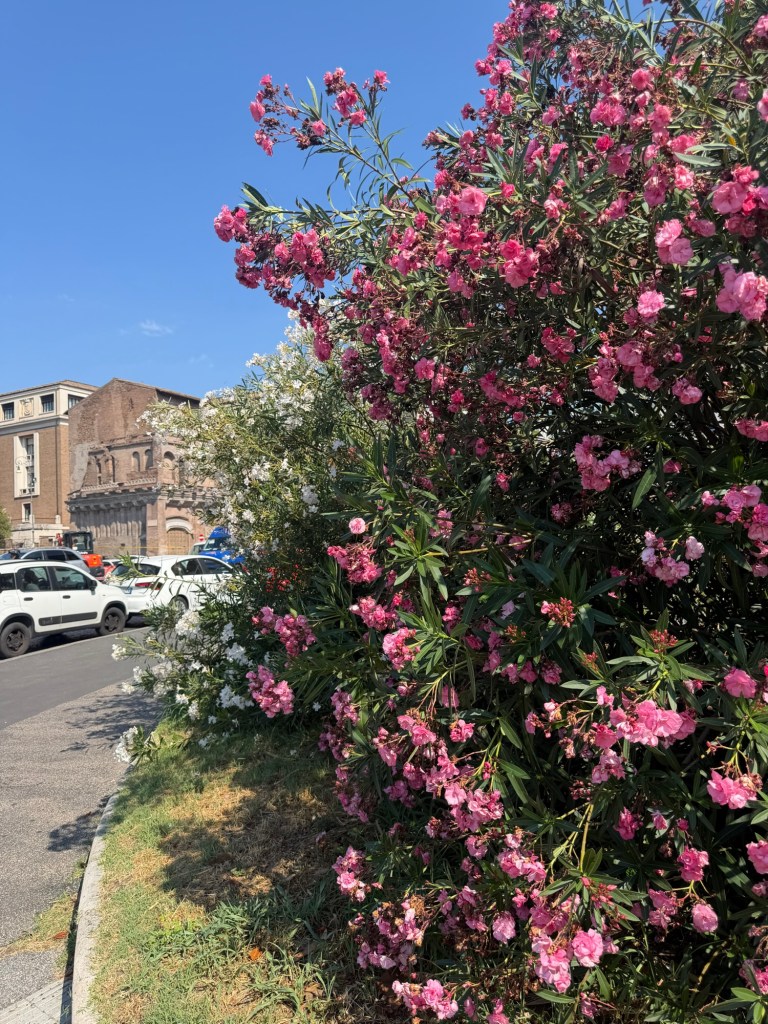
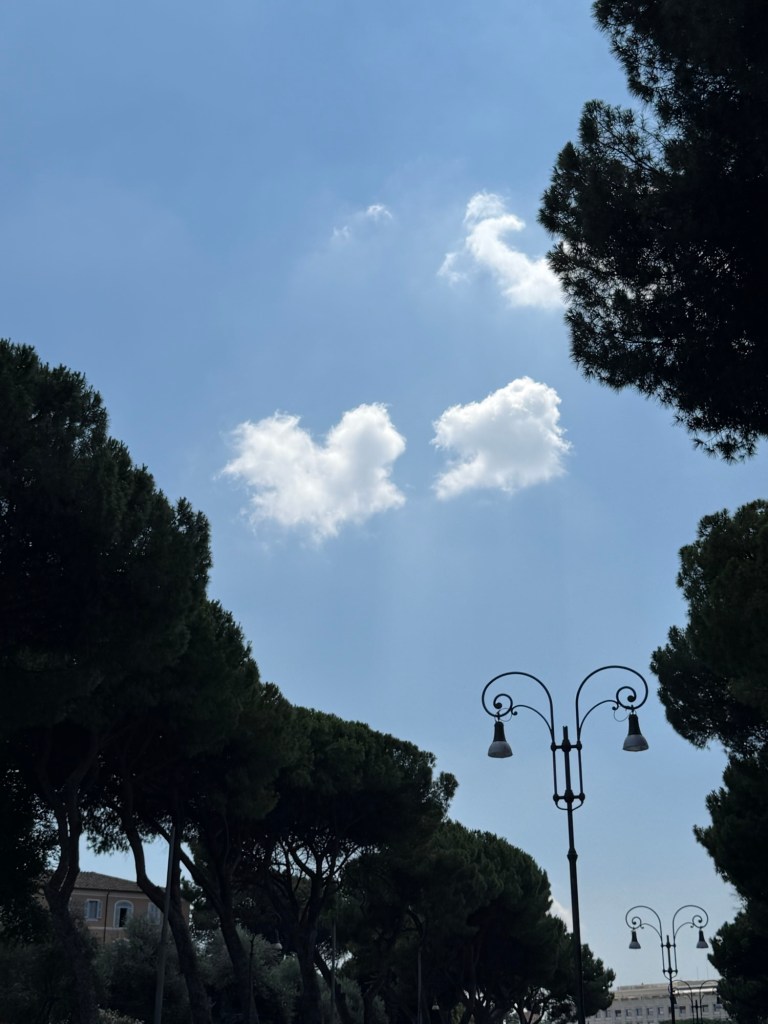
On the walk there, I got to explore a different part of Rome, and enjoy the insane amounts of foliage and fauna. I took a myriad of pictures from a multitude of angles, as I know it this is going to make great painting reference fodder for me.
I reached the Colosseum and was greeted by Shea and the rest of the group. Everyone walked about helter skleter and it dawned on me that I was really there; I was really at the Colosseum! Yesterday’s lingering feelings made it hard to actually feel this, but I kept telling myself that I needed to be grateful and make the most of this day. After all, this is an attraction that so many people dream of seeing. The last thing I wanted was to ever have to say that my experience at the Colosseum was tainted by my own contrition.
We learned from Shea and Professor Yarrow that so much of the Colosseum’s lore is dramatized. In fact, only 3-8 percent of gladiators actually died in fights. A fair percentage of entertainment was beast-on-beast. As someone who loves animals, I couldn’t help but think how the Barbary lion’s population was absolutely decimated by these fights. They were an incredibly special subspecies driven to extinction, all at the hands of desired grandeur.
Much of Ancient Rome — and even the world we live in today — orbits that motif. We want to prove excellence as a society and we always want to one-up our adversaries. Technology in Ancient Rome was all about proving triumph through scale, and displaying magnitude through volume. Essentially, their opponents were going to know Ancient Romans were not worth the fight before there was even bloodshed. By the time a decision was made to slain the enemy, it was too late for the oppressed!
Ancient Rome knows a lot about oppression, though. An interesting dichotomy happened where gladiators were both enslaved and oppressed, but also revered and celebrated. We learned through our lesson that some people actually chose to revoke their own rights to become gladiators. To be a gladiator was a symbol status, and some people yearned for that distinction.
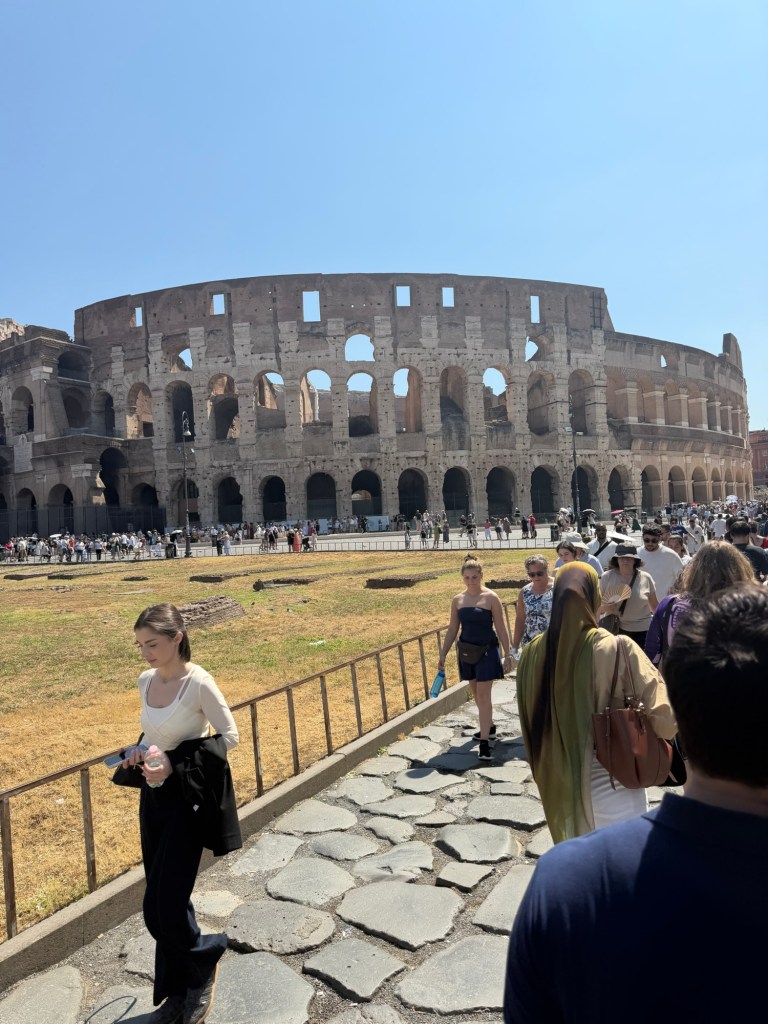
The rest of the day was spent in awe that I got to see such an amazing historical site. Fortunate doesn’t even begin to describe how I feel on this trip, and my awareness of that has gone up day by day.


Leave a comment