
Word count: 1,013
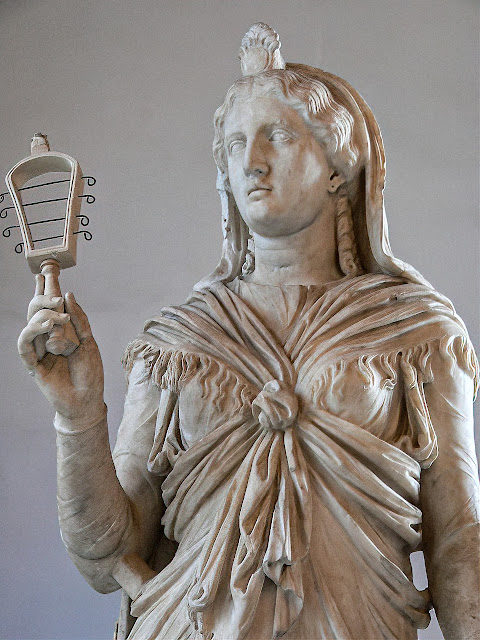
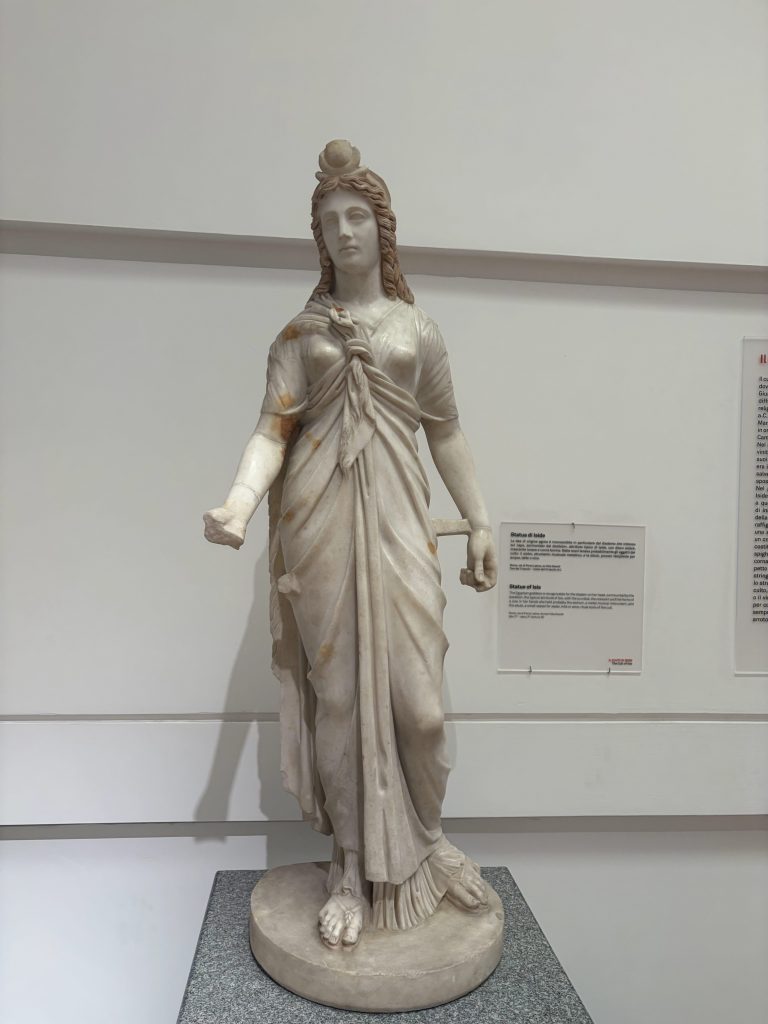
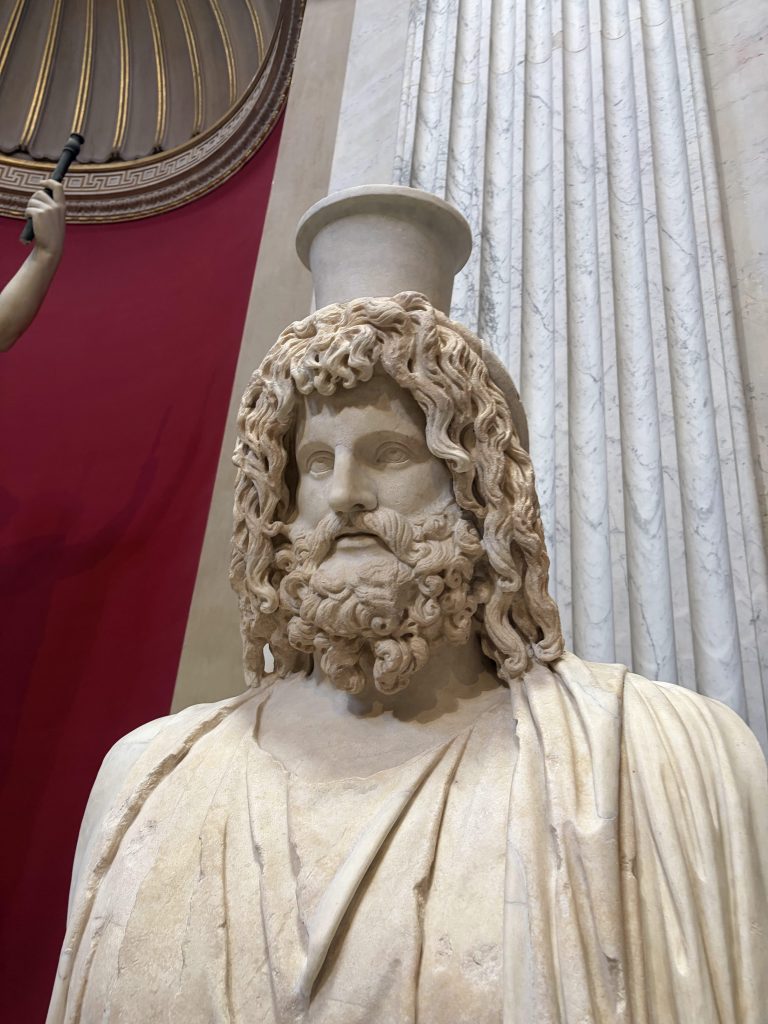
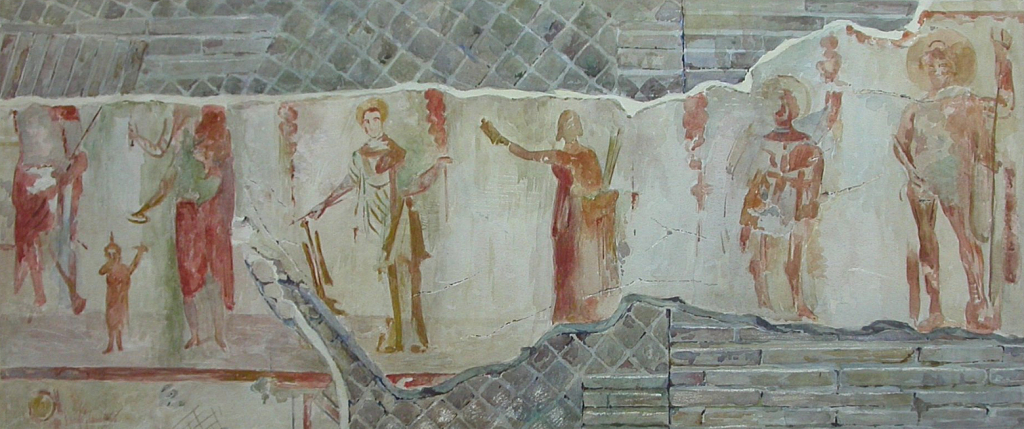
Isis is an Egyptian goddess who represents divine motherhood, fortune, and cosmic order, often identified as a giver of life due to bringing her husband-son, Osiris, back to life. She is often depicted and closely associated with Sarapis, who evolved from Osiris but was syncretized within Rome as a Jupiter-like figure. Although they date back to the third millennium BCE, both Isis and Sarapis began to appear in Rome in the 2nd century BCE, following the spread and Hellenization of the religions into Greece. Her cult is categorized as a “mystery cult,” meaning that the god being worshipped was not accepted in the pantheon, and which often required an initiation into the cult. For the cult of Isis, this initiation was a symbolic rebirth from one’s old life into a new one.
She is often depicted with a cresent moon atop her head, and holding ritual instruments such as the systrum and the situla.
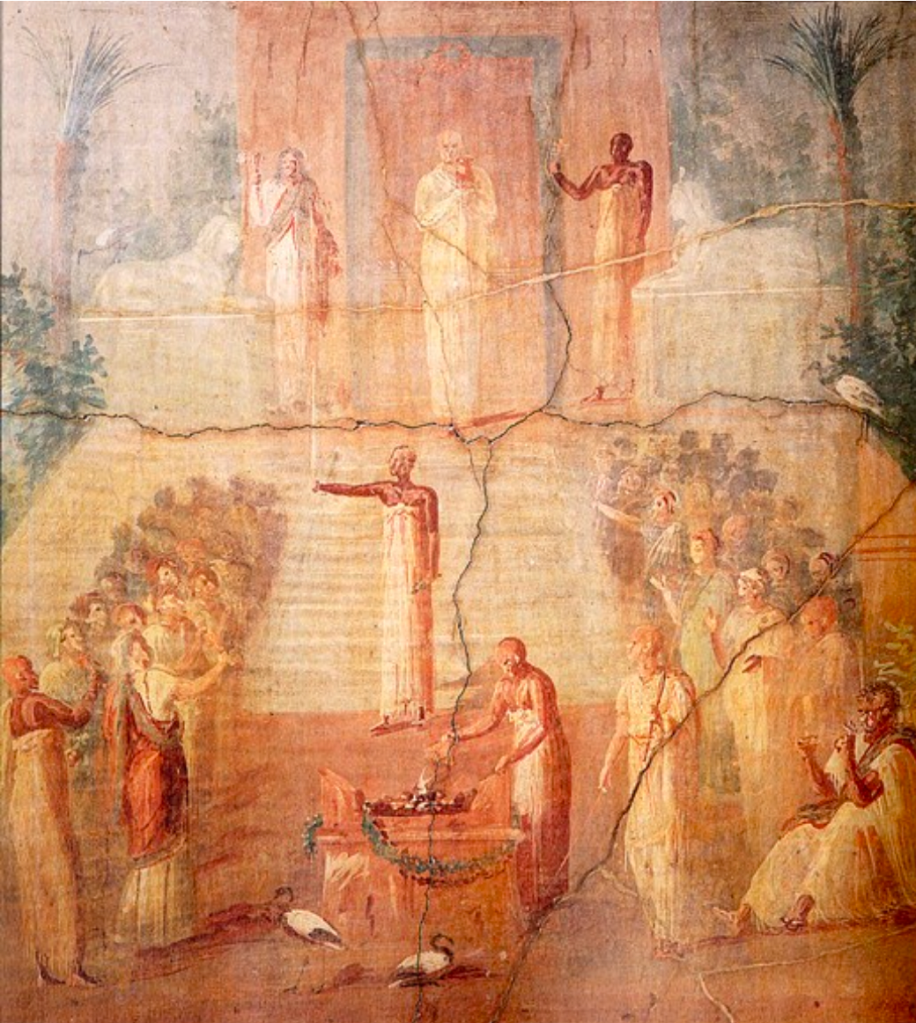
Even before the official assimilation of Isis, there were many sanctuaries and temples around Rome and its provinces, one in particular being the Iseum Campense which was located in the Campus Martius, where we are standing today. There also remains an Iseum in Pompeii, which was rebuilt after it was destroyed in the volcanic eruption. Records of a few different ritual celebrations exist, one being the Inventio Osideris, which took place in the fall and reenacted Osiris’ death and subsequent resurrection via Isis. The philosopher Plutarch also wrote about the activities of the cult of Isis, saying that some followers shave their hair and are buried wearing sacred robes. The cult also carried out traditions that we are more familiar with in Greco-Roman religions, such as animal sacrifice, particularly of birds. However, he also says that it is not what makes one a true follower of Isis, but instead one’s dedication to finding a cosmic truth.
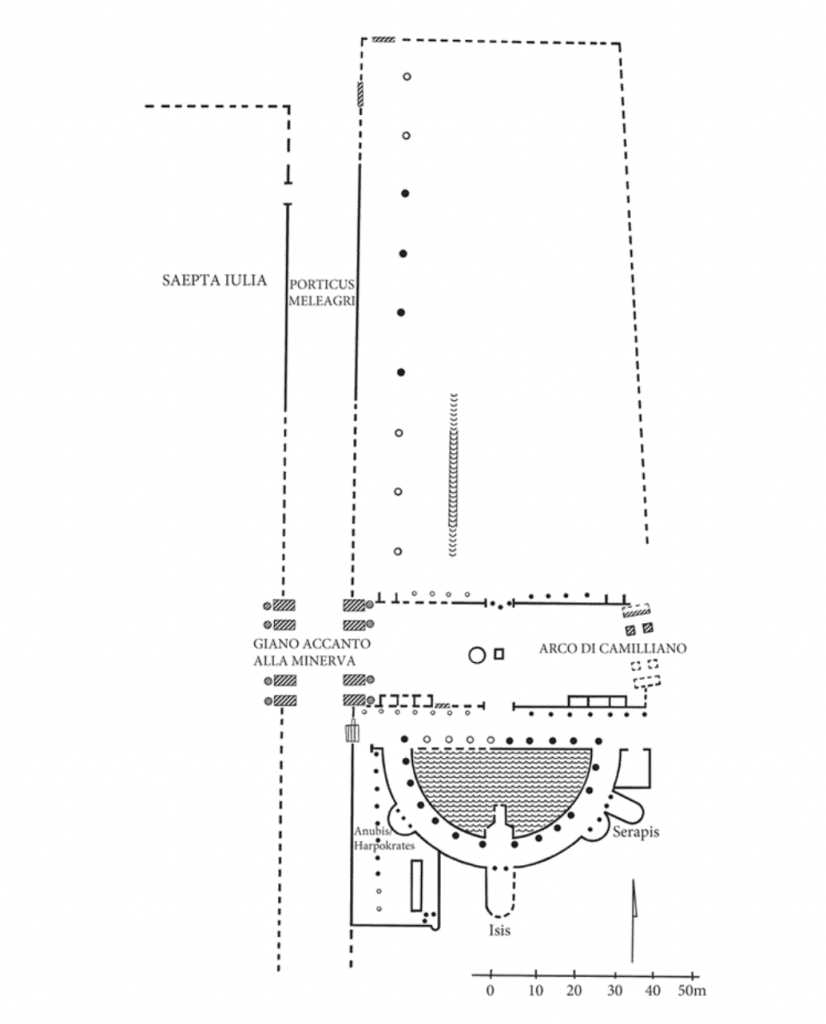
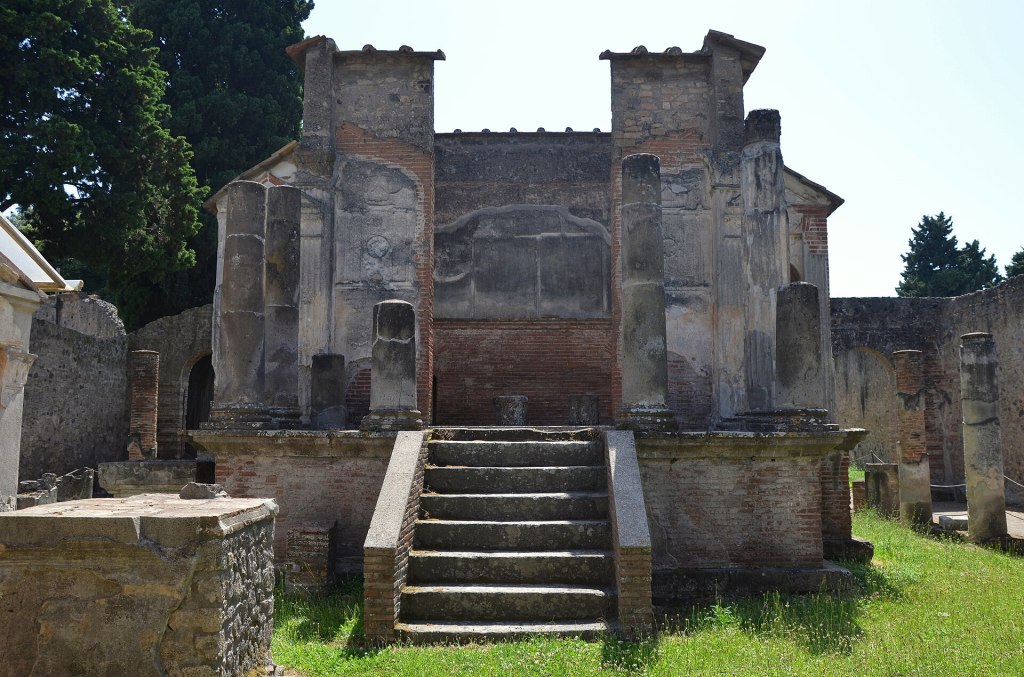
The focus on resurrection in the story of Isis is one of the primary reasons the cult became so popular. Isis gave Romans hope for an afterlife, something that was not present in Pagan religions. Pagan worship of the gods rested mainly on a relationship of mutual, impersonal benefit. In exchange for veneration and sacrifice, the gods would provide the human with their request. Isis’ cult, in comparison, gave the initiates more individual ways of understanding religion and the universe, and in its promise of eternal life appealed to both the struggling lower classes and the power hungry elite.
One “quote” from Isis has the goddess proclaim that “‘I untie the bonds of Necessity, reluctant though she be”, with the necessity in question being interpreted as death.
Another inscription from Cyrene reads “Without me nothing has come into existence, and the stars do not hold their courses without first receiving my instructions.”
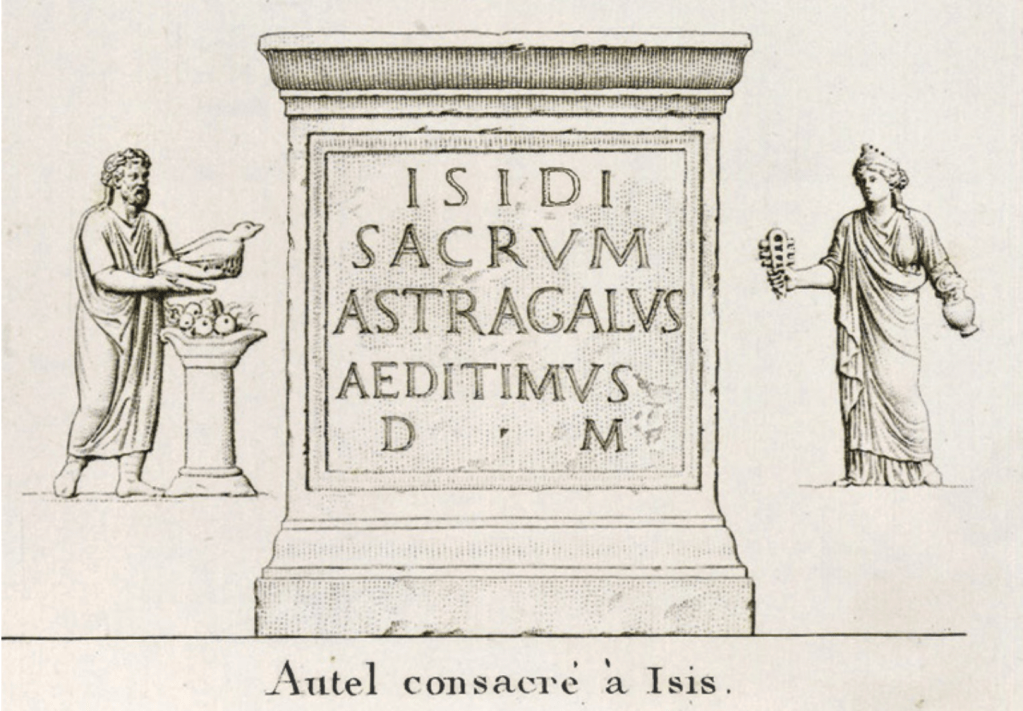
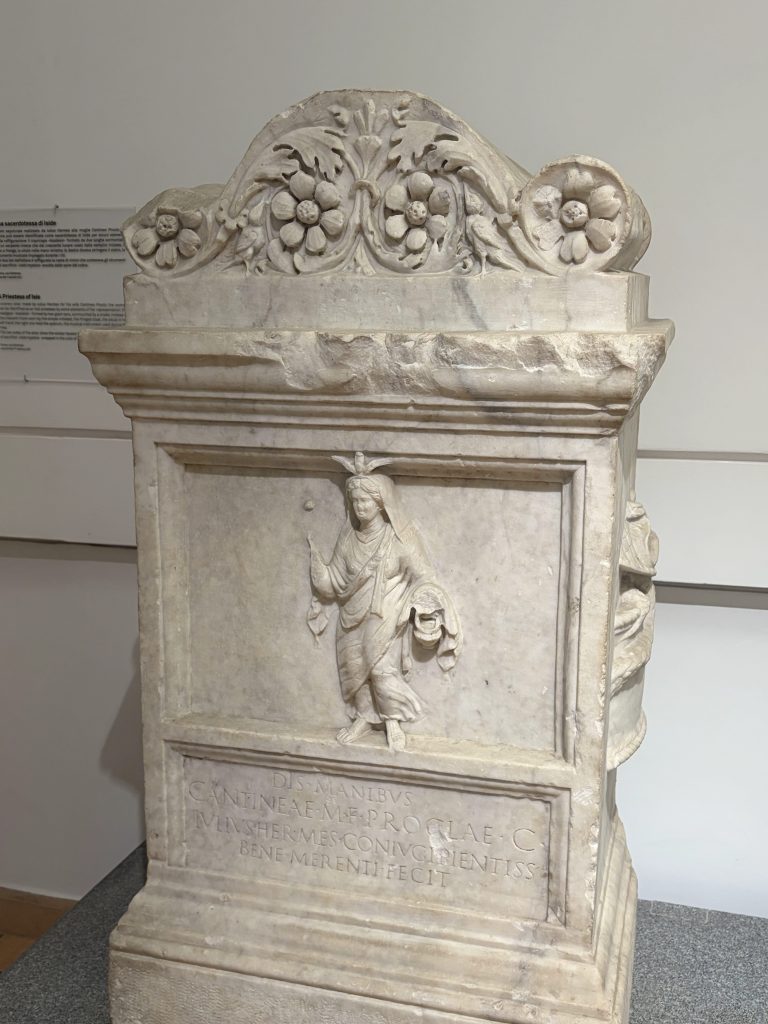
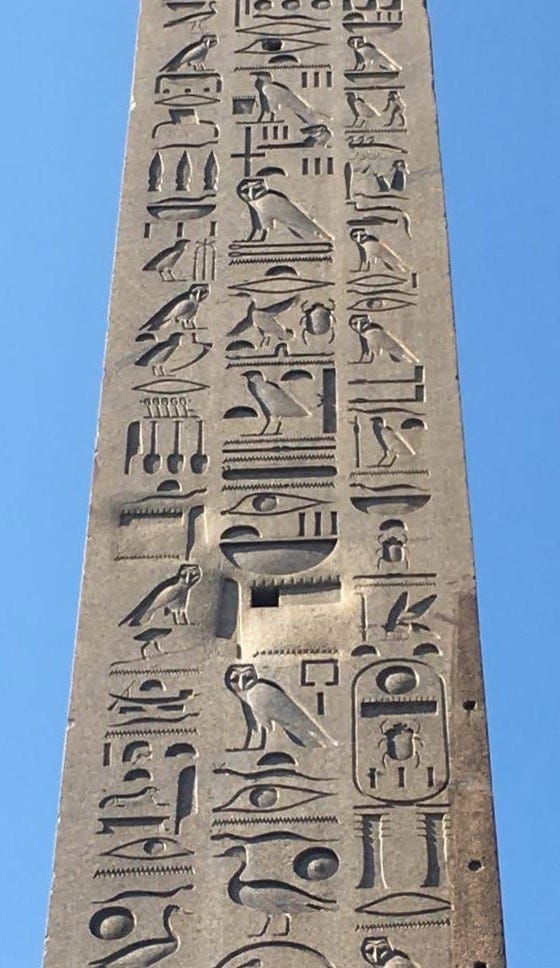
The Roman adoption and worship of Isis also stems from ‘Egyptomania,” i.e. Rome’s fascination and romanticization of Egyptian culture, evident not only in its adoption of Egyptian gods but also in the large amount of Egyptian artifacts in Rome, such as the Lateran Obelisk. Isis was also worshipped by many of the elite, including emperors such as Caracalla and Caligula, and Augustus called for temples to be rebuilt after their destruction. Isis and Sarapis, associated with Egyptian royalty, were able to be assimilated to the image of the Roman imperial couple and used to further political careers.
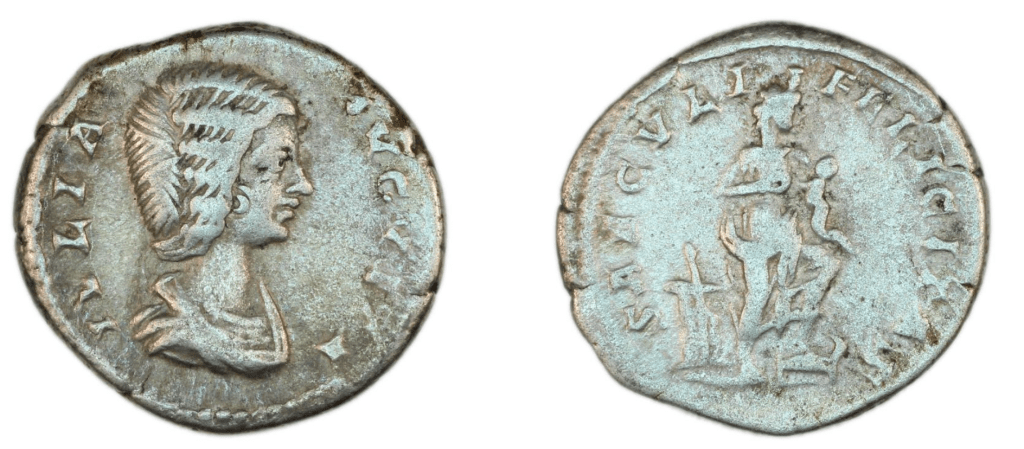
However, there were also some who opposed the cult of Isis. Past scholarship has placed the reasons for its controversy around the assumption that the cult was made up of mostly women and lower class citizens, however, we’ve already seen that that is not true. Rather, opposition for the cult of Isis was mainly political. Particularly in the early spread of the cult, Isis was closely associated with Cleopatra, who was often depicted with attributes of Isis, and Mark Antony then associated with Osiris. Mark Antony’s alignment with Cleopatra then cause Octavian (aka Augustus) to push anti-Egyptian propaganda and foster an attitude of us vs. them within the empire.
Also in the first century BCE, the cult was opposed by the Roman senate. At the time, the Senate was acting less as a cohesive power and more as a battle of multiple individuals. Therefore, large, unregulated gatherings of a foreign cult such as that of Isis were perceived to be a threat to power. Temples were ordered to be destroyed, with one account by Valerius Maximus recalling a consul beating down the doors of the temple with an axe. Another account tells of bees gathering near the temple site, which the Romans took to be a bad omen and subsequently destroyed the temple again.
Ultimately, these efforts to quell the cult of Isis were evidently unsuccessful, as in the first century CE both Isis and Sarapis were accepted into the Roman pantheon.
Bibliography:
Alvar, Jaime. Romanising Oriental Gods: Myth, Salvation and Ethics in the Cults of Cybele, Isis and Mithras. Vol. 165. Brill, 2008.
Hackworth Petersen, Lauren, ‘The Places of Roman Isis: Between Egyptomania, Politics, and Religion’, Oxford Handbook Topics in Classical Studies (online edn, Oxford Academic, 1 Apr. 2014.)
Hayne, Léonie. “Isis and Republican Politics.” Acta Classica 35 (1992): 143–49. http://www.jstor.org.brooklyn.ezproxy.cuny.edu/stable/24594174.
Karoglou, Kiki. “Mystery Cults in the Greek and Roman World.” The Metropolitan Museum of Art, October 1, 2013. https://www.metmuseum.org/essays/mystery-cults-in-the-greek-and-roman-world.
Orlin, Eric M. “Octavian and Egyptian Cults: Redrawing the Boundaries of Romanness.” The American Journal of Philology 129, no. 2 (2008): 231–53.
Takács, Sarolta A. Isis and Sarapis in the Roman world. Vol. 124. Brill, 2015.


.jpg)
Leave a comment