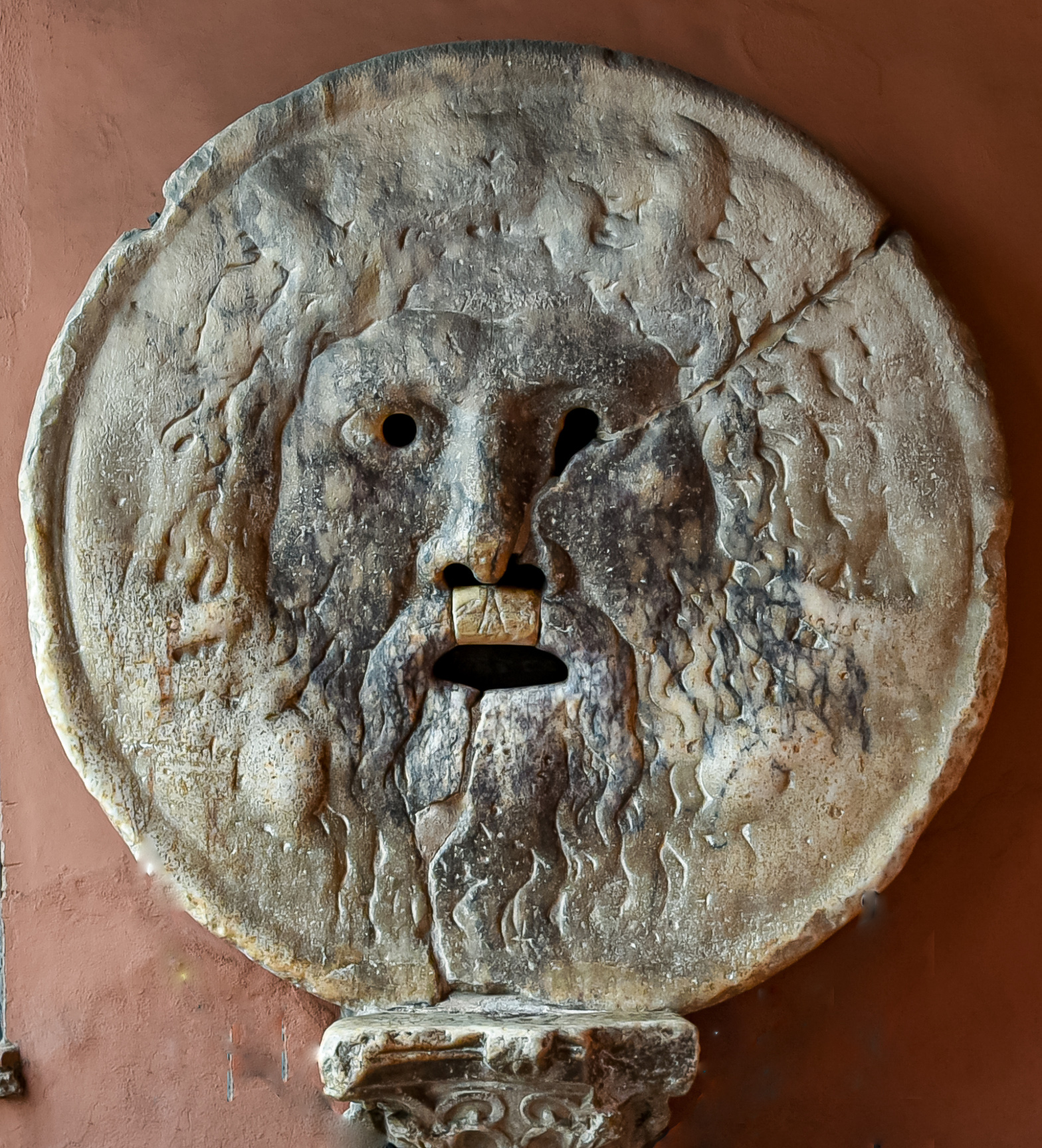

Hey everyone. So, today I want to talk about Septimius Severus, and specifically how he used massive public spectacles and architecture to prove he belonged on the Roman throne. Severus was an outsider. He was a military general from Lepcis Magna in North Africa, and he seized power by winning a really bloody civil war in the late second century. Because he didn’t have deep, aristocratic roots in Rome, the Senate and the people didn’t automatically respect his right to rule. He had a massive crisis of legitimacy. Scholars like Mary Boatwright and Diane Favro point out that in ancient Rome, “spectacle” wasn’t just mindless entertainment; it was a deliberate political tool. Severus realized that if he wanted to survive, he needed to completely rewrite his own history and make the public see his family as the undisputed future of the empire. He achieved this mainly in two ways: by organizing a huge religious festival called the Ludi Saeculares and by commissioning an astonishing, enormous marble map of the city.
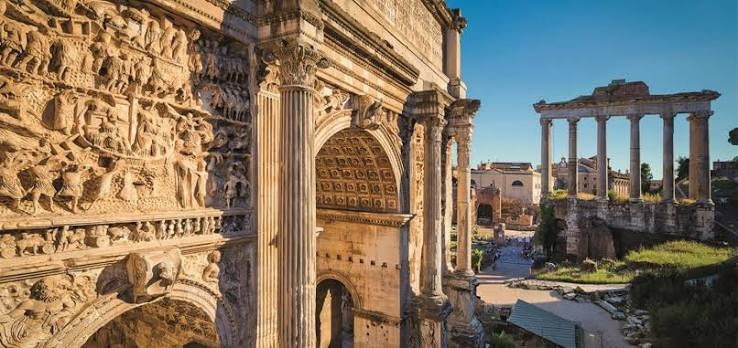
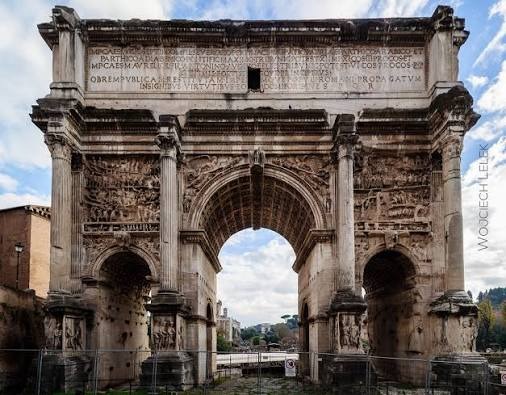
Fun fact: Severus originally put both of his sons’ names (Caracalla and Geta) on the arch. But after Severus died, Caracalla murdered Geta so he wouldn’t have to share the throne. Caracalla then ordered a damnatio memoriae—meaning he tried to erase Geta from history. He had Geta’s name chiseled off the arch and replaced with extra praise for himself. If you look closely at the arch in Rome today, you can still see the empty, patched-up stone where Geta’s name used to be.
He organized the Ludi Saeculares, or Centennial Games, in the year 204. In the past, this event was scheduled to happen just once per century and a decade. They were designed to mark the end of an old historical period and the beginning of a revitalized and prosperous age. The first Severus was explicitly borrowing from Augustus’s methods, given that the emperor Augustus had famously used these games to commence his golden age. By announcing a new age, Severus was essentially telling the Roman public to forget about the civil wars and the bloodshed that got him to the throne. He declared, “The past is gone, a divine new era has started, and my family is the one protecting it.” Stone inscriptions from the event, analyzed recently, indicate Severus added his own interpretation. He favored Hercules and Bacchus, gods associated with his North African hometown, over mainstream Roman deities like Apollo.. His actions involved integrating his regional ancestry into the central tenets of Roman state religion. (Which I learned from a woman at the cafe the previous weekend was not uncommon. She believed anyone could be a roman. It had nothing to do with race but more so loyalty to the culture.)
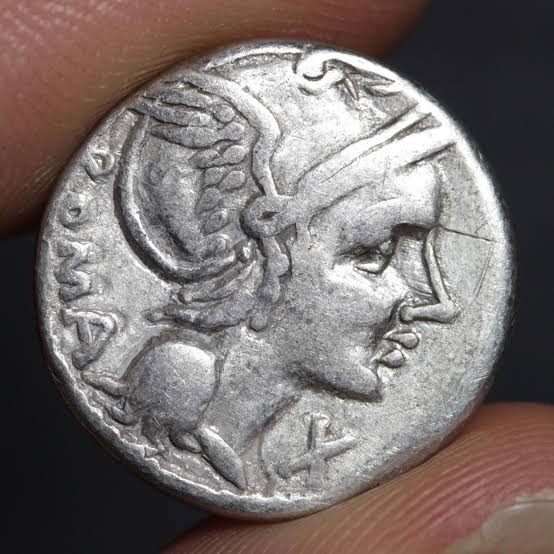
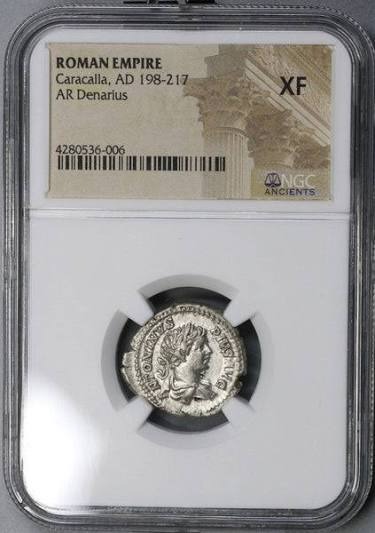
Fun fact: In ancient Rome, coins weren’t just money; they were the government’s social media. Because it took months to plan the Ludi Saeculares, Severus minted silver coins celebrating the upcoming games and handed them out to the public. People literally held the advertisement for the festival in their hands before it even started, making it one of the earliest examples of mass-media hype for an event.
Severus made sure his two young sons, Caracalla and Geta, were front and center for every single sacrifice and procession. He was forcing the public and the Senate to look at his kids and see them as the inevitable, divinely sanctioned future rulers of Rome. To lock in their loyalty, he also distributed massive cash handouts and free gifts to the crowd during the games. He basically tied the physical and financial well-being of the Roman people directly to the survival of his specific family line.
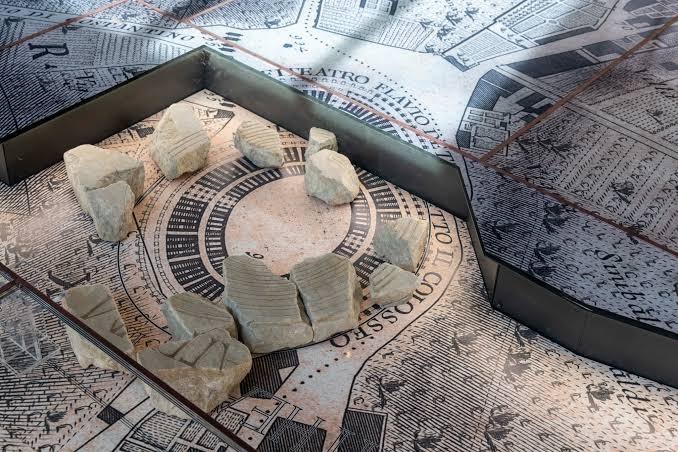
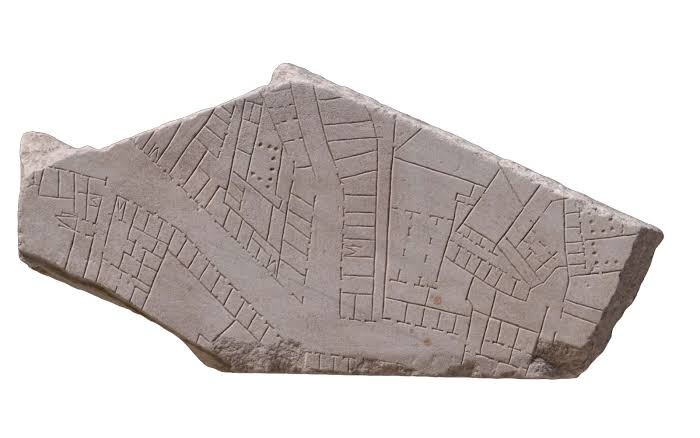
Fun fact: First, the map was oriented completely backward from how we look at maps today the south was at the very top, not North. Second, after the Roman Empire fell, people completely forgot what the map was. During the Middle Ages, locals smashed up the massive marble slabs and used the fragments as cheap building materials to patch up houses, build garden walls, or melted them down into lime to make cement. Today, only approximately 10% to 15% of the map survives because it was literally recycled by medieval Romans.
Severus didn’t just want temporary spectacles that people would eventually forget; he wanted permanent ones built directly into the fabric of the city. His well-known map, the Forma Urbis Romae, created between 203 and 211, is what we’ll discuss now. This wasn’t a small, foldable map to navigate with. It was a colossal blueprint of the entire city of Rome, meticulously carved into 150 enormous pieces of marble. When assembled, its dimensions were approximately 60 feet in width and 43 feet in height, and it was displayed on a huge interior wall within the Temple of Peace.
Scholars from the Stanford Digital Forma Urbis Project have looked closely at how people actually experienced this map, and they found it was completely impractical for navigation. The map was drawn at a 1 to 240 scale, meaning the details near the top, forty feet in the air, were way too small for anyone to actually read. So, why build it? Because the map itself was an architectural flex. In the ancient world, mapping something was the ultimate sign of ownership and control. With the entire capital city, down to its smallest details, showcased in costly marble, Severus was visually conveying to his populace that he possessed complete dominion over Rome. This served as a lasting testament to his administrative power.
In addition to that, the map was a fantastic piece of propaganda for the buildings he was constructing.Before his ascent, a colossal fire ravaged Rome, prompting Severus to invest heavily in the reconstruction of temples, markets, and public areas. The Forma Urbis clearly highlighted all of these newly restored areas. Whenever a Roman citizen looked up at that giant wall of marble, they were being reminded of how Severus had physically saved and remade their city.
Severus pursued additional actions beyond the games and the map to conclude. Architecture served as a continuous symbol of his authority. For example, he built a massive, three-story monumental fountain called the Septizodium at the foot of the Palatine Hill. Although not a practical water source, it was located at the city entrance for travelers from Africa.It was a grand and impressive welcome mat, meant to display his affluence and local pride upon entering Rome. He constructed a colossal Triumphal Arch in the heart of the Roman Forum to commemorate his military successes, ensuring the Senate daily passed a monumental tribute to his army.
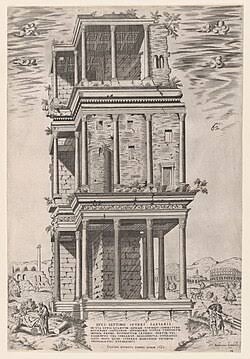
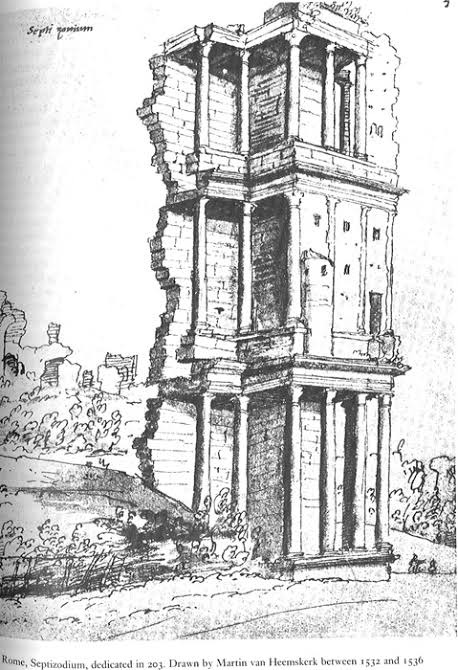
For almost 1,400 years, through the Middle Ages, the enormous and stunning three-story fountain remained largely undamaged. But in 1588, Pope Sixtus V decided he needed high-quality marble to build St. Peter’s Basilica and other Vatican projects. He employed an architect to systematically tear down the Septizodium’s remaining facade and haul the stones off. Visiting the Vatican or seeing the Flaminio Obelisk means you’re looking at marble that was once Severus’s African welcome mat.
When you look at all of this together, it shows that Severus was a master of public relations. He understood that military might alone couldn’t secure a throne. By combining transient, emotionally charged rituals like the Ludi Saeculares with permanent, overwhelming visual monuments like the marble map, he successfully changed the narrative of his entire reign. He transformed himself from a dangerous provincial usurper into a legitimate, heaven-sanctioned emperor, bringing order, security, and a magnificent new golden age to Rome. Thanks for listening, let me know if you have any questions.
BIBLIOGRAPHY
Boatwright, Mary T., Daniel J. Gargola, and Richard J. A. Talbert. 2004. The Romans: From Village to Empire. Oxford: Oxford University Press.
Favro, Diane. 1996. The Urban Image of Augustan Rome. Cambridge: Cambridge University Press.
“Performance of the Saecular Games in 204 CE (CIL VI, 32326-32336).” Judaism and Rome Project. Edited by the French National Center for Scientific Research (CNRS).
The Stanford Digital Forma Urbis Romae Project. 2002–2016. Stanford University Department of Computer Science and Department of Classics.


Leave a comment