
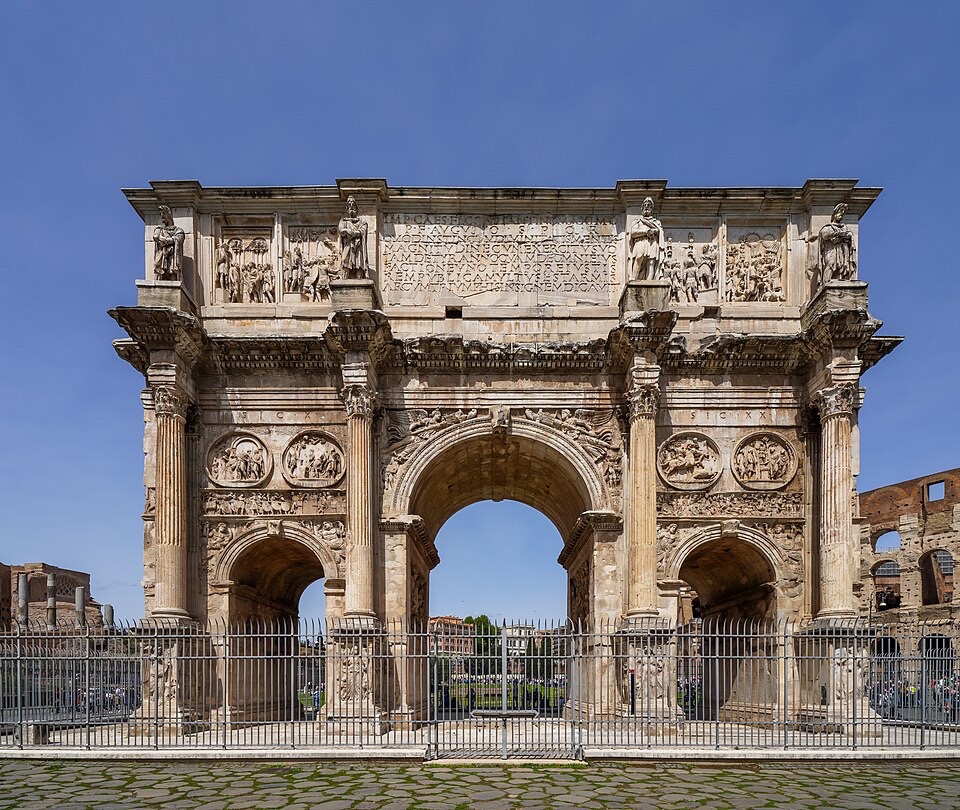
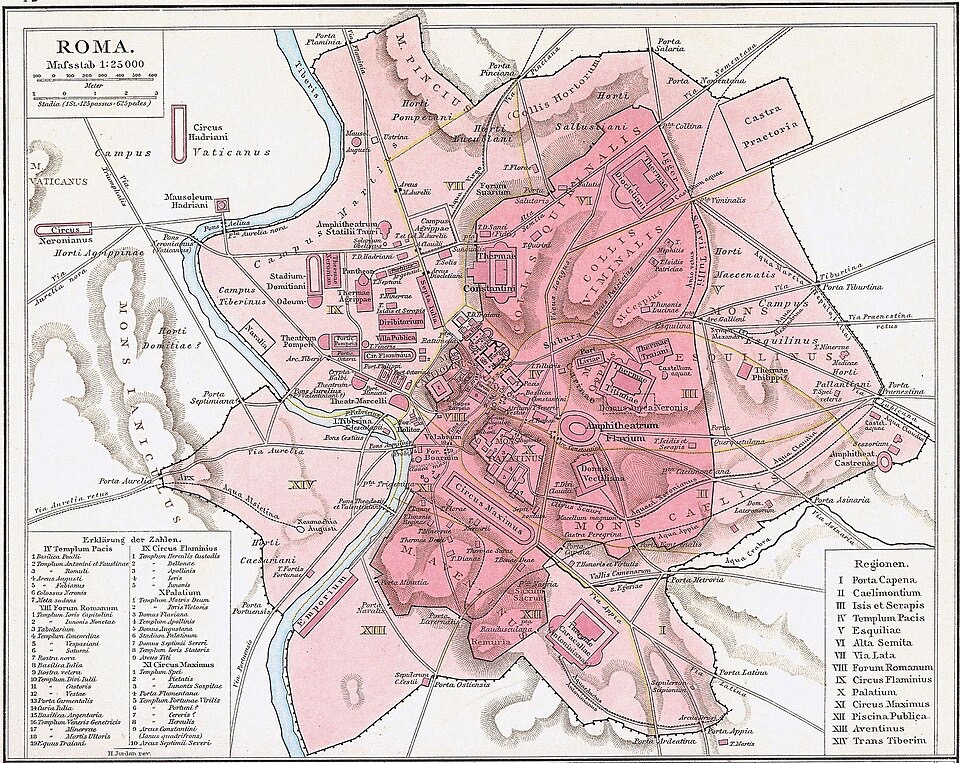
The arch of Constantine or “Arco di Costantino” in italian is an arch built between the years 312 and 315 to honor Roman emperor Constantine the great. It is located along the route of the triumphal, a ceremony or parade through streets of Rome celebrating the military victories of emperors, between the Roman Forum and the Colosseum. It was commissioned by the Roman senate to commemorate Constantine’s decade as emperor and his victory over Maxentius at the Battle of the Milvian Bridge in AD 312 . This battle unified the western roman empire under one ruler bringing an end to rivalry between Constantine and Maxentius. Roman emperor Constantine ruled from the year AD 306 to 337 and was the first Roman emperor to convert to christianity. Interestingly enough there does not appear to be any Christian imagery on the arch of Constantine.
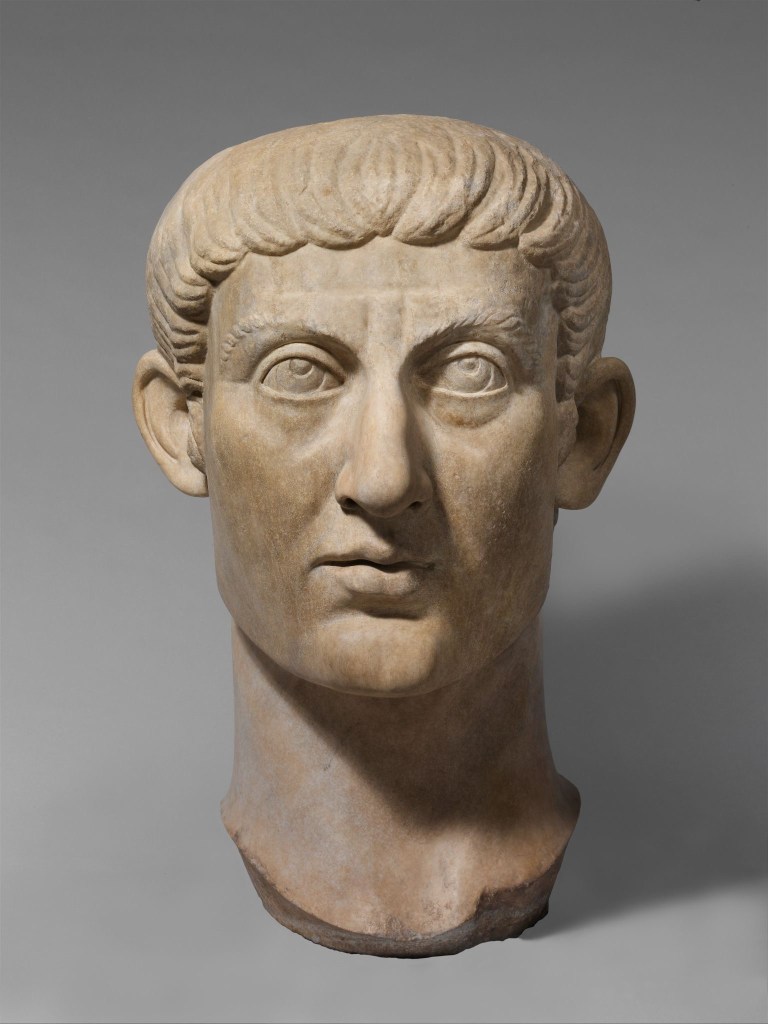
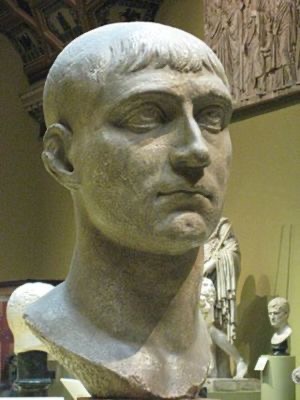
Emperor Constantine shown on the top and Emperor Maxentius on the bottom.
Though that arch of Constantine was named after Constantine the great many parts of it are sculptures commissioned by and dedicated to previous emperors, namely Trajan, Hadrian and Marcus Aurelius. Though the heads of the sculptures depicting the likeness of these previous emperors were replaced with emperor Constantine’s head.
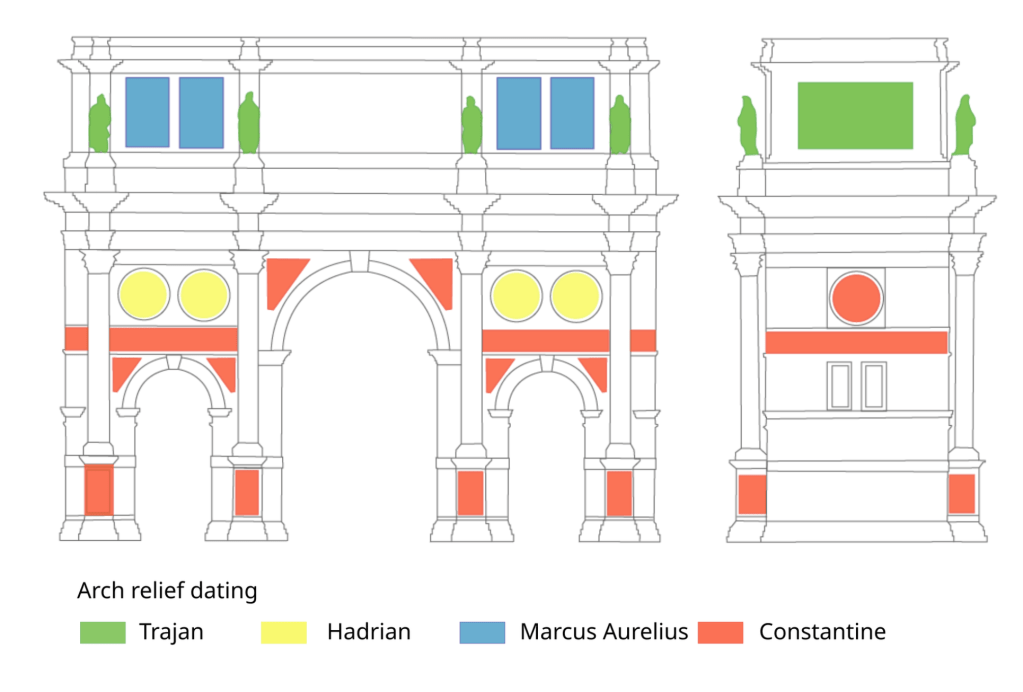
Most of the panels/sculptures commissioned by Constantine are located near the base of the arch of Constantine. These panels depict the accomplishments of emperor Constantine. From east to west are depicted the March to Verona, the Siege of Verona, the Battle of the Milvian Bridge, the Entrance to Rome, Imperial Oration from the Rostra, and the Distribution of Money. Most of these achievements relate to his victory over Maxentius, while others like the distribution of wealth depict Constantine being “generous”, distributing support payments to the citizens of the Roman empire. There is also in inscription at the top of the arch that According to Mark Cartwright (2013) reads “To the emperor Flavius Constantine the Great pious and fortunate, the Senate and People of Rome because by divine inspiration and his own greatness of spirit with his army on both the tyrant and all his faction at once in rightful battle he avenged the State dedicated this arch as a mark of triumph.” This inscription can be interpreted to mean that Constatine was chosen by God to win, being given “divine inspiration.” You may also notice how they don’t mention Maxentius’ name, just labeling him as a “tyrant” in an effort to erase Maxentius from memory.
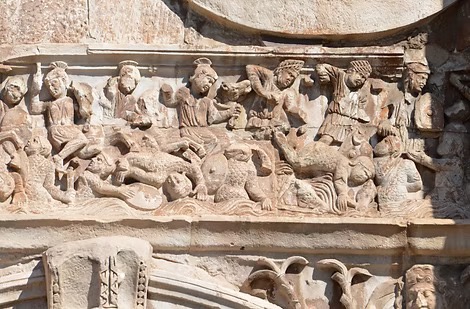
Constantinian relief depicting the Battle of the Milvian Bridge
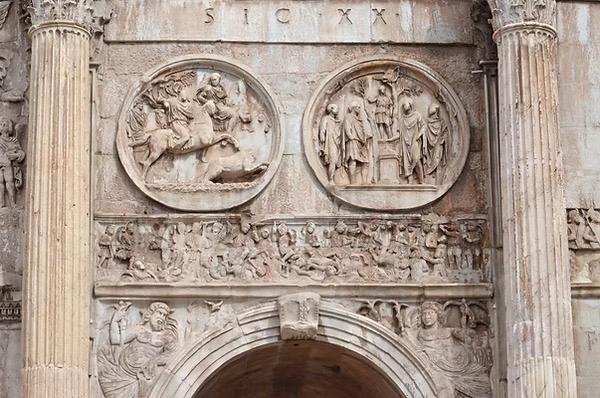
Located in the middle of the arch of Constantine are roundel relief sculptures created during the rule of emperor Hadrian who ruled from AD 117 to 138. These roundels depict scenes of hunting and sacrifices as shown in the image below.
Located at the top of the arch of Constantine there are 8 panels depicting Marcus Aurelius performing various activities as emperor. Some panels depict scenes of the emperor at war while others depict him engaging in animal sacrifice and hunting. As stated before the heads were unfortunately replaced with the likeness of emperor cotanine, as shown below.
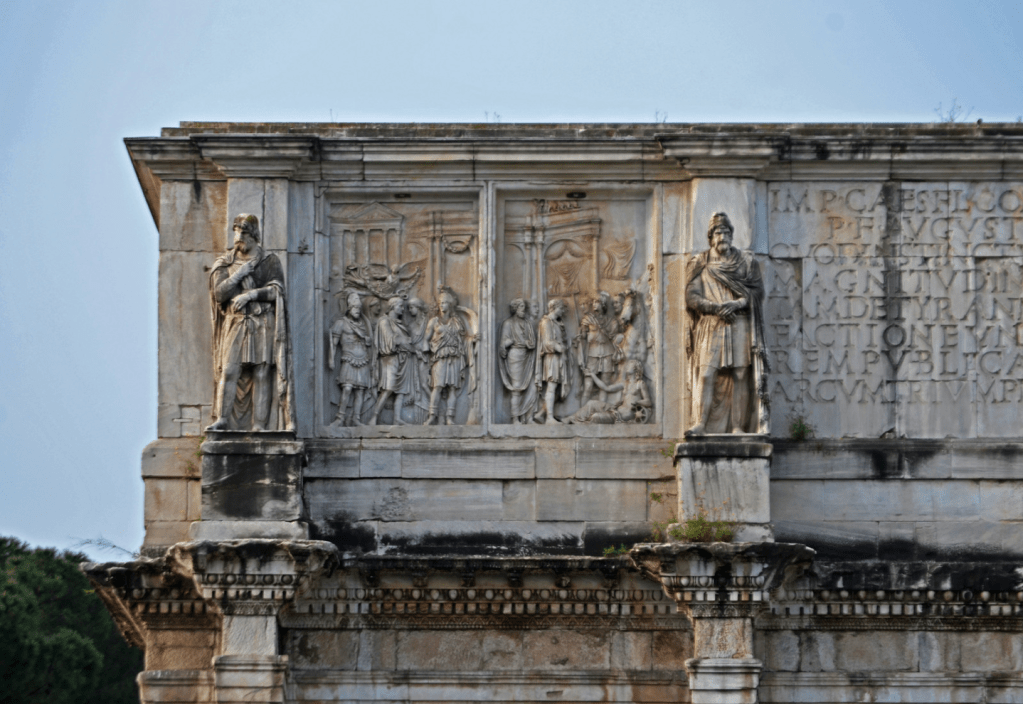
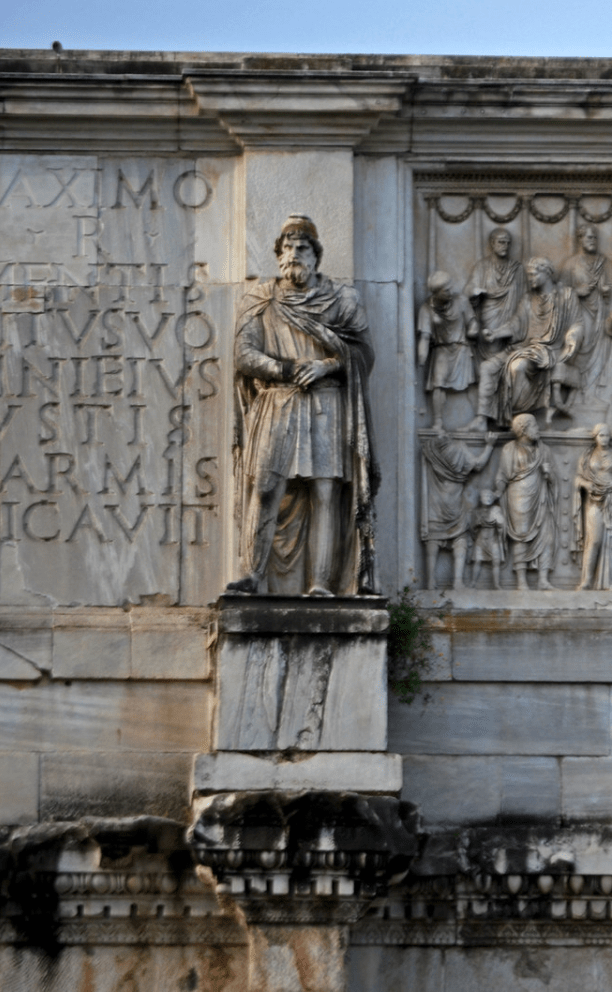
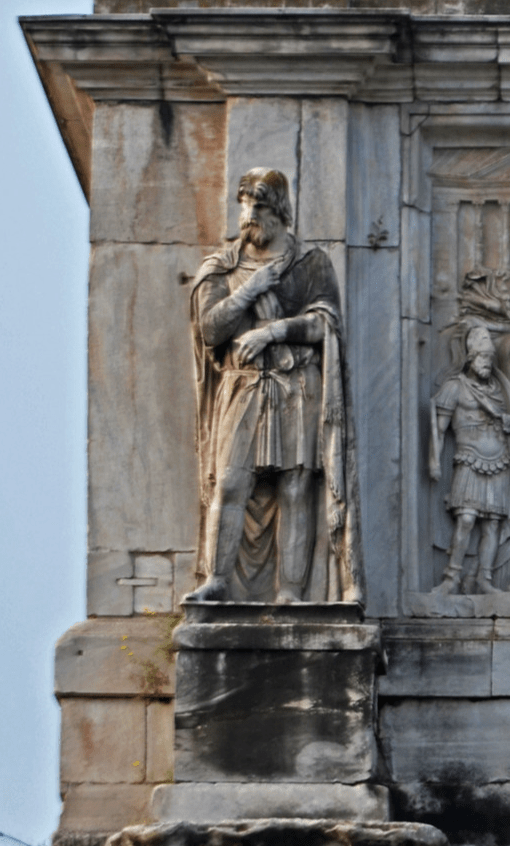
Located inside the passageway of the central arch are relief sculptures created during the reign of Trajan, who ruled from 98 to 117 AD. These panels depict several battles between the Romans and the Dacians. The Dacians fought against emperor Trajan’s conquest of Dacia but ultimately lost, causing part of Dacia to become a province of the roman empire. There are also sculptures at the top of the arch created during the reign of Trajan, that depict Dacian captives as shown in the images below.
Sources:
- The Arch of Constantine. (2026). Google Books. https://books.google.com/books?hl=en&lr=&id=ihGoAwAAQBAJ&oi=fnd&pg=PP14&dq=arch+of+constantine&ots=9mz5Kw7n54&sig=DUM3K-4oe6UC32aYdUNAnkQ2vVI#v=onepage&q=arch%20of%20constantine&f=false
- Arch of Constantine. (2020, February 1). Wikipedia. https://en.wikipedia.org/wiki/Arch_of_Constantine
- Hendrix, D. (2016). Arch of Constantine. The Byzantine Legacy. https://www.thebyzantinelegacy.com/constantine-arch
- Cartwright, M. (2013, June 9). Inscription, Arch of Constantine I. World History Encyclopedia. https://www.worldhistory.org/image/1267/inscription-arch-of-constantine-i/


Leave a comment