
484 words, 3 minutes read time.
Today we went to the colosseum! I was super excited because I had already witnessed its greatness from the outside during the first weekend, as well as going to a concert in the architectural site across the street last night. On the bus ride there, I noticed that the word for bus line “linea” is the same in Russian! Finding similarities between Russian and Italian has been really interesting to me because it shows the transfer of language between different cultures. Another word I noticed on the first day was the word for ticket “biglietti” was also the same in Russian.

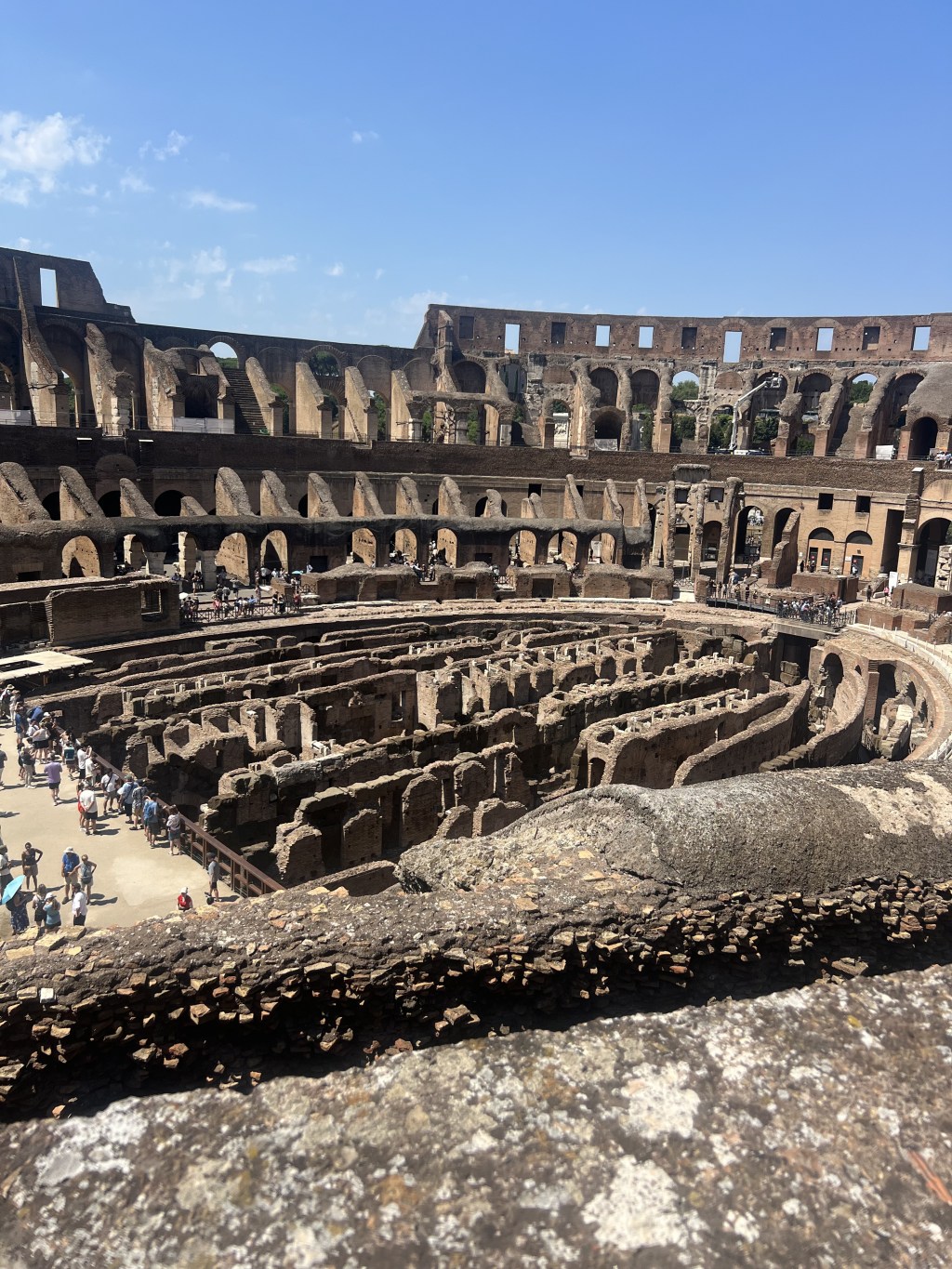
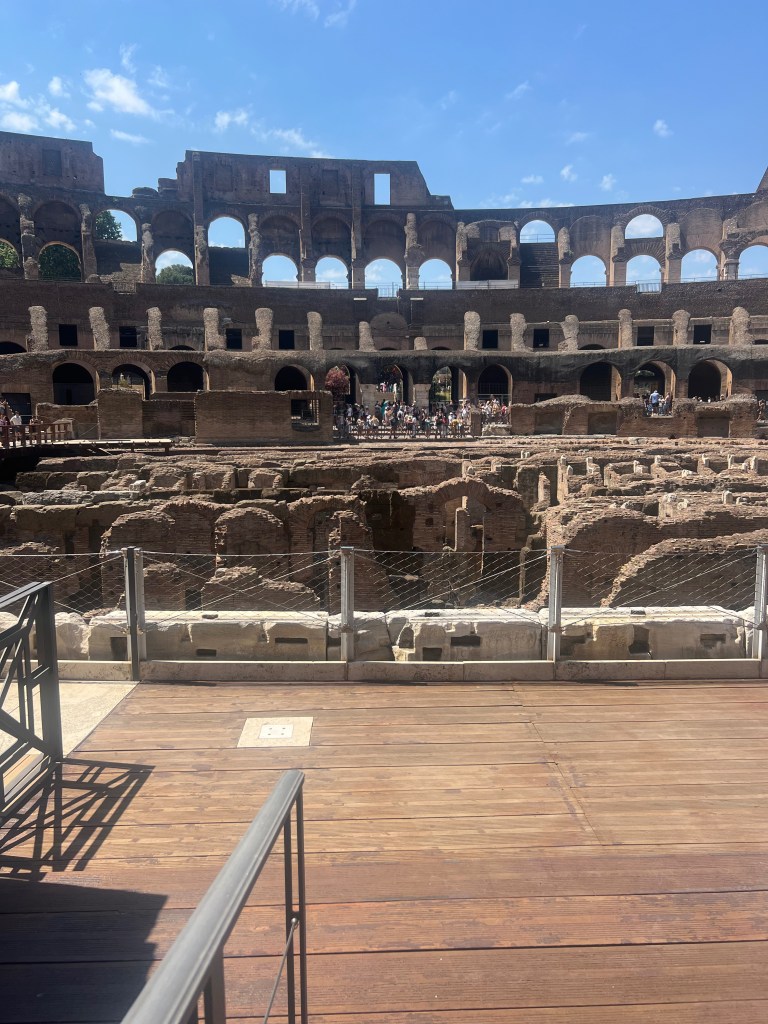
After we did some awesome sword fighting, we made our way into the colosseum. I wondered what entrance we were using since, in the ancient world, who you were determined what entrance you used. It is similar to stadium seating so you only have access to the part where you entered from. “According to the Calendar of AD 354 the seating could hold 87,000 people, though modern estimates prefer to reduce the figure to 50,000 (still double the capacity of any of Rome’s theatres, yet only a fifth of the Circus Maximus)(pg.314).” Professor Yarrow noted that the colosseum was built by Jewish slaves which was upsetting. It made me realize that people question how these great architectural marvels were built, like how the column monoliths were transported, but it makes more sense realizing that it was probably done painstakingly by a bunch of enslaved people whose lives were expendable to Rome. The colosseum was built with a bunch of underground levels with pulley systems and trap doors that are now exposed. These structures gave a similar effect as a pop star coming up from under the stage. Except animals would be coming out to fight the gladiators. They were like the modern celebrities, though they were enslaved people.
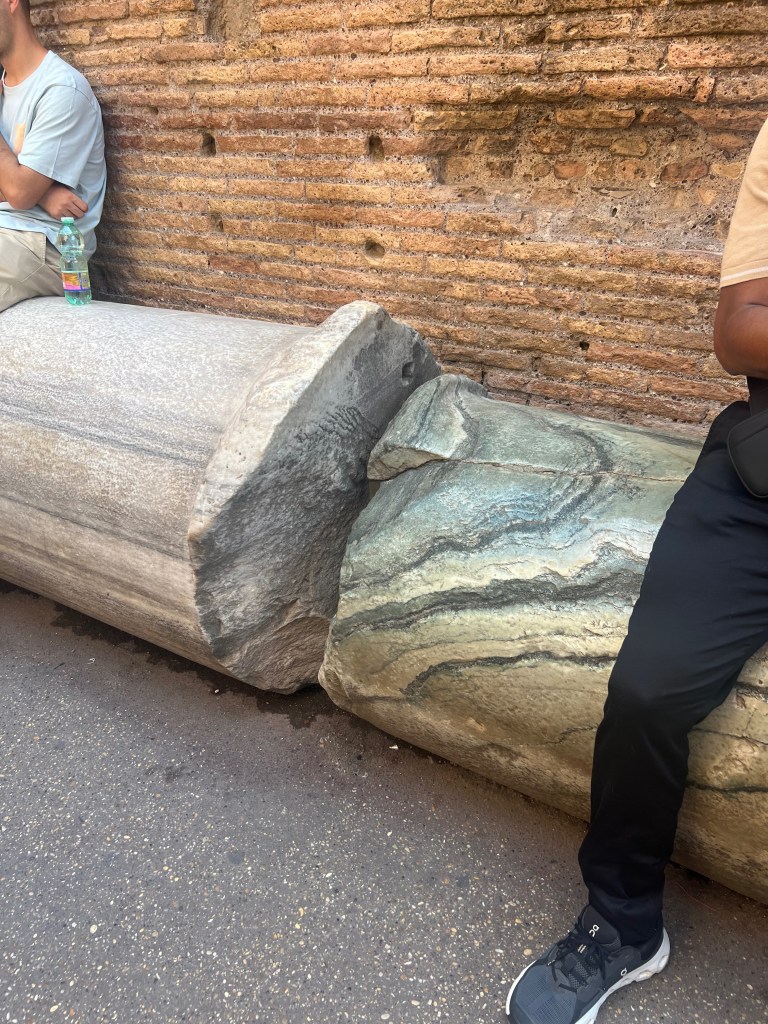
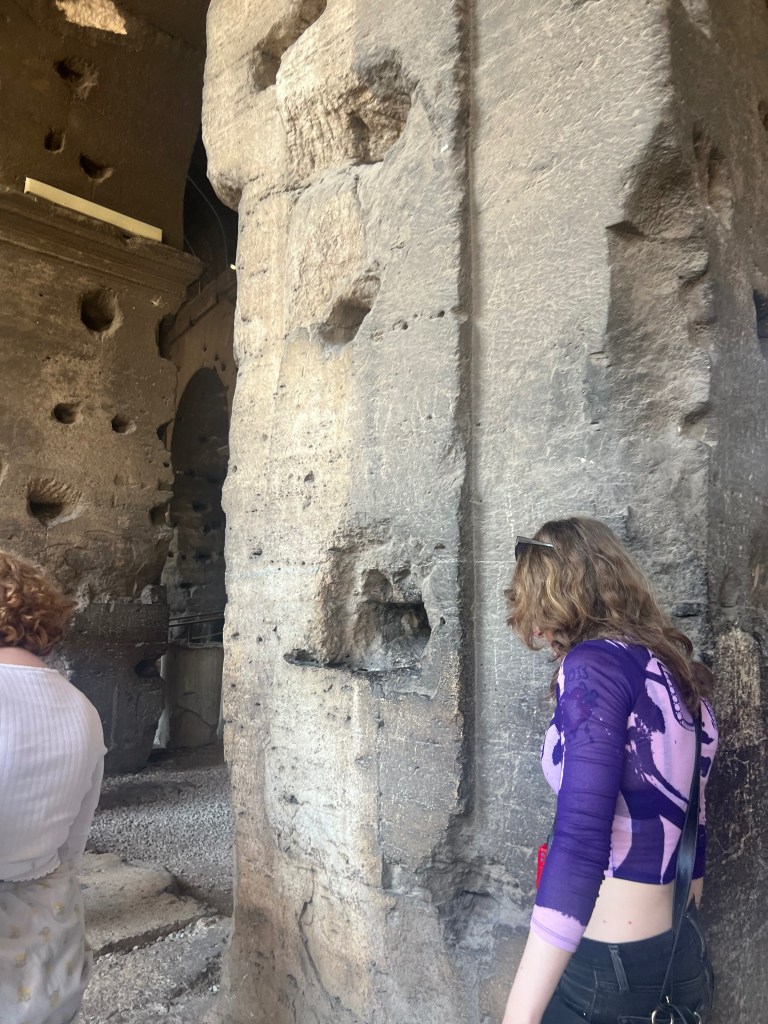
Professor Yarrow wanted to show us the true color of this marble column but people were sitting on it haha.
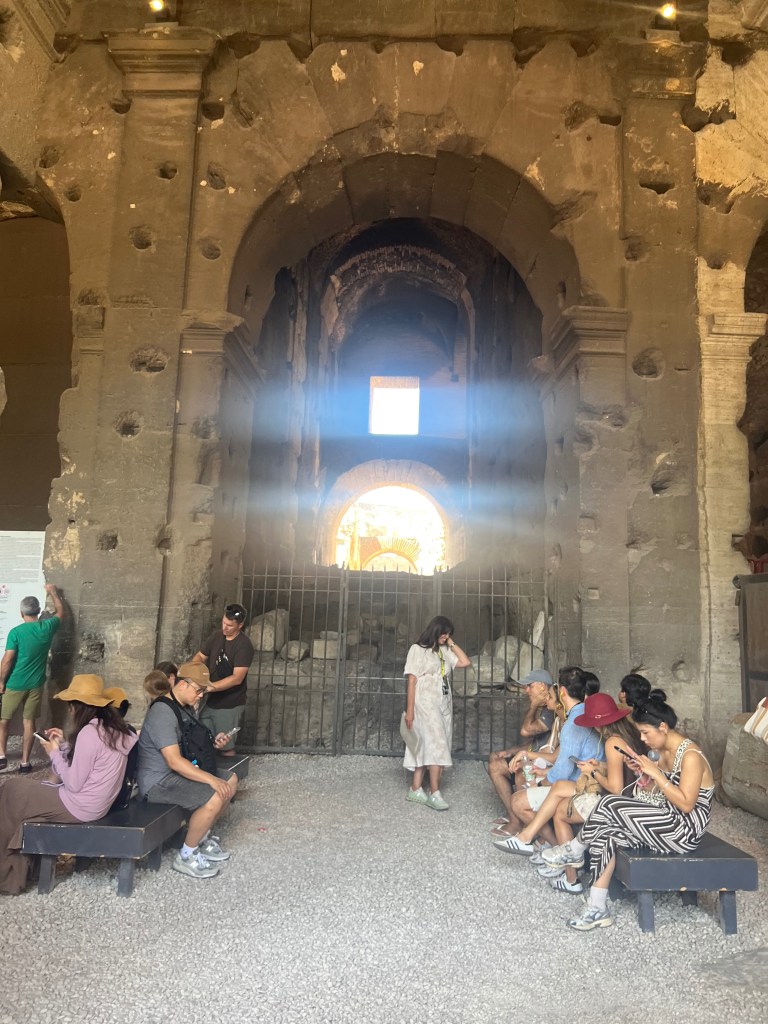
The brick is all exposed but there is remnants of the plaster that covered it. There are holes in the walls from people taking and reusing metals inside the walls.
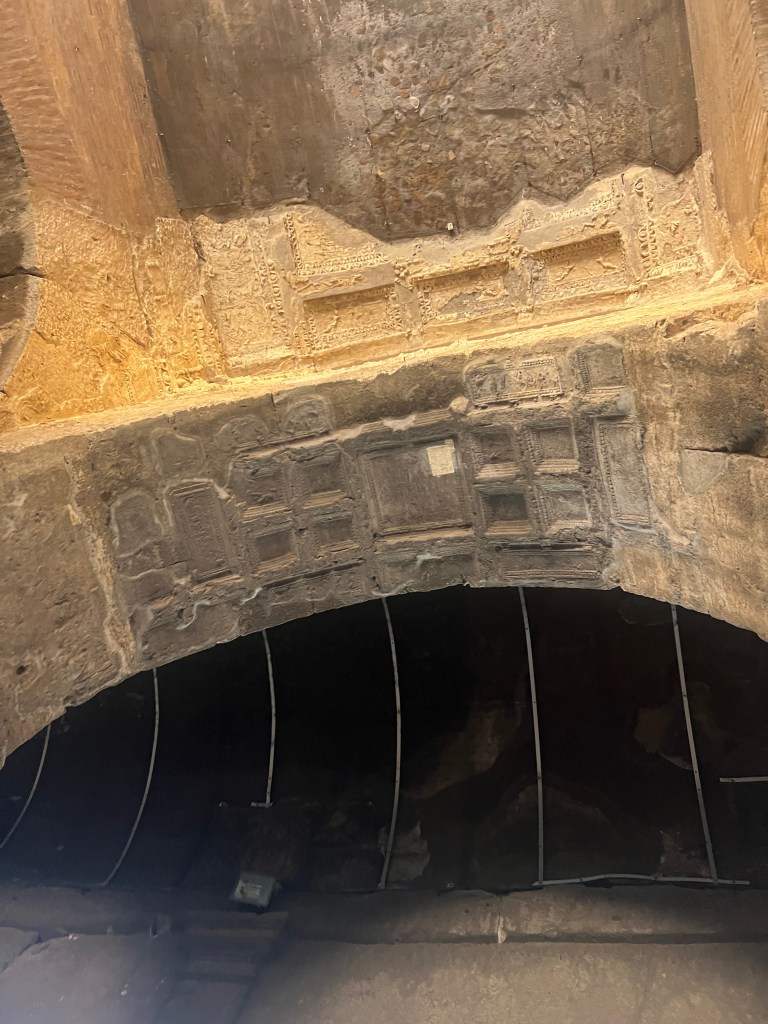
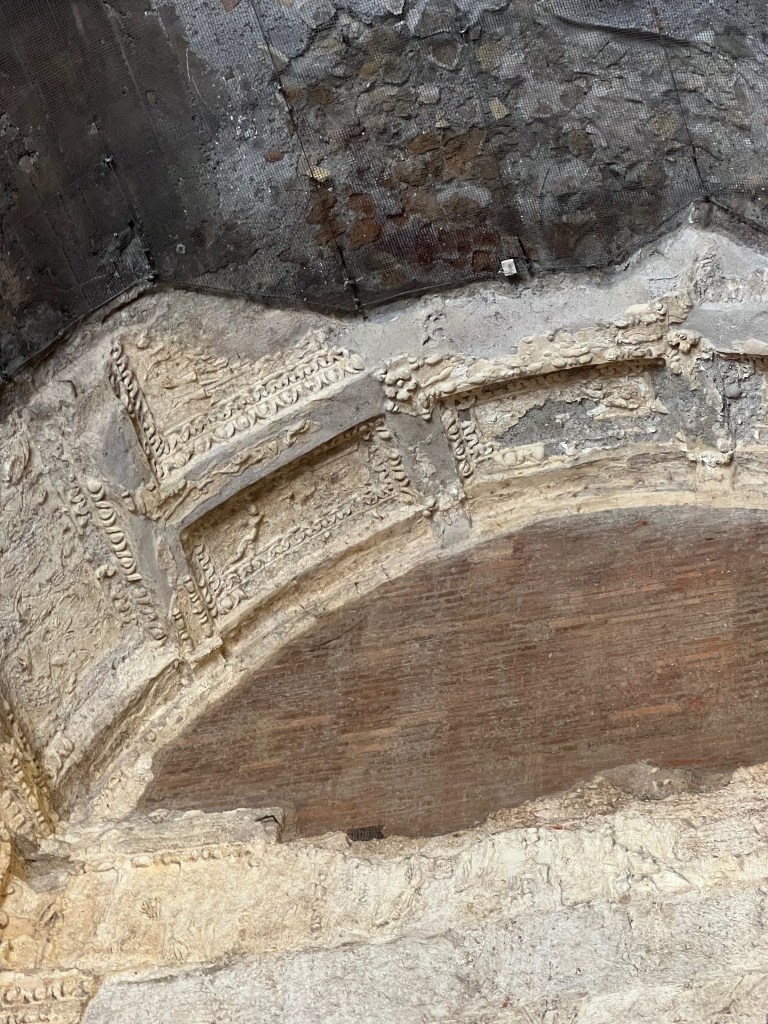
I noticed graffiti in the exposed brick of the colosseum, I did not expect such a protected area to have graffiti. But it might not always have been so protected, which made me wonder how old this graffiti might be.
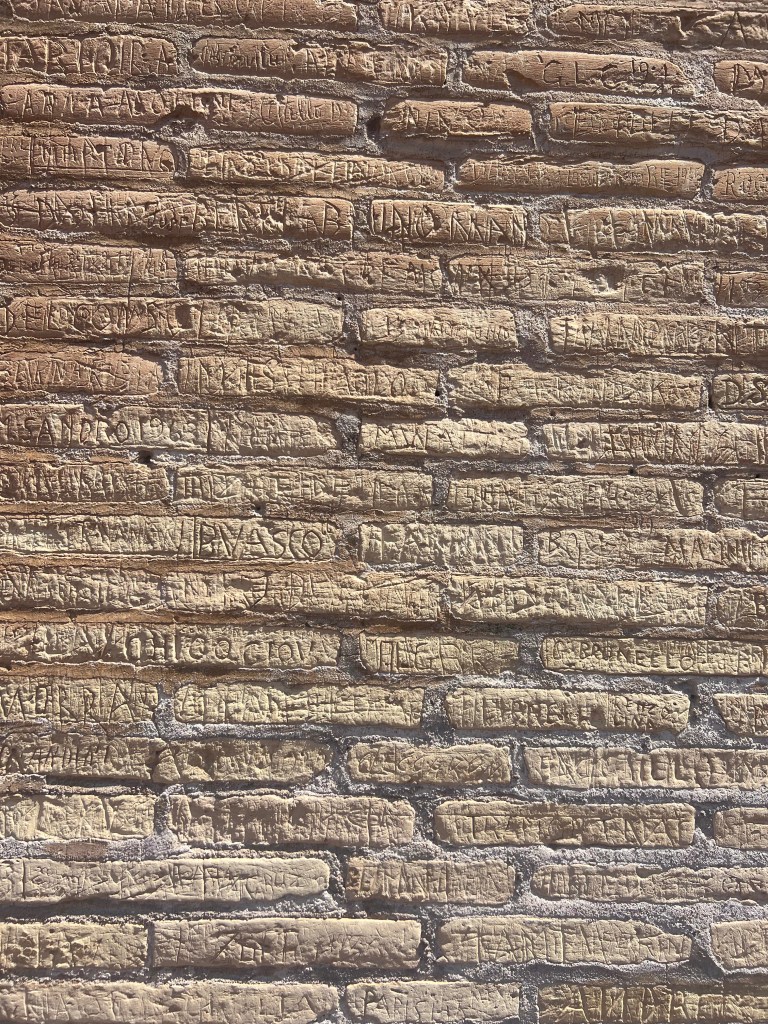
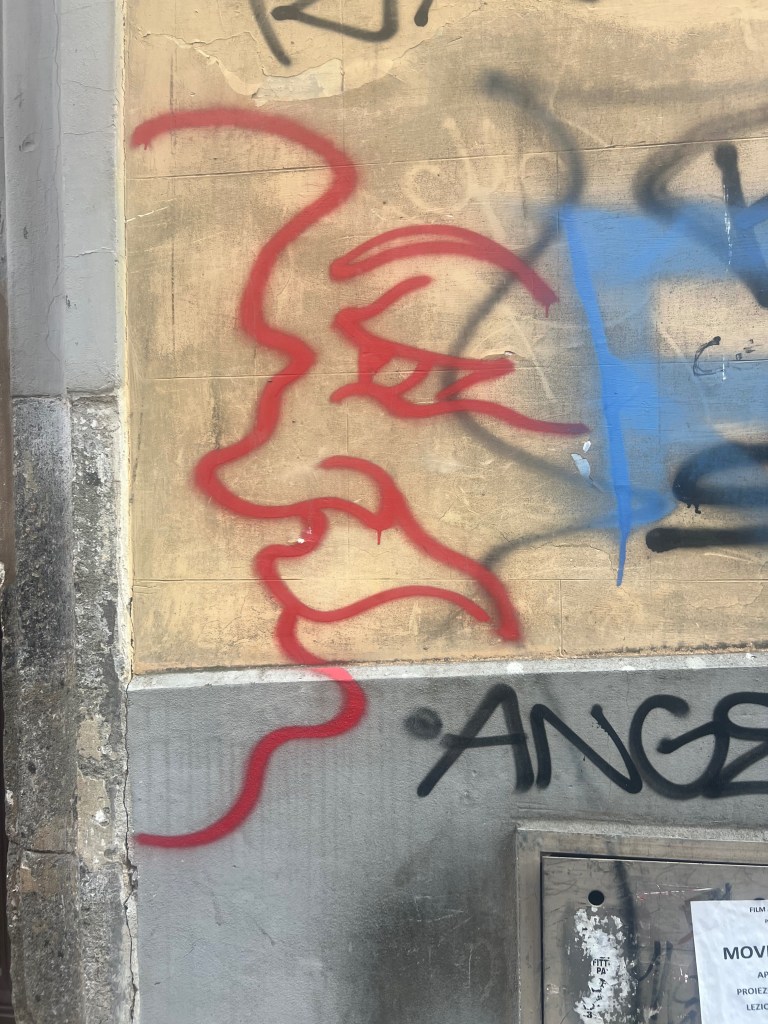
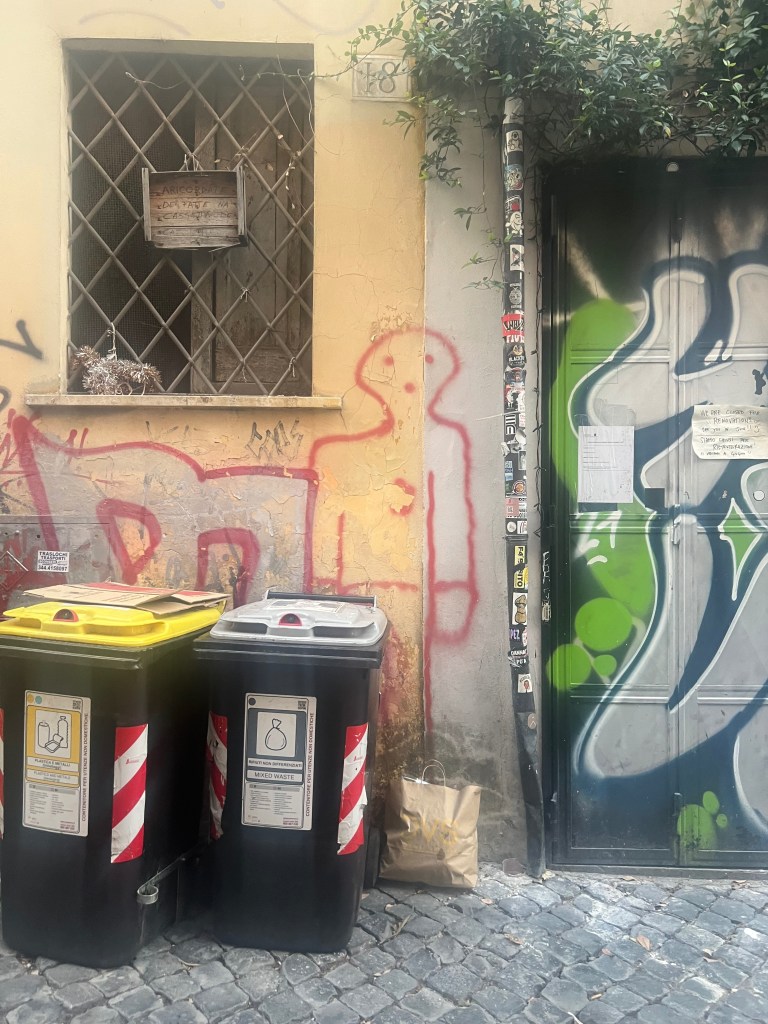
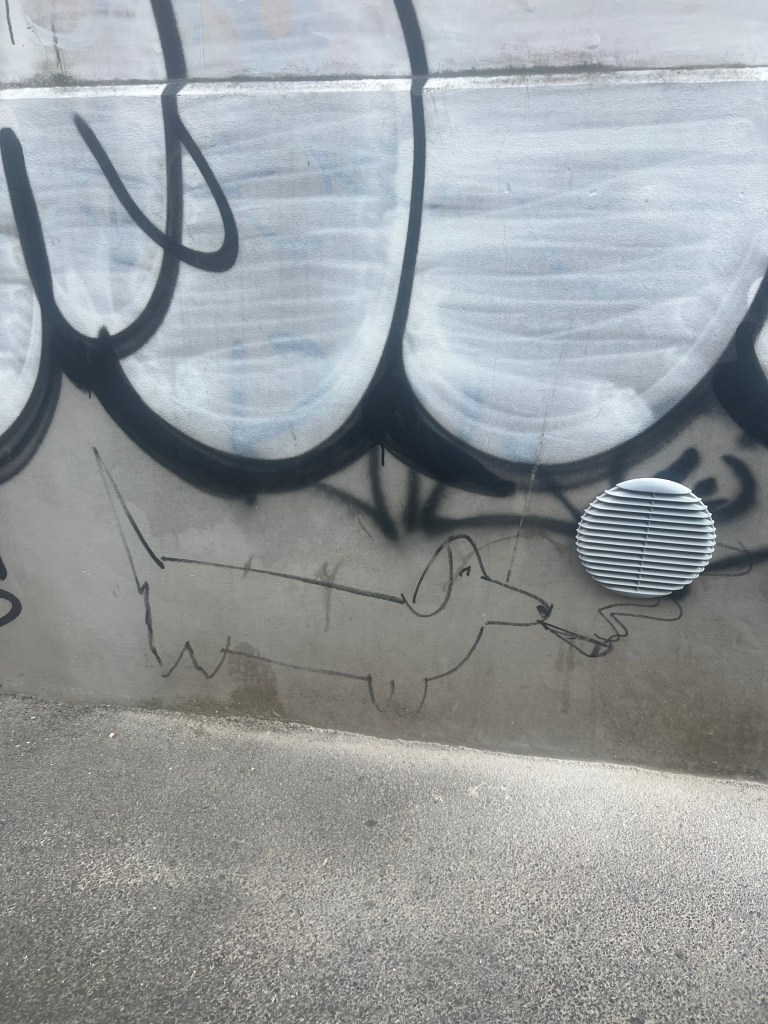
I’ve been noticing graffiti throughout my trip. Here is some graffiti I liked just from today.
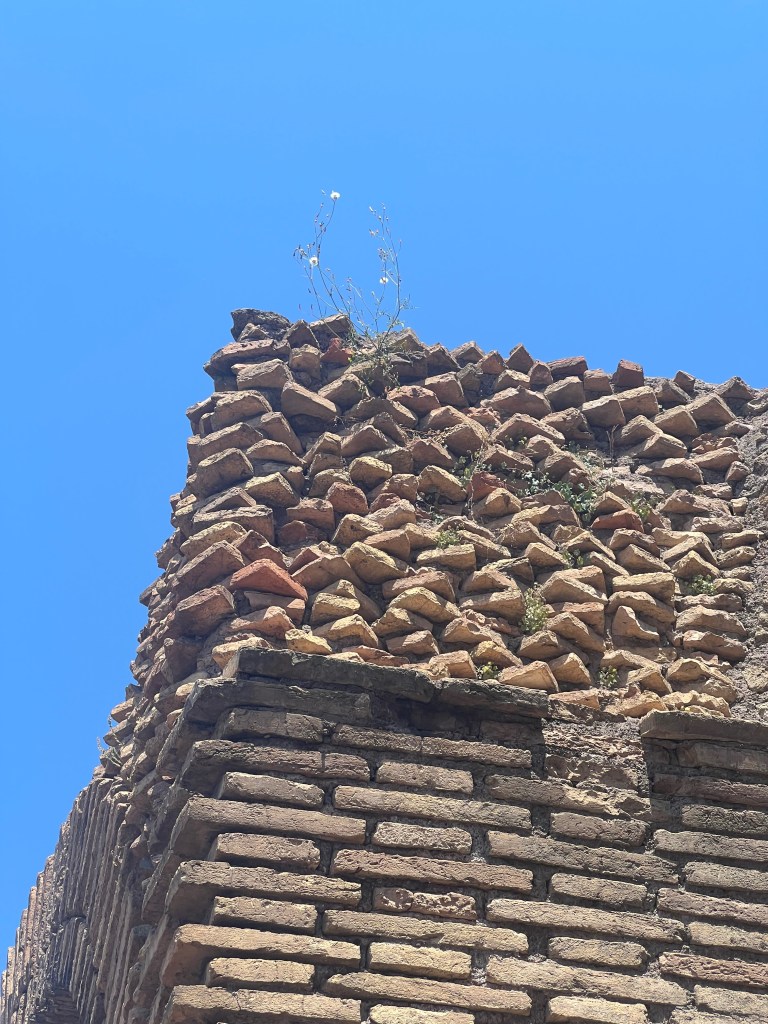
I have also been noticing all the greenery over growing and I think it’s so beautiful. Apparently there was 420 species of plants growing in colosseum during the Middle Ages.
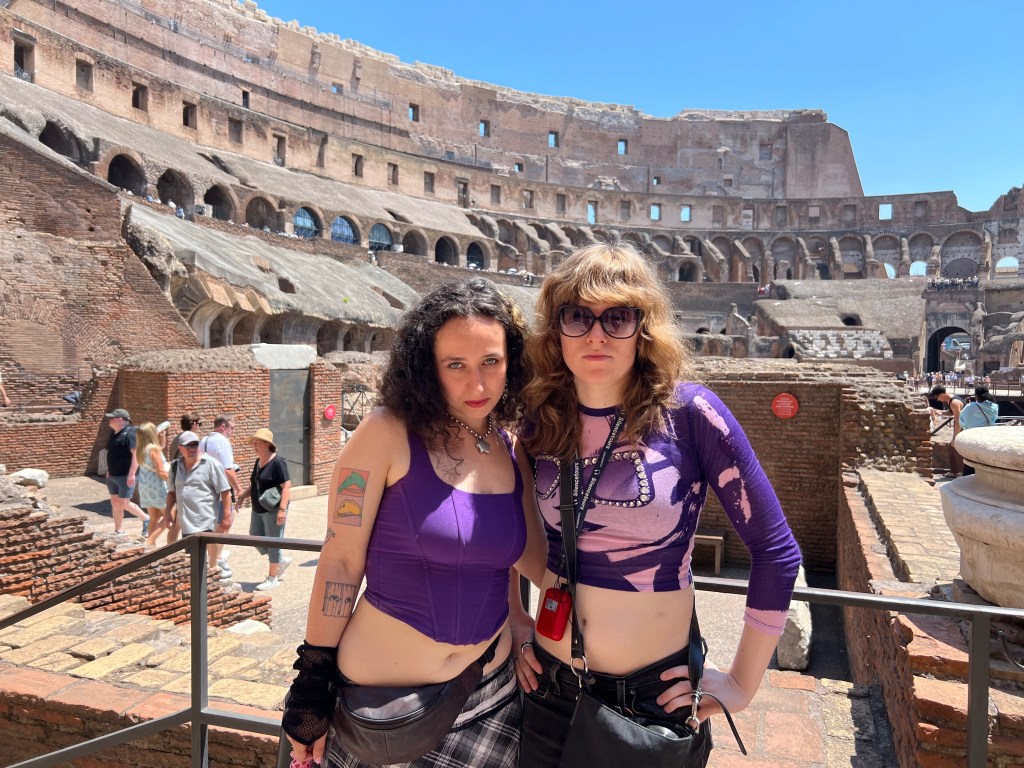
Dakota and I unintentionally matched today and it was so cute.
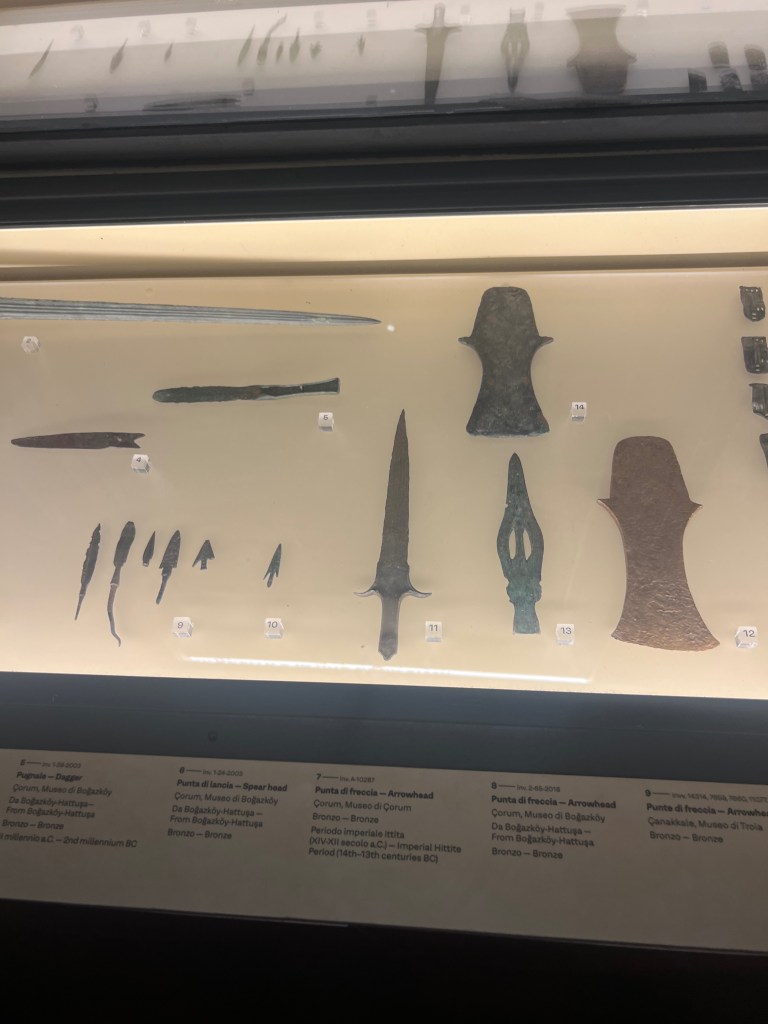
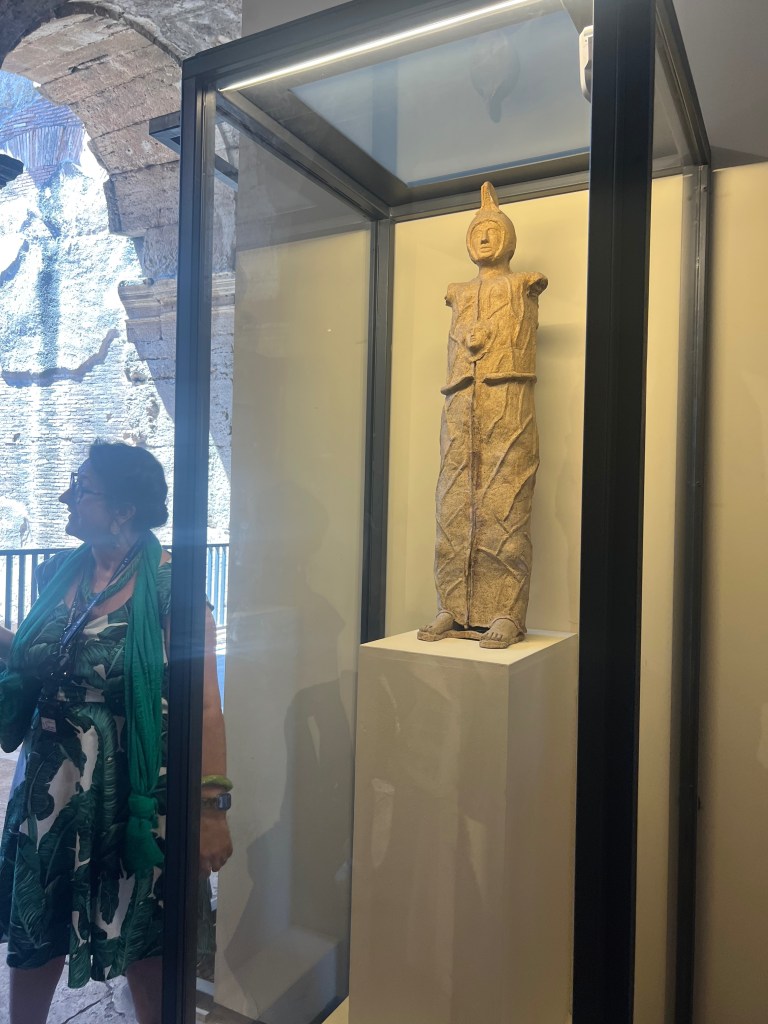
There was a temporary exhibit with borrowed pieces in the colosseum and professor Yarrow emphasized how much planning and work it takes to make things like that happen.


Leave a comment