
Word count: 541
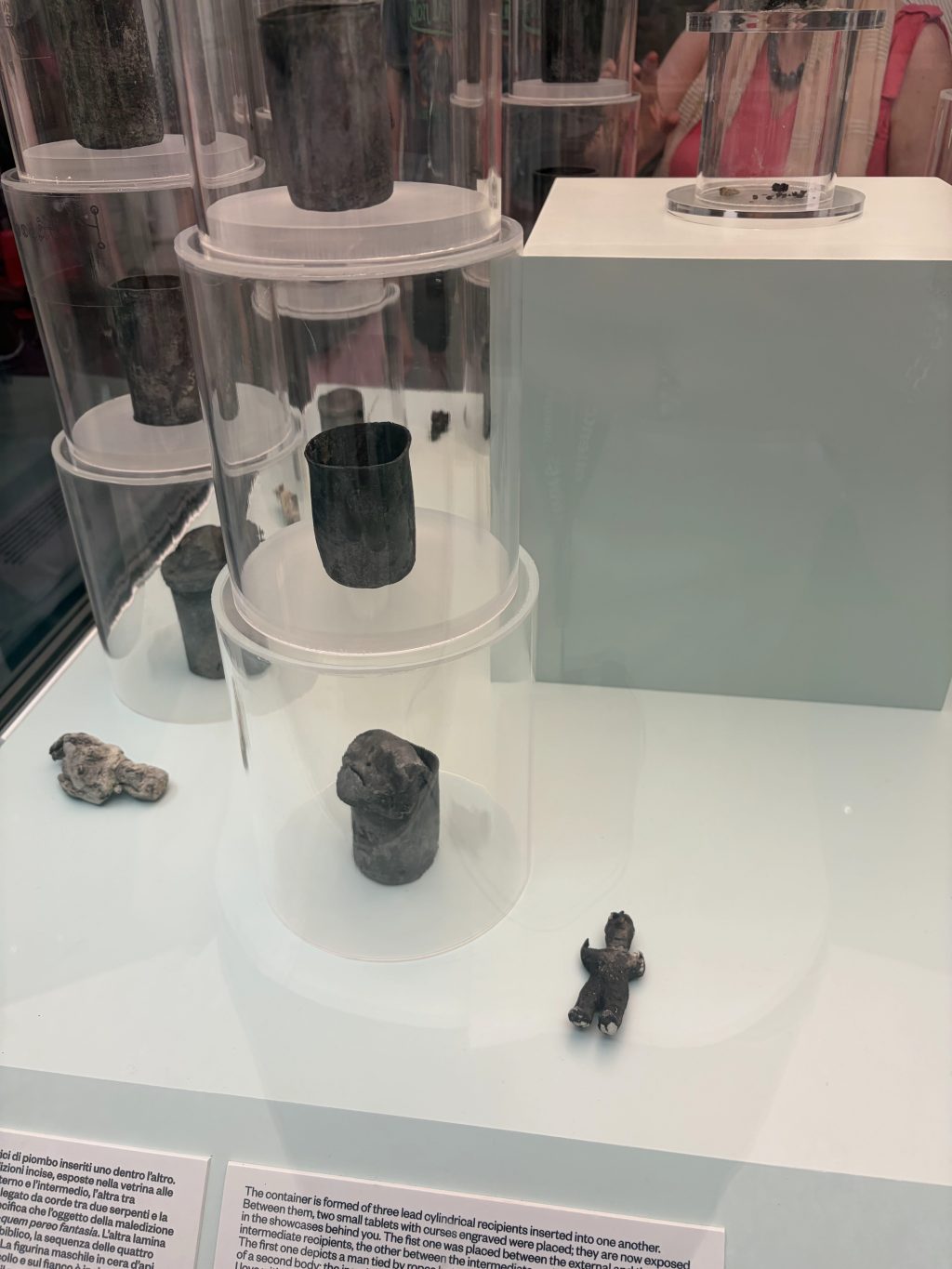
On Tuesday, we went to the Baths of Diocletian. Inside the museum, we spent a lot of time in the epigraphic collection which contained some “900 ancient inscriptions of all kinds, on all types of stone, metal and terracotta, on all sorts of objects, are organized chronologically (archaic and Republican period at the bottom, Imperial above) and thematically (society, politics, commerce, trades and associations, religion).” It’s a vast collection that showcases a wide range of Roman life, and I was really looking forward to this stop because the Classics professor from Temple I had met early on in my trip told me they had some curse dolls here…so I was overjoyed to see them displayed alongside the tablets.
They were made from wax formed around bone, and although now they just look like little lumps, were very detailed, often featuring characteristics to identify the victim by. Some had words carved into them, or their feet cut off, and one even had nails hammered through it. The doll would have been put, upside down into the smallest of 3 vessels, which were placed inside one another like nesting dolls. Sometimes, curse tablets would be placed in between these layers of containers. The Romans were very thorough when it came to curses.
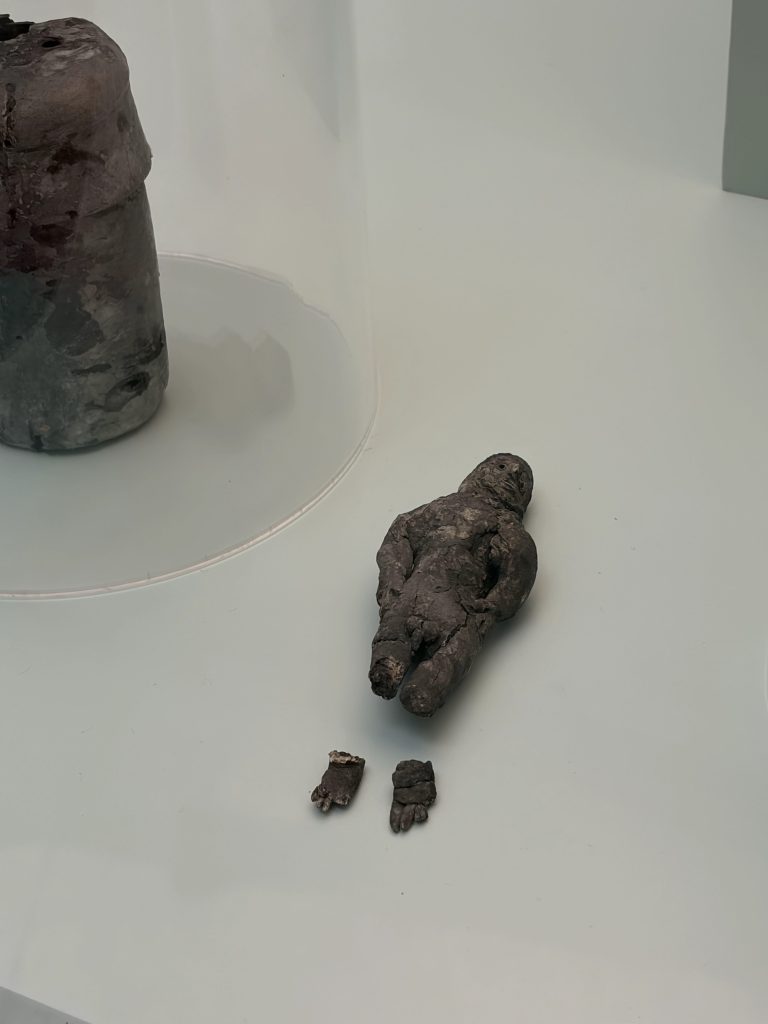
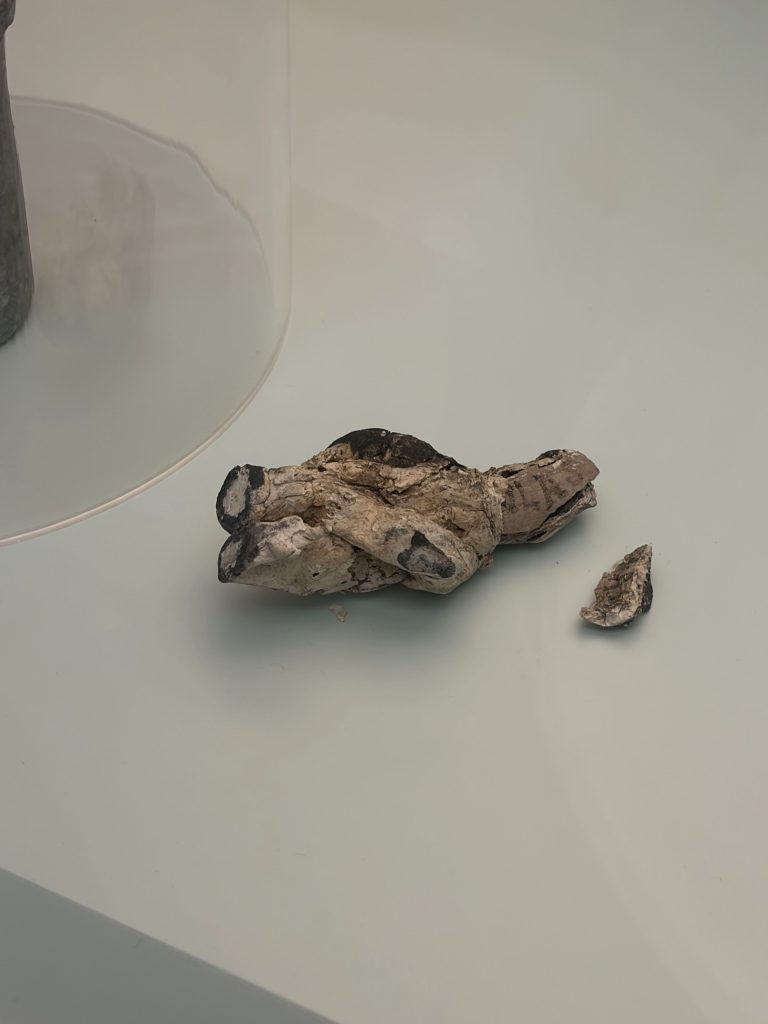
They reminded me of votive offerings we’ve seen, and differed from curse tablets in their physicality, despite them functioning similarly. They feel more intense and purposeful, and in a way make me think about the triumphal arches we’ve seen. Just as the arch reenacts the triumph through all future passages underneath it, these dolls allow the creator to “reenact” the physical harm they wish to bring upon the person the doll represents.
Of course these dolls don’t work (I hope), but in a way it feels like maybe they, and the curse tablets, allow the curser to get out their anger and frustration through this physical act of violence. It reminds me of this meme my coworkers and I would always laugh at:

Also intriguing to me was one of the curse tablets that was calling on Jesus to harm the pagan gods of the other person’s religion (I forgot to take a photo of it). Seeing the weird and imperfect world of early Christianity is always interesting to me, especially now that the religion is so institutionalized and by the book. I like to see the roughness around the edges! The chaos and collision between the worship of Christ and the remaining belief of pagan gods, as well as the continued practice of pagan rituals like these curse tablets, shows that they were still figuring out what it meant to be Christian, and that it wasn’t just a single thing. Much like today, religion was still deeply individual and people found solace in it in unexpected ways.
One thing I really love about ancient art in general is how it preserves everyday people and not just the elite. The curse tablets and dolls are records of petty conflict that feels deeply human and relatable, even though most of us aren’t going around putting curses on our neighbors.


Leave a comment