
Word count – 800
Time to read – 5 min
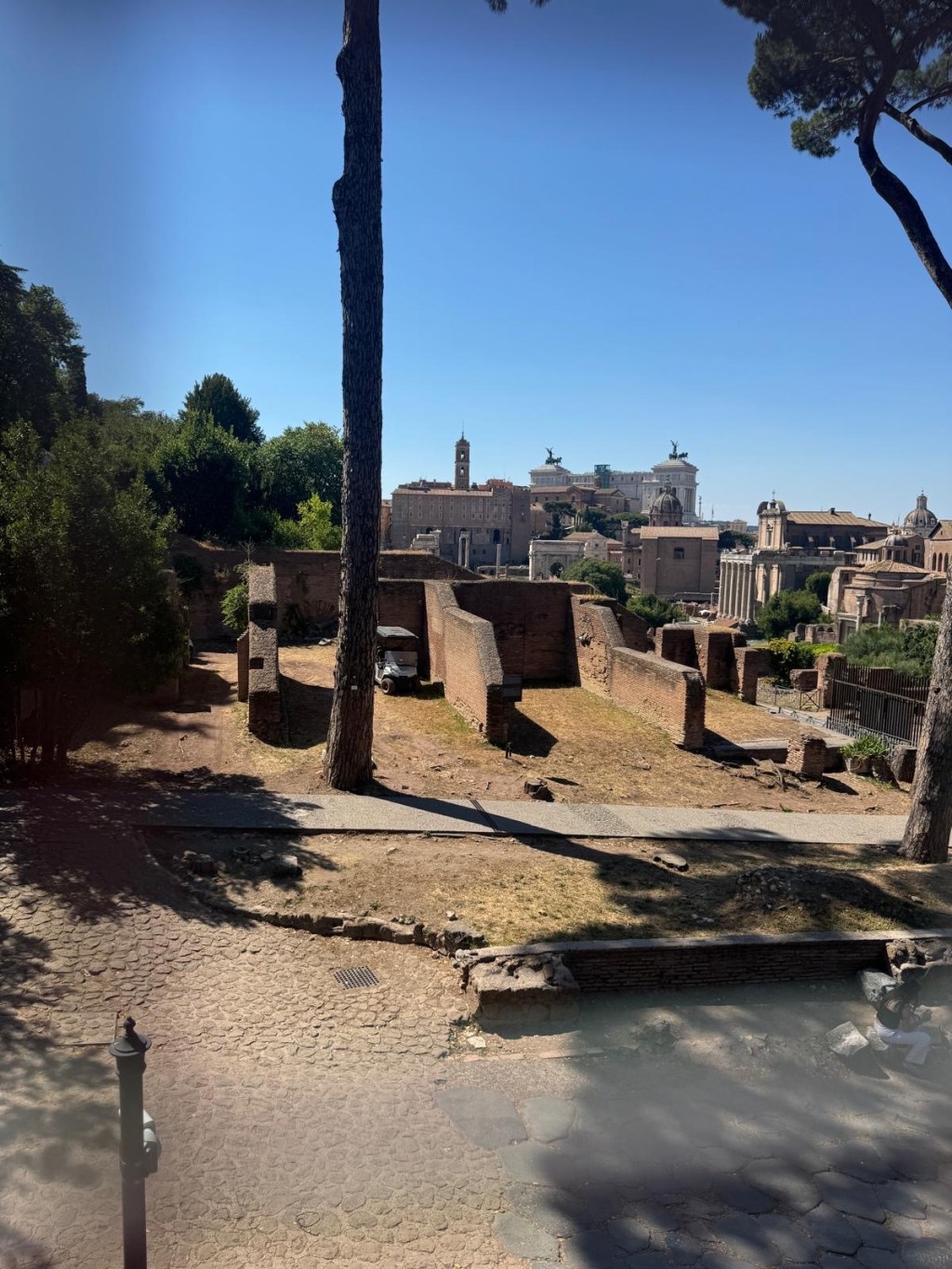
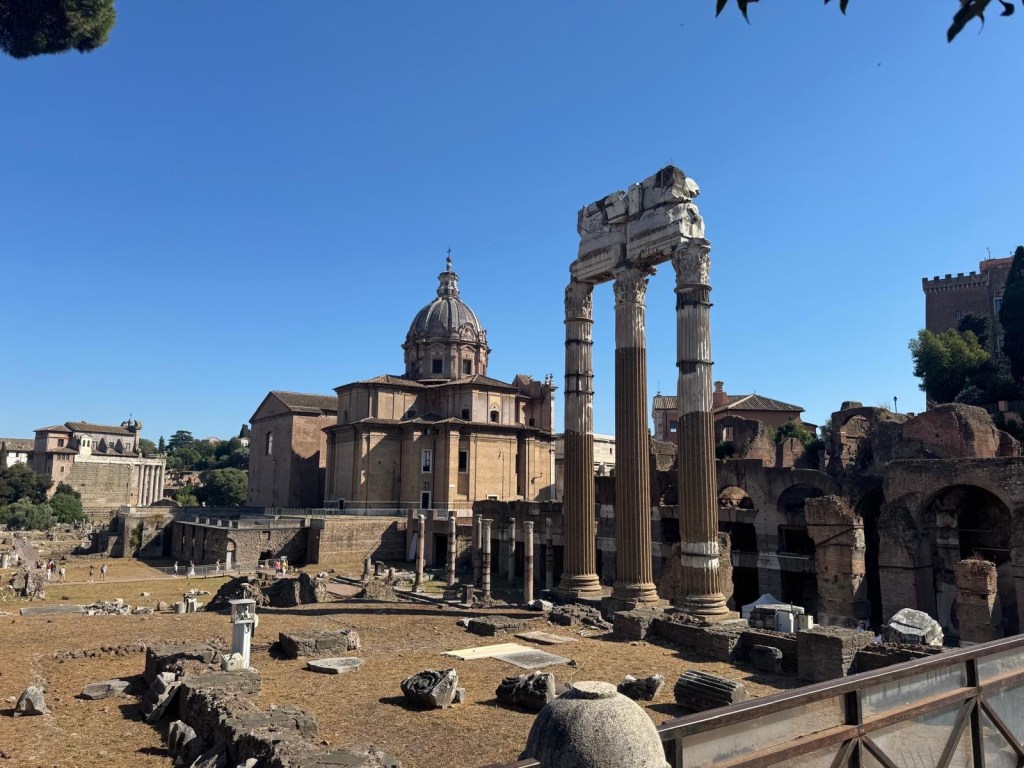
The site that really resonated with me during our tour was the Temple of Venus Genetrix in Caesar’s Forum because I kept thinking about Amanda Claridge’s section talking about Caesar’s image after death being manipulated to reinforce later political ambitions. What struck me most from the reading was how Caesar’s deification was not something that happened naturally, but was instead carefully constructed through ritual acts, architecture, and political propaganda. The Temple isn’t just his legacy, it’s part of a broader effort to control the narrative of Caesar’s memory and manipulate how that memory could be used to endorse political successors like Octavian.
Reading about how Caesar becomes “Divus Julius” makes it clear that Caesar’s rise to semi-god status was not an organic result of his murder. Instead, it becomes clear that this was very much a political maneuver. By deciding to build a temple where Caesar was cremated and instituting a formalized cult for him, Caesar’s memory was being tied to place. But when I was standing in the Forum, I kept thinking about how that remembrance was reinforced through a combination of beliefs rituals, and urban planning. The article mentions that games, priests, and rituals were created, but it stops short of describing how that repetitive process affected people’s thoughts over time. I could only try to understand that once I was standing where Romans once stood. What I think the reading does not account for is how unstable or malleable that remembrance was for the average Roman.
We know that Caesar had people working for him who wanted him deified and that there were people who tried to destroy some of the early pieces of evidence for his divinity (the altar and inscription). But after that how much did that meaning shift? When a Roman walked by that temple, would Caesar’s divinity be something they thought about, or had it become background noise? The construction of the temple makes it feel like his legacy was set in stone, but the process behind it feels much more precarious. I also found that visiting the physical space made me think about how authority is linked to visibility. Throughout both texts, they mention how Caesar needed to have his spot established through a cult and a temple, but neither talk about how Caesar still needs Roman to pass by those sites and acknowledge them.
Every day the Romans walked past the temple, it reminded them of his impact, but what isn’t there now is that initial sense of awe or pomp. The temple now stands, but you have no idea its there significance unless you are looking for it. Being there made me realize how dependent ancient political power was on maintaining a common visual language. Another detail that I noticed during my visit was how the reading describes Augustus almost sculpting himself to be Caesar’s heir in terms of names, honors, and urban development.
What I couldn’ t help but think about when reading this part was how Caesar may have felt omnipresent throughout Rome. What is hard to understand from a text is how incremental that must have felt for its contemporaries. A person does not walk around one day and see Julius Caesar political leader and the next day see him as a god. Nor do they wake up one day and see Octavian rejecting that and another day where he has placed himself at the head of both Caesar and the gods. This happened over years and was reinforced through repetition.
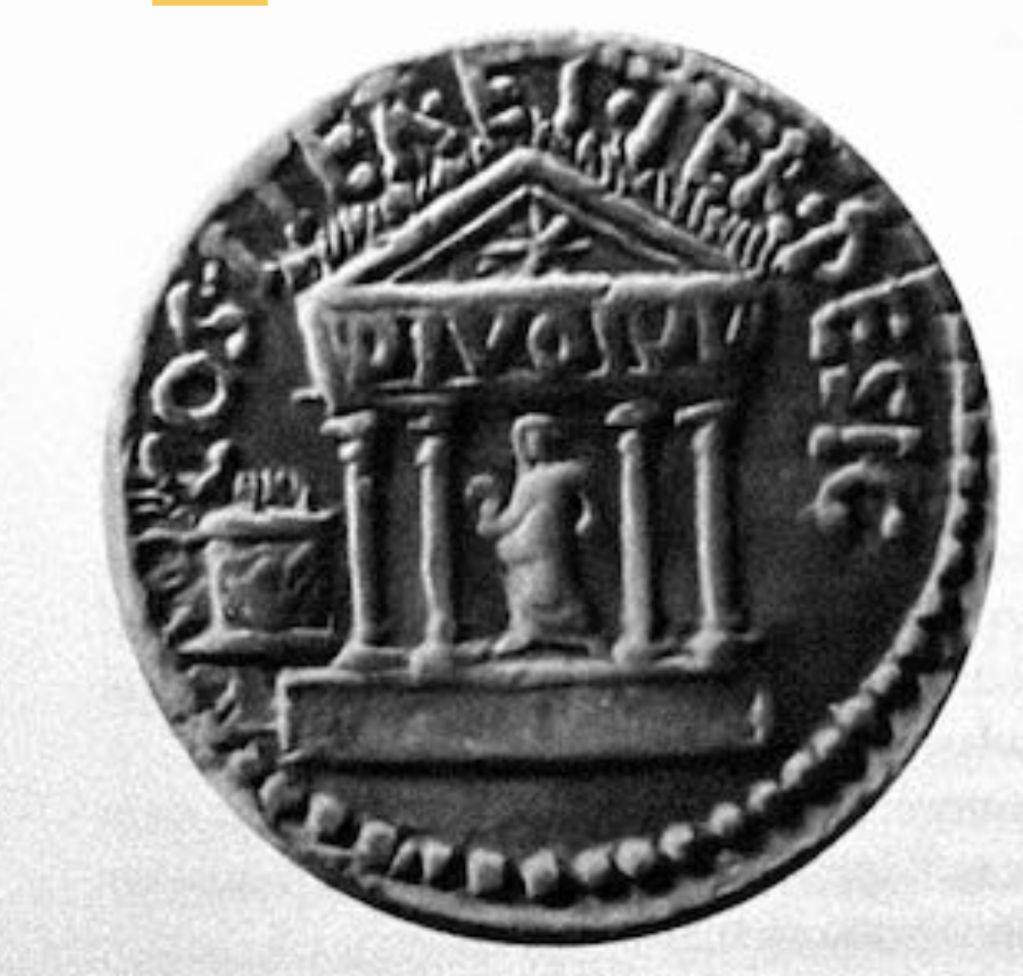
Figure 33 on page 100 of the Claridge book shows a coin that was issued in 36 BC before the temple was completely finished. You can see the image of the comet on the top of the temple.
For my solo presentation on the Temple of Venus Genetrix I’ll share more about an important point from our reading when Amanda Claridge brings up how the images of Julius Caesar chosen by those who followed him were constructed to justify their own ruling pursuits.
Temple Julius was one of the first temples of the new imperial fora, which were built alongside the Republican structures so this meant mixing imperial symbols with the traditional forum spaces. This was built after the assassination of Julius Caesar.
After defeating Marc Antony & Cleopatra and becoming the emperor, Caesar’s nephew Octavian finally completed the Temple of the Deified Julius Caesar, 15 years after Caesar’s assassinaton on the same grounds where Caesar was cremated. This is described on page 100:
“Instead of proceeding in the traditional rite to the Campus Martius where the pyre had been prepared, the body [of Julius Caesar] was actually cremated at the other end of the Forum, in front of the Regia, which had been Caesar’s headquarters as chief priest (pontifex maximus). An altar and a column of Numidian yellow stone, inscribed Parenti Patriae (to the founder of the nation), were briefly erected on the spot for the cult of the dead dictator, but abolished almost immediately by the anti-Caesar camp. However, Caesar’s supporters soon struck back, and in 42 BC Mark Antony, Octavian (Augustus), and Lepidus decreed that a temple should be built, instituting official games and a new priest to look after the cult. It was not the first time that a mortal hero had been turned into a god, even during the hero’s lifetime. The practice was common enough in the Greek East, where the honour had been conferred on various Roman generals. Individual aristocratic households in Rome were long accustomed to honour their worthier ancestors with something of the sort, and charismatic political leaders such as the Gracchi had been venerated with altars and sacrifices at least for a while after their death. But the official public cult created for Caesar was a major innovation. Caesar himself had paved the way by actively promoting the concept of his own divinity during the last year of his life, when he was to be called Juppiter Julius. Divus Julius was a milder alternative, which became the norm for all the emperors who were deified thereafter. The temple was deidicated by Octavian (Augustus) on 18 August 29 BC and survived to late antiquity. Nothing remains of the superstructure except a column base, fragments of a Corinthian pilaster-capital.” .
(Claridge, p. 100)
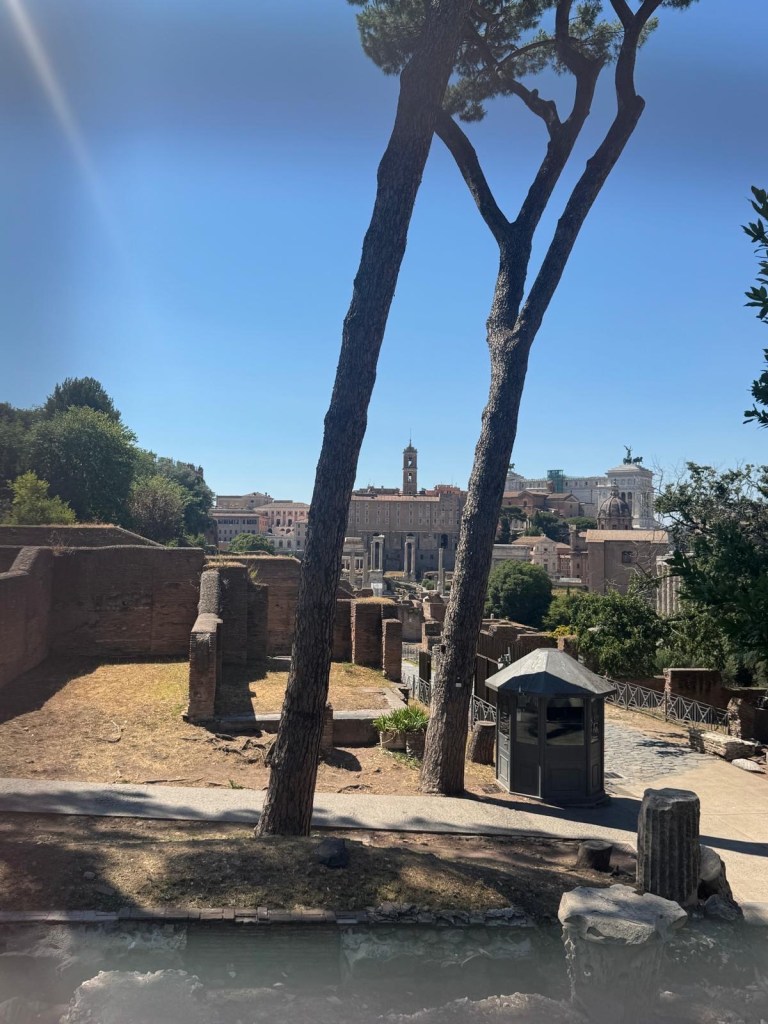
It’s important to remember that for Octavian it was helpful to institutionalize the image of Julius Caesar as if he was anointed by the gods because Octavian as Caesar’s nephew became his heir, which some saw as a divine direction after a comet appeared across Rome sometiem after Julius Caesar’s death. After Octavian battled Marc Anthony & Cleopatra to rule the empire, the Senate would give Octavian the honorific title “Augustus”. It’s not surprising that Augustus would later get his own temple tribute on the same axis as the Julius Caesar Temple, to emphasize Augustus as coming from the direct lineage of Caesar and the gods too (Julius Caesar promoted the idea that he was directly related to Venus’s son).
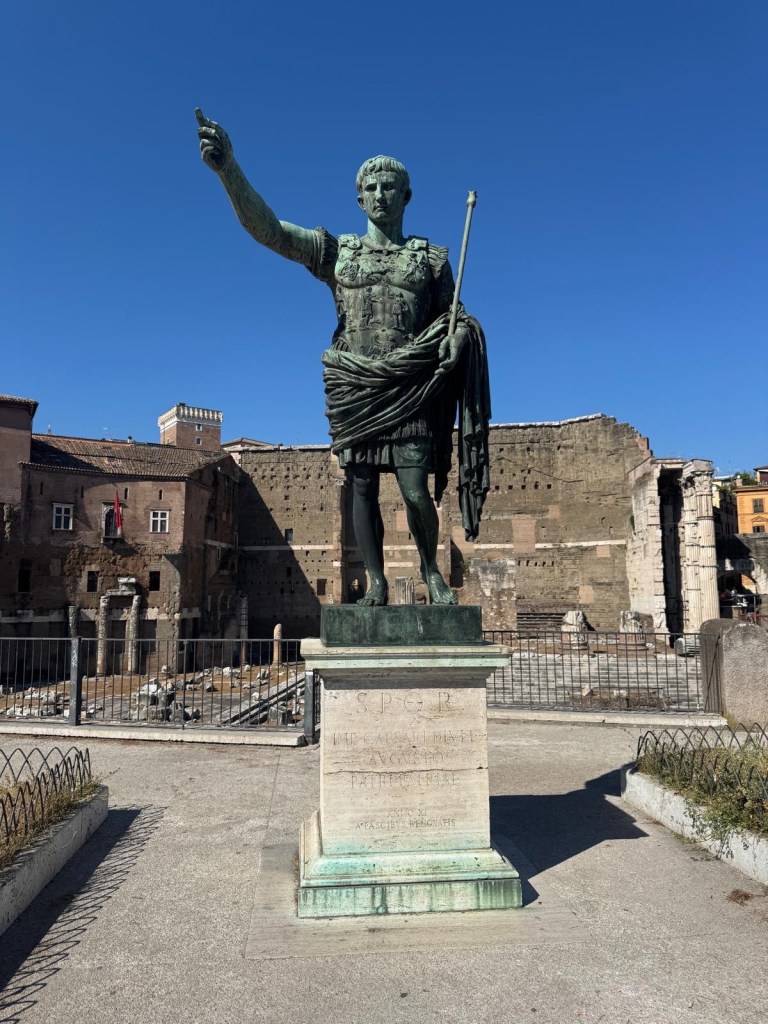
The temple to Julius Caesar was a rostra, a platform for speeches with six columns at the front. I read that people still bring flowers to the site to honor where Julius Caesar was cremated.


Leave a comment