
Word count: 465
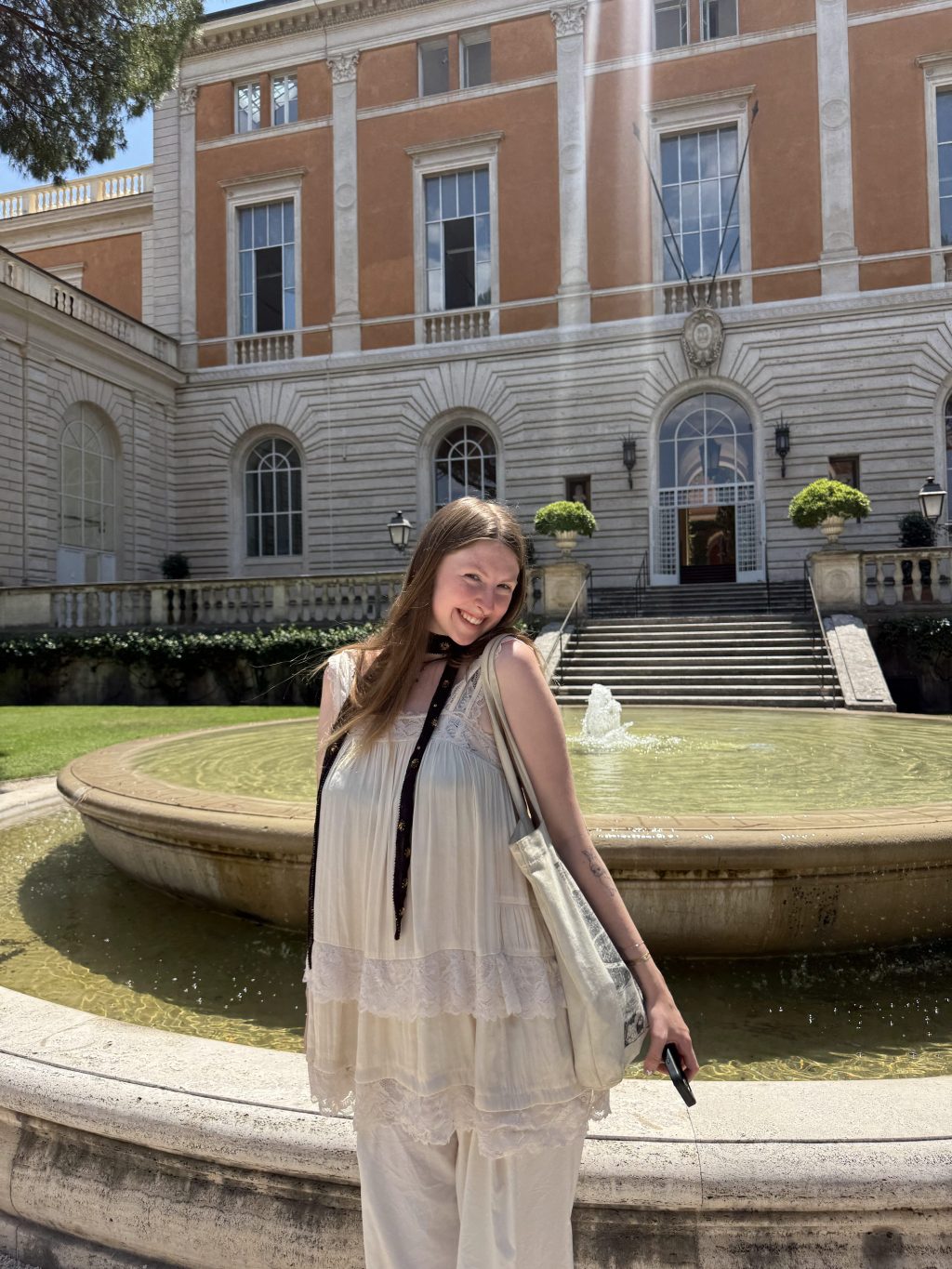
On day 8, we were supposed to handle ancient artifacts at the American Academy of Rome. It did not go to plan, and the session was unfortunately and frustratingly cancelled last minute. However, Sebastian, a librarian at the AAR, was still kind enough to give us a tour, as long as we avoided the Vogue photoshoot that was also happening there.
Professor Yarrow asked if he would let us take a look at the medieval manuscript they have, and to my delight he said yes. Manuscripts are my favorite art form in the world, I could spend hours looking at them. They are so unique in the way they capture so much human interaction within them, from the scribes who illuminate upon the pages to the viewer who leaves their fingerprints behind. The one they had was a 15th century book of hours, and it was interesting to learn that most of the illustrations had been cut out of it and redistributed, so only one remained in the actual book.
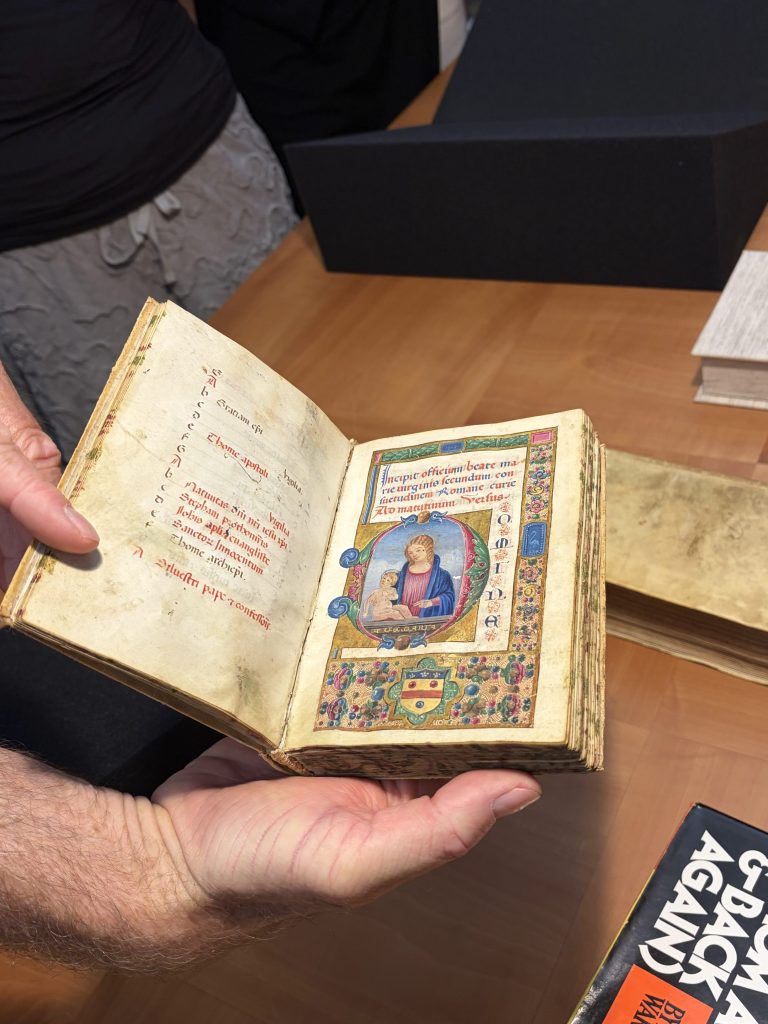
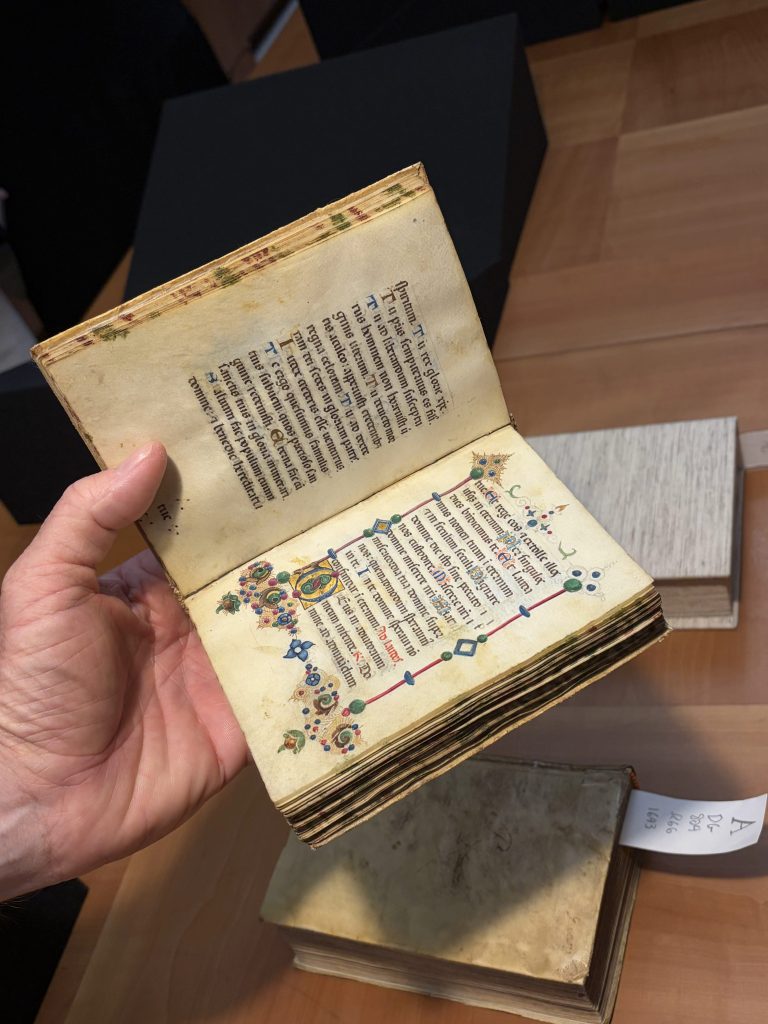
So although we didn’t get to handle antiquities, I ended up lucking out in other ways. And likewise, although we didn’t get to turn through the manuscript ourselves, seeing Sebastian do so still brings the object into a new context. Usually we see manuscripts pinned open to certain pages in museums, not closed on a shelf for actual use. The fact that this one is here and still used by scholars for research is really amazing and definitely makes it feel more like a “real book.”
We also talked a lot with Sebastian about the experience of a fellowship at the academy, and how amazing of an opportunity it is for artists and scholars. In the day’s reading, Frederick Whitling talks about the presence of Western powers in the Meditteranean through “foreign schools,” such as the AAR. The institute felt familiar and American in the educational sense, but Italian in the history it was focused on, especially as America lacks the mythologized ancient past that these cultural institutions focus on. The reading says that “As research institutions, the foreign schools in the Mediterranean have doubled as a kind of unofficial cultural embassies, illustrating that national and international perspectives can and will coexist.” Through giving international artists and academics a space in which to immerse themselves with Italian history and modern culture, the viewpoints it produces are multifaceted and diverse.
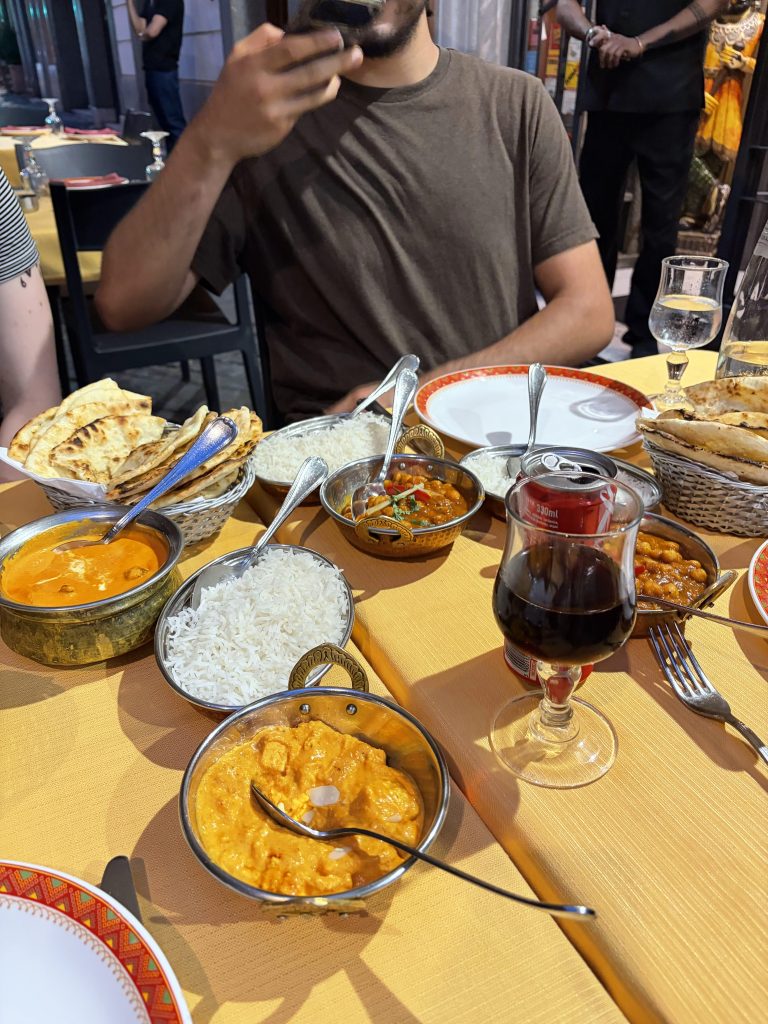
After leaving the academy, we walked up to Paola’s fountain and took photos together before we made our way back to Trastevere, where some of us got suppli and gelato and explored a flea market. Later that night, Paola, Hamood, Dakota and I went out for Indian, which was a welcome and delicious break from all the pasta and pizza we’d had thus far.


Leave a comment