
Word Count: 827
Today was probably one of the hottest days we’ve had in Rome so far. Between standing in the sun and walking from site to site, I felt like I was constantly looking for shade, one of the things that saved me was discovering the public water stations around the city. It was my first time ever seeing refillable fountains where you could choose between still or sparkling water, and I honestly thought that was the coolest thing ever. It made staying hydrated a little more exciting, especially with the heat we were dealing with.
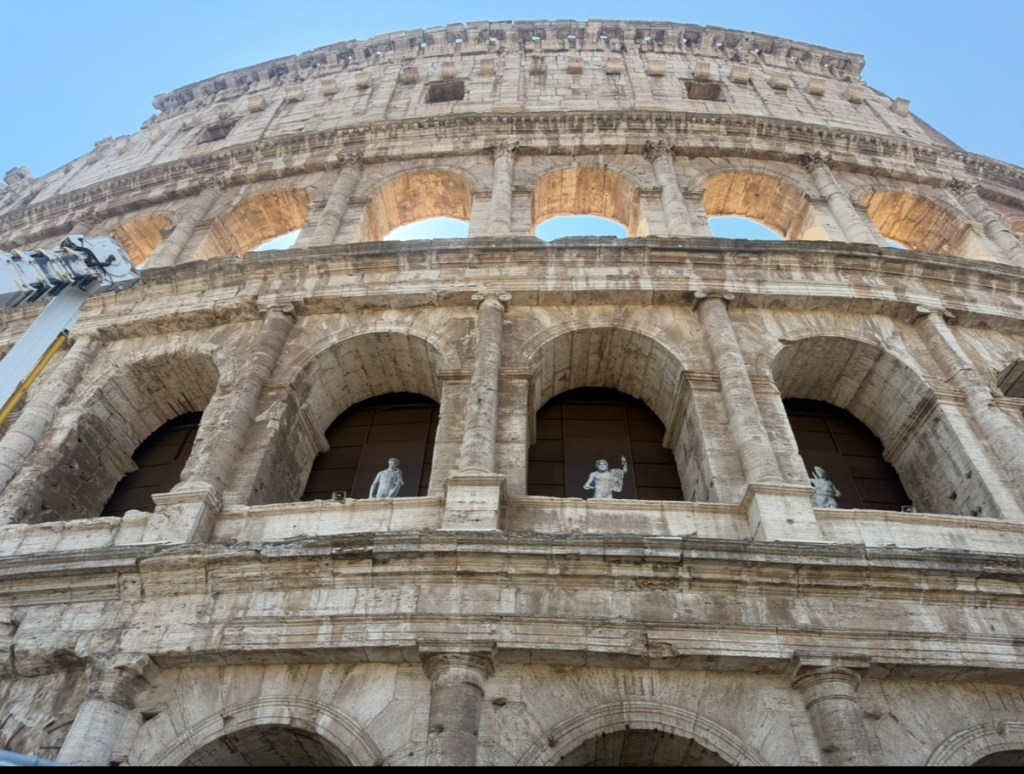
Today’s sites really showed me how closely technology and the empire were connected in Ancient Rome because in all honesty before today I mostly thought of Roman technology as impressive engineering, but walking through the Colosseum and learning more about the surrounding area made me realize it was much more than that. Roman engineering wasn’t just about building beautiful monuments, it was also about demonstrating power, controlling the city, and reminding people of the strength of the empire. The reading even describes how Hadrian moved Nero’s enormous Colossus using “twenty four elephants,” showing just how advanced Roman engineering had become and how much effort emperors invested into creating symbols of imperial authority.
One of my favorite parts of the day was actually presenting at the Colosseum with my partner. Instead of simply visiting the site, I got to talk about something I had spent time researching, which made the experience much more meaningful. Our presentation focused on emperors like Nero, Caligula, and Commodus, who are usually remembered as some of the worst rulers in Roman history. However, after researching them and speaking on behalf of them, I realized history is much more complicated than I originally thought. Most of what we know comes from writers like Tacitus, Suetonius, and Cassius Dio who often had political reasons to portray certain emperors negatively. It made me think about how history is written and whether people are remembered fairly depending on who gets to tell their story.
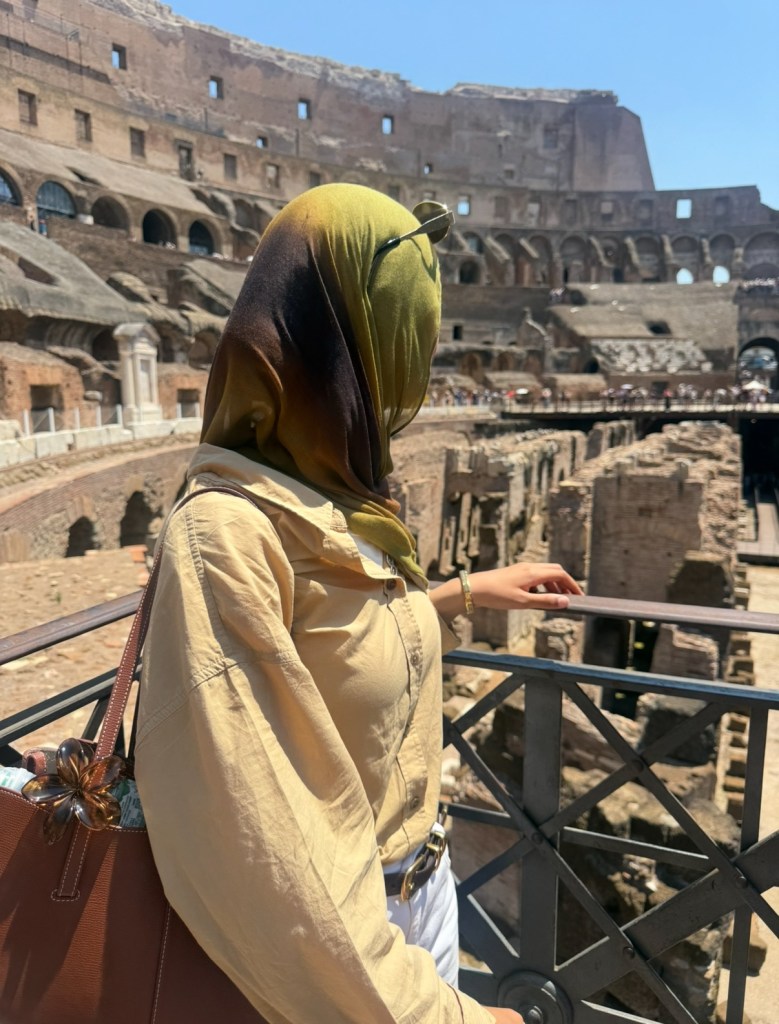
Standing inside the Colosseum while talking about those emperors made everything feel much more real. I kept thinking about how many decisions these rulers made that shaped what I was standing in centuries later. At the same time, I realized that buildings can send messages just like written history can. The Colosseum wasn’t only built for entertainment, it also reminded everyone who entered of the emperor’s wealth, authority, and ability to provide massive public spectacles for the people. Architecture itself became a form of political messaging as the monuments also symbolized the idea that the emperor was wealthy, strong, and in charge of the city and its people. Every enormous structure served as a reminder to the Romans of who was in charge and strengthened the notion that the empire would continue forever.
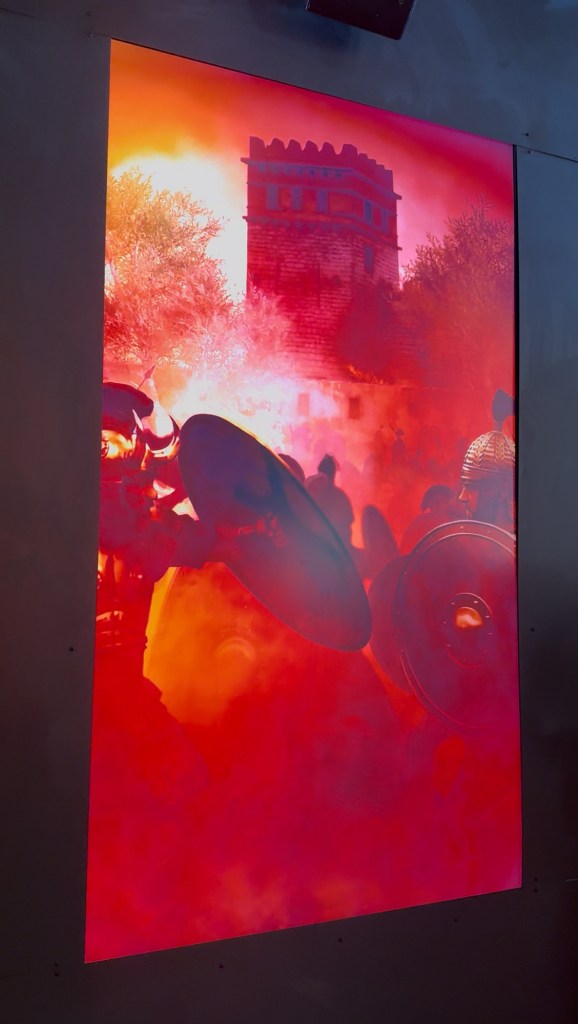
Something else I really enjoyed inside the Colosseum were the videos that played throughout the museum. I loved how they told stories instead of simply listing facts and dates, watching the animations helped me imagine what the arena looked like when it was filled with spectators, gladiators, and animals even though it made me feel like an ipad kid. Sometimes history in textbooks can feel distant but those videos made it much easier to picture what daily life may have actually looked like during the Roman Empire. Out of everything we’ve visited so far, the Colosseum has easily become my favorite monument in Italy. I think part of that is because I had the opportunity to present there, which made me feel much more connected to the site than if I had simply walked through it as a tourist. After spending so much time researching the emperors and then standing in the very place where so much Roman history unfolded, it all felt much more meaningful. I also loved learning about how historians continue to debate whether rulers like Nero, Caligula, and Commodus have been remembered fairly, reminding me that history isn’t always as straightforward as it first seems. I’ve always wanted to visit the Colosseum because it’s one of those landmarks you constantly see in movies, documentaries, and history books. Actually standing inside it felt surreal as its one of the 7 wonders of the world. I kept reminding myself that I was standing in one of the most famous monuments in the entire world, and that made presenting there feel even more special.
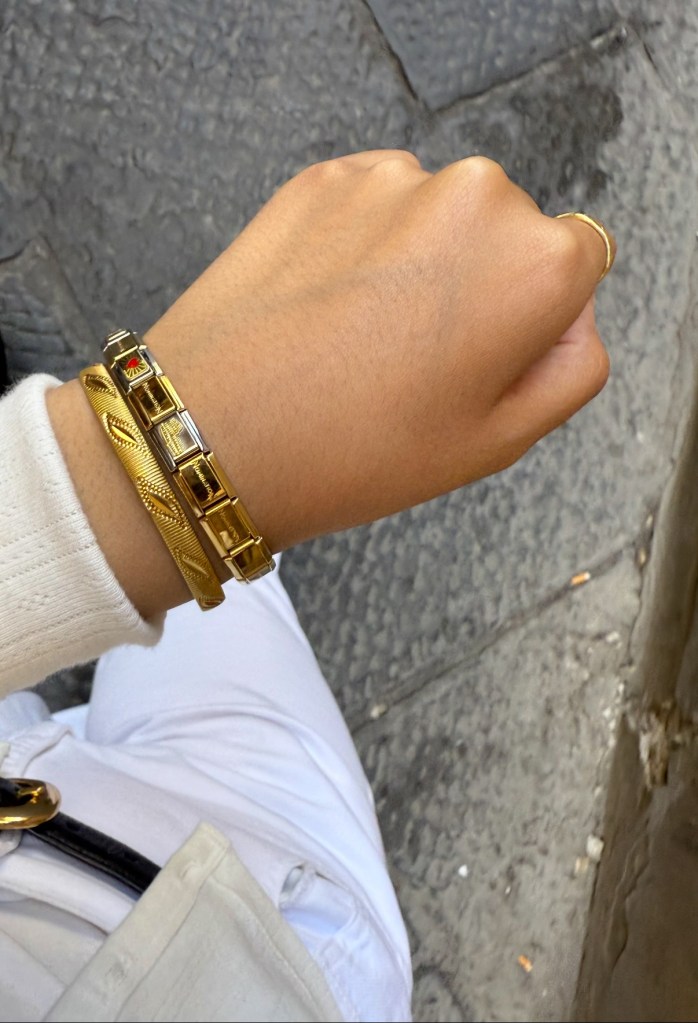
I ended up purchasing a tiny Colosseum charm as a keepsake before I left, and I am sure it will be my favorite item I bring back from Italy. Every time I look at it I know it’ll remind me not only of one of the most iconic places in the world, but also of the experience of presenting there, surviving one of the hottest days in Rome, drinking sparkling water straight from the public fountains and realizing that history comes alive so differently when you’re actually standing where it happened.


Leave a comment