
Word Count: 873
Today was my first time really using Rome’s public transportation, and I was honestly surprised by how familiar yet different it felt compared to New York City. We took the bus to our destination, and the buses themselves reminded me a lot of the ones back home. The biggest difference, though, was that you don’t interact with the bus driver at all. They have nothing to do with collecting fares or answering questions, their only job is to drive. I thought that was really interesting because in New York it feels like the driver is much more involved. Another thing I really appreciated was that every bus stop displayed exactly when the next bus would arrive. Throughout the trip, I actually found the buses to be much more reliable than the trains when it came to staying on schedule.
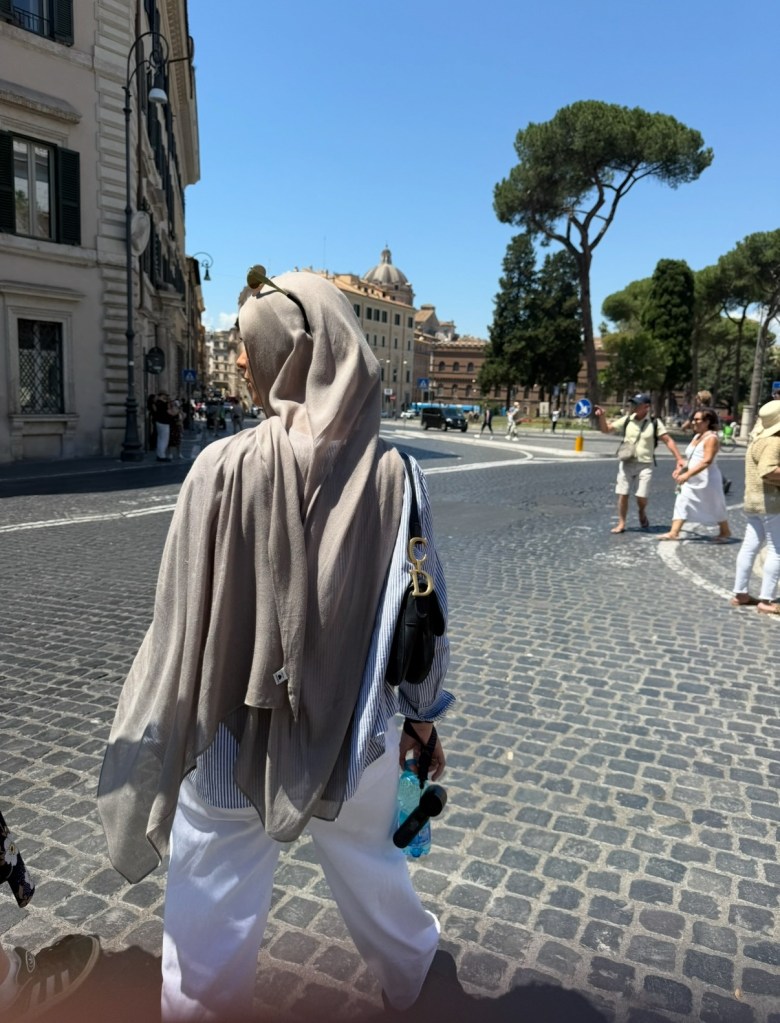
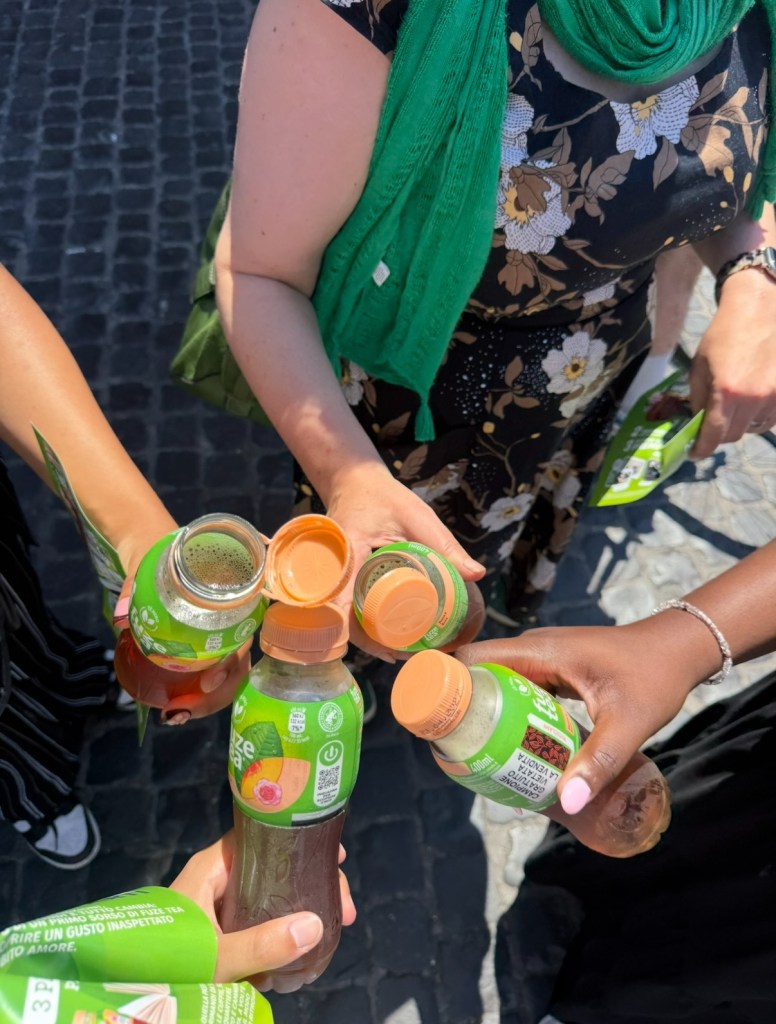
After getting off the bus, we walked through what felt like endless cobblestone streets. They were beautiful but definitely a workout to walk on. One thing that really surprised me was how quickly the atmosphere changed. The neighborhood around my temporary apartment is actually very quiet and peaceful, so after just one bus ride it felt like I had entered a completely different city. Suddenly I was surrounded by tourists, busy streets, cafés, and people everywhere. It reminded me so much of New York City because it felt like leaving a quiet neighborhood in Brooklyn and suddenly finding yourself in the middle of Times Square. As we made our way across Piazza del Popolo with my professor and roommates, we came across a booth giving away free samples of ice-cold lemon tea. With how unbelievably hot it was that day it honestly could not have come at a better time. It was such a small gesture but it ended up being one of my favorite memories because it was so refreshing after what felt like walking around in the sun for hours. Moments like that remind me that sometimes the best parts of traveling are the unexpected ones.
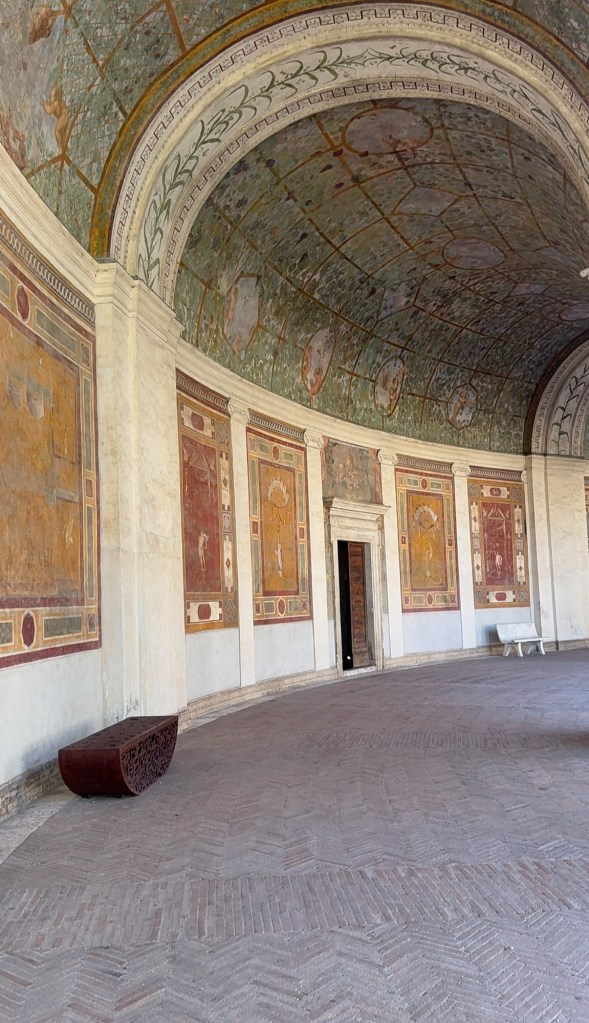
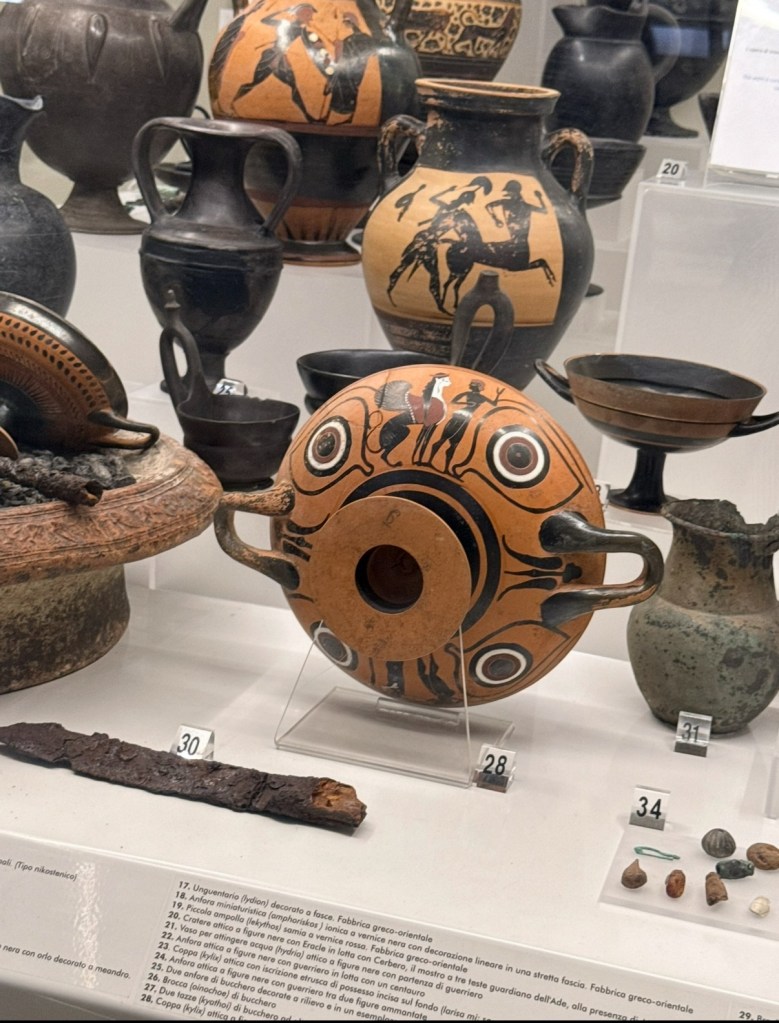
Afterward, we arrived at the museum, and I immediately noticed how beautiful the gardens were. There was so much greenery surrounding the building that it almost felt like a peaceful escape from the busy streets of Rome. I also loved looking up at the large arches, especially because many of them had artwork painted above them. It reminded me that in Rome, even the ceilings and architectural details are treated like works of art. Throughout the museum, one artifact that really caught my attention was a drinking cup with painted eyes on it. I learned that the eyes were meant to mimic and protect the person drinking from it. I thought that was such a creative idea because it showed how even everyday objects could carry symbolic meaning. Instead of simply being a cup, it reflected the beliefs and traditions of the people who used it, making it one of the most memorable artifacts I saw that day.
The reading helped me understand why Rome developed where it did. It explained that the city’s location near the Tiber River and its surrounding hills made it an ideal place for trade, transportation, and eventually the growth of an empire. It also explains that Rome’s geography gave it strategic advantages, allowing it to expand into one of the most powerful cities in history. Reading that before exploring the city made me appreciate my surroundings even more because I realized I wasn’t just walking through another European city, I was walking through the landscape that helped shape the Roman Empire.
As I continued walking around I kept noticing the same style of architecture everywhere I looked. Massive stone buildings, arches, columns, fountains, and churches seemed to appear on almost every street. Even though each monument had its own history, they all shared a similar architectural style that made the city feel connected. It amazed me how buildings that were constructed centuries apart could still fit together so naturally. One of the biggest things I’ve noticed in Rome is that nothing really feels out of place. Ancient buildings stand next to modern cafés, busy roads, and apartment buildings, making the city feel like history and everyday life exist side by side.
One symbol I noticed over and over again was the she-wolf with Romulus and Remus. After completing the reading, it became much clearer why this image is so popular throughout Rome. Since the legend tells the story of the city’s founding, it has become one of Rome’s most recognizable symbols. Once I noticed it for the first time, I started seeing it everywhere, from statues and artwork to souvenirs in gift shops. It was interesting how one story has continued to shape the city’s identity thousands of years later.
By the end of the day, I realized that Rome isn’t just a city full of famous landmarks. It’s a place where history is woven into everyday life. Whether I was riding the bus, walking on cobblestone streets, cooling off with free lemon tea in Piazza del Popolo, admiring ancient artwork in the museum, or noticing symbols from Rome’s founding story throughout the city, I found myself constantly making connections between what I had read and what I was experiencing.


Leave a comment